Trump Declares “Economic War” on Iran — Tehran Fires Back as Threats Spread Beyond the Gulf
 ΧΡΟΝΟΣ ΑΝΑΓΝΩΣΗΣ 7 '
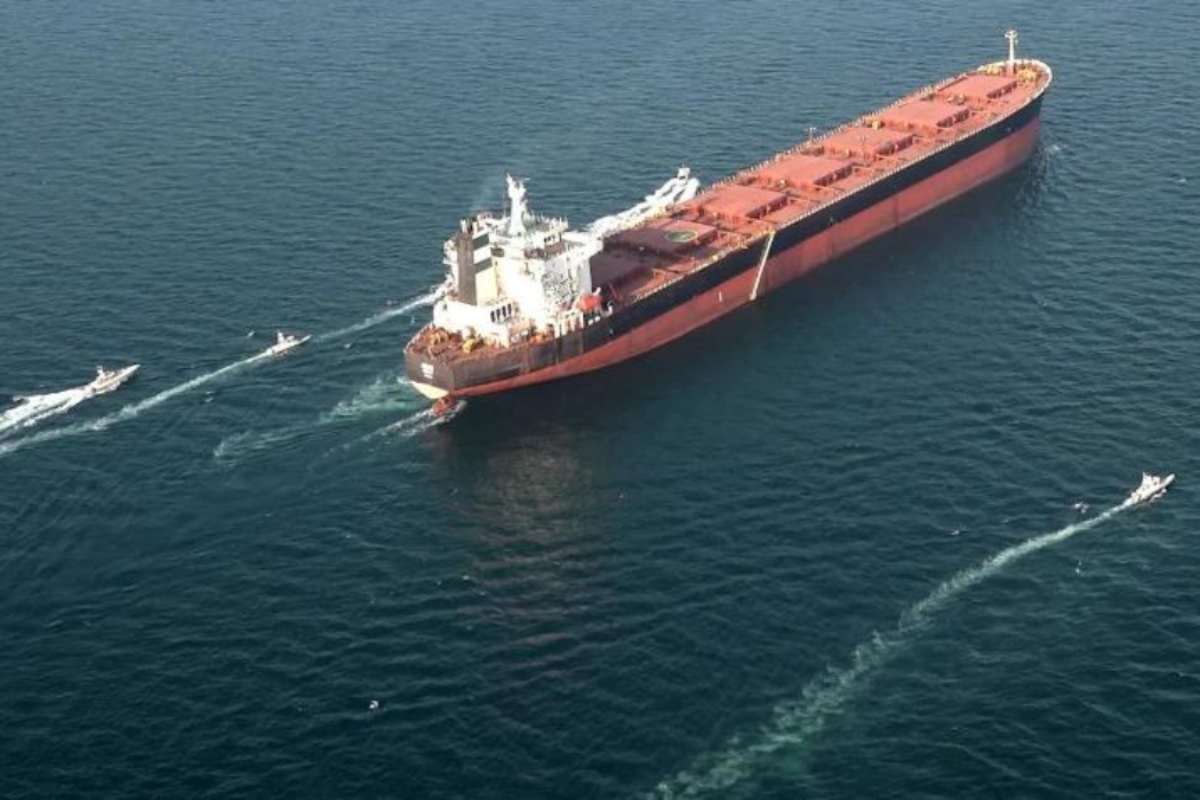
Πηγή Φωτογραφίας: AP Photo//Trump Declares “Economic War” on Iran — Tehran Fires Back as Threats Spread Beyond the Gulf



The confrontation between Washington and Tehran is entering an increasingly dangerous phase, with diplomacy stalled and both sides expanding their threats far beyond the original battlefield.
US President Donald Trump has now threatened what he described as an unprecedented campaign of “economic warfare and isolation” against Iran, warning that countries, banks, companies and even government entities providing Tehran with an economic “lifeline” could themselves face severe consequences.
Tehran’s response has been equally defiant.
Iranian officials are making clear that they do not intend to surrender under economic pressure. At the same time, the Iranian military is warning Gulf states against facilitating American operations, while reports suggest Tehran has examined potential retaliation against US military assets even in Europe.
The result is a rapidly widening confrontation in which sanctions, energy routes, military bases and the Strait of Hormuz are becoming interconnected fronts of the same geopolitical struggle.
Trump’s “Economic D-Day”
Trump dramatically raised the stakes by declaring that Washington was preparing what he called the most crushing economic operation ever directed against another country.
“ANY country that allows its financial institutions, businesses, airports, or government entities to provide any type of lifeline to Iran will itself face TREMENDOUS Economic Consequences,” Trump wrote.
The US president also demanded an end to Iranian oil smuggling, financial swap arrangements, cash transfers, exchange houses, ship registries and networks of front companies.
The message effectively extends Washington’s pressure campaign beyond Iran itself.
Countries continuing to facilitate Iranian trade could therefore find themselves facing secondary US economic pressure, dramatically increasing the international stakes.
China presents perhaps the most difficult test for such a strategy, given its role as the dominant buyer of Iranian oil and its own enormous economic leverage over Washington.
Tehran’s Answer: Pressure Will Not Bring Surrender
Iran, however, is responding by portraying Trump’s economic offensive as evidence that Washington has failed to achieve its objectives through military and diplomatic pressure.
Iranian Foreign Minister Abbas Araqchi has described the latest US economic escalation as a distraction from America’s own domestic economic problems, arguing that the strategy threatens both the global economy and the principle of national sovereignty.
More importantly, Tehran is signaling that sanctions will not force it to accept Washington’s terms.
Iranian officials have maintained that negotiations cannot be equated with capitulation, while Tehran continues to demand the lifting of the US naval blockade and oil sanctions, the release of frozen Iranian assets and an end to military operations and threats.
Iranian parliament speaker and chief negotiator Mohammad Bagher Qalibaf has made the country’s position on Hormuz explicit.
“Until the US fulfills its commitments… the Strait will not reopen,” he said, listing the blockade, sanctions, frozen assets and military operations among Tehran’s conditions.
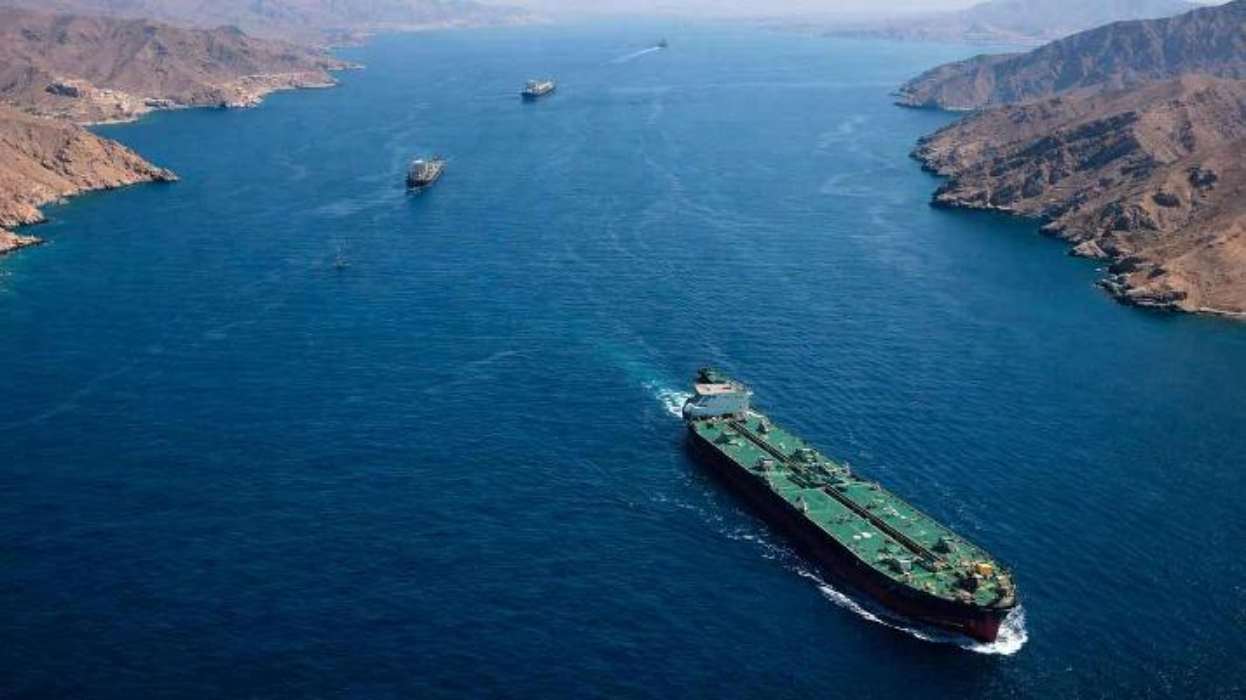
That leaves the world’s most strategically important oil chokepoint at the centre of the confrontation.
Iran Warns the Gulf: Helping America Means Taking Part in the War
Tehran is simultaneously increasing pressure on Washington’s regional partners.
Iranian Armed Forces Chief of Staff Major General Ali Abdollahi warned Gulf countries that Tehran is closely monitoring US military movements at bases throughout the region.
He specifically pointed to the presence of military aircraft and aerial refuelling tankers.
“We warn that any assistance or facilitation provided to the aggressor US military will be considered participation alongside US military forces,” Abdollahi said.
The warning is significant.
It suggests that Tehran could regard logistical support — not merely direct participation in attacks — as sufficient grounds for retaliation.
That puts countries hosting American military facilities in an increasingly uncomfortable position.
Could the Conflict Reach Europe?
Perhaps the most alarming development is the possibility that the geographical boundaries of the confrontation could expand.
According to the report cited in the material provided, Iranian planners have examined potential strikes against American military sites and assets in southeastern Europe should the war with Washington resume.
Bulgaria was reportedly among the locations considered after Sofia authorised the temporary deployment of US tanker aircraft at Bezmer air base in support of American operations in the Middle East.
Cyprus has also reportedly entered Iranian strategic calculations because of the British RAF base at Akrotiri.
If such scenarios ever moved from contingency planning to actual operations, the implications would be enormous: a US-Iran conflict would no longer be confined primarily to the Middle East.
Hormuz Becomes the Ultimate Pressure Point
Behind the increasingly aggressive rhetoric lies the unresolved dispute over the Strait of Hormuz.
Before the conflict, roughly one-fifth of globally traded oil and LNG moved through the strategic waterway, making disruption there a threat not simply to regional stability but to the global economy.
Washington insists on freedom of navigation.
Tehran sees control over access to the strait as one of its strongest remaining strategic cards.
And Trump has taken the confrontation into extraordinary rhetorical territory by circulating an image describing Hormuz as “New U.S. Territory.”
Iran responded with mockery.
An official Iranian account published a map highlighting California and labelled it:
“NEW TERRITORY OF ISLAMIC REPUBLIC OF IRAN.”
Behind the social-media exchange, however, lies an extremely serious contest over control of one of the arteries of the global energy system.
From Sanctions War to Global Economic Confrontation
Trump’s new threat changes the equation because it potentially forces third countries to choose.
Washington is effectively warning governments and businesses: maintain an economic lifeline to Iran and risk consequences from the United States.
Tehran’s counter-message is equally stark: provide military assistance to Washington and Iran could regard you as a participant in the conflict.
That creates two overlapping spheres of coercion — American economic power on one side and Iranian military and energy leverage on the other.
The danger is that the confrontation gradually ceases to be simply a US-Iran dispute.
Gulf states, China, European governments, international banks, energy companies and shipping operators could increasingly be forced to calculate the costs of choosing one side or attempting to remain neutral.
And with diplomacy stalled, Hormuz disrupted and rhetoric escalating in Washington and Tehran, the next phase may be fought as much through oil, banks, shipping lanes and sanctions as through missiles.
Yet the growing references to military targets beyond the Gulf reveal the greater danger: an economic war intended to isolate Iran could ultimately widen the geographical boundaries of the conflict itself.
Source: pagenews.gr
Διαβάστε όλες τις τελευταίες Ειδήσεις από την Ελλάδα και τον Κόσμο