Karatzaferis Unleashed: “Samaras Will Form a Party – Mitsotakis Is the Best Prime Minister”
 ΧΡΟΝΟΣ ΑΝΑΓΝΩΣΗΣ 10 '
Πηγή Φωτογραφίας: eurokinissi//Karatzaferis Unleashed: “Samaras Will Form a Party – Mitsotakis Is the Best Prime Minister”



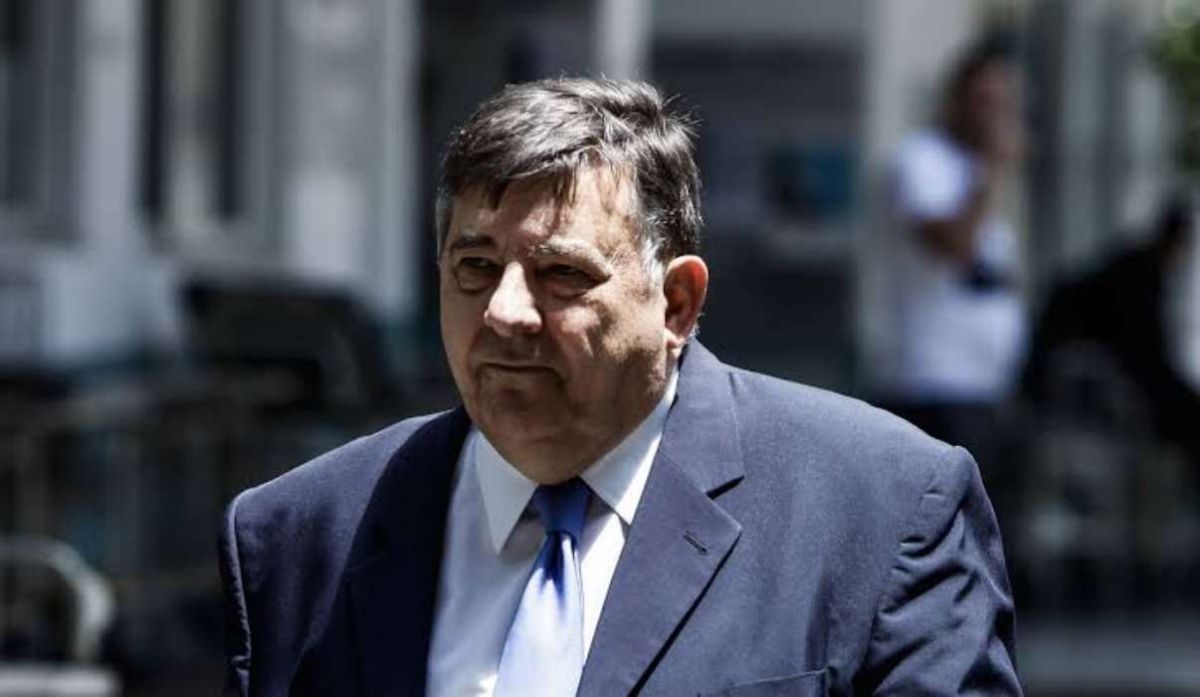
Former LAOS leader Giorgos Karatzaferis delivered a sweeping intervention on Greece’s political landscape on Tuesday morning, using an interview with SKAI TV to address everything from Antonis Samaras and the fragmentation of the Greek right to Alexis Tsipras, Nikos Androulakis, Kyriakos Velopoulos and the road to the 2027 national election.
His sharpest attacks were directed at former prime minister Antonis Samaras, whom Karatzaferis accused of breaking a political understanding dating back to the turbulent years of Greece’s debt crisis.
But beyond the personal confrontation, Karatzaferis offered a broader assessment of where Greek politics may be heading.
He predicted that Samaras will ultimately launch a new political party, estimated that such a formation could attract around 5% of the vote and warned that it could create a “real problem” for New Democracy.
At the same time, he strongly backed Prime Minister Kyriakos Mitsotakis on foreign and defence policy.
“Mitsotakis is the best prime minister, at least on national and foreign policy issues,” Karatzaferis said.
Karatzaferis Turns on Samaras: “He Has No Honour”
The interview began with the renewed controversy surrounding Samaras and the transfer of former LAOS figures to New Democracy during the debt-crisis era.
Karatzaferis gave his own account of what happened following his disagreement with the terms surrounding Greece’s PSI debt restructuring.
According to him, he and Samaras had reached an understanding that neither side would target the other’s political personnel.
Karatzaferis claimed that while Samaras was assuring him that he would not recruit LAOS figures, arrangements involving Adonis Georgiadis and Makis Voridis were already underway.
“At the very moment he was telling me, ‘I’m not going to take anyone,’ he had Adonis and Voridis there and was making the deal,” he claimed.
He then launched one of his harshest attacks on the former prime minister.
“Honour is honour. He doesn’t have it.”
The allegation reflects Karatzaferis’ account of the events and his personal assessment of Samaras.
“Samaras Will Eventually Form a Party”
Karatzaferis believes the possibility of a new Samaras-led party is very real.
For the moment, however, he suggested that the prospect is also being used as political leverage.
“My sense is that, until now, he has been applying pressure,” Karatzaferis said.
Asked whether Samaras would ultimately take the decisive step, his answer was unequivocal:
“In the end, he will do it.”
Karatzaferis even put a number on the potential electoral strength of such a formation.
“I see him at around 5%.”
Crucially, he argued that those votes would not necessarily come exclusively from New Democracy.
A Samaras party, he suggested, could also draw support from Kyriakos Velopoulos’ Greek Solution, Afroditi Latinopoulou’s political space and conservative Christian voters.
Why 5% Could Matter Far More Than the Number Suggests
The broader significance of Karatzaferis’ prediction lies in the arithmetic of Greece’s increasingly fragmented political system.
A Samaras party would not have to become a major electoral force to complicate Mitsotakis’ path to another strong government.
Even a relatively small transfer of conservative voters away from New Democracy could affect its ability to consolidate the broader centre-right electorate ahead of the 2027 election.
Karatzaferis acknowledged that risk directly.
“He will create a problem for Mitsotakis. A real problem.”
The battle on New Democracy’s right flank could therefore become one of the defining contests of the next national election.
Government Without Mitsotakis? “Nonsense”
Karatzaferis flatly dismissed speculation that New Democracy could eventually participate in a broader conservative coalition on the condition that Mitsotakis step aside as prime minister.
His response was characteristically blunt.
“Nonsense. All of that is nonsense.”
For Karatzaferis, a post-election realignment of the Greek right built around the removal of Mitsotakis is not currently a credible scenario.
That assessment is significant because coalition mathematics could become increasingly important if Greece enters the 2027 election with a more fragmented party system.
Velopoulos: “A Surplus of Intelligence, a Deficit of Seriousness”
Karatzaferis was equally provocative when discussing Greek Solution leader Kyriakos Velopoulos.
“Velopoulos has a great surplus of intelligence and a great deficit of seriousness,” he said.
He revealed that he had previously urged Velopoulos to strengthen his party by recruiting credible political personnel.
“What had I been telling him all this time? Get serious, find people, because you will need them.”
Karatzaferis also expressed strong doubts about whether New Democracy could realistically cooperate with Greek Solution in its current form, suggesting that the party’s political profile creates a substantial obstacle to such an arrangement.
Tsipras: Recognisable, but Already Tested
Former prime minister Alexis Tsipras also came under fire.
Karatzaferis acknowledged one important advantage for Tsipras: his political brand remains instantly recognisable.
“Tsipras has momentum in the sense that he is known,” he said.
But he immediately pointed to the former prime minister’s record in office.
“But he has already been tested. Last time Tsipras closed our banks. Are we bringing him back now to close our homes?”
Karatzaferis argued that there is a clear ceiling to any renewed Tsipras momentum, placing it in the area of 15%-16% before predicting that support could subsequently fall again.
Androulakis: “He Had the Entire Field – He Doesn’t Have It”
His assessment of PASOK leader Nikos Androulakis was even more unforgiving.
Karatzaferis argued that Androulakis had been handed a rare political opportunity to dominate Greece’s centre-left at a time when Tsipras was largely absent from frontline politics.
“He had the entire field in front of him to dominate the centre-left. Tsipras wasn’t there. There was nothing,” he said.
Asked why Androulakis had failed to capitalise on that opening, Karatzaferis replied:
“He doesn’t have it. That’s as far as he goes.”
He nevertheless argued that PASOK itself still has political talent, referring to figures including Pavlos Geroulanos and Anna Diamantopoulou.
The distinction was clear: Karatzaferis’ criticism was aimed primarily at the party’s leadership rather than at the absence of potentially significant political figures within PASOK.
Karystianou: “She Suddenly Lost Momentum”
Karatzaferis also addressed Maria Karystianou and the prospect of her emerging as a political force.
“She suddenly weakened,” he said.
In his view, distancing herself from figures capable of contributing political and organisational experience damaged her prospects.
His comments point to another dimension of Greece’s pre-election landscape: the possibility that new political formations could compete with established parties for an electorate that remains unusually fragmented.
The Strongest Endorsement: “Mitsotakis Is the Best Prime Minister on National Issues”
The most politically consequential part of the interview came when Karatzaferis was asked what advice he would give Mitsotakis ahead of the next election.
Before offering any prescription, he delivered a striking endorsement.
“Mitsotakis is the best prime minister, at least on national and foreign policy issues.”
Karatzaferis based that assessment primarily on the shift he believes has taken place in the balance between Greece and Turkey.
He contrasted previous Turkish threats against Greece with the military position Athens has developed through its defence modernisation programme.
“Now we have warships. Now we have aircraft. Now we have French aircraft. Now we have American aircraft,” he said.
His argument was that Greece’s defence build-up has fundamentally changed Ankara’s strategic calculations and strengthened Athens’ deterrence posture.
Israel and a Greece That “Is No Longer Alone”
Karatzaferis also placed considerable emphasis on Greece’s strategic relationship with Israel.
“Greece is no longer alone,” he said.
He even claimed a personal role in the early development of closer Greek-Israeli relations during George Papandreou’s premiership.
Beyond that historical claim, however, his central argument concerned the present: Greece now operates within a wider network of strategic, military and diplomatic partnerships that has significantly strengthened its position in the Eastern Mediterranean.
The Bigger Picture: The Battle for Greece’s Right Is Only Beginning
Strip away Karatzaferis’ colourful language and personal confrontations, and his interview offers a broader warning about the direction of Greek politics.
New Democracy faces an increasingly crowded political field to its right. Velopoulos and Latinopoulou already compete for conservative voters, while a Samaras party could create another pole capable of drawing support from the traditional centre-right electorate.
On the other side of the political spectrum, PASOK is seeking to consolidate its position while Tsipras attempts to reclaim political space and emerging movements test whether public dissatisfaction can be converted into electoral power.
Karatzaferis’ central conclusion is nevertheless clear: Mitsotakis remains the dominant figure within the broader centre-right, and his strongest political assets are Greece’s defence transformation, foreign policy and enhanced international position.
That makes the key question ahead of 2027 bigger than simply who will challenge New Democracy.
It is whether Mitsotakis can reunify the broader centre-right electorate before the election — or whether fragmentation to his right will turn several relatively small political forces into decisive players in Greece’s next battle for power.
Source: pagenews.gr
Διαβάστε όλες τις τελευταίες Ειδήσεις από την Ελλάδα και τον Κόσμο