Citi Sees €171bn Bank Payouts in 2027—Nordea’s Buyback Pause Raises the Stakes
 ΧΡΟΝΟΣ ΑΝΑΓΝΩΣΗΣ 4 '

Πηγή Φωτογραφίας: AP Photo//Citi Sees €171bn Bank Payouts in 2027—Nordea’s Buyback Pause Raises the Stakes



European banks are preparing to return substantial sums to shareholders, with Citi forecasting total distributions of €171 billion in 2027. Behind those attractive payouts, however, lies a question markets must reassess: how much surplus capital will remain available after supervisory reviews?
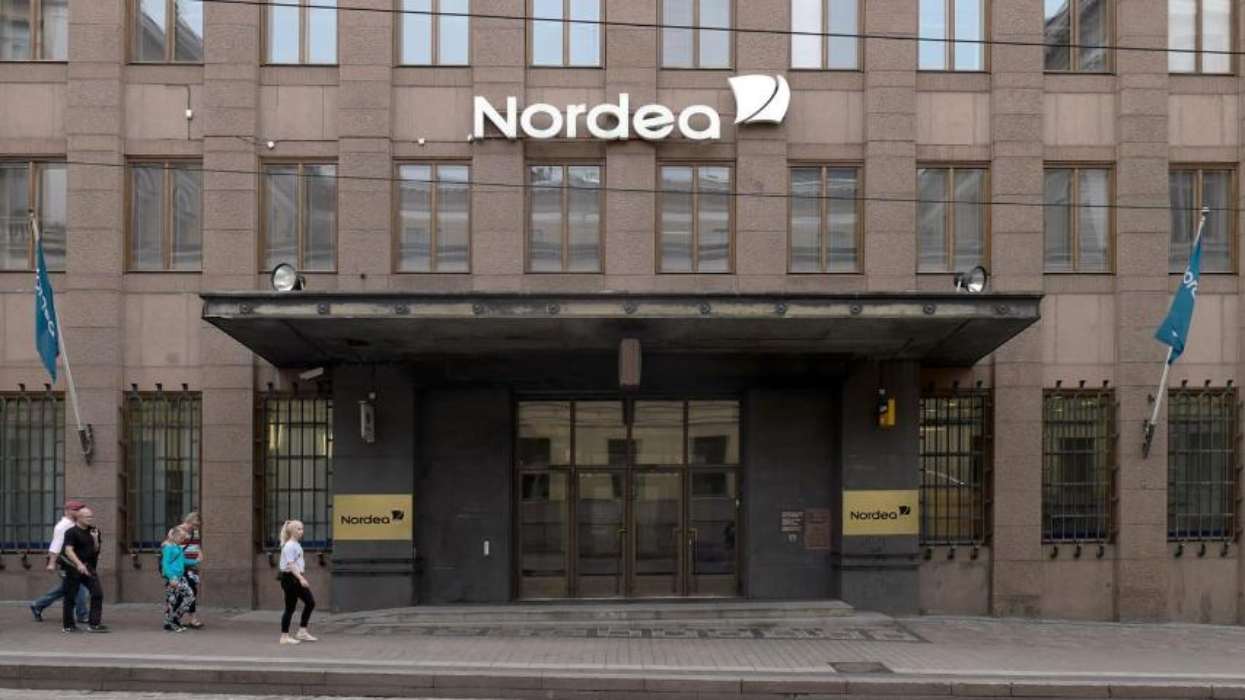
Nordea’s decision to put buybacks on hold, pending greater clarity on the European Central Bank’s assessment of its capital models, demonstrates that distributions depend on more than management intentions.
Meanwhile, the completion of existing repurchase programmes could remove a significant source of demand from the stock market.
Where the €171 billion would go
Citi’s forecast divides next year’s distributions into €109 billion in dividends and €62 billion in share buybacks.
Those figures imply that dividends account for approximately 64% of the total, with repurchases representing the remaining 36%.
The estimated combined distribution yield stands at 7.5%, while the sector is expected to return approximately 75% of its earnings.
That yield measures projected distributions relative to market value. It is neither a forecast of share-price appreciation nor a guaranteed investment return.
Buybacks support daily market demand
The importance of repurchases is visible in trading volumes.
At Lloyds, Commerzbank, Barclays and Santander, buybacks represent more than 12% of average daily trading volume, according to Citi’s tracking.
A company systematically purchasing its shares under an approved programme can absorb some selling pressure and provide recurring demand.
Once that programme ends, the buying flow stops. The stock’s performance then depends more heavily on other investors, earnings developments and broader market conditions.
The end of a buyback does not automatically imply a falling share price. It does, however, remove a buyer that had been participating regularly in the market.

Nordea resets expectations
Nordea said it was pausing buybacks while awaiting clarity on the impact of the ECB’s review of its capital models.
The bank does not expect related decisions before 2027.
The announcement accompanied third-quarter operating profit of €1.54 billion, down 4% and below analysts’ expectations. Its shares fell approximately 5% in early Helsinki trading on October 15.
The reaction highlighted how sensitive valuations can be to capital-return expectations, particularly when those distributions are central to a bank’s investment appeal.
Five lenders under closer observation
Citi’s analysis identifies Handelsbanken, ING, SEB, Deutsche Bank and Danske Bank as lenders warranting closer attention because of comparatively low risk-weight densities in large corporate lending.
That measure concerns the relationship between the relevant exposures and their risk-weighted amounts.
It does not establish a capital shortfall or predict that these banks will suspend distributions. It identifies an area to monitor should supervisory requirements become more demanding.
How regulatory changes can squeeze payouts
The mechanism matters across the sector. If risk-weighted assets increase while capital remains unchanged, the bank’s capital ratio falls, assuming other factors remain constant.
Management may consequently need to retain a larger capital buffer, reducing the capacity for additional share repurchases.
That can happen without a corresponding deterioration in loan quality: the change may stem from how risk is measured rather than an increase in defaults.
The distinction is important for investors assessing whether expected distributions rest on durable capital generation or on assumptions that could change following a regulatory review.
The next test for European bank shares
The €171 billion forecast remains a substantial element of the European banking sector’s investment appeal.
But markets must now distinguish between projected payouts and distributions that banks can execute while maintaining sufficient capital headroom.
The next test will be whether earnings, regulatory requirements and capital generation allow management teams to deliver those returns—and whether other buyers step in as existing repurchase programmes finish.
Source: pagenews.gr
Διαβάστε όλες τις τελευταίες Ειδήσεις από την Ελλάδα και τον Κόσμο