Rubin Blasts Barrack: “He Will Demolish Trump’s Legacy”—Alarm Over Turkey Tilt
 ΧΡΟΝΟΣ ΑΝΑΓΝΩΣΗΣ 5 '
Πηγή Φωτογραφίας: AP Photo//Rubin Blasts Barrack: “He Will Demolish Trump’s Legacy”—Alarm Over Turkey Tilt



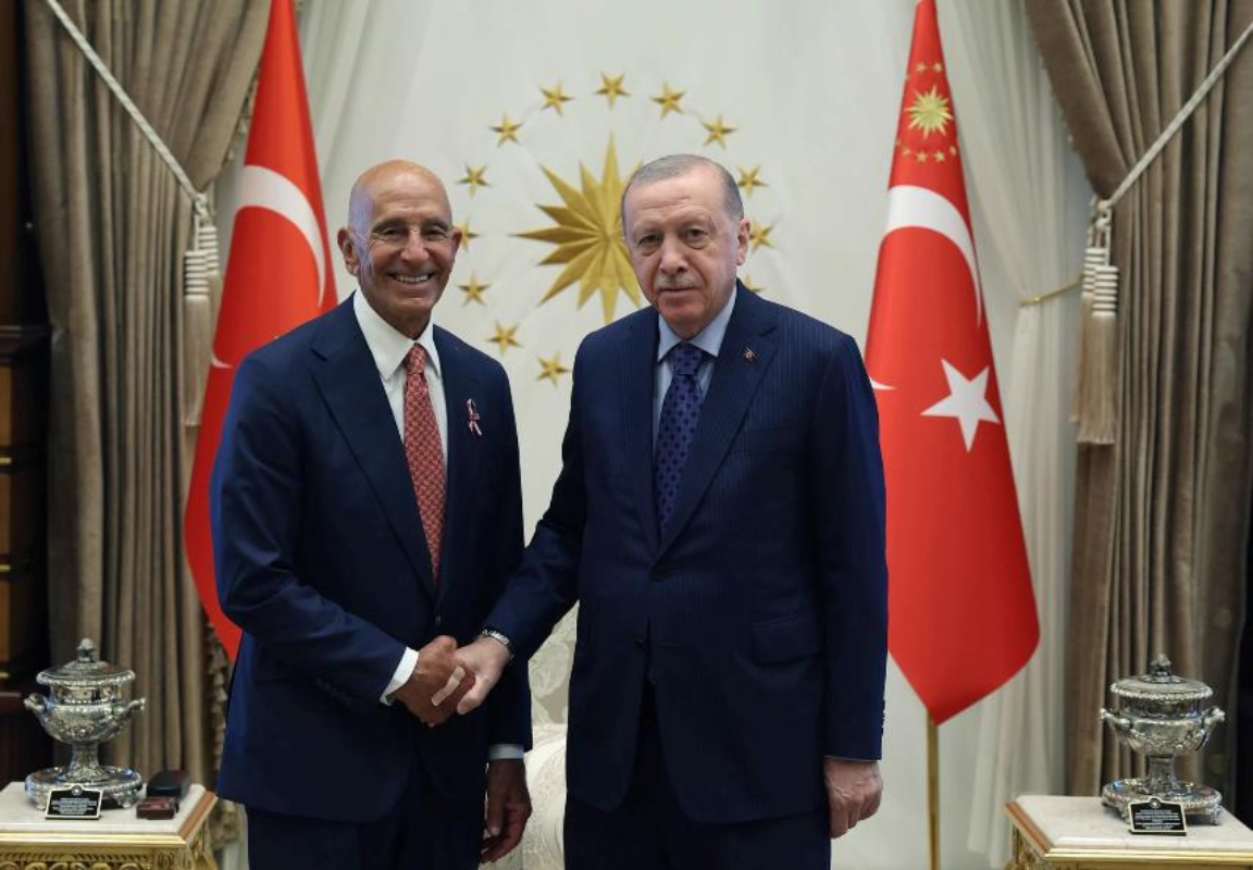
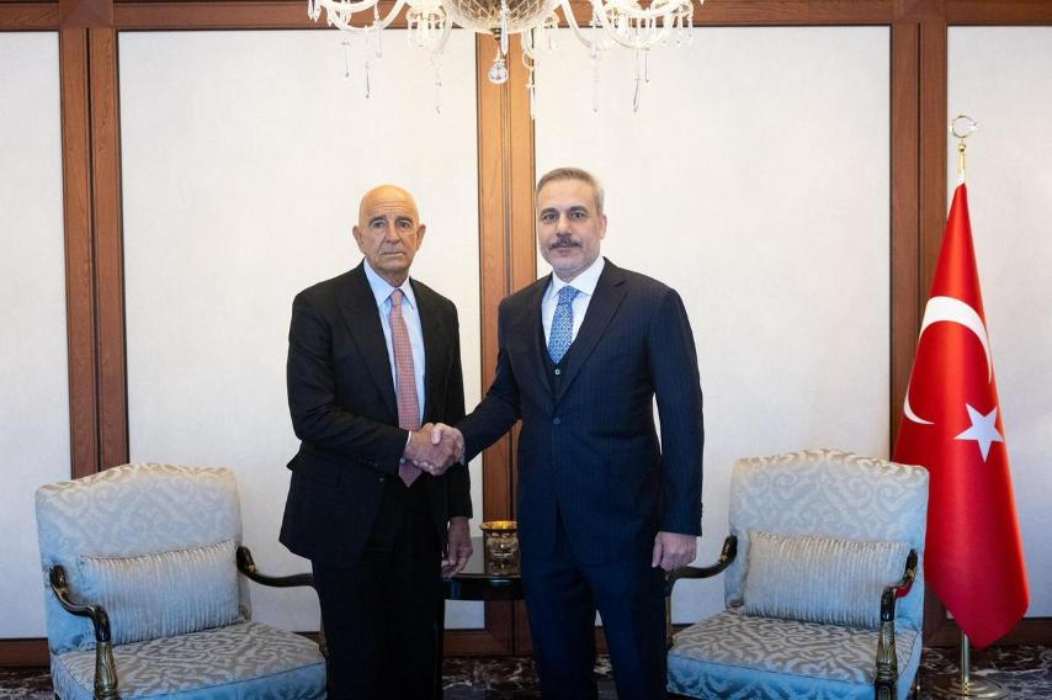
Michael Rubin has delivered a stark warning to Washington: Tom Barrack’s approach towards Turkey could undermine American strategic interests and overshadow Donald Trump’s legacy in the Middle East.
In an opinion article titled “Tom Barrack Will Demolish Trump’s Legacy,” Rubin challenges the influence of the US ambassador to Turkey and presidential envoy over American policy in the Eastern Mediterranean and the Middle East.
For Athens, the most consequential element of his argument connects three sensitive issues: American weapons sales to Ankara, sanctions over Turkey’s acquisition of Russian S-400 air-defence systems, and Washington’s response to Turkish actions affecting Greek sovereignty.
“Reworked US policy in Turkey’s favour”
Rubin portrays Barrack as one of Trump’s most influential aides.
“Even Barrack’s critics acknowledge that he has, almost single-handedly, reworked US policy toward the eastern Mediterranean and the Middle East in Turkey’s favor,” he writes.
His central accusation is that Barrack sees Ankara as a principal partner for advancing American interests while underestimating the risks associated with strengthening its regional position.
Rubin identifies him as a leading advocate for selling F-35 fighter jets to Turkey and waiving sanctions connected to its purchase of the Russian S-400 system.
He also accuses Barrack of downplaying Turkish actions in Syria, which Rubin describes as ethnic cleansing, and violations of Greek sovereignty.
The warning running through his argument is that rapprochement with Ankara could become tolerance of its regional ambitions.
The Turkey–Israel balancing act
Rubin attributes a broader strategic calculation to Barrack: empowering Turkey as a counterweight to Israel, thereby allowing Washington to reduce its own regional involvement.
“Barrack appears to believe that a regional balance between Turkey and Israel can create enough stability to allow the US to exit the region,” he argues.
He disputes the assumption that strengthening a regional power necessarily produces stability.
In his assessment, Recep Tayyip Erdoğan’s ideological objectives and Turkey’s regional ambitions make it risky to give Ankara greater responsibility within the regional security architecture.
The concern therefore extends beyond bilateral US–Turkey relations. It encompasses the consequences that increased Turkish influence could have for other American allies and partners.
Why Rubin invokes Obama’s Iran policy
Rubin draws a comparison with Barack Obama’s approach towards Iran and the 2015 nuclear agreement.
“It is a repeat of President Barack Obama’s theory that Middle East peace required a balance between Israel and Iran,”he writes.
In Rubin’s interpretation, the expectation that Iran’s economic reintegration would encourage stability underestimated the regime’s ideology and its support for regional networks.
He argues that sanctions relief and investment helped replenish resources available for proxy warfare and weapons programmes.
Rubin uses that historical comparison to warn that Washington could repeat what he considers a strategic mistake—this time through excessive reliance on Turkey.
The $15 billion pipeline and the business connections
Questions about the relationship between public diplomacy and private business also feature in the criticism.
A Reuters investigation published on October 9 reported that Barrack advocated for TI Capital, a firm run by a longstanding business associate, to participate in plans to rehabilitate the Kirkuk–Baniyas oil pipeline, linking Iraq to Syria. The estimated project cost was $15 billion.
Reuters documented his financial interest in a separate property venture managed by TI Capital. Ethics specialists raised concerns about the appearance of impartiality surrounding his advocacy.
Reuters found no evidence that Barrack stood to profit from the pipeline. The State Department said he had no financial interest or role in the project, that his public interventions reflected American policy supporting regional energy integration, and that he had been certified as complying with ethics requirements.
What is at stake for Greece
For Athens, the substantive question is how Washington’s engagement with Ankara affects the balance of power in the Eastern Mediterranean.
Arms transfers, sanctions policy and the handling of disputes between allies shape the environment in which Greece conducts its foreign policy.
Rubin’s intervention exposes a sharp disagreement over American strategy: how heavily Washington should rely on Turkey, and what costs that reliance might create for its other relationships.
His argument raises a practical question for American partners: whether closer ties with Ankara will be accompanied by clear limits on actions that threaten their interests.
Rubin closes with a prediction that captures the severity of his criticism:
“Policymakers a decade from now will understand that the roots of future conflict in the Middle East rest in the naive and misguided policies promoted by Ambassador and Special Envoy Tom Barrack in Trump’s name.”
Source: pagenews.gr
Διαβάστε όλες τις τελευταίες Ειδήσεις από την Ελλάδα και τον Κόσμο