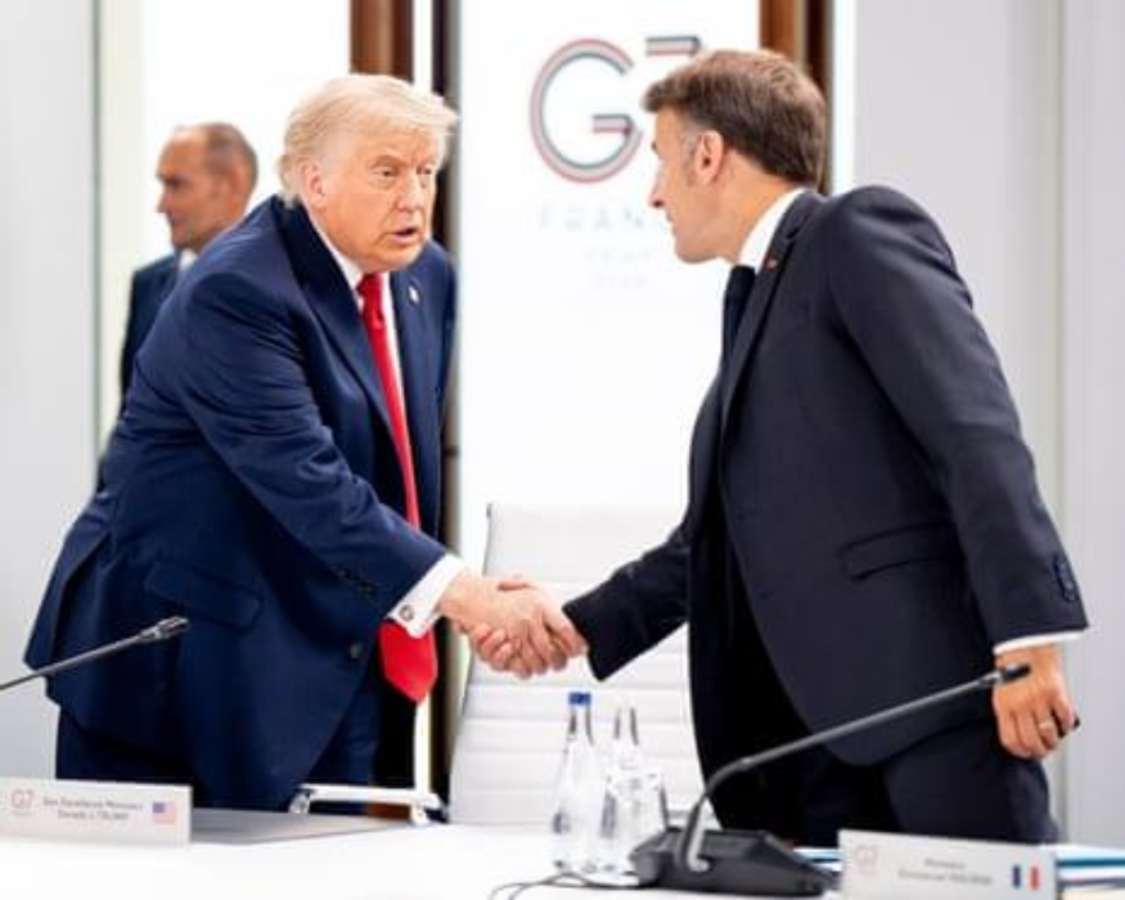
The world’s leading Western economies are reaching for one of their most powerful emergency tools to confront the latest energy shock.
G7 leaders have agreed to coordinate the release of:
100 million barrels
from emergency oil stocks, with the operation beginning immediately and extending over four months.
The intervention will be coordinated through the International Energy Agency (IEA) and comes amid severe volatility in global oil and refined-product markets.
But one detail makes this intervention particularly significant.
The G7 does not intend to wait months before delivering relief.
A substantial volume of diesel will be released during the first 20 days.
That reveals where one of the greatest immediate vulnerabilities in the global energy system now lies.
Not just in crude oil.
But in the refined fuels needed every day by transport, industry and businesses.
Diesel First: The Critical 20-Day Window
The official G7 statement sets out an explicitly frontloaded strategy.
The 100 million barrels will be released over four months, but G7 countries and partners will prioritize a substantial diesel release within the first 20 days.
The IEA will then assess the impact of the measures and report back before the end of that period.
Additional diesel releases could follow if market conditions require them.
The strategy is designed to address a central problem in the current crisis: even when crude oil is available, the world still needs sufficient refining capacity to turn it into usable fuels.


G7 Pushes Refineries to Produce More
The stock release is therefore only one element of a broader package.
G7 governments have also agreed to coordinate refinery maintenance schedules to prevent simultaneous shutdowns of capacity.
Where possible, refineries will be encouraged to temporarily increase utilization rates.
The group is also calling on countries with significant refining capacity outside the G7 to increase production of refined products, particularly diesel.
The objective is straightforward:
increase actual fuel supply, not merely crude availability.
The Second Front: No Export Bans
The agreement contains another politically significant commitment.
G7 countries pledged to refrain from imposing export restrictions on energy and energy products between members.
They are also urging other producing countries to avoid bans that could intensify market tensions.
That provision addresses one of the biggest dangers in any global energy shock.
When governments become concerned about domestic fuel prices, they can be tempted to retain production at home.
But if several major exporters act simultaneously, a domestic protection measure can quickly become an international supply crisis.
The G7 is trying to prevent exactly that dynamic.
Trump Had Been Pushing Europe to Act
The agreement comes after mounting pressure from Washington for European countries to make greater use of their strategic reserves.
US President Donald Trump had publicly pushed for additional supplies to enter the market as governments struggled with rising energy costs.
The new G7 agreement gives Washington part of what it had been seeking: a large, coordinated stock release with immediate action on diesel.
Trump quickly presented the development as a success for his approach.
But the final agreement is broader than a unilateral European concession to the United States.
It is a collective G7 intervention, implemented with partners through the IEA and accompanied by commitments on refining capacity, international trade and future stock replenishment.
From the French “50+50” Plan to a G7 Deal
Only hours earlier, discussions had centered on a French proposal built around a possible combination of:
50 million barrels of diesel
and
50 million barrels of crude oil.
Paris was attempting to reconcile two competing priorities.
The first was the need to inject fuel quickly into the market.
The second was to avoid exhausting emergency stocks too aggressively if the geopolitical crisis continued.
The final G7 agreement retained the headline figure of 100 million barrels, while placing the operation inside a wider multilateral framework.
Macron Moves the Debate to the G7
France currently holds the G7 presidency and had been preparing a coordinated response to the energy shock for weeks.
President Emmanuel Macron had argued that strategic reserves could be used to calm markets while warning against measures that would fragment global energy trade.
That distinction has now become part of the official G7 approach:
release emergency stocks, increase refining output and keep international energy trade open.
The group is trying to expand supply without triggering a wave of national protectionism.
The Strait of Hormuz Is at the Heart of the Crisis
Behind the emergency measures lies the geopolitical shock in the Middle East.
The G7 statement directly calls for the restoration of navigational rights through the Strait of Hormuz, one of the world’s most important energy chokepoints.
The group condemned Iran’s disruption of international trade and energy security and said it would intensify efforts to restore the free flow of commerce through the strait.
Hormuz is critical because a substantial share of internationally traded oil passes through the narrow waterway connecting the Persian Gulf with the Arabian Sea.
Any prolonged disruption therefore affects far more than regional producers.
It threatens the architecture of the global oil market itself.
March’s Record Intervention: 400 Million Barrels
The October decision is not the first emergency stock release of 2026.
In March, the IEA countries agreed to release as much as:
400 million barrels
from strategic reserves following the initial Middle East supply shock.
It was the largest coordinated oil-stock release in the history of the IEA.
According to France’s presidency of the G7, the group accounted for roughly 70% of that intervention.
Macron said at the time that the 400 million barrels were roughly equivalent to 20 days of volumes normally exported through the Strait of Hormuz.
The latest intervention therefore comes on top of an already extraordinary year for the world’s emergency energy reserves.
Up to Half a Billion Barrels in 2026
Put the two interventions together and the scale becomes clearer.
Up to 400 million barrels in March.
Now:
100 million barrels over four months.
That means emergency releases coordinated through the IEA framework could reach:
500 million barrels in 2026
if the announced maximum volumes are fully implemented.
That is an extraordinary amount of emergency supply.
But it also exposes the fundamental limitation of strategic reserves.
Strategic Reserves Buy Time — They Do Not Produce Oil
Emergency stocks are exactly that: stocks.
They represent energy produced previously and stored for a crisis.
Releasing them can add supply immediately.
It can reassure markets.
It can reduce the risk of panic buying.
And it can give governments time to find alternative supplies.
But it does not create new permanent production.
Every barrel released today ultimately needs either to be replaced or offset by restored supply elsewhere.
The G7 itself acknowledges this problem.
Its new agreement instructs the IEA to include stock replenishment among the recommendations in its follow-up assessment.
The Real Battle Is Increasingly About Refined Fuels
The latest crisis also highlights a structural vulnerability that is often obscured by headline crude prices.
A country can have access to oil while still experiencing shortages or extremely high prices for diesel.
Why?
Because crude must first be refined.
That requires functioning refineries, adequate capacity, transportation networks and access to the right grades of crude.
The G7’s decision to frontload diesel stocks and coordinate refinery maintenance is therefore highly significant.
This is no longer simply an oil-supply crisis.
It is also a refining and refined-products crisis.
Why Diesel Matters So Much to Europe
Diesel is particularly important for Europe.
It powers large parts of road freight, commercial transport, agricultural machinery and industrial activity.
A sharp increase in diesel prices can therefore spread rapidly through an economy.
Transport becomes more expensive.
Logistics costs rise.
Agricultural costs increase.
Businesses face higher operating expenses.
And those increases can eventually appear in consumer prices.
That makes diesel not simply an energy commodity but an important transmission mechanism between geopolitical disruption and inflation.
The Inflation Risk
The G7 intervention is therefore also an economic-policy move.
A sustained oil and diesel shock can push headline inflation higher and complicate monetary policy.
Central banks can raise interest rates to suppress demand.
But they cannot reopen the Strait of Hormuz.
Nor can higher borrowing costs produce diesel.
Governments therefore have a strong incentive to address the supply shock directly before it spreads more deeply through wages, services and consumer prices.
The Market Signal
There is also a psychological dimension.
Commodity markets trade not only on today’s physical supply but on expectations about tomorrow’s shortages.
By announcing a coordinated 100-million-barrel intervention, the G7 is telling traders that major consuming economies are prepared to use their emergency reserves rather than passively accept an uncontrolled supply shock.
That signal itself can affect prices.
But its durability will depend on what happens next in the Middle East.
Russia Remains Part of the Energy Equation
The G7 also made clear that the energy emergency will not change its sanctions policy toward Russia.
The leaders reaffirmed that sanctions will remain in place while the group works with the IEA and other international partners to prevent spillovers into fuel, natural gas and commodity markets.
That creates another constraint.
Western governments are trying simultaneously to:
maintain pressure on Moscow,
manage a Middle East supply shock,
keep fuel available,
contain inflation,
and avoid protectionist export restrictions.
The energy crisis has therefore become inseparable from wider geopolitical strategy.
The G7 Is Trying to Regain Control of the Market
The significance of the October agreement goes well beyond 100 million barrels.
The Middle East crisis is disrupting energy flows.
Europe is worried about diesel.
The United States is focused on domestic fuel prices.
Refineries are under pressure.
Governments fear another inflation surge.
And the Strait of Hormuz remains central to global supply security.
The G7 response is to coordinate almost every lever available:
strategic reserves, refinery capacity, trade policy, diplomacy and the IEA emergency mechanism.
The Next 20 Days Will Matter
The first test comes quickly.
The G7 has ordered a follow-up assessment before the end of the initial 20-day window.
That report will examine implementation, market stability and whether additional action is required.
If the frontloaded diesel release succeeds in easing pressure, governments will have bought valuable time.
If it does not, further releases may follow.
The larger question, however, cannot be answered from strategic storage tanks.
It depends on whether normal energy flows can be restored.
The G7 has opened the emergency reserves. Now the race is to stabilize the physical oil market before emergency stocks have to become the world’s substitute for normal supply.
Source: pagenews.gr