Mitsotakis at MED9: “Europe Must Respond Now” — Energy, Migration and Greece’s Plan
 ΧΡΟΝΟΣ ΑΝΑΓΝΩΣΗΣ 8 '
Πηγή Φωτογραφίας: eurokinissi//Mitsotakis at MED9: “Europe Must Respond Now” — Energy, Migration and Greece’s Plan



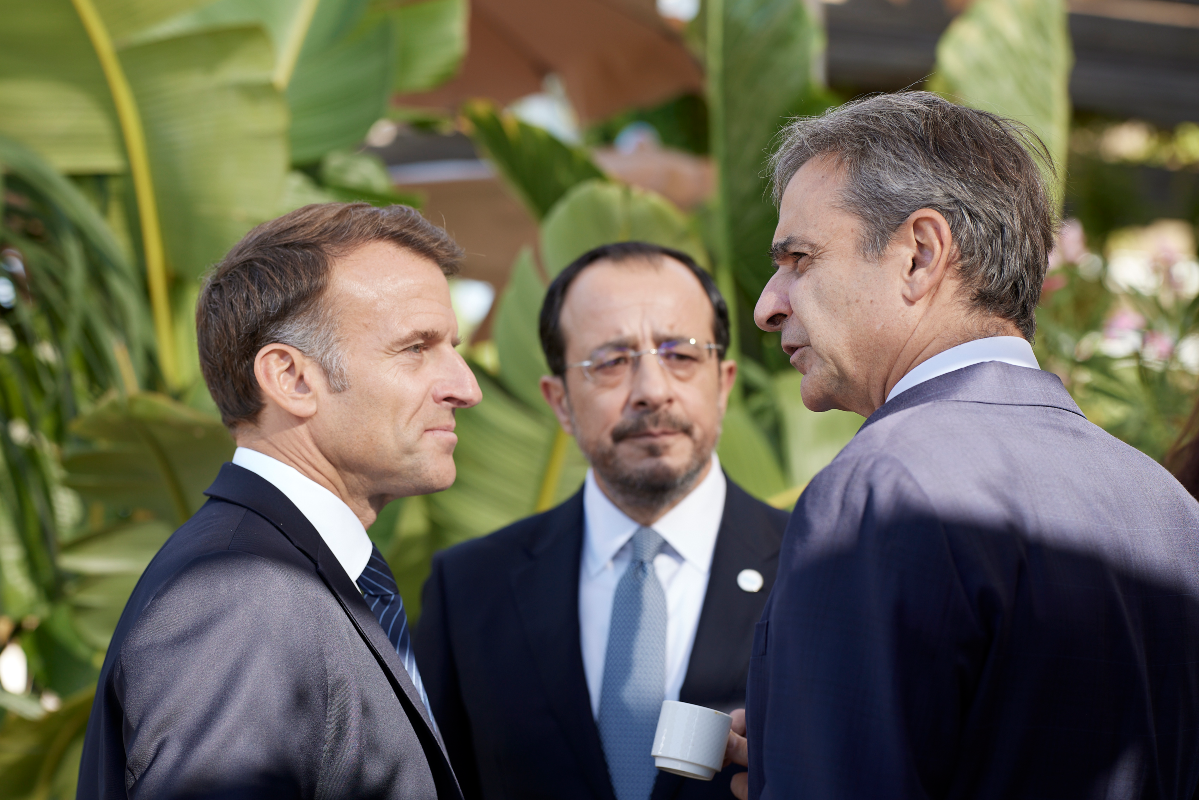
Prime Minister Kyriakos Mitsotakis used the MED9 Summit in Split, Croatia, to make the case that Europe’s major crises can no longer be addressed primarily through national instruments.
Energy, competitiveness, the EU budget and migration were at the heart of the Greek intervention, with Mitsotakis calling for stronger and more coordinated European action.
The timing is particularly significant.
The summit of the nine Mediterranean EU member states comes ahead of the next crucial European Council, giving southern European countries an opportunity to coordinate positions as the bloc faces renewed economic and geopolitical pressure.
Athens is putting forward three main priorities:
support against the energy shock, greater European financial firepower, and a common mechanism to respond to migration emergencies and hybrid threats.
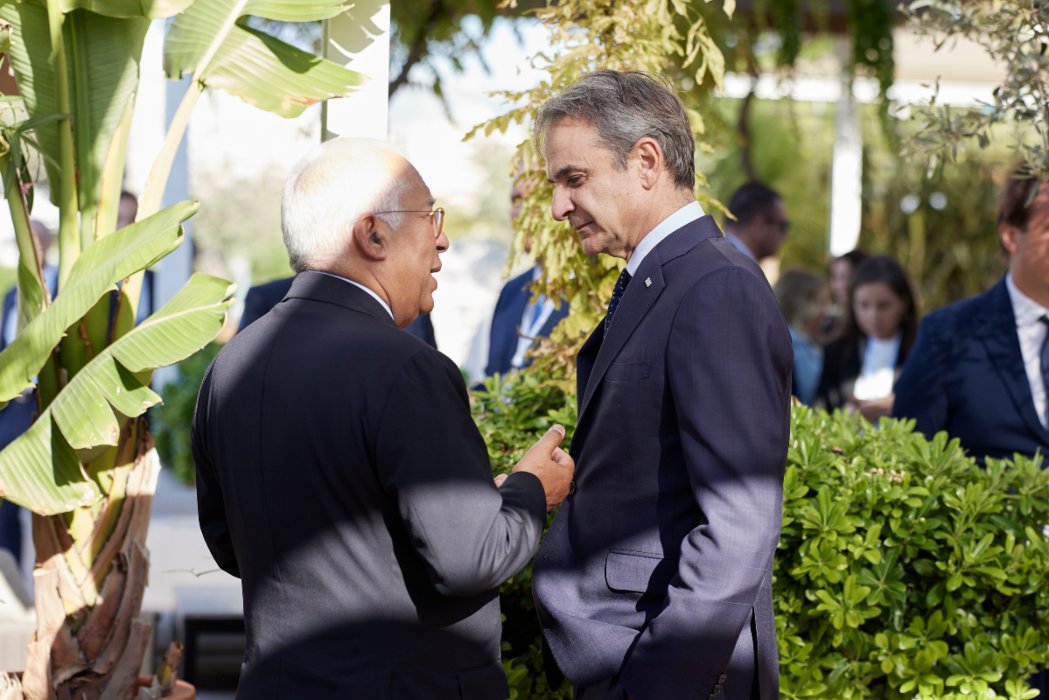
Mitsotakis: Europe Must Support Citizens and Businesses
Mitsotakis placed particular emphasis on elevated energy prices and the inflationary pressures they are generating.
According to the Greek Prime Minister’s Office, he reiterated that Europe must respond to the current environment and explore ways to support households and businesses.
The Greek position, however, comes with an important condition:
support measures must be compatible with fiscal stability and sustainability.
In effect, Athens is seeking greater room for European-level intervention so that member states are not once again forced to confront a continent-wide energy crisis exclusively with national resources.
Energy Is Now a Competitiveness Problem
The Greek prime minister directly linked high energy prices to one of the EU’s most pressing structural challenges: competitiveness.
The issue is no longer confined to household energy bills.
It affects manufacturing costs.
Industrial production.
Investment.
Exports.
And ultimately the ability of European companies to compete with businesses in the United States and Asia, where energy costs can be substantially lower.
For Athens, energy policy and European competitiveness have therefore become two sides of the same problem.
Greece’s New Focus: Europe Needs Refining Capacity
One of the most notable elements of Mitsotakis’ intervention concerned refining capacity within the European Union.
The prime minister argued that recent developments have demonstrated the importance of European initiatives aimed at safeguarding sufficient refining capacity inside the bloc.
The point has broader geoeconomic implications.
Energy security is not simply about whether Europe can import crude oil or natural gas.
It is also about whether it retains the infrastructure needed to process sufficient volumes of energy products and protect its market during periods of international disruption.
After successive energy crises, the concept of European strategic autonomy is therefore acquiring another dimension: maintaining critical energy infrastructure and industrial capacity within Europe itself.
The EU Budget Must Match Europe’s Ambitions
The second major issue raised by Mitsotakis was the next Multiannual Financial Framework, the EU’s long-term budget.
The Greek prime minister stressed that the next European budget must be commensurate with the scale of the Union’s ambitions.
The message is straightforward.
Europe cannot simultaneously seek:
stronger defence,
greater energy autonomy,
the green transition,
higher competitiveness,
better protection of its external borders,
stronger cohesion,
and greater geopolitical influence,
without providing the financial resources required to achieve those goals.
Athens has already argued that Europe’s expanding list of strategic responsibilities requires a budget capable of financing them.
Mitsotakis: Cohesion and Competitiveness Are Not Rivals
Greece’s position on the next EU budget contains another important element.
Mitsotakis has stressed that cohesion policy should not be seen as being in conflict with competitiveness.
Instead, Athens views cohesion as one of its prerequisites.
For countries such as Greece, this is particularly important as negotiations over the next EU budget increasingly involve difficult choices between traditional policies — including cohesion and the Common Agricultural Policy — and newer priorities such as defence, security and technological competitiveness.
Athens argues that financing Europe’s new strategic priorities should not come at the expense of policies designed to reduce economic and regional inequalities within the Union.
Greece’s Proposal for a Migration Emergency Mechanism
The third major pillar of Mitsotakis’ intervention concerned migration.
At the MED9 Summit, the Greek prime minister welcomed the European Commission’s positive stance toward Greece’s proposal for the creation of a European emergency mechanism.
The mechanism would be designed to respond to situations involving:
sudden increases in migration flows,
the instrumentalisation of migration by third countries,
or the emergence of hybrid threats.
The logic behind the Greek proposal is that an EU member state located on the Union’s external border should not be expected to confront a sudden and organised pressure alone.
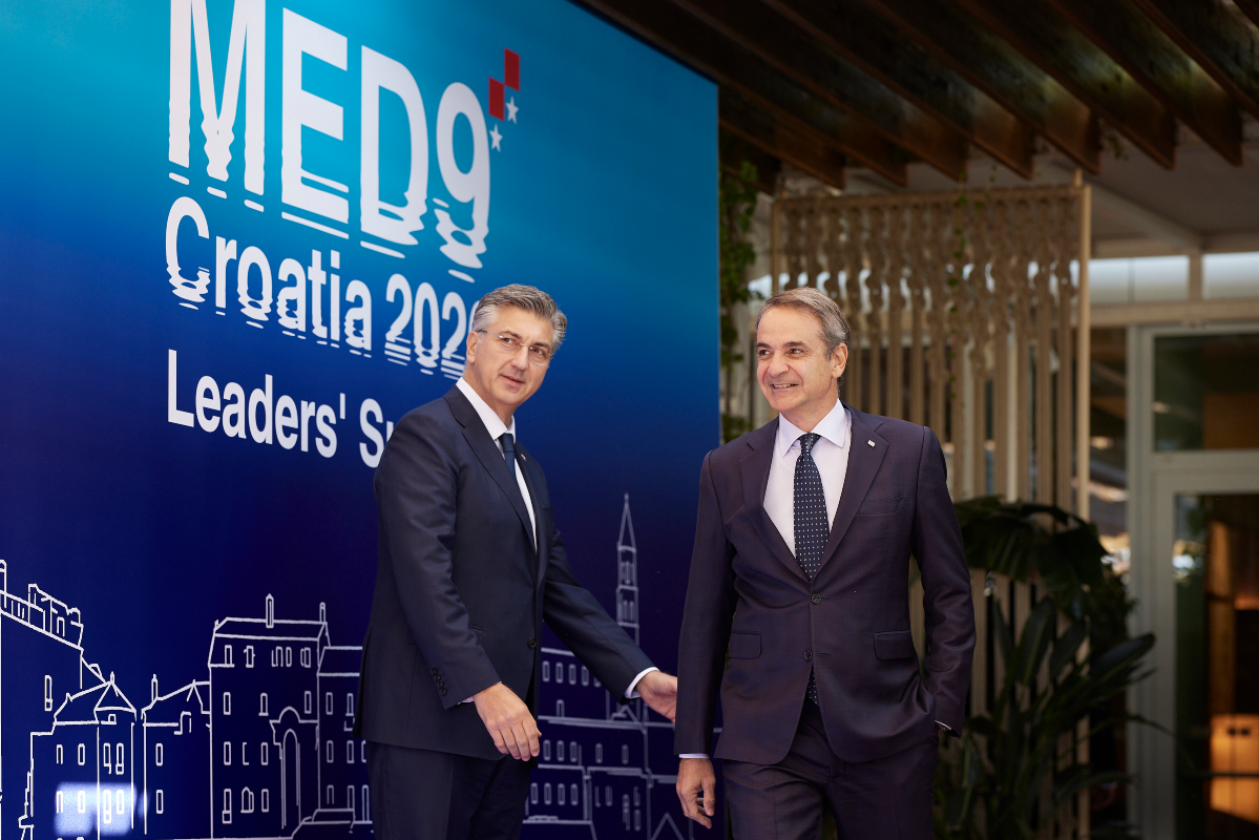
From Evros to a European Mechanism
The Greek proposal is closely linked to the country’s experience at the Evros border in 2020.
Athens maintains that it faced an organised attempt to instrumentalise migration flows at the EU’s external frontier.
Other member states have since faced comparable forms of pressure.
Mitsotakis has used this experience to argue that such situations should not be viewed exclusively as migration-policy challenges.
Under certain circumstances, they can acquire the characteristics of a hybrid threat.
Athens therefore wants a standing European mechanism so that the EU does not have to improvise a response every time a new crisis emerges.
Commission Signals Support for the Greek Proposal
The most politically significant development is that the idea is no longer being discussed solely as a Greek demand.
Mitsotakis welcomed the European Commission’s positive stance toward the proposal.
He had also expressed satisfaction during recent remarks alongside Lithuanian President Gitanas Nausėda, noting the Commission’s support for the concept of a European mechanism capable of responding to instrumentalised migration flows and emergency pressure.
This does not mean that such a mechanism has already been formally established.
It does mean that the Greek proposal has moved into the broader European policy debate.
Why MED9 Matters
MED9 brings together nine southern EU member states:
Greece, Cyprus, France, Italy, Spain, Portugal, Malta, Slovenia and Croatia.
Despite differences in their individual priorities, the countries share important interests in areas including:
the Mediterranean,
migration,
energy security,
climate change,
external border protection,
and developments in the Middle East.
Croatia, which holds the MED9 presidency in 2026, has placed the goal of a safer, more sustainable and more resilient Mediterranean at the centre of its agenda.
Von der Leyen and Costa Add Political Weight
The presence of European Commission President Ursula von der Leyen and European Council President António Costa gives the Split summit additional political weight.
It provides MED9 leaders with a direct opportunity to bring southern Europe’s priorities to the leadership of the EU’s two key institutions.
For Athens, the timing is particularly important.
The Split summit comes ahead of the next gathering of European leaders, where energy costs, competitiveness, the EU budget and security are expected to feature prominently.
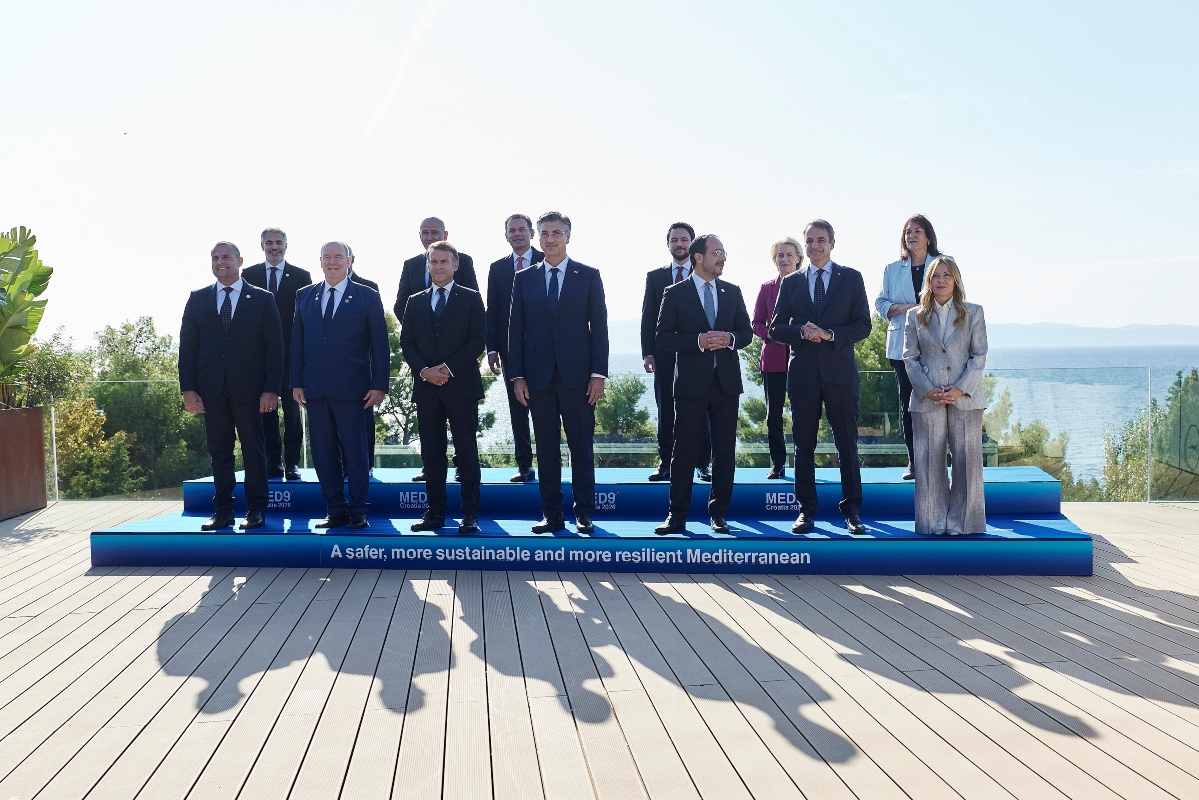
Athens’ Message: European Crises Need European Solutions
If there is one common thread running through Mitsotakis’ interventions at MED9, it is this:
Greece wants crises with European causes and European consequences to be addressed with European instruments.
On energy, that means common action to protect households and businesses without undermining fiscal stability.
On the budget, it means sufficient resources to turn Europe’s growing ambitions into deliverable policies.
On migration, it means solidarity and an emergency-response mechanism when a member state faces sudden migration pressure or the instrumentalisation of migrants.
And on competitiveness, it means protecting critical European infrastructure and productive capacity — including refining capacity.
For Greece, the Split meeting was therefore more than another regional summit.
It was a staging ground for the next major European negotiations.
And Mitsotakis’ message was clear:
if Europe wants greater security, stronger competitiveness and more resilience, it will also need the common tools — and the financial resources — to deliver them.
Source: pagenews.gr
Διαβάστε όλες τις τελευταίες Ειδήσεις από την Ελλάδα και τον Κόσμο