Europe’s €2tn Budget Battle: €131bn for Defence, €100bn for Ukraine — and a Fight Over Who Pays
 ΧΡΟΝΟΣ ΑΝΑΓΝΩΣΗΣ 8 '
Πηγή Φωτογραφίας: AP Photo//Europe’s €2tn Budget Battle: €131bn for Defence, €100bn for Ukraine — and a Fight Over Who Pays



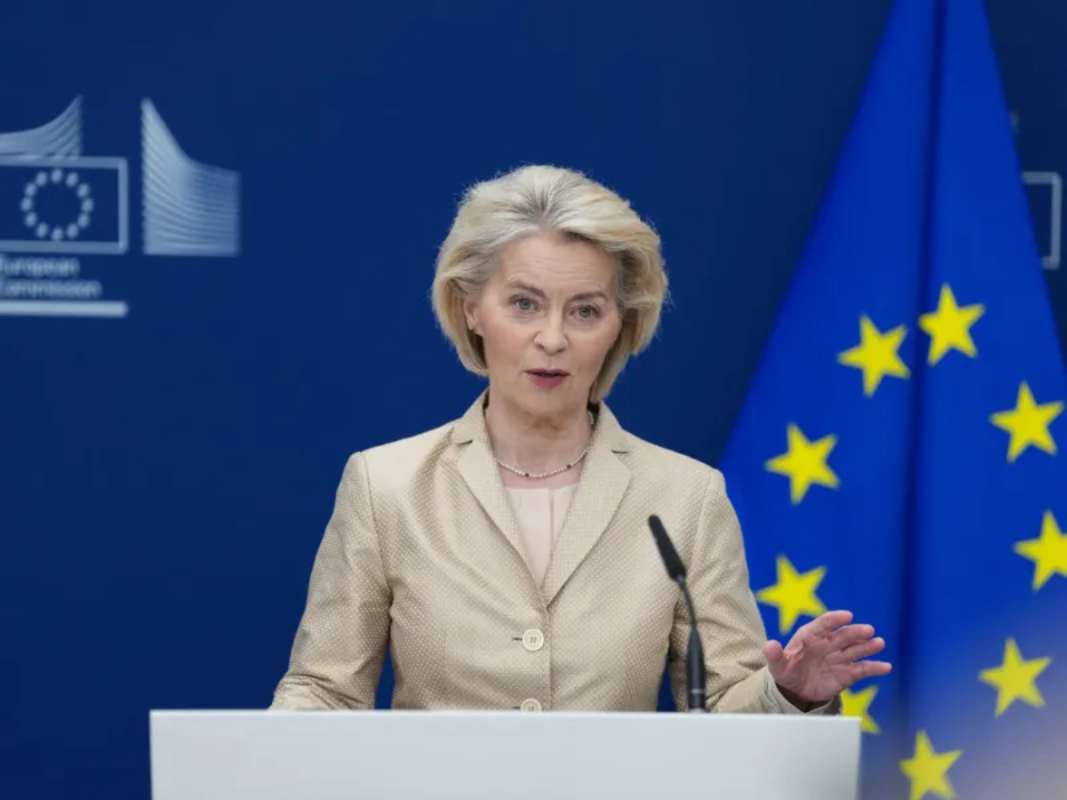
The European Union is entering one of the most consequential political and fiscal negotiations of the coming years: the new Multiannual Financial Framework (MFF) for 2028–2034, a budget approaching €2tn designed to finance Europe’s defence ambitions, competitiveness, support for Ukraine, cohesion, energy security and geopolitical reach.
EU affairs ministers are meeting in Brussels today as the General Affairs Council holds a policy debate on the next MFF. Ministers are also preparing for the October European Council and discussing the EU’s legislative programming for 2027.
The European Commission’s proposal amounts to almost €2tn, equivalent to an average of around 1.26% of the EU’s gross national income over the seven-year period.
But behind the headline figure lies a much bigger political question: what kind of Europe are the 27 prepared to finance — and who will pay for it?
From cohesion to defence: Europe’s strategic shift
The most striking change concerns security.
The Commission proposes €131bn for defence, security and space through the European Competitiveness Fund — roughly five times the EU-level funding available under the previous financial period.
The political message is significant. Defence is no longer being treated as a relatively peripheral component of the EU budget. It is becoming a central element of European industrial and economic policy.
The money is intended to support strategic technologies, European defence production capacity, cybersecurity, space capabilities and dual-use infrastructure. Funding for military mobility under the Connecting Europe Facility is also set to increase sharply.
That shift comes as the war in Ukraine continues, instability in the Middle East remains acute and Washington has pressed European allies to shoulder a greater share of their own security burden.
Up to €100bn for Ukraine
Ukraine receives a separate and substantial provision.
The proposed framework could mobilise up to €100bn for Ukraine between 2028 and 2034, with flexibility built into the mechanism because the country’s financial requirements will depend on the course of the war, reconstruction needs and its path towards EU membership.
There is an important distinction, however.
Operations with direct military implications are not financed through the ordinary EU budget. Military assistance is handled separately, notably through the European Peace Facility, which sits outside the MFF.
The €100bn provision therefore needs to be understood within the broader political and economic support architecture for Ukraine rather than simply as a military aid package.
€865bn for national and regional plans
Despite the strategic shift towards defence and competitiveness, national and regional policies would still absorb the largest share of the budget.
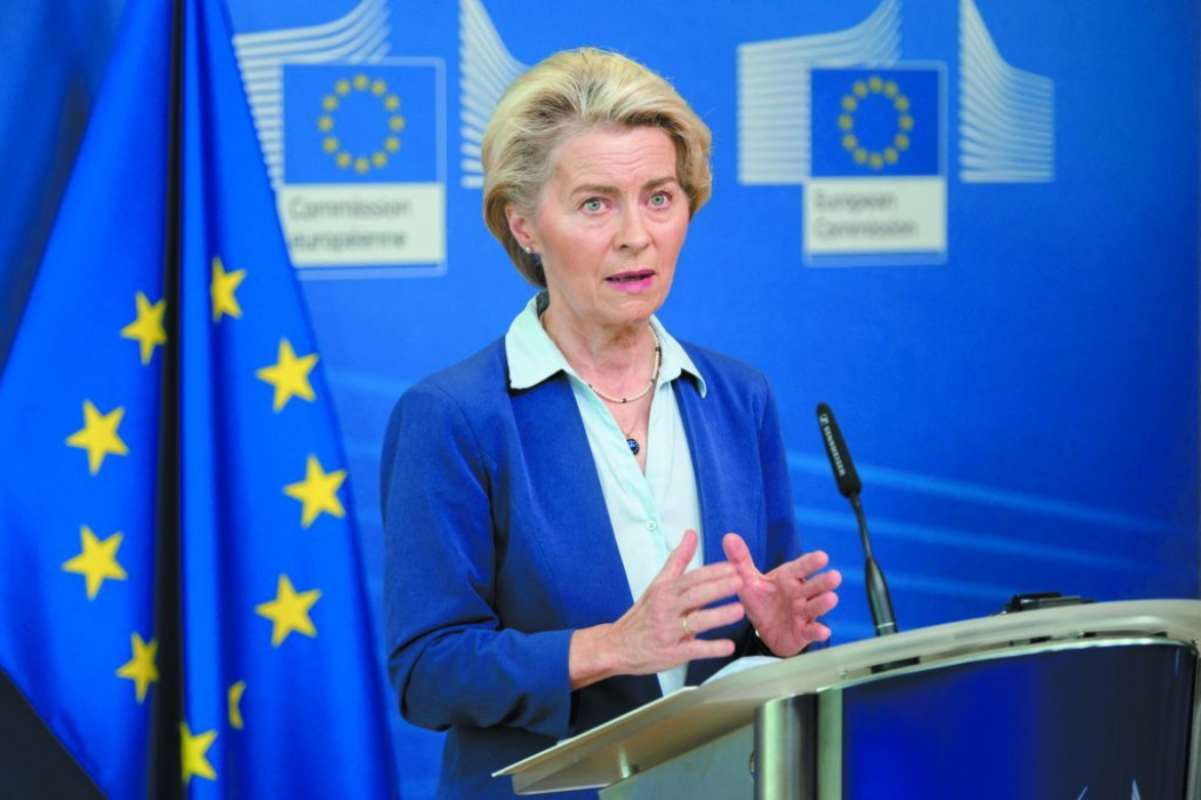
The Commission proposal allocates roughly €865bn to National and Regional Partnership Plans.
Another €409bn would be directed towards competitiveness, around €49bn to Erasmus+ and AgoraEU, while Global Europe would receive €200bn.
The Global Europe instrument is intended to consolidate a significant part of the EU’s external financing architecture, covering areas ranging from enlargement and neighbourhood policy to international partnerships and crisis response.
Then comes the NextGenerationEU bill
There is another major constraint on the next budget: repayment of borrowing associated with NextGenerationEU.
Around €168bn is earmarked in the proposed financial architecture for NextGenerationEU repayments.
That reduces the room available for new priorities at precisely the moment when Europe wants to spend more on defence, technology, energy security and competitiveness without abandoning agriculture, cohesion and regional development.
The result is an increasingly difficult fiscal equation.
Europe wants to do more — but the number of competing demands on the same budget has also increased dramatically.
The net contributors push back
This is where the political battle becomes more intense.
A group of major net contributors has pushed for a substantial reduction in the Commission’s overall proposal, arguing that new priorities should be financed to a greater extent through reallocations and savings rather than significantly higher national contributions.
The disagreement is therefore not necessarily over whether Europe should invest more heavily in defence, security and competitiveness.
It is increasingly about who pays the additional bill, how much national governments contribute and which traditional programmes may have to give ground.
The debate over common European borrowing adds another layer of disagreement, particularly among governments wary of turning the NextGenerationEU model into a permanent fiscal instrument.
Merz enters the negotiations under political pressure
Germany is critical to that equation.
The political difficulties facing Chancellor Friedrich Merz are raising questions in Brussels about Berlin’s ability to play its traditional role in brokering a final compromise over the EU budget.
The Financial Times reports that European officials are increasingly concerned about the implications of Germany’s domestic political weakness for negotiations over the €2tn framework.
The discussion comes as the AfD has strengthened its position in German politics and the Christian Democrats have faced significant setbacks in regional contests.
One European official quoted by the FT captured the concern:
“When you have to choose between a very weak German chancellor and a brand-new German chancellor, there are no good options.”
Germany has traditionally been central to resolving the EU’s most difficult budget disputes — both because of its financial weight and because of its capacity to mediate between competing groups of member states.
This time, Berlin faces a difficult balance.
It is being asked to support a Europe that spends considerably more on security while simultaneously explaining a larger European budget to a more politically fragmented domestic electorate.
The negotiations did not begin today
One distinction is important.
Today’s General Affairs Council meeting does not mark the beginning of the MFF process from scratch.
Negotiations have already been under way, including work on the so-called negotiating box and partial Council positions on key components of the future budget.
What today’s meeting represents is another important political stage in a negotiation whose most difficult financial and horizontal questions remain unresolved.
Critical raw materials move up the agenda
The debate also extends well beyond the budget.
EU ministers are discussing the Union’s legislative priorities for 2027, while economic security and the reduction of strategic dependencies are becoming increasingly important elements of European policymaking.
That includes efforts to diversify critical supply chains and strengthen Europe’s access to strategic raw materials — an area increasingly linked to defence production, batteries, semiconductors, clean technologies and the broader competition between Europe, China and the United States.
The Council is also addressing rule-of-law developments within the EU and in candidate countries including Albania, Montenegro, North Macedonia and Serbia.
€2tn is ultimately a political choice
The 2028–2034 budget is far more than an accounting exercise.
The €131bn for defence, security and space, up to €100bn for Ukraine, €409bn for competitiveness, €200bn for Global Europe and roughly €865bn for national and regional plans illustrate an attempt to reshape Europe’s priorities for a substantially more dangerous geopolitical environment.
The hardest part begins when those priorities translate into national contributions, new EU revenues and possible reductions elsewhere.
With the war in Ukraine continuing, the Middle East unstable, Washington demanding greater European responsibility for security and Germany entering the negotiations under domestic political pressure, the battle over the €2tn budget is becoming a test of whether the EU can agree not only on how much Europe should spend, but what kind of geopolitical and economic power it intends to become by 2034.
Source: pagenews.gr
Διαβάστε όλες τις τελευταίες Ειδήσεις από την Ελλάδα και τον Κόσμο