Greece Recovers €150 Million from Unfinished Investments as 1,000 Projects Target 20,000 Jobs
 ΧΡΟΝΟΣ ΑΝΑΓΝΩΣΗΣ 10 '
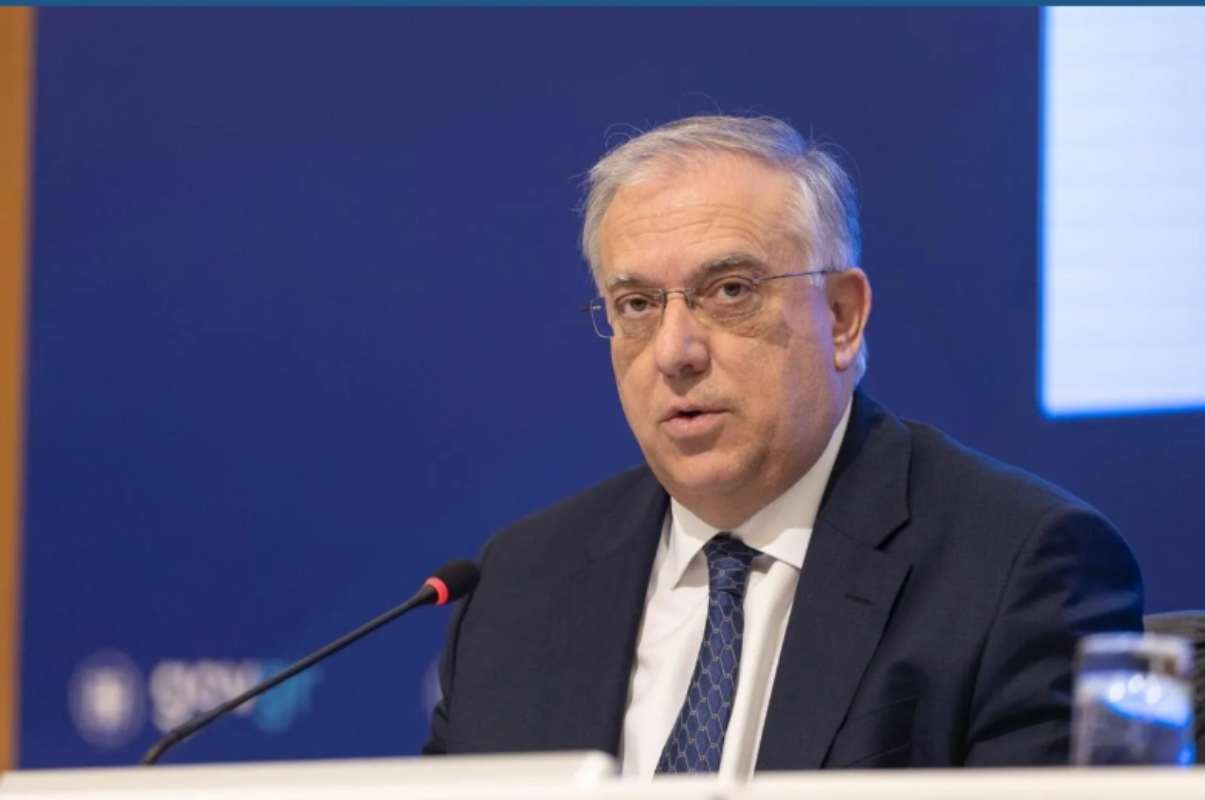
Πηγή Φωτογραφίας: eurokinissi//Greece Recovers €150 Million from Unfinished Investments as 1,000 Projects Target 20,000 Jobs



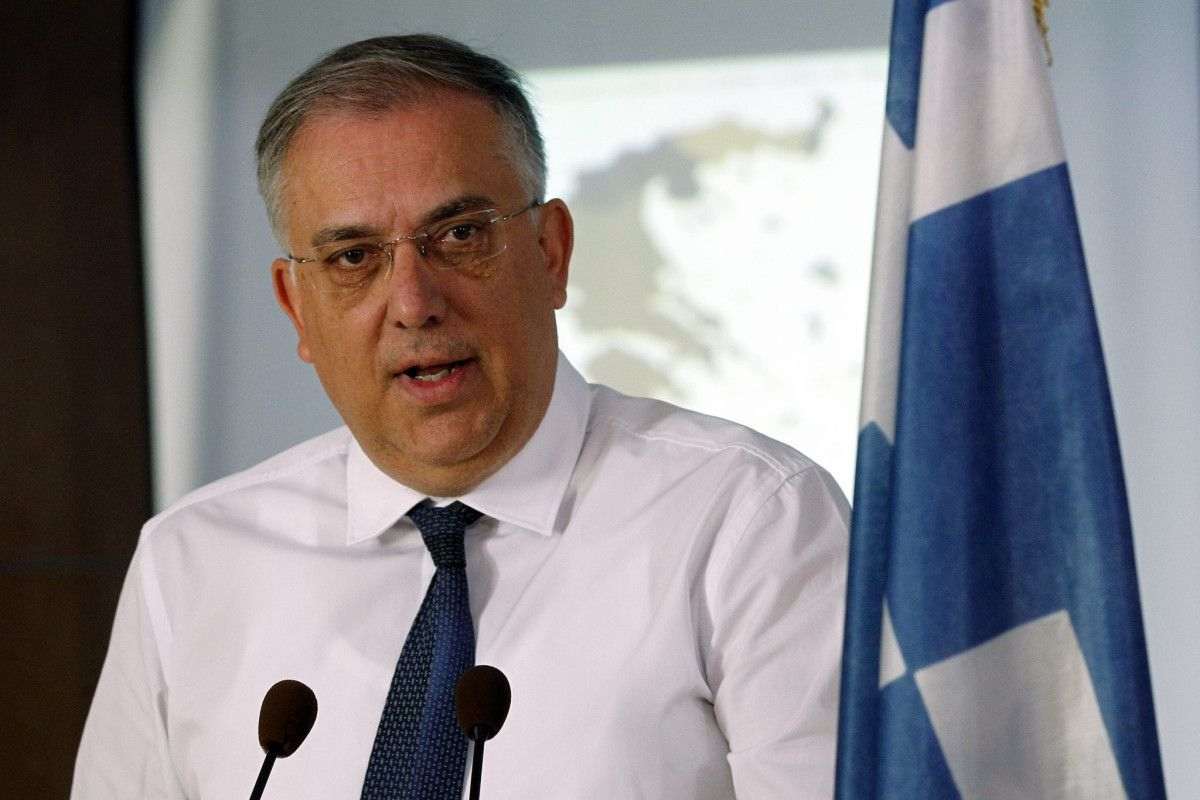
Greece has recovered €150 million in public funds from investment projects that were subsidised but never completed, Development Minister Takis Theodorikakos revealed, highlighting the government’s efforts to strengthen financial accountability while redirecting public resources towards productive investment.
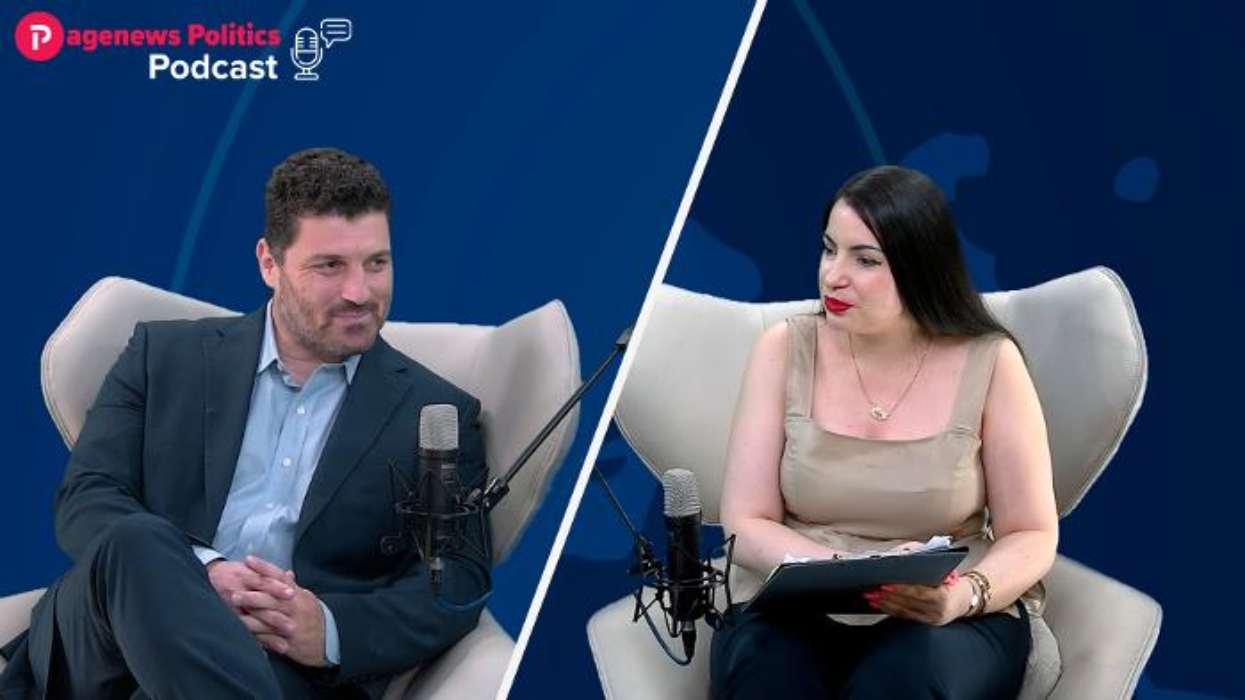
In a wide-ranging interview, Theodorikakos presented an economic development strategy centred on industrial expansion, regional investment, higher-paying jobs and faster administrative procedures.
He also announced discussions with retailers over additional price reductions ahead of Christmas, defended the timing of investigations into major financial irregularities and reaffirmed Greece’s position on the strategically important electricity interconnection with Cyprus.
The minister’s central message was that economic growth must translate into tangible improvements in employment, wages and living standards, rather than simply stronger headline economic indicators.
€150 Million Recovered: A Crackdown on Failed Investment Schemes
One of the most significant disclosures concerned the recovery of public subsidies awarded to businesses that failed to deliver the investment projects they had promised.
According to Theodorikakos, hundreds of companies received state financial support over the past two decades without completing their approved investments.
“There are hundreds of investment projects for which companies received money over the past 20 years but never carried out the investments,” he said.
The recovery process has proved particularly complicated because many historical records exist only in paper form.
The minister explained that investment files dating from before approximately 2011–2012 are stored in warehouses in Aspropyrgos, requiring ministry officials to examine individual cases manually.
“We have recovered €150 million. This is not money that will be returned at some point in the future. It has already been recovered,” he stressed.
“This is Greek taxpayers’ money, and it will be used for productive purposes, genuine investments and real jobs that make a difference to the economy.”
Theodorikakos said the recovery effort would continue, arguing that identifying financial misconduct is insufficient unless public money is also returned.
The initiative forms part of the government’s broader commitment to enforcing financial accountability and ensuring that public subsidies deliver measurable economic benefits.
€226 Million in Major Investments Across Greece
The minister also highlighted a new wave of major investment projects supported through Greece’s Development Law.
Ten investment plans across the country’s regions represent a combined investment budget of €226.2 million, with state support exceeding €104 million.
The projects are expected to generate more than 400 new jobs while expanding productive capacity outside Athens and other major urban centres.
Theodorikakos described the government’s decision to prioritise manufacturing and productive investment as a fundamental shift in economic policy.
“Over the past two years, we have redirected the entire philosophy of the Development Law towards supporting industry and productive investment,” he said.
He argued that industrial development may attract less political attention than high-profile disputes but remains essential to sustainable economic growth.
The minister also emphasised administrative reform, saying that evaluations of investment applications are now completed within 90 days.
This acceleration is intended to address one of the longstanding obstacles facing businesses in Greece: lengthy approval procedures that delay investment decisions and project implementation.
1,000 Investment Projects and 20,000 Jobs
Theodorikakos said approximately 1,000 investment projects are now progressing under the government’s development strategy, with a strong concentration in manufacturing and regional Greece.
According to the minister, these investments are associated with the creation of 20,000 jobs, many of which are expected to offer wages above the national average.
“Over the past two years, 1,000 investments have been moving forward, most of them in industry and most of them in the regions. They are creating 20,000 jobs, which generally offer significantly better salaries than the average in the Greek economy,” he said.
The government’s objective is not only to expand employment but also to improve the quality and geographical distribution of economic opportunities.
Theodorikakos linked industrial investment to Greece’s efforts to retain younger workers and reverse the migration of skilled professionals.
He argued that creating attractive employment opportunities outside Athens could also help relieve pressure on housing and living costs in the capital.
“Who could disagree that the best social policy is a job? Who could disagree that we need better salaries and opportunities for young people to remain in Greece, particularly in the regions?” he asked.
The minister’s comments reflect a wider policy challenge for Greece: translating economic expansion into higher productivity, stronger household incomes and more balanced regional development.
Christmas Price Cuts: New Retail Initiatives Under Discussion
With household purchasing power remaining a central political concern, Theodorikakos confirmed that the government’s voluntary price-reduction initiative continues to cover approximately 1,100 product codes.
He also disclosed that discussions have taken place with retailers over additional measures during the Christmas and New Year holiday period.
“For Christmas and New Year, discussions have indeed taken place about new initiatives from the retail sector so that essential goods can be available at significantly better prices,” he said.
The minister acknowledged that high living costs continue to place considerable pressure on hundreds of thousands of Greek families.
He insisted that the response must focus on practical interventions capable of reducing the financial burden on households.
“Inflation and the cost-of-living problem are not solved through marches and demonstrations in Paris or by tearing up laws and legislative provisions. They are addressed by doing what is necessary to ease the burden on the people affected,” he argued.
The proposed holiday initiatives have not yet been detailed, and the scale of any additional price reductions remains to be determined.
Financial Crime and Political Accountability
Theodorikakos also addressed criticism from opposition parties suggesting that recent investigations into financial misconduct have been timed to coincide with the approaching election period.
He rejected the accusation, pointing out that the Ministry of Development’s efforts to recover improperly retained investment subsidies have been underway for two years.
The minister argued that law enforcement agencies cannot suspend investigations simply because elections may be approaching.
“When you serve in government, you cannot say that because elections are seven months away, people suspected of stealing €200 million or evading taxes should be left alone,” he said.
He maintained that investigations should proceed whenever the competent authorities uncover evidence of wrongdoing.
Theodorikakos also stressed that recovering public funds should be regarded as a fundamental obligation of the state rather than a political communications exercise.
His comments came amid renewed public scrutiny of major financial irregularities and tax-evasion investigations in Greece.
Elections and the Opposition’s Political Challenge
Turning to domestic politics, Theodorikakos said the timing of the next national election remains a decision for Prime Minister Kyriakos Mitsotakis.
He also referred to Greece’s forthcoming presidency of the Council of the European Union as a factor in the wider political timetable.
The minister argued that voters are ultimately interested in two fundamental questions: which policies can secure a stronger economy and greater prosperity, and which political leadership is capable of implementing them.
He criticised opposition parties for focusing on competition among themselves rather than presenting a credible alternative programme for government.
“I see opposition parties fighting over who will come second, and I believe that is the wrong approach,” he said.
Theodorikakos also suggested that Greece would benefit from stronger political competition based on substantive policy differences.
“I believe it would be much more useful for the country’s political life to have another party with electoral strength comparable to New Democracy, creating stronger competition based on arguments rather than toxic political rhetoric,” he stated.
He stressed that the absence of a strong opposition alternative should not encourage complacency within the governing party.
Greece–Cyprus Electricity Link: Sovereign Rights Remain Non-Negotiable
The interview also addressed the strategically significant electricity interconnection between Greece and Cyprus, a project with major implications for regional energy security and Eastern Mediterranean geopolitics.
Theodorikakos expressed confidence that survey operations and the installation of the submarine cable would proceed as planned.
He emphasised that Greece had not compromised its sovereign rights and that the relevant authorisations remained under the jurisdiction of Greece and Cyprus.
“The essential point is that Greece safeguards and exercises its sovereign rights. What matters enormously for the Greek people, the government and developments in the wider region is that the survey work and cable installation by the French vessel proceed normally,” he said.
The minister rejected opposition suggestions that the government had made concessions on sovereignty.
“No one can claim, on the basis of what the Greek government has done, that we have made any retreat from our sovereign rights,” he argued.
He called for greater political unity on national issues and expressed confidence that the necessary operational measures had been taken to allow the project to proceed.
“We should look at reality and unite our forces. I am confident that all the necessary measures have been taken at the operational level to complete this process, and my assessment is that developments will proceed normally,” Theodorikakos concluded.
Source: pagenews.gr
Διαβάστε όλες τις τελευταίες Ειδήσεις από την Ελλάδα και τον Κόσμο