Rubio: “Greece Is a Secure Energy Hub” – US LNG Reshapes Europe’s Energy Map
 ΧΡΟΝΟΣ ΑΝΑΓΝΩΣΗΣ 7 '
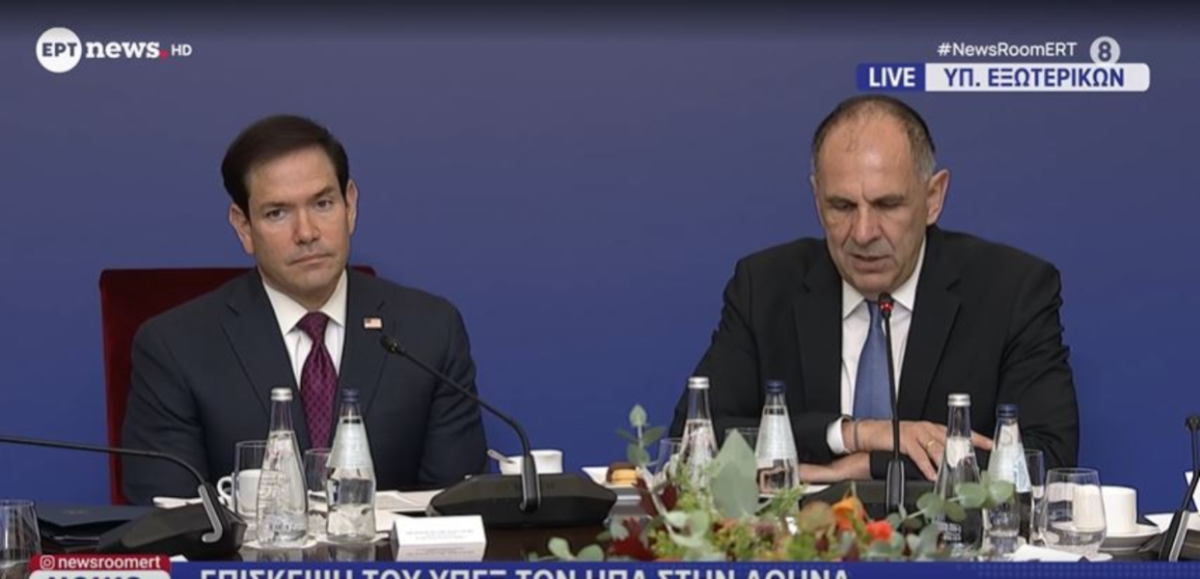
Πηγή Φωτογραφίας: screenshot//Rubio: “Greece Is a Secure Energy Hub” – US LNG Reshapes Europe’s Energy Map



Marco Rubio’s visit to Athens is taking on a distinctly geopolitical and energy-focused dimension, with the US Secretary of State placing Greece at the center of the emerging energy architecture Washington is seeking to strengthen across Europe.
Speaking alongside Greek Foreign Minister George Gerapetritis at the launch of the 6th Round of the Greece-US Strategic Dialogue, Rubio highlighted Greece’s role as a secure energy hub capable of facilitating the flow of American liquefied natural gas into European markets.
“Greece is a secure energy hub, facilitating the transportation of American LNG to Europe,” Rubio said.
The significance of the statement extends far beyond bilateral energy cooperation.
Greece is increasingly positioned as a key entry point in an energy corridor that begins in the United States and, through Greek infrastructure and cross-border interconnections, can extend into the Balkans, Eastern Europe and Central Europe.
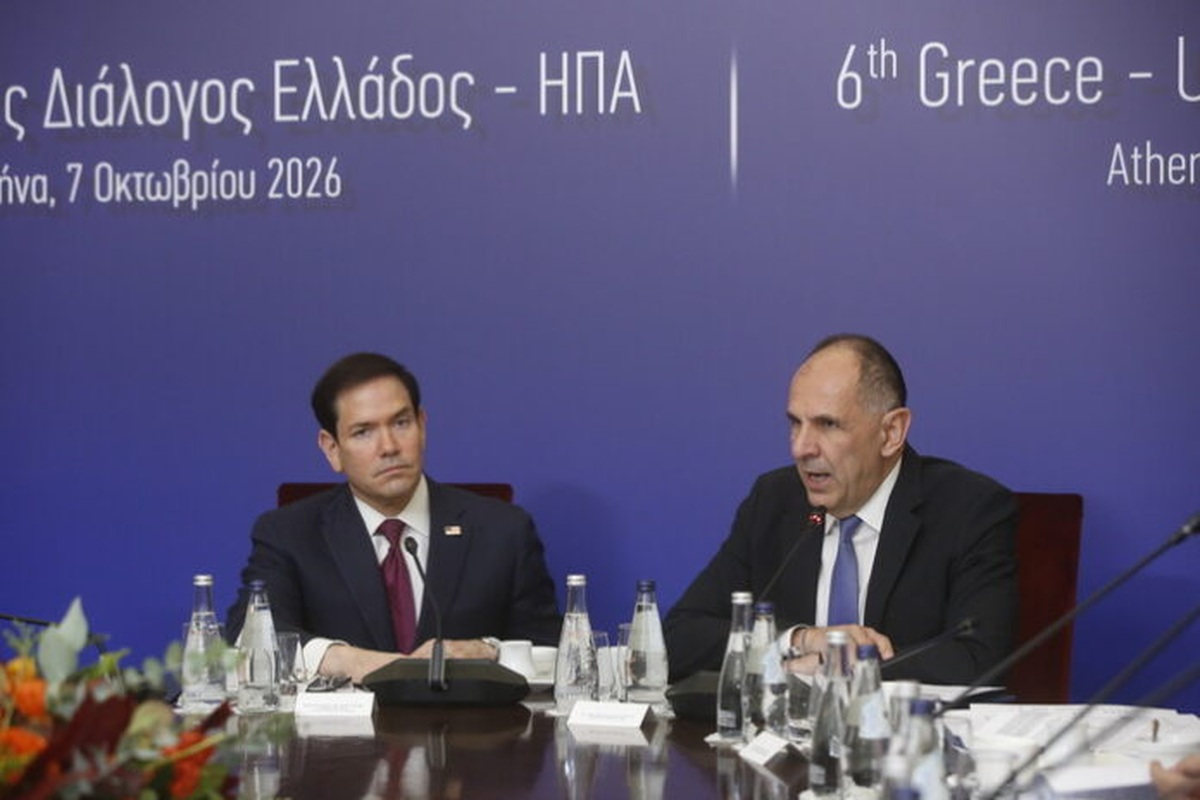
Washington Points to Greece as a Gateway for US LNG
Energy security has become one of the central pillars of US strategy in Europe.
Russia’s war against Ukraine accelerated Europe’s effort to reduce its dependence on Russian natural gas, while tensions in the Red Sea and uncertainty surrounding the Strait of Hormuz have once again raised a fundamental question: how secure are the routes supplying Europe with energy?
This is precisely where Greece’s strategic position becomes increasingly important.
The Vertical Gas Corridor is at the heart of efforts to move larger quantities of LNG from Greece northward through Bulgaria and Romania and potentially deeper into Central and Eastern Europe.
For Washington, the infrastructure offers another potential route for American LNG to reach European consumers.
Rubio: Greece an “Indispensable NATO Partner”
Rubio did not limit his remarks to energy.
The US Secretary of State described Greece as an “indispensable NATO partner” and a “pillar of stability in the region,” effectively linking three dimensions of the bilateral relationship: defense, geopolitics and energy.
“In times of uncertainty, we need strategic partners,” Rubio said, adding:
“We have incredible things to do together.”
The message carries particular weight against today’s international backdrop.
Ukraine remains an active geopolitical front, the Middle East continues to generate significant security risks, and energy routes are increasingly becoming instruments of strategic power.
Against this backdrop, Greece’s geography is acquiring greater strategic value.
Red Sea, Strait of Hormuz and Ukraine
Rubio also stressed the need to develop stronger and more resilient supply chains amid global instability.
Recent crises have demonstrated that energy security is not simply about who produces oil and natural gas.
It is also about how those resources reach the market.
The Red Sea remains a critical artery for global trade, the Strait of Hormuz is one of the world’s most important chokepoints for hydrocarbon flows, and the war in Ukraine has fundamentally altered Europe’s energy map.
Within this equation, Greece is seeking to evolve from an energy consumer into a regional transit and redistribution hub.
From Revithoussa and Alexandroupolis to the Vertical Corridor
Greece’s strategy rests on a network of infrastructure and interconnections whose geopolitical importance has increased sharply since Russia’s invasion of Ukraine.
The Revithoussa LNG terminal, the Alexandroupolis FSRU and cross-border gas interconnections provide the infrastructure needed for LNG arriving in Greece to move further north.
The Vertical Gas Corridor represents another critical piece of that strategy.
For Athens, this translates into greater geopolitical weight within Southeast Europe’s energy system.
For Washington, it provides an additional pathway for US LNG to penetrate European markets as Europe continues efforts to curb its reliance on Russian energy.
Gerapetritis: Relationship “Closer and More Cohesive Than Ever”
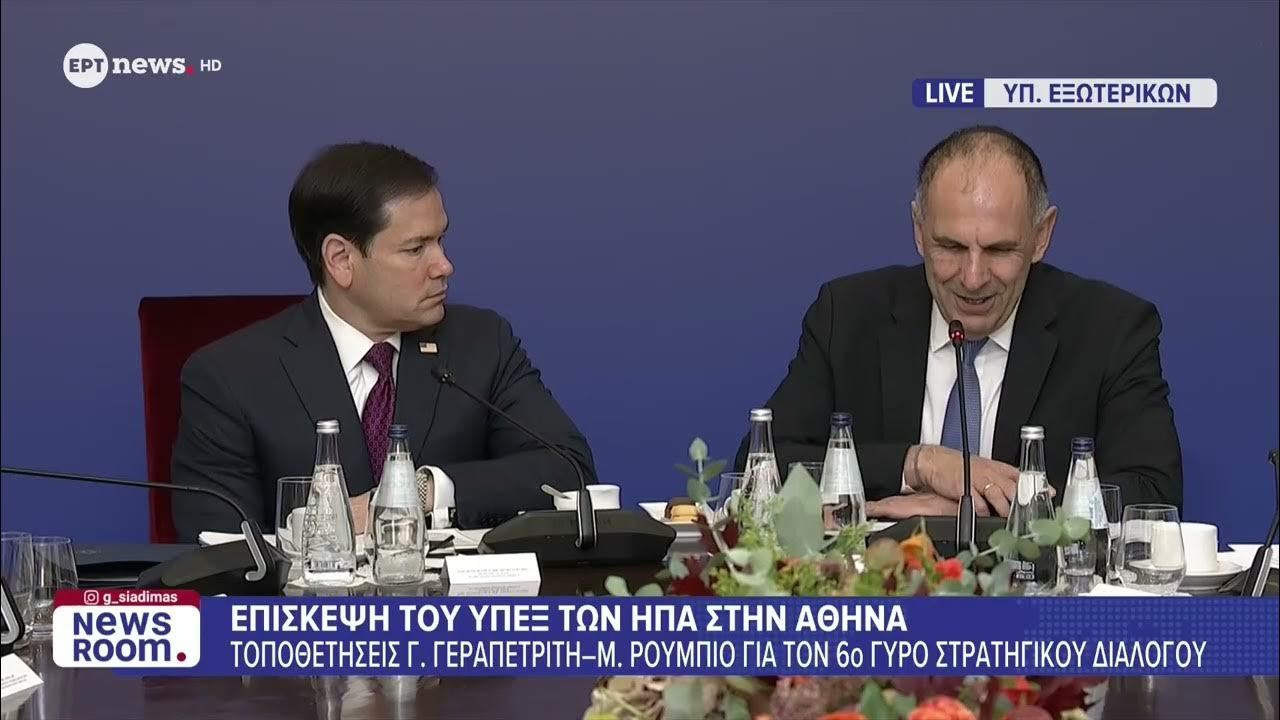
For his part, George Gerapetritis described relations between Greece and the United States as “closer and more cohesive than ever,” emphasizing the progress achieved in both energy and defense cooperation.
The Greek Foreign Minister said the energy and defense agreements between the two countries provide tangible evidence of the progress in bilateral relations.
He also singled out the involvement of two major American energy companies.
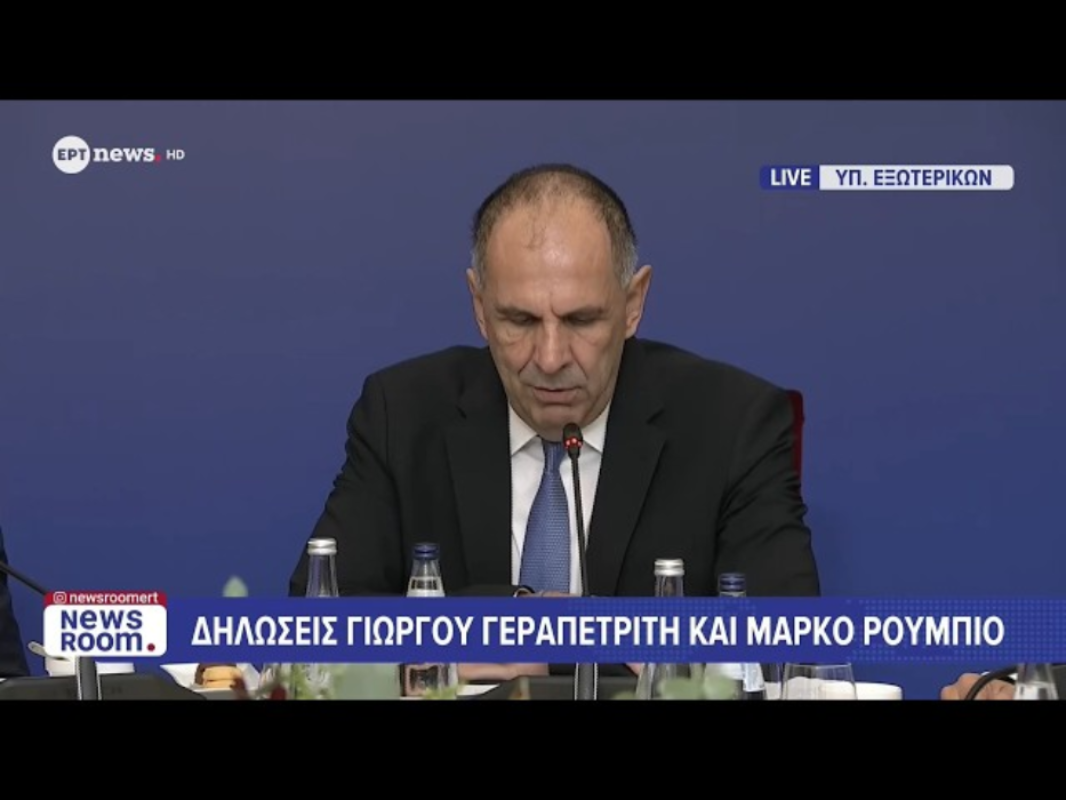
“The commitment of US companies Chevron and ExxonMobil underscores their confidence in Greece,” Gerapetritis said.
The reference is significant.
The involvement of American energy majors in Greek offshore areas adds a second dimension to the relationship: Greece is being viewed not only as a transit route for American energy, but also as a destination for energy investment and exploration.
LNG, Chevron and ExxonMobil: Pieces of the Same Strategic Puzzle
Taken together, the statements by Rubio and Gerapetritis reveal a broader strategic picture.
US LNG, the Vertical Corridor, Greek energy infrastructure, Chevron and ExxonMobil are not isolated chapters.
They are increasingly connected to efforts to strengthen a southern energy axis for Europe, with Greece seeking a central role.
Energy is therefore becoming an instrument of foreign policy.
Greece sits at the crossroads of the Eastern Mediterranean, the Balkans, the Black Sea region and the wider European market — a geographical position that gives its infrastructure strategic significance beyond its domestic energy needs.
Energy Alongside Defense
It is no coincidence that the 6th Greece-US Strategic Dialogue extends well beyond energy.
Defense, regional security, shipping, technology, trade and investment are also part of the broader agenda.
Defense cooperation and energy security increasingly run in parallel, creating a broader strategic framework between Athens and Washington.
The emerging formula is clear:
Defense – Energy – Geopolitics.
That triangle helps explain why Rubio’s reference to Greece as a “secure energy hub” carries considerably greater political significance than a routine statement on LNG trade.
Greece on Europe’s New Energy Map
Europe’s battle for energy security is no longer simply about prices.
It is about routes, ports, LNG terminals, pipelines, interconnectors, alliances and geopolitical influence.
Washington wants to expand the role of American LNG in European markets. Europe is searching for diversified suppliers and more secure supply routes. Greece, meanwhile, is seeking to leverage its geography and infrastructure to become a major gateway for those flows toward the European north.
That is why Marco Rubio’s statement from Athens stands out as the central message:
“Greece is a secure energy hub.”
It is a statement that places Greece not only within Washington’s security architecture in the Eastern Mediterranean, but increasingly within the broader equation of Europe’s energy security and diversification.
Source: pagenews.gr
Διαβάστε όλες τις τελευταίες Ειδήσεις από την Ελλάδα και τον Κόσμο