Rubio: “We Could Never Allow” a Greece–Turkey Conflict — The F-35 Blockade and the Cyprus Cable
 ΧΡΟΝΟΣ ΑΝΑΓΝΩΣΗΣ 14 '
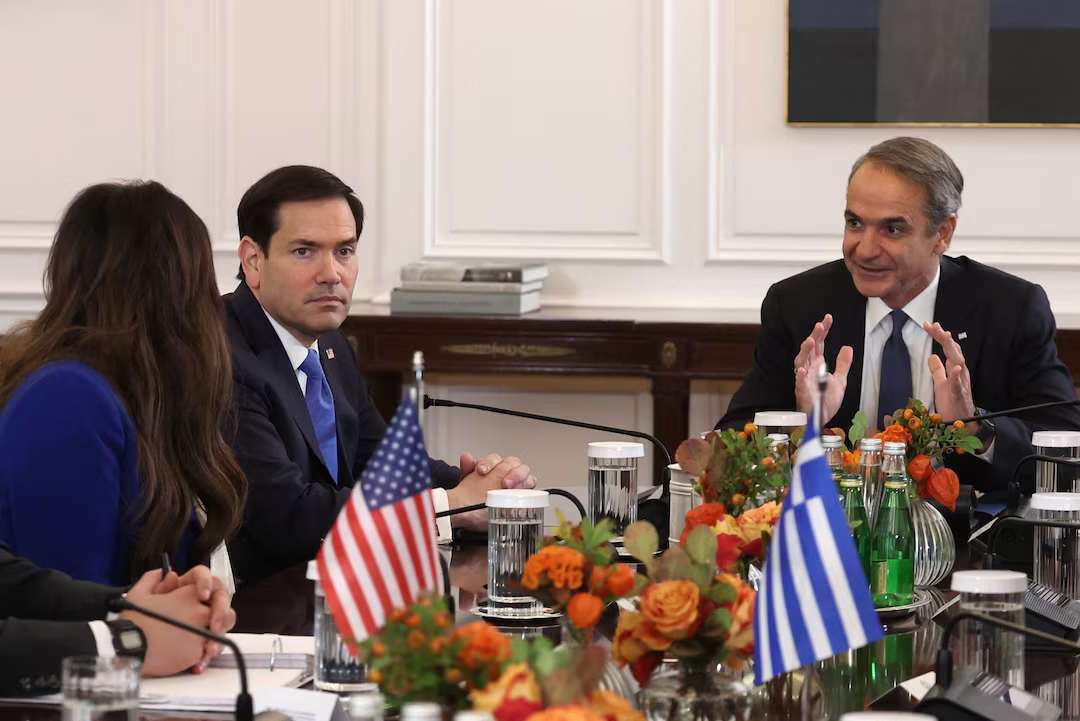
Πηγή Φωτογραφίας: eurokinissi//Rubio: “We Could Never Allow” a Greece–Turkey Conflict — The F-35 Blockade and the Cyprus Cable



US Secretary of State Marco Rubio delivered one of his clearest assessments of the geopolitical balance in the Eastern Mediterranean during an extensive interview with the Greek newspaper Kathimerini, addressing the possibility of a Greek-Turkish military confrontation, the future of the Greece–Cyprus electricity interconnector and the obstacles preventing Turkey from acquiring American F-35 fighter jets.
His remarks offered an unusually detailed insight into the Trump administration’s approach to two NATO allies whose competing maritime claims remain a persistent source of tension.
Rubio combined an unequivocal political commitment to preventing a Greek-Turkish conflict with a preference for discreet diplomacy, particularly over the strategically important Great Sea Interconnector.
He also confirmed that President Donald Trump would like Turkey to receive F-35 aircraft it has already paid for, while stressing that US legislation continues to prevent their transfer until the dispute over Ankara’s Russian-made S-400 missile systems is resolved.
Beyond the Eastern Mediterranean, Rubio discussed Greece’s requests for advanced weapons, its defence relationship with Israel, Washington’s objectives regarding Iran, the risk of escalation in Ukraine and the historical foundations of the Western alliance.
Greece and Turkey: A Conflict Washington Says It Cannot Allow
Perhaps the most consequential part of Rubio’s interview concerned the possibility of a serious confrontation between Greece and Turkey in the Aegean or around Cyprus.
Asked whether the United States would intervene to prevent a dangerous escalation, Rubio described such a scenario as inconceivable.
He emphasised that both countries are NATO allies and important American partners, making a military confrontation damaging to all parties involved.
“It would not be good for anyone,” Rubio said, according to the interview.
He went further, declaring:
“We could never allow it to happen.”
The statement represents a strong political expression of Washington’s determination to prevent conflict between the two neighbouring allies.
Rubio argued that such a confrontation would serve neither Greek nor Turkish interests and would also undermine American security objectives.
His answer did not, however, specify an automatic US military intervention or establish a formal security guarantee in favour of either country.
Instead, it underlined the administration’s intention to use American influence to prevent a crisis from escalating into armed confrontation.
The distinction is important for Athens, which maintains close defence relations with Washington while facing continuing disagreements with Ankara over maritime jurisdiction and security in the Eastern Mediterranean.
The Greece–Cyprus Cable: Rubio Explains Washington’s Diplomatic Strategy
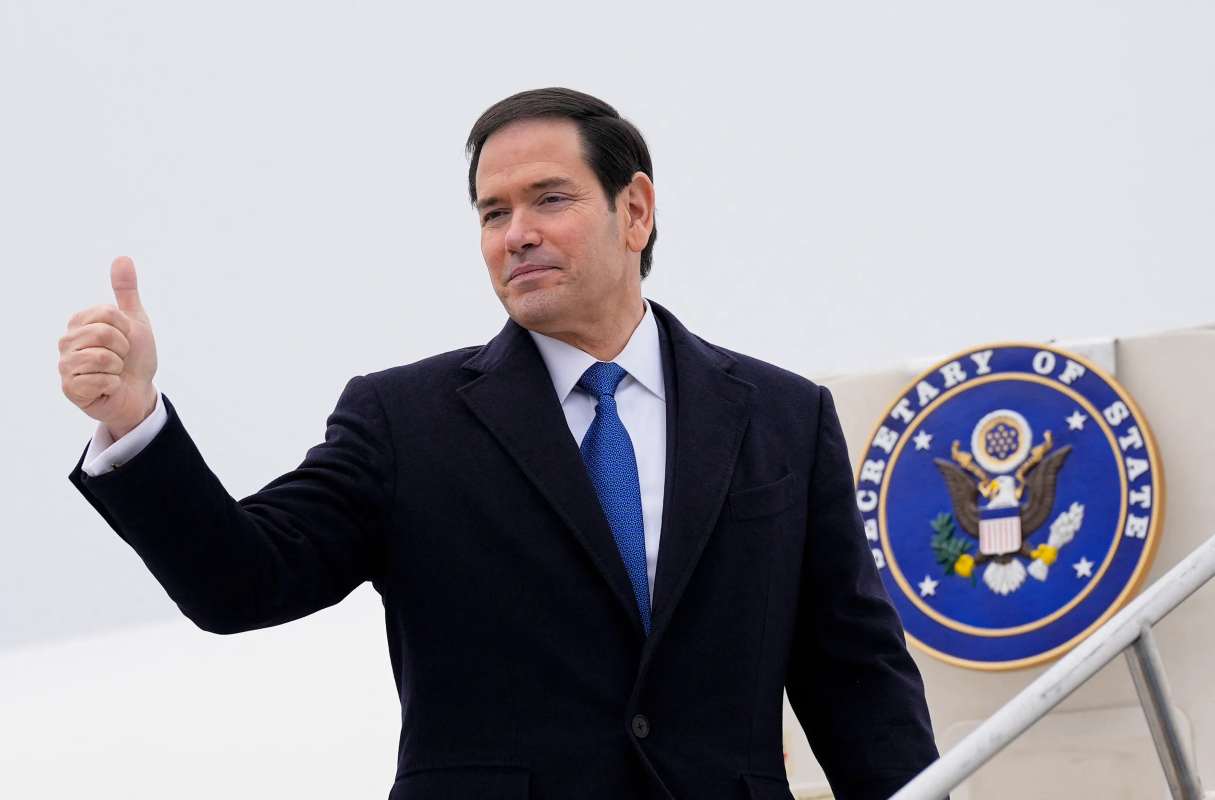
Rubio also addressed the future of the Great Sea Interconnector, the ambitious electricity project intended to connect Cyprus to the European power network through Greece.
The project has become increasingly sensitive because of Turkish objections to maritime activities associated with its implementation.
Rather than beginning with the territorial dispute, Rubio placed the issue within the broader framework of global energy security.
He argued that the Russia–Ukraine war, tensions involving Iran around the Strait of Hormuz and Houthi attacks in the Red Sea had demonstrated the dangers of relying on limited energy supply routes.
For Washington, he explained, diversifying energy infrastructure and supply chains is a strategic priority.
He also stressed that American and Greek interests converge in this area.
Addressing the obstacles facing the interconnector, Rubio acknowledged that the project encounters significant difficulties.
He said the United States intends to use its diplomatic relationships to communicate the importance of such infrastructure to the parties involved and to seek solutions.
The Secretary of State did not announce a specific agreement with Ankara or promise an operational American response to possible interference with cable-laying activities.
Instead, he emphasised that sensitive disputes are often more effectively resolved through direct, private diplomatic engagement than through public statements.
His remarks suggest that Washington sees diplomacy as the principal means of addressing the project’s geopolitical obstacles.
They do not establish that the United States recognises a Turkish right to authorise the cable.
Why Rubio Believes the US Relationship With Turkey Matters
Asked whether President Trump’s relationship with Turkish President Recep Tayyip Erdoğan could facilitate mediation, Rubio explained why Washington continues to invest in its ties with Ankara.
He noted that Turkey remains an important NATO ally and that the United States maintains regular communication with the Turkish government.
He also referred to Turkey’s involvement in international diplomatic initiatives, including its previous role in hosting talks between Russia and Ukraine.
According to Rubio, the relationship Washington has developed with Ankara could prove useful in addressing sensitive regional disagreements.
His central argument was that public declarations and successful diplomacy are not always the same thing.
While governments can make strong statements through the media, he suggested, resolving difficult disputes often requires direct conversations away from public scrutiny.
This approach helps explain the administration’s reluctance to discuss its precise diplomatic plans concerning the Greece–Cyprus cable.
For Athens, however, the critical issue remains whether such consultations can facilitate the project without turning disputed Turkish maritime claims into a practical requirement for prior approval.
Turkish F-35s: Trump Wants a Deal, but the S-400 Problem Remains
Rubio provided an equally significant assessment of Turkey’s efforts to re-enter the F-35 programme.
He confirmed that President Trump would like, if legally possible, to facilitate the delivery of aircraft for which Ankara has already paid.
However, Rubio made clear that the president’s political preference cannot override restrictions established by Congress.
He referred to US legislation and defence authorisation provisions imposing strict conditions on any transfer.
The central obstacle remains Turkey’s acquisition of Russian S-400 air-defence systems.
Rubio explained that Ankara is aware of the legal requirements and is exploring potential ways to resolve the dispute.
He did not rule out an eventual solution, noting that different options might be considered.
But he emphasised that the issue remains unresolved and that the aircraft cannot currently be transferred under the existing legal framework.
The significance of this clarification is considerable.
It confirms that the Trump administration’s interest in restoring defence cooperation with Turkey has not yet produced a decision allowing Ankara to receive the fifth-generation fighters.
For Greece, the outcome could influence the future balance of air power in the Aegean and Eastern Mediterranean.
Greece’s F-35 Weapons Request: A Decision for President Trump
The interview also revealed that Greece is seeking advanced weapons capabilities for its own future F-35 fleet.
Asked about systems comparable to those available to Israel, Rubio confirmed that the Greek request is receiving serious consideration.
He explained that the decision involves a review across several American government departments and agencies.
The final decision, he said, rests with President Trump, taking into account recommendations from the US defence establishment.
Rubio also offered a positive assessment of Greece’s military relationship with the United States.
He described Greece as an important defence ally and emphasised the high degree of interoperability between the two countries’ armed forces.
He further acknowledged Greece’s contribution to regional security during periods when the American military presence faced significant challenges.
These considerations, according to Rubio, would be taken into account when assessing Athens’ request.
Nevertheless, he did not announce approval of any particular weapons system or provide a delivery timetable.
The interview therefore signals a favourable American assessment of Greek defence cooperation, rather than a completed arms agreement.
Greece and Israel: Washington Welcomes the Strategic Partnership
Rubio also expressed a positive view of Greece’s growing defence relationship with Israel.
He described the American relationship with Israel as historically important while acknowledging the diplomatic challenges involved in maintaining productive ties with other Middle Eastern countries.
According to Rubio, Washington must balance its close relationship with Israel with engagement across a region where governments hold sharply different positions on regional conflicts.
He suggested that Greece is attempting to play a similar role.
Athens maintains a strong strategic relationship with Israel while also developing diplomatic relations with Arab states and other regional partners.
For Washington, that ability to maintain multiple channels of communication can contribute to regional stability.
Rubio’s comments reinforce the perception of Greece as a country capable of connecting different diplomatic and security relationships in the Eastern Mediterranean.
Iran: Rubio Sets Out Washington’s Nuclear Red Line
Turning to Iran, Rubio delivered one of the interview’s strongest statements of American strategic intent.
He insisted that Tehran must not be allowed to acquire nuclear weapons.
The Secretary of State portrayed American military operations as an effort to weaken Iran’s missile capabilities, drone infrastructure and ability to protect a potential nuclear weapons programme behind a substantial conventional arsenal.
He accused the Iranian leadership of directing major financial resources towards armed groups and military capabilities rather than domestic development.
Rubio also warned that economic pressure on Iran could intensify dramatically in the coming weeks.
He argued that restrictions affecting Iranian oil revenues would further weaken the country’s economic position.
In his assessment, the Iranian leadership faces a fundamental choice between functioning as a conventional state and continuing its revolutionary regional strategy.
Rubio maintained that the original American objective was not formally regime change, but a change in the government’s conduct and the prevention of nuclear weapons development.
These claims and forecasts reflect the administration’s stated position rather than independently verified assessments of the conflict’s military and economic outcomes.
For Greece, developments involving Iran are particularly important because instability in the Strait of Hormuz and the Red Sea directly affects international shipping, energy supplies and transportation costs.
Ukraine: Rubio Warns of a Dangerous Strategic Deadlock
Rubio described the war in Ukraine as a strategic stalemate carrying serious risks of further escalation.
He argued that Russia had not originally anticipated a conflict of such duration.
According to his assessment, prolonged military deadlocks generally end through either negotiations or escalation.
At present, he suggested, the prospects for a negotiated settlement remain limited.
Rubio identified Moscow’s demand for control over the entirety of Donetsk as a major obstacle, noting that Kyiv regards such a condition as unacceptable.
He also warned about the possibility of further attacks in the Black Sea, sabotage operations affecting neighbouring countries and renewed Russian strikes against Ukraine’s electricity infrastructure.
The approaching winter, he suggested, could create additional dangers if Moscow intensifies its attacks on the Ukrainian energy network.
At the same time, Rubio acknowledged Ukraine’s expanding ability to conduct long-range strikes inside Russian territory.
The United States, he said, remains willing to facilitate a negotiated settlement if meaningful opportunities emerge.
His comments illustrate Washington’s concern that a prolonged stalemate could eventually develop into a broader confrontation affecting countries beyond Ukraine.
Rubio’s Political Identity: Greece, Democracy and Western Civilisation
The final part of the interview offered a different insight into Rubio’s political thinking.
Asked whether his visit to the birthplace of democracy might inspire a future presidential campaign, he avoided addressing his personal political ambitions directly.
Instead, he focused on the historical and cultural relationship between the United States and Europe.
Rubio argued that the transatlantic partnership rests on more than defence agreements, economic interests and shared security concerns.
It is also grounded in a common cultural inheritance.
He pointed to the influence of ancient Greece on American architecture, political institutions and constitutional traditions.
According to Rubio, Western societies should recognise and take pride in that inheritance.
He also clarified that pride in Western civilisation should not imply hostility towards other cultures.
His remarks reveal an important element of his political worldview: the belief that strategic alliances are strengthened by historical identity, shared institutions and cultural continuity.
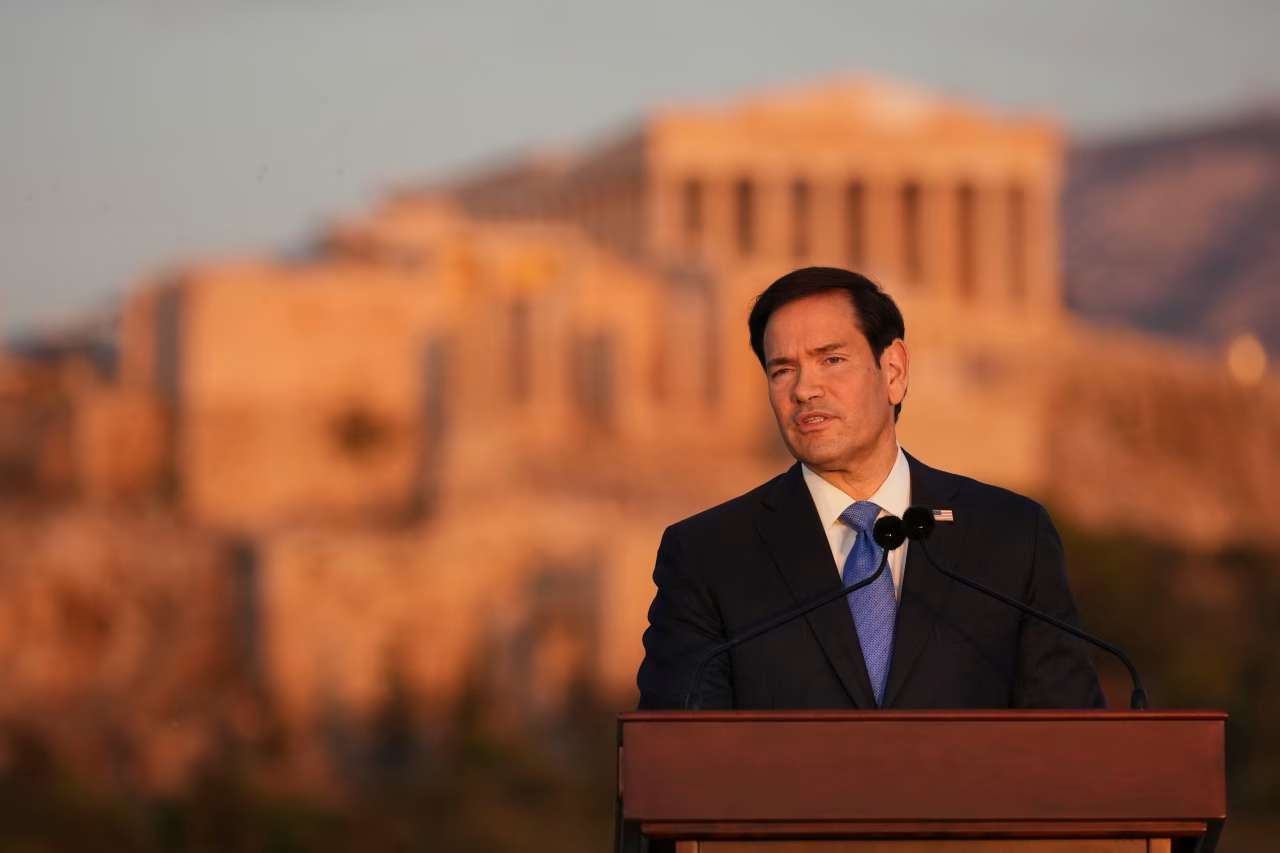
The choice to discuss these themes in Athens, shortly before his address at the Pnyx, gave the message additional symbolic significance.
The Geopolitical Message: Deterrence, Diplomacy and Defence
Taken together, Rubio’s interview outlines an American strategy built around three central objectives in the Eastern Mediterranean.
First, preventing a Greek-Turkish military confrontation. Rubio made clear that Washington considers such a conflict unacceptable and intends to work against escalation.
Second, advancing regional energy infrastructure through diplomacy. The United States supports the strategic importance of the Greece–Cyprus electricity interconnector but has not publicly specified how it would respond to every possible obstruction.
Third, maintaining control over critical defence decisions. Turkish F-35 deliveries remain constrained by American legislation, while Greek requests for advanced weapons are undergoing review.
The interview also demonstrates Rubio’s wider approach to foreign policy: a firm position on Iran’s nuclear ambitions, concern about escalation in Ukraine and an emphasis on the cultural foundations of the Western alliance.
For Athens, the next stage will be defined by concrete decisions rather than diplomatic language alone.
Progress on the electricity interconnector, the outcome of Greece’s advanced weapons requests and the management of tensions with Turkey will determine how the strategic partnership develops in practice.
Rubio has made Washington’s intention to prevent a Greek-Turkish conflict unmistakable. The unanswered question is how that political commitment will translate into action when the next serious test emerges in the Aegean or Eastern Mediterranean.
Source: pagenews.gr
Διαβάστε όλες τις τελευταίες Ειδήσεις από την Ελλάδα και τον Κόσμο