Five Political Flashpoints at the Dublin EU Summit: Ukraine,€70 Billion,AI and the Battle to Succeed Lagarde
 ΧΡΟΝΟΣ ΑΝΑΓΝΩΣΗΣ 12 '
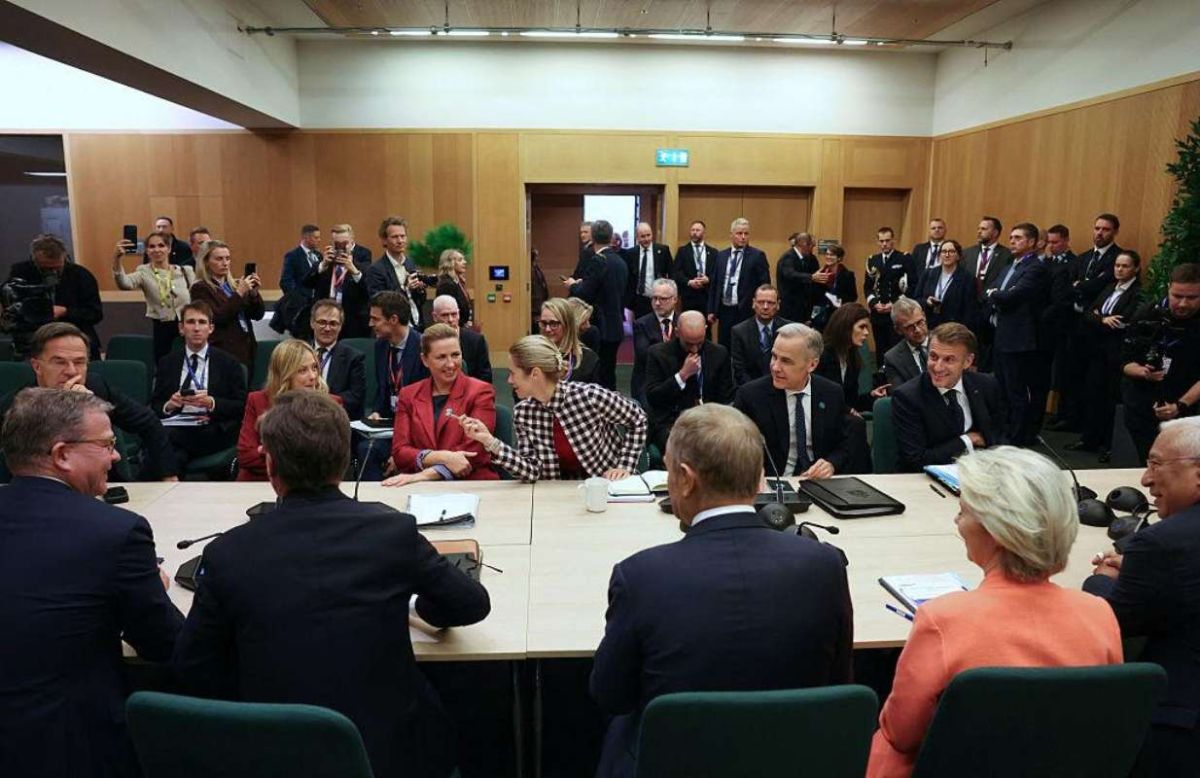
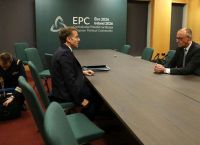
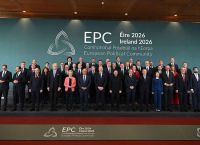
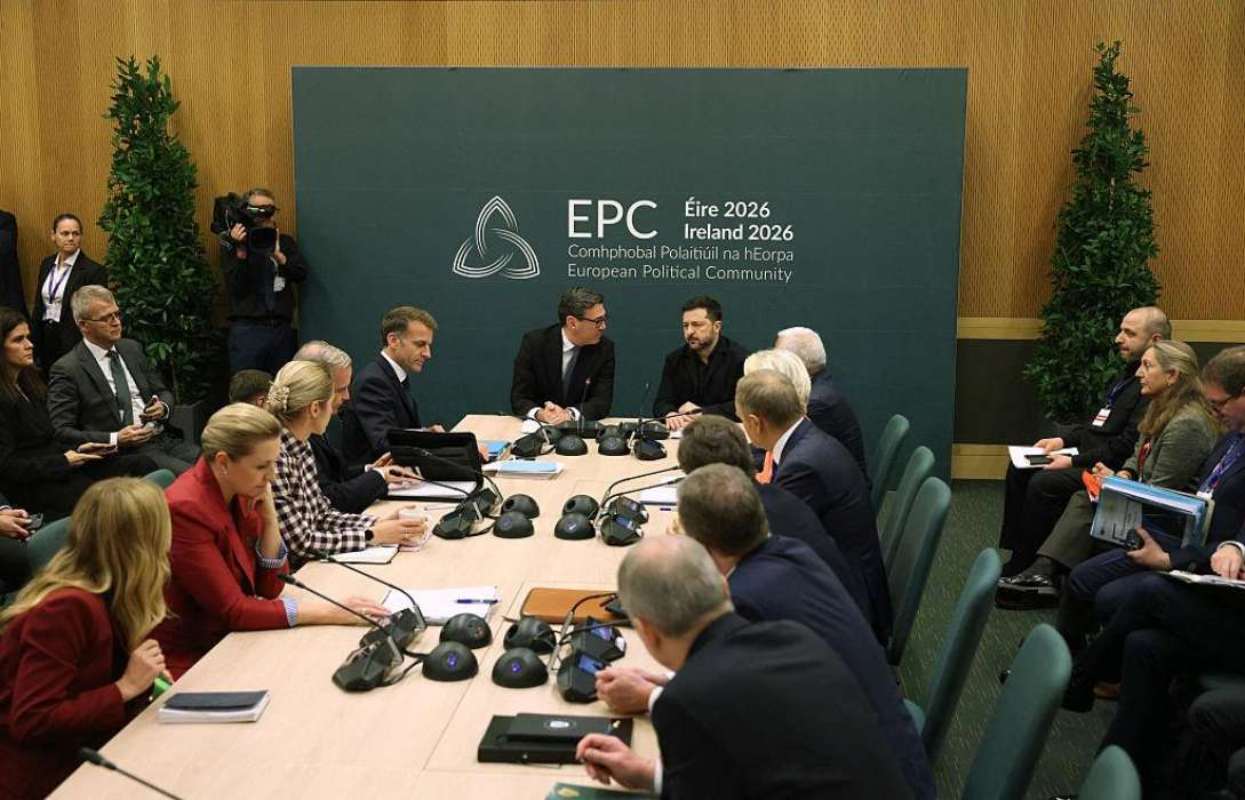
Πηγή Φωτογραφίας: European leaders at the Dublin summit.//Five Political Flashpoints at the Dublin EU Summit: Ukraine, €70 Billion, AI and the Battle to Succeed Lagarde



Five major issues, ranging from artificial intelligence and the war in Ukraine to Kyiv’s estimated €70 billion financing gap and the succession of European Central Bank President Christine Lagarde, are shaping the political agenda of the European Union’s informal summit in Dublin on Friday, November 13.
European leaders arrived in the Irish capital for a strategic discussion on artificial intelligence, but accelerating diplomatic efforts to end the war in Ukraine and internal disagreements over Europe’s role in the negotiations have significantly expanded the summit’s scope.
According to POLITICO, the discussions revolve around five critical areas: Europe’s competitiveness in AI, representation in Ukraine peace negotiations, financial support for Kyiv, the EU’s next long-term budget and the contest over senior positions at the European Central Bank.
Behind these issues lies a common question: Can Europe transform its economic and institutional strength into genuine strategic autonomy?
1. Artificial Intelligence: Will Europe Become a Technology Power or Remain Dependent on the US and China?
Artificial intelligence is the summit’s official central theme, with European Council President António Costa placing technological sovereignty at the heart of the discussion.
Costa has called on European leaders to examine how the continent can become a leading and independent force across the entire AI value chain.
The strategic dilemma is fundamental.
Should Europe invest heavily in developing its own advanced AI models capable of competing with American and Chinese technology companies, or concentrate on adopting and deploying technologies developed elsewhere?
Finnish Prime Minister Petteri Orpo and Estonian Prime Minister Kristen Michal have argued that Europe should not abandon its ambition to compete at the technological frontier.
Their position reflects a growing concern that dependence on foreign AI infrastructure could weaken Europe’s long-term economic competitiveness and strategic independence.
However, financing remains a major obstacle.
Developing advanced AI systems requires enormous computing capacity, sophisticated data centers, specialized semiconductors, skilled researchers and access to reliable, affordable electricity.
These investments must compete with other European priorities, including defense spending, industrial modernization and support for Ukraine.
Arthur Mensch, chief executive of French AI company Mistral, is participating in the discussions and represents Europe’s ambition to develop globally competitive AI technology.
Mensch has argued that Europe should remain active in the development of frontier AI models rather than limiting itself to applications built on foreign systems.
Nobel Prize-winning researcher Geoffrey Hinton is also contributing to the debate, focusing on the risks associated with increasingly powerful artificial intelligence and the need for effective safety mechanisms.
The European Union has already established a regulatory framework through the AI Act.
The challenge now is whether it can combine regulation with the investment, infrastructure and industrial policies necessary to compete internationally.
2. Ukraine: Who Will Negotiate With Putin on Europe’s Behalf?
The second major dispute concerns Europe’s representation in negotiations aimed at ending Russia’s war in Ukraine.
US envoy Steve Witkoff announced on Thursday, following talks with Russian President Vladimir Putin in Moscow, that European representatives would be invited to participate in the next round of negotiations.
The development addresses a longstanding European concern that decisions about the continent’s future security could be made primarily by Washington and Moscow.
However, agreement on the importance of European participation has not produced agreement on who should represent Europe.
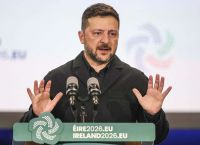
Ukrainian President Volodymyr Zelenskyy has urged European governments to select a representative before the end of November.
European Council President António Costa supports a clear and unified European position.
EU foreign policy chief Kaja Kallas argues that the bloc’s treaties already establish the institutional responsibilities of senior European officials in foreign affairs and security policy.
Estonian Prime Minister Kristen Michal has supported the institutional approach, emphasizing the importance of accountability to all EU member states.
France and Germany, however, remain cautious about transferring exclusive negotiating authority to Brussels.
French President Emmanuel Macron has emphasized that European governments must first agree on their proposals and their vision for the continent’s future security.
German Chancellor Friedrich Merz has defended the E3 format, bringing together Germany, France and the United Kingdom.
Merz considers the existing structure an established mechanism for coordinating European diplomatic efforts.
The disagreement is significant because European governments would be expected to provide substantial financial assistance, reconstruction support and potentially security commitments under any future peace settlement.
The central question is whether Europe should be represented by its institutions or by a smaller group of major national powers.
3. Ukraine’s €70 Billion Financing Gap: Merz Demands Fairer Burden-Sharing
The third major issue concerns Ukraine’s financial requirements for 2027.
According to POLITICO, Kyiv faces an estimated €70 billion funding shortfall.
The scale of the challenge is intensifying disagreements over how the European Union should distribute the financial burden of supporting Ukraine.
Germany, one of the largest contributors to the EU budget and Ukraine’s European support effort, is demanding greater participation from other member states.
In a letter to António Costa, Chancellor Friedrich Merz linked Ukraine’s financing requirements to negotiations over the EU’s next long-term budget.
Berlin argues that countries benefiting from collective European security should contribute proportionately to the financial commitments required to sustain it.
The German position has generated concern among governments reluctant to accept additional fiscal obligations.
The financing debate is also directly connected to Europe’s diplomatic influence.
European leaders want to ensure that countries providing substantial economic support to Ukraine have a meaningful role in shaping the terms of any settlement.
Some European lawmakers have proposed placing frozen Russian assets under stronger EU control to prevent them from being used in a negotiated arrangement concluded without meaningful European participation.
The issue is expected to return to the agenda at the next European Council meeting on November 26–27.
For European governments, the challenge is twofold: maintaining Ukraine’s financial stability while preserving unity over the distribution of costs.
4. The EU’s 2028–2034 Budget: Behind-the-Scenes Negotiations Begin
Although the European Union’s next seven-year budget is not officially the main subject of the Dublin summit, it is a major focus of informal discussions.
The next Multiannual Financial Framework (MFF) will cover the period from 2028 to 2034 and determine the EU’s financial priorities for years to come.
The negotiations involve several competing demands, including defense, technological competitiveness, agricultural support, regional cohesion, industrial policy and assistance to Ukraine.
According to POLITICO, a new negotiating document containing possible compromises is expected around November 21.
No final agreement is expected in Dublin.
However, bilateral meetings among major contributors and influential member states could shape the positions governments adopt before the next formal summit.
Merz has already indicated that he intends to hold discussions with several European leaders, including Emmanuel Macron.
The fundamental disagreement concerns the overall size of the budget and how spending should be distributed.
Some governments want tighter fiscal discipline and limits on national contributions.
Others argue that Europe’s strategic ambitions require substantially greater common investment.
The negotiations will therefore test whether member states can reconcile demands for stronger European capabilities with domestic fiscal constraints.
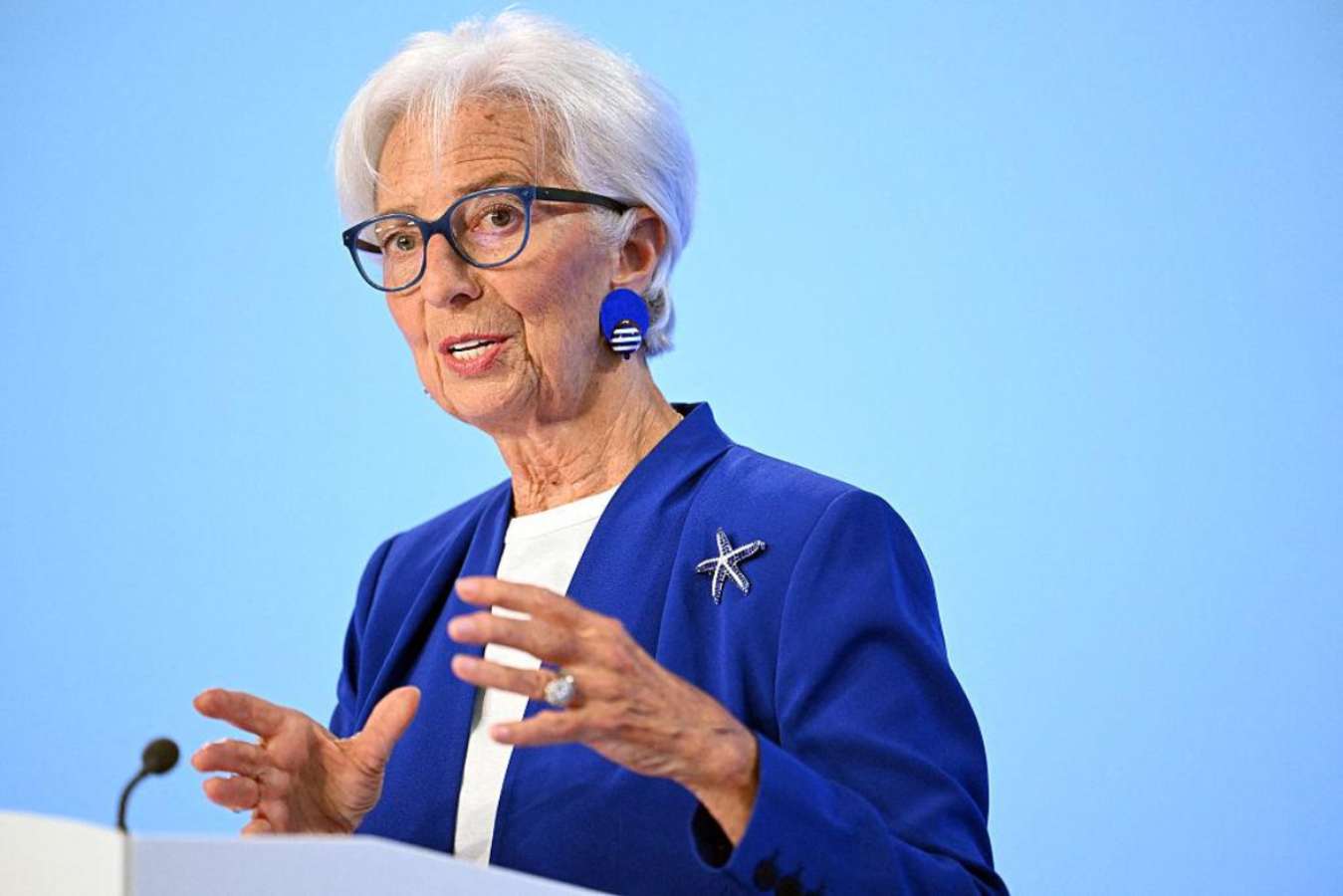
5. The Race to Succeed Christine Lagarde: Macron and Merz Begin the ECB Bargaining
The fifth major issue concerns the future leadership of the European Central Bank.
Although Christine Lagarde’s term as ECB president has not yet ended, European governments are already beginning to consider the succession process.
Behind the scenes, Emmanuel Macron and Friedrich Merz are examining possible candidates and the wider distribution of senior positions at the central bank.
According to POLITICO, two prominent names have emerged in the discussions.
Pablo Hernández de Cos, the former governor of the Bank of Spain, is one potential candidate.
Klaas Knot, the former president of the Dutch central bank, is another.
The succession debate is complicated by the fact that other important positions on the ECB’s Executive Board are also approaching the end of their terms.
The mandates of Isabel Schnabel and Philip Lane expire in 2027, creating the possibility of a broader negotiation involving several senior appointments.
France and Germany are particularly interested in the position of ECB chief economist.
According to officials cited by POLITICO, Paris and Berlin are considering different combinations of appointments.
One possible arrangement would involve Germany securing the chief economist position in exchange for supporting Hernández de Cos for the ECB presidency.
The Spanish former central banker is generally associated with a less restrictive approach to monetary policy than Knot, who has historically taken a more hawkish stance on inflation.
Spanish Prime Minister Pedro Sánchez and Dutch Prime Minister Rob Jetten, whose countries have an interest in the potential candidates, are absent from the Dublin summit because of domestic political commitments.
Discussions are expected to intensify ahead of the November 26–27 European Council meeting.
The eventual choice will carry considerable significance.
The next ECB leadership will face difficult decisions involving economic growth, inflation, financial stability and the financing requirements of an increasingly demanding European policy agenda.
Macron and Merz at the Center of Europe’s Political Bargaining
The five issues reveal how closely interconnected Europe’s major political and economic challenges have become.
Artificial intelligence requires substantial investment and technological independence.
Ukraine requires sustained financial support, security commitments and effective diplomatic representation.
The next EU budget will determine how much money can be allocated to these priorities.
And the future leadership of the European Central Bank will influence the broader economic environment in which European governments pursue their objectives.
At the center of these negotiations is the relationship between Paris and Berlin.
France and Germany are simultaneously involved in discussions over Ukraine, the EU budget and senior European appointments.
Their cooperation remains important to the functioning of the European Union, but agreement between the two countries alone is not sufficient.
Smaller member states are demanding meaningful participation, particularly in decisions involving security, financial obligations and institutional representation.
The challenge for European leaders is therefore to build agreements that reflect the interests of the wider Union rather than relying exclusively on negotiations among its largest economies.
Europe’s Strategic Autonomy Faces a Reality Check
The Dublin summit highlights a central contradiction in the European Union’s ambitions.
Europe wants to become more technologically independent, more capable of defending itself and more influential in international diplomacy.
Yet each objective requires political unity and financial commitments that remain difficult to secure.
The artificial intelligence debate illustrates the investment challenge.
The Ukraine negotiations expose the difficulties of speaking with one diplomatic voice.
The financing discussions reveal tensions over burden-sharing.
And the ECB succession demonstrates how institutional appointments remain closely connected to national political interests.
Europe must decide not only what it wants to achieve, but also how it will finance its ambitions and who will represent those ambitions internationally.
The decisions taken in Dublin may not resolve all five disputes.
However, the summit could help determine the direction of negotiations ahead of the next European Council meeting later in November.
The broader stakes extend far beyond the immediate agenda.
From advanced AI development to Ukraine’s postwar security and the future leadership of the eurozone’s central bank, Europe is confronting decisions that will shape its economic and geopolitical position for years.
The central test is whether the European Union can turn its considerable economic and institutional resources into coordinated strategic action.
Source: pagenews.gr
Διαβάστε όλες τις τελευταίες Ειδήσεις από την Ελλάδα και τον Κόσμο