Mitsotakis: Greece’s “Daedalus” Supercomputer Marks a €58.9 Million Leap into the AI Era
 ΧΡΟΝΟΣ ΑΝΑΓΝΩΣΗΣ 11 '
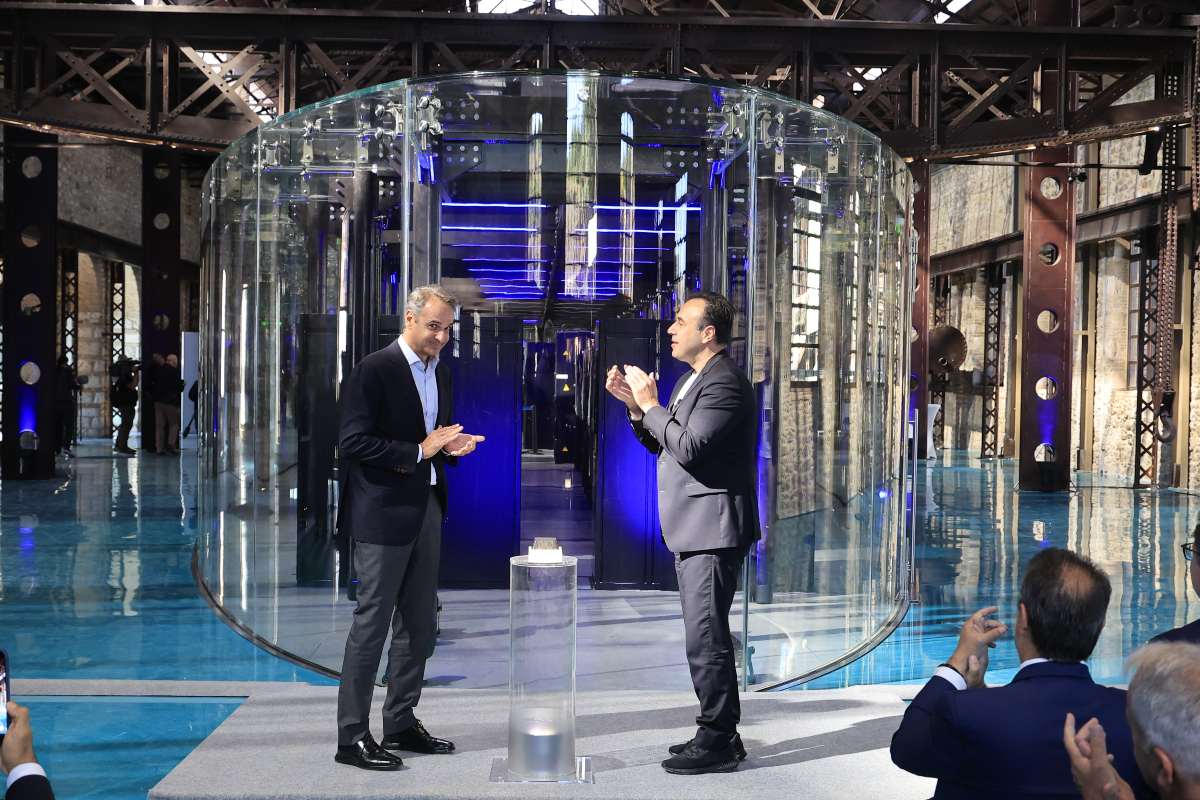
Πηγή Φωτογραφίας: eurokinissi//Mitsotakis: Greece’s “Daedalus” Supercomputer Marks a €58.9 Million Leap into the AI Era



From Greece’s Industrial Past to Its Digital Future
Greece is entering a new phase of technological development with the inauguration of Daedalus, a powerful national supercomputer designed to strengthen the country’s research capabilities and accelerate the development of artificial intelligence.
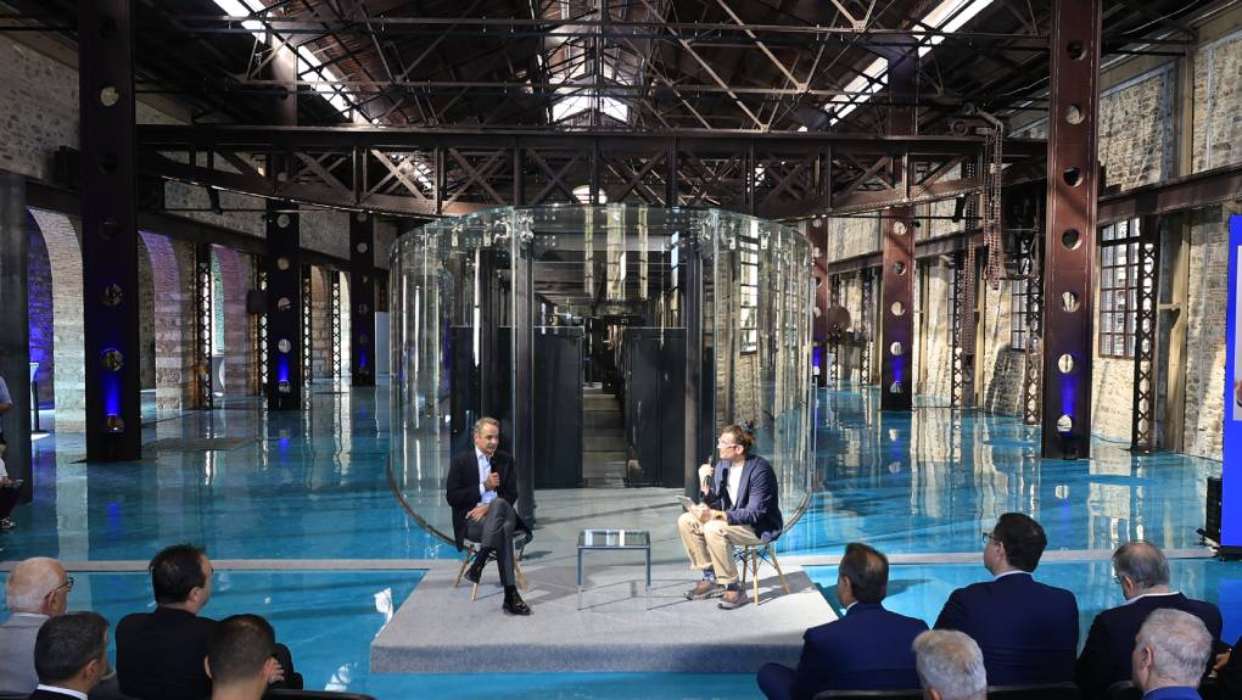
The inauguration ceremony in Lavrio, attended by Prime Minister Kyriakos Mitsotakis, highlights the government’s ambition to establish Greece as an increasingly active participant in Europe’s digital and technological transformation.
The supercomputer is housed in a new data center developed within the historic former Lavrio Power Station, transforming a landmark of Greece’s industrial heritage into a modern center for advanced computing and digital innovation.
The location carries considerable symbolism.
A site once associated with electricity generation and industrial production is now becoming part of the infrastructure supporting the data-driven economy.
Beyond its technological significance, Daedalus represents a strategic investment in Greece’s ability to develop domestic computing capabilities, support scientific research and reduce reliance on external infrastructure for advanced computational tasks.
A €58.9 Million Investment Backed by European Funding
The Daedalus project was implemented by the National Infrastructures for Research and Technology network, known as GRNET, with a total budget of €58.9 million.
The investment is supported through Greece’s National Recovery and Resilience Plan, Greece 2.0, alongside European funding mechanisms including NextGenerationEU and the European High Performance Computing Joint Undertaking, EuroHPC.
Its development forms part of the European Union’s broader strategy to strengthen high-performance computing capabilities and improve access to advanced technological infrastructure.
The investment comes at a time when computing power has become a critical resource for scientific research, artificial intelligence development and industrial competitiveness.
However, the significance of Daedalus extends beyond its construction cost.
Its long-term economic and technological value will depend on how effectively universities, research institutions, startups and businesses use the infrastructure to develop new applications, products and services.
Mitsotakis and Greece’s Strategic AI Ambitions
The participation of Prime Minister Kyriakos Mitsotakis in the inauguration reflects the political importance the Greek government attaches to artificial intelligence and advanced digital infrastructure.
AI is increasingly viewed not simply as a technological development but as a major factor influencing economic productivity, industrial competitiveness, public administration and national innovation capacity.
For Greece, the central challenge is whether investments in advanced computing can translate into higher productivity, new skilled employment opportunities and stronger participation in international research and technology markets.
Daedalus provides an important part of the infrastructure needed to pursue those objectives.
Its effectiveness will ultimately depend on access arrangements, the availability of specialized personnel, continued investment and the ability of Greek businesses to integrate advanced computing into their operations.
The broader policy ambition is to enable Greece to become more than a consumer of technological solutions developed elsewhere.
By expanding domestic computing capacity, the country seeks to strengthen its ability to develop, train and deploy advanced AI models and scientific applications.
Papastergiou: “Daedalus Is a Machine That Can Train Models”
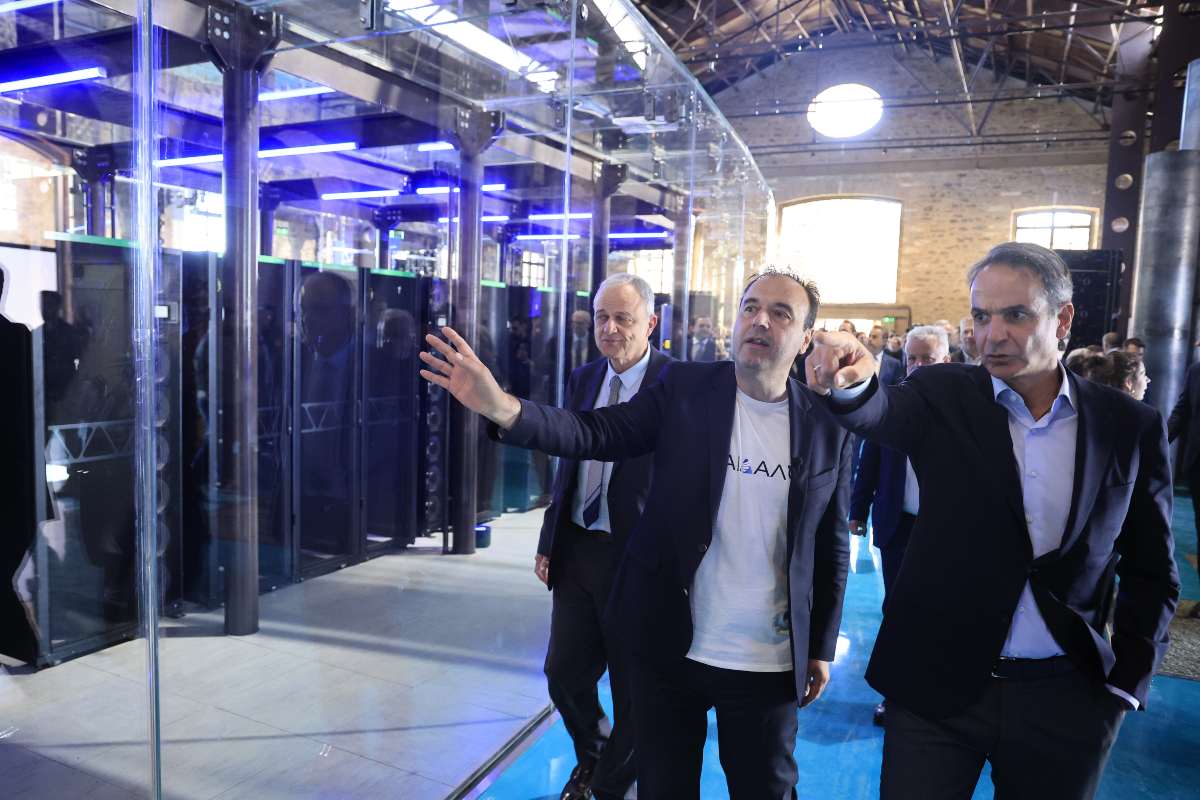
Digital Governance Minister Dimitris Papastergiou has emphasized the practical significance of the new supercomputer.
Speaking to ERTnews, Papastergiou explained that Daedalus will provide researchers and businesses with computing resources that are often prohibitively expensive or difficult to access.
“Daedalus is a machine that can train models,” he said.
The minister noted that many Greek universities, research organizations and companies have already developed promising ideas or tested applications on a smaller scale.
Scaling those projects, however, requires substantially greater computing power.
“There are many universities, research institutions and businesses that have something in mind or have tested something on a smaller scale,” Papastergiou explained.
The new infrastructure is intended to provide the computing capacity needed to develop such projects further, with access designed to reduce the financial barriers faced by eligible users.
This could be particularly significant for startups and small and medium-sized enterprises that lack the financial resources of major international technology companies.
What Daedalus Can Deliver for Healthcare, Energy and Industry
Supercomputers are designed to perform computational tasks requiring processing capabilities far beyond those of conventional systems.
Their applications extend across several strategically important sectors.
In healthcare and biomedical research, advanced computing can support the analysis of large datasets, the development of computational models and the study of complex biological processes.
In climate science, supercomputers can run sophisticated simulations, improve the analysis of extreme weather events and help researchers examine the long-term effects of climate change.
In the energy sector, they can support electricity grid simulations, demand forecasting and the optimization of complex energy systems.
Transportation and industrial production can also benefit from advanced modeling, materials research and the optimization of manufacturing processes.
These capabilities do not automatically produce scientific breakthroughs or commercial applications.
Their value depends on sustained research investment, specialized teams and effective collaboration between public institutions, universities and private companies.
Nevertheless, access to national high-performance computing infrastructure removes an important obstacle for organizations seeking to undertake computationally demanding projects.

Daedalus at the Heart of Greece’s PHAROS AI Factory
Daedalus will serve as the core computing infrastructure of PHAROS, Greece’s artificial intelligence factory.
The initiative aims to connect advanced computing capacity with technical expertise, specialized tools and services supporting AI development.
PHAROS is designed to create an ecosystem where researchers, startups and businesses can access the resources needed to develop and test advanced AI applications.
The objective extends beyond training large AI models.
It includes supporting practical applications across strategically important areas of the Greek economy, including healthcare, energy, public administration and industrial innovation.
Under the government’s organizational plan, the initiative will be managed through a corporate structure in which Greece’s Growthfund holds a 70% stake and the Greek state holds the remaining 30%.
The structure is intended to allow greater flexibility in forming partnerships, attracting investment and responding to technological developments.
Papastergiou has emphasized the importance of moving quickly in a sector characterized by rapid innovation.
“This cannot be done at the pace of the Greek public sector,” he said.
His remarks highlight one of the central challenges of public technology policy: combining accountability and public oversight with the speed required to remain competitive in fast-moving technological markets.
Greece Enters Europe’s High-Performance Computing Network
Daedalus also strengthens Greece’s participation in the European Union’s wider technological strategy.
The EU is seeking to reduce critical dependencies on external providers in areas including semiconductors, cloud computing, artificial intelligence and high-performance computing.
The EuroHPC Joint Undertaking plays a central role in this effort by coordinating and supporting the development of advanced computing infrastructure across member states.
Greece’s participation creates opportunities for cooperation with European research institutions and technology companies.
It also provides a foundation for developing applications tailored to domestic priorities, including Greek-language AI systems, shipping, agriculture, public administration and disaster management.
National computing infrastructure may also support more controlled processing of sensitive datasets, provided that appropriate cybersecurity and data protection safeguards are implemented.
The initiative therefore has implications not only for research and innovation but also for Europe’s broader debate over digital sovereignty.
A Supercomputer with Global Recognition
Daedalus is positioned among the world’s leading high-performance computing systems.
According to the latest published benchmark figures, the system has achieved a measured performance of approximately 85.69 petaflops, placing it 31st globally in the TOP500 ranking.
It has also been ranked 23rd in the Green500 list, which assesses the energy efficiency of supercomputing systems.
These figures demonstrate the scale of the computing infrastructure being developed in Greece.
High performance and energy efficiency are increasingly important as AI workloads require growing amounts of electricity and specialized hardware.
For the Greek economy, the challenge will be to turn that computational capacity into practical research results and commercially valuable applications.
New Opportunities for Greek Universities and Startups
One of the most important objectives of the Daedalus initiative is to broaden access to advanced computing resources.
For Greek universities, this could mean greater opportunities to participate in international research projects and develop computationally intensive scientific applications.
For startups, access to high-performance computing may reduce a significant barrier to developing and testing innovative products.
Small and medium-sized businesses could also benefit from technologies that previously required disproportionately large investments.
However, successful implementation will require transparent access procedures, reliable technical support, adequate operating budgets and clear project-selection criteria.
The infrastructure’s impact should be evaluated through measurable outcomes, including the number of research teams supported, applications developed, industry partnerships established and technologies transferred into commercial use.
The Political and Economic Significance of Daedalus
The inauguration of Daedalus represents a significant milestone in Greece’s digital infrastructure strategy.
For the Mitsotakis government, the investment demonstrates a commitment to expanding the country’s technological capabilities through major infrastructure projects supported by European resources.
Yet the establishment of a powerful supercomputer is only the beginning.
The next stage will determine whether the infrastructure can generate measurable benefits for the Greek economy and society.
That requires connecting research capabilities with real-world needs, supporting scientific talent and creating opportunities for businesses to develop innovative products.
Greece already possesses universities, research institutions and specialized scientific teams capable of working with advanced computing technologies.
The challenge is to ensure that these capabilities are supported by stable infrastructure, continued technological upgrades and effective institutional cooperation.
With Daedalus, Greece is strengthening its position within Europe’s high-performance computing ecosystem. The project’s lasting significance will be measured not only by processing power or international rankings, but by its contribution to scientific discovery, industrial innovation and economic competitiveness.
The inauguration in Lavrio marks a new stage in that effort, linking Greece’s industrial heritage with its ambitions for an increasingly technology-driven future. Source: pagenews.gr
Διαβάστε όλες τις τελευταίες Ειδήσεις από την Ελλάδα και τον Κόσμο