Gaza Genocide Case: Landmark Myanmar Ruling Raises Legal Stakes for Israel at The Hague
 ΧΡΟΝΟΣ ΑΝΑΓΝΩΣΗΣ 11 '
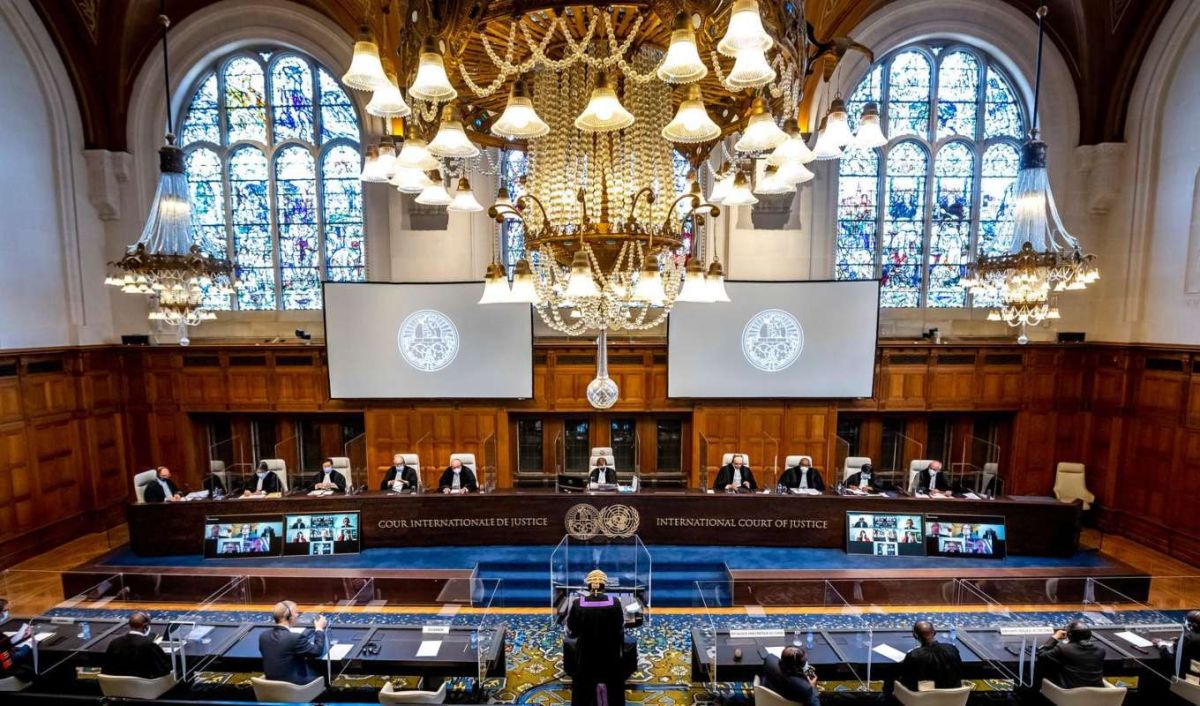



A landmark judgment concerning atrocities committed thousands of miles from Gaza could have profound consequences for one of the most consequential international legal battles facing Israel.
The International Court of Justice (ICJ) has ruled that Myanmar violated the 1948 Genocide Convention through its treatment of the Muslim Rohingya minority, establishing what legal experts describe as an unprecedented finding of state responsibility for genocide.
The November 19, 2026 judgment represents a significant development in international law. But its implications may extend well beyond Myanmar.
South Africa, which has accused Israel of committing genocide during its military operations in Gaza, believes the decision could strengthen its legal arguments when the case reaches its substantive hearings, which are not expected before 2029.
The central issue is whether a state can pursue an identifiable military objective while simultaneously acting with genocidal intent.
According to legal experts interviewed by Reuters, the Myanmar judgment makes clear that the two are not necessarily mutually exclusive.
A Historic Verdict: 10,000 Killed and More Than 700,000 Displaced
The case concerned Myanmar’s 2017 military campaign against the Rohingya, a predominantly Muslim minority concentrated in Rakhine State.
The operations involved widespread killings, the destruction of villages, sexual violence and mass displacement.
According to evidence considered in the proceedings, approximately 10,000 people were killed, including children, while more than 700,000 Rohingya fled their homes.
Myanmar defended its military campaign as a response to insurgent attacks.
However, nine judges on the 15-member ICJ bench concluded that the atrocities amounted to state-sponsored genocide.
The court also found that Myanmar had failed to meet its obligation to prevent genocide.
It ordered the country to facilitate the return of Rohingya refugees and provide reparations, although the amount was not specified.
The case was brought seven years earlier by The Gambia, acting with the support of Muslim-majority countries.
For international lawyers, the judgment is significant not only because of its conclusion but also because of the reasoning used to establish genocidal intent.
The Legal Breakthrough: Military Objectives Do Not Rule Out Genocidal Intent
Under the 1948 Genocide Convention, proving genocide requires more than establishing that mass killings or other atrocities occurred.
Prosecutors or applicant states must demonstrate a specific intent to destroy, in whole or in part, a national, ethnic, racial or religious group as such.
This requirement has historically made genocide exceptionally difficult to prove.
The Myanmar ruling, however, clarifies how courts can assess that intent.
Rather than considering individual acts in isolation, the judges examined a broader combination of factors, including the scale of the violence, its systematic nature and the history of persecution against the Rohingya.
Marieke de Hoon, professor of international criminal law at the University of Amsterdam, said the judgment rejected the argument that the existence of a military objective necessarily rules out genocidal intent.
She explained that certain acts, particularly attacks against women and children and widespread sexual violence, could not be adequately explained by military objectives alone.
This distinction could prove central to South Africa’s case against Israel.
Israel maintains that its operations in Gaza were directed against Hamas following the October 7, 2023 attacks and were conducted in accordance with international law.
South Africa argues that the conduct and consequences of those operations demonstrate an intent to destroy part of the Palestinian population.
The Myanmar precedent does not determine which argument will prevail, but it could influence how the court evaluates the evidence.
South Africa Sees a Major Opportunity in Its Case Against Israel
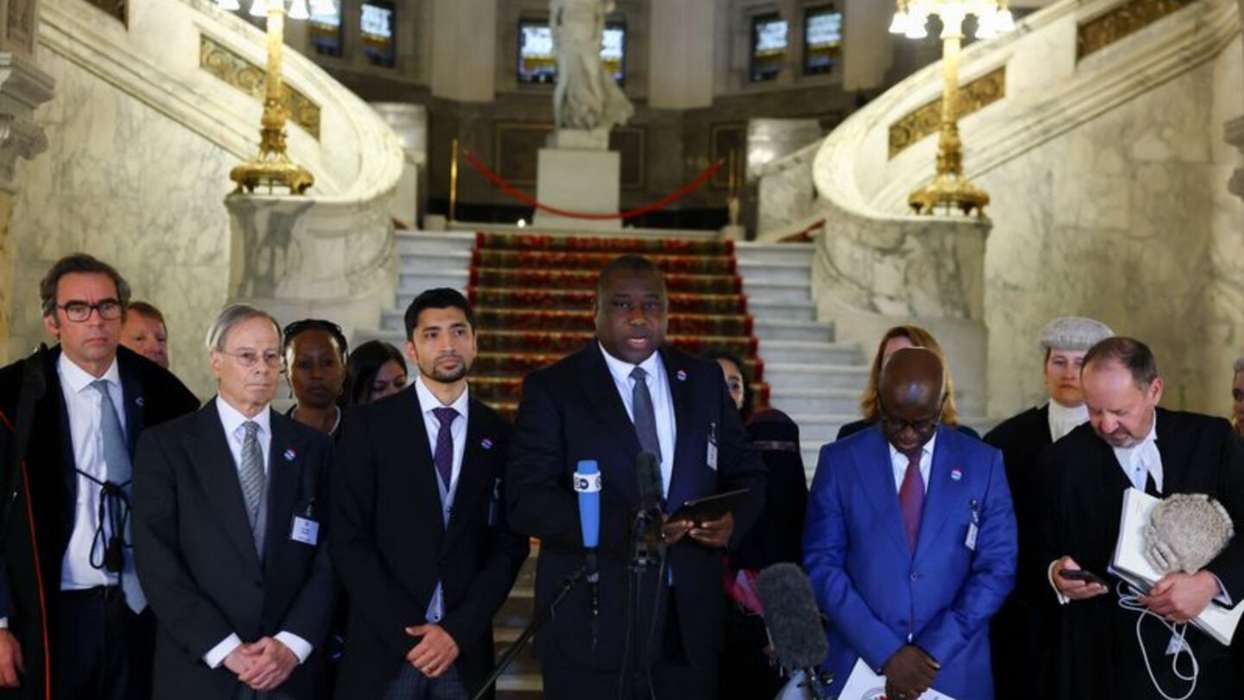
South Africa welcomed the judgment, describing it as a potentially important development for its own proceedings against Israel.
Foreign Minister Ronald Lamola said the ruling was of considerable significance because it established that a state could be found responsible for genocide.
Pretoria intends to study the judgment carefully, particularly its treatment of ethnic cleansing, the killing of children, sexual violence and the destruction of civilian infrastructure.
South Africa’s case alleges that Israeli military operations in Gaza created conditions of life intended to bring about the destruction of Palestinians as a protected group.
It has also argued that the war disproportionately affected women and children and included acts intended to prevent births.
In its submissions, South Africa cited estimates suggesting that approximately 70% of those killed were non-combatants.
Israel categorically rejects the genocide allegations, maintaining that its military actions comply with international law.
The ICJ has not issued a final judgment finding Israel responsible for genocide in Gaza.
Nevertheless, the Myanmar ruling could provide South Africa with additional legal arguments concerning the interpretation of genocidal intent.
An Israeli Legal Scholar Identifies New Risks for Israel’s Defence
One of the most notable assessments came from Yuval Shany, an Israeli legal scholar who examined the potential implications of the judgment.
According to Shany, the court retained the demanding legal standard that genocidal intent must be the only reasonable inference from the evidence.
However, it broadened the contextual factors that can be considered when reaching that conclusion.
Those factors extend beyond a repeated pattern of conduct to include the systematic nature of atrocities, their scale and the historical treatment of the targeted population.
Shany said this approach could give South Africa additional avenues for arguing that genocide occurred in Gaza.
His assessment is significant because it distinguishes between two separate legal questions.
The court has not abandoned the high threshold for proving genocide.
Instead, it has clarified the range of evidence that may be used to satisfy that threshold.
That distinction could become particularly important when the judges assess Israel’s explanation of its military objectives alongside evidence presented by South Africa.
Women and Children Could Become Central to the Gaza Proceedings
The Myanmar judgment placed considerable emphasis on atrocities committed against women and children.
The court examined evidence of killings, sexual violence and attacks that could not readily be explained as necessary military operations.
Legal experts believe this aspect of the decision may resonate in the Gaza proceedings.
South Africa has argued that the effects of Israel’s military campaign on Palestinian women, children and civilian infrastructure are relevant to establishing genocidal intent.
Its case also addresses the destruction of essential services and the conditions imposed on the civilian population.
The significance of such evidence lies not simply in the number of casualties or the scale of destruction.
The legal question is whether the acts, considered together and in context, demonstrate the specific intention required by the Genocide Convention.
For the ICJ, that remains a demanding test.
The existence of devastating humanitarian consequences does not automatically establish genocide, just as the existence of a military objective does not automatically exclude it.
Pro-Israel Legal Group Warns of a Lower Threshold for Genocide Findings
The judgment has also generated concern among legal organisations sympathetic to Israel’s position.
The Hague Initiative for International Cooperation (Thinc), a think tank funded by pro-Israeli groups, argued that the ruling could fundamentally change how courts assess allegations of genocide.
Its director, Andrew Tucker, warned that the judgment might effectively lower the threshold for establishing genocidal intent.
He argued that this could have far-reaching implications for Western militaries engaged in operations against terrorist organisations.
According to Tucker, the Myanmar decision could become a model for future cases because it recognises that genocidal intent may coexist with legitimate military objectives.
He also raised concerns about the weight assigned to United Nations investigative reports and the court’s interpretation of states’ obligations to prevent genocide.
These concerns reflect a broader legal debate over whether the judgment represents a major expansion of genocide jurisprudence or a clarification of principles already contained in international law.
Why Genocide Remains So Difficult to Prove
The Genocide Convention identifies five categories of prohibited acts when committed with the specific intent to destroy a protected group:
- Killing members of the group.
- Causing serious bodily or mental harm.
- Deliberately imposing conditions of life calculated to bring about the group’s physical destruction.
- Imposing measures intended to prevent births.
- Forcibly transferring children to another group.
The presence of one or more of these acts is not sufficient on its own to establish genocide.
The decisive element is the intention behind them.
This is what distinguishes genocide from other grave violations of international humanitarian law, including war crimes and crimes against humanity.
Richard Horsey, senior adviser for Asia at the International Crisis Group, said the Myanmar judgment demonstrated that the exceptionally high legal threshold for genocide could nevertheless be met.
He noted that the ICJ had never previously found a state responsible for committing genocide.
The ruling therefore marks a significant moment in the development of international law.
A Landmark for Myanmar, a New Legal Battleground for Gaza
The Myanmar judgment establishes a historic finding of state responsibility for genocide against the Rohingya.
For the victims and displaced communities, it also creates a legal basis for reparations and measures aimed at facilitating their return.
For South Africa, the ruling provides a potentially powerful precedent in its case against Israel.
For Israel, it presents a legal challenge to the proposition that the stated purpose of defeating Hamas is, by itself, sufficient to exclude genocidal intent.
But the distinction between the two cases remains essential.
The conflicts, evidence and legal circumstances are different.
The ICJ has not ruled that Israel committed genocide in Gaza, and the Myanmar judgment does not predetermine the outcome of South Africa’s case.
What it does establish, according to the legal experts cited by Reuters, is that military objectives and genocidal intent must be assessed independently rather than treated as inherently incompatible.
That principle could become one of the most consequential issues when the Gaza case eventually reaches its decisive stage at The Hague.
The Myanmar ruling has not decided the legal fate of Israel’s military campaign. It may, however, change the arguments on which that fate will be judged.
Source: pagenews.gr
Διαβάστε όλες τις τελευταίες Ειδήσεις από την Ελλάδα και τον Κόσμο