The New Energy Power Map: Türkiye, the Gulf and Guyana Race for Billions
 ΧΡΟΝΟΣ ΑΝΑΓΝΩΣΗΣ 14 '
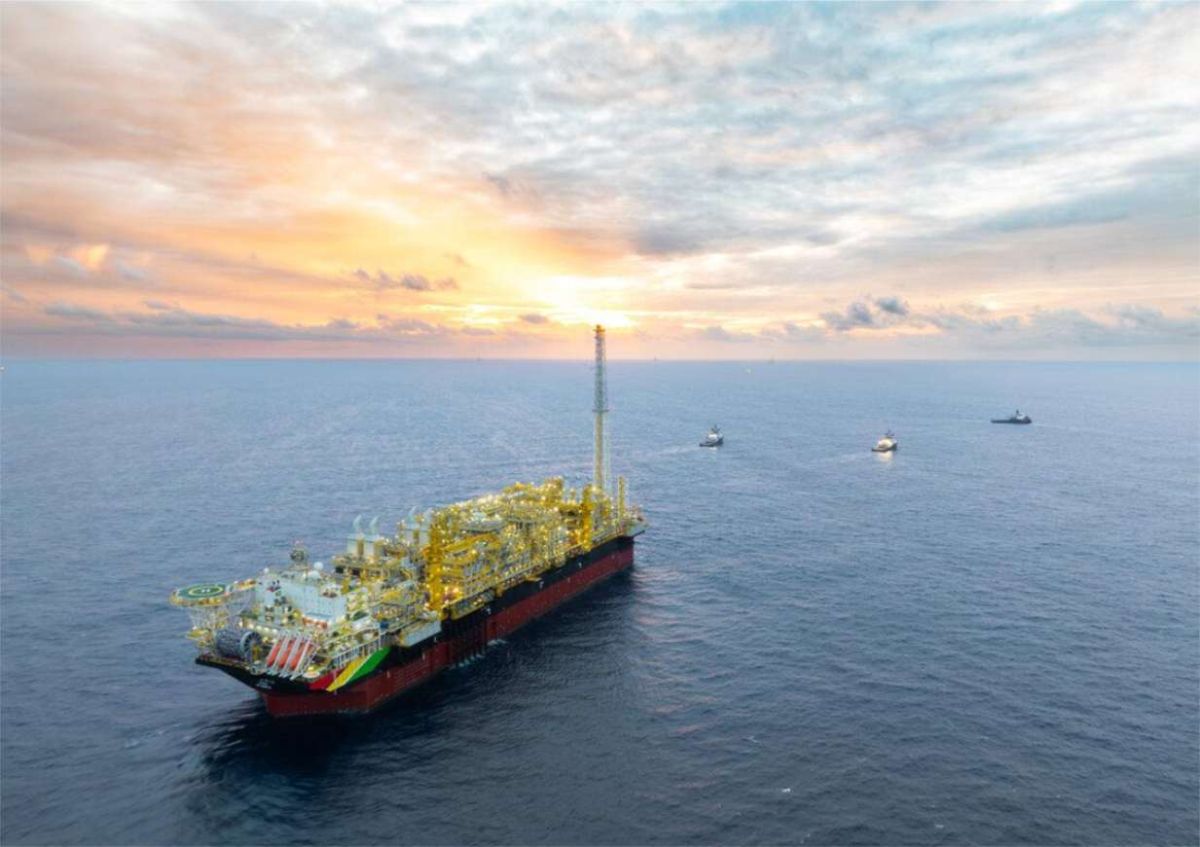
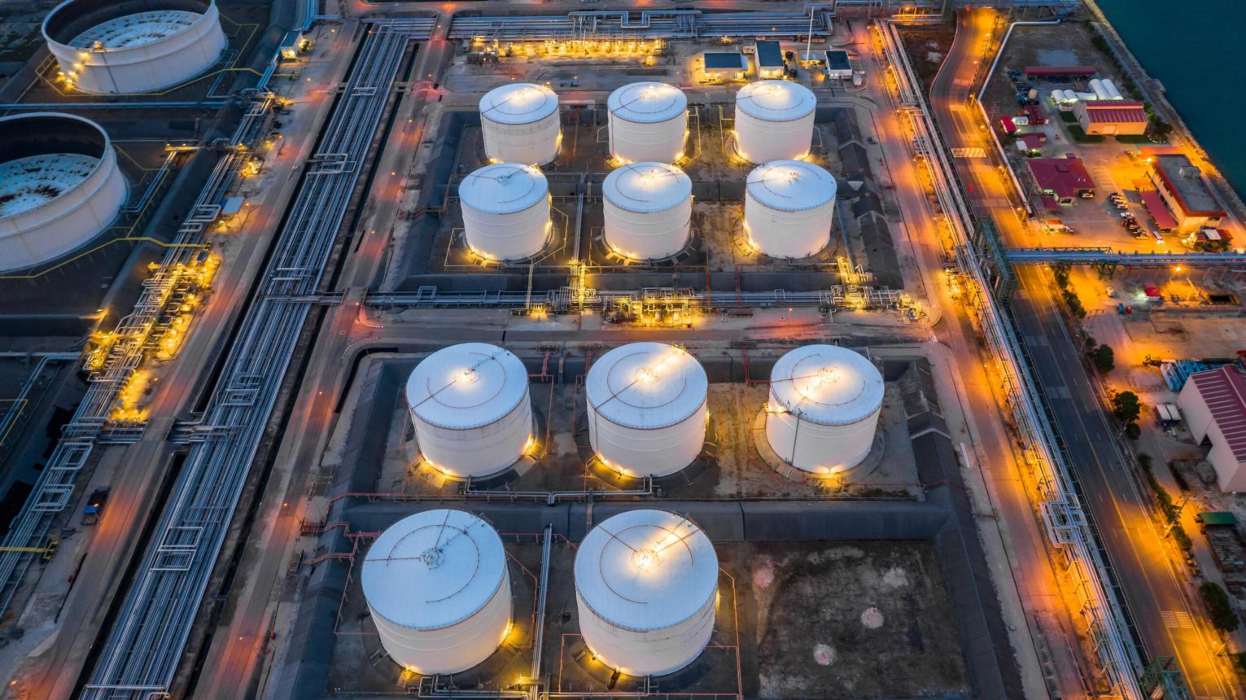
Πηγή Φωτογραφίας: Τσεϊχάν – Πετρελαϊκός τερματικός σταθμός /Πηγή αναζήτησης: BOTAŞ & Γουιάνα – Το FPSO Errea Wittu Φωτογραφικό υλικό: MODEC / κυβέρνηση Γουιάνας



The world’s next major energy hub may not emerge where the largest oil and gas reserves are located.
It may emerge where pipelines bypass a dangerous maritime chokepoint, where new export terminals are being built, or where international energy companies commit billions of dollars before the broader market fully recognizes a region’s strategic importance.
The energy crisis of 2026 is not merely changing prices. It is redrawing the geography of global power.
The conflict in the Middle East and disruptions around the Strait of Hormuz are forcing governments, energy companies and investors to reconsider the routes through which oil and natural gas reach international markets.
In this rapidly changing environment, certain locations are acquiring greater strategic importance.
Türkiye’s Ceyhan, Fujairah in the United Arab Emirates and Yanbu in Saudi Arabia are increasingly central to discussions about alternative oil export routes.
Meanwhile, Guyana has emerged as one of the clearest examples of a country turning offshore discoveries into substantial production capacity.
The critical question is which of these locations will develop into internationally significant energy hubs — and which will remain ambitious infrastructure proposals.
The Hormuz Shock Is Rewriting Global Energy Routes
The International Energy Agency’s World Energy Outlook 2026 describes the disruption to energy supplies through the Strait of Hormuz as the largest energy supply shock the world has faced.
The scale of the crisis is extraordinary.
- 2.8 billion barrels of oil: cumulative supply losses from the Gulf region through the end of October.
- 60 billion cubic metres of natural gas: cumulative supply losses identified by the IEA.
- Approximately 7 million barrels per day: additional bypass capacity that new pipeline projects could provide if completed.
- Around $40 billion: estimated investment required for these alternative infrastructure projects.
Before the crisis, the Strait of Hormuz was one of the world’s most important energy corridors, connecting Gulf producers with international markets, particularly in Asia.
Its disruption has exposed a structural vulnerability that policymakers have understood for decades: concentrating enormous energy flows through a limited number of maritime chokepoints creates systemic risks.
The response is no longer limited to building larger strategic reserves.
Governments and energy companies are seeking entirely new routes.
And that is where the next generation of strategic energy hubs begins to emerge.
Ceyhan: Türkiye’s Bid to Become a Mediterranean Energy Powerhouse
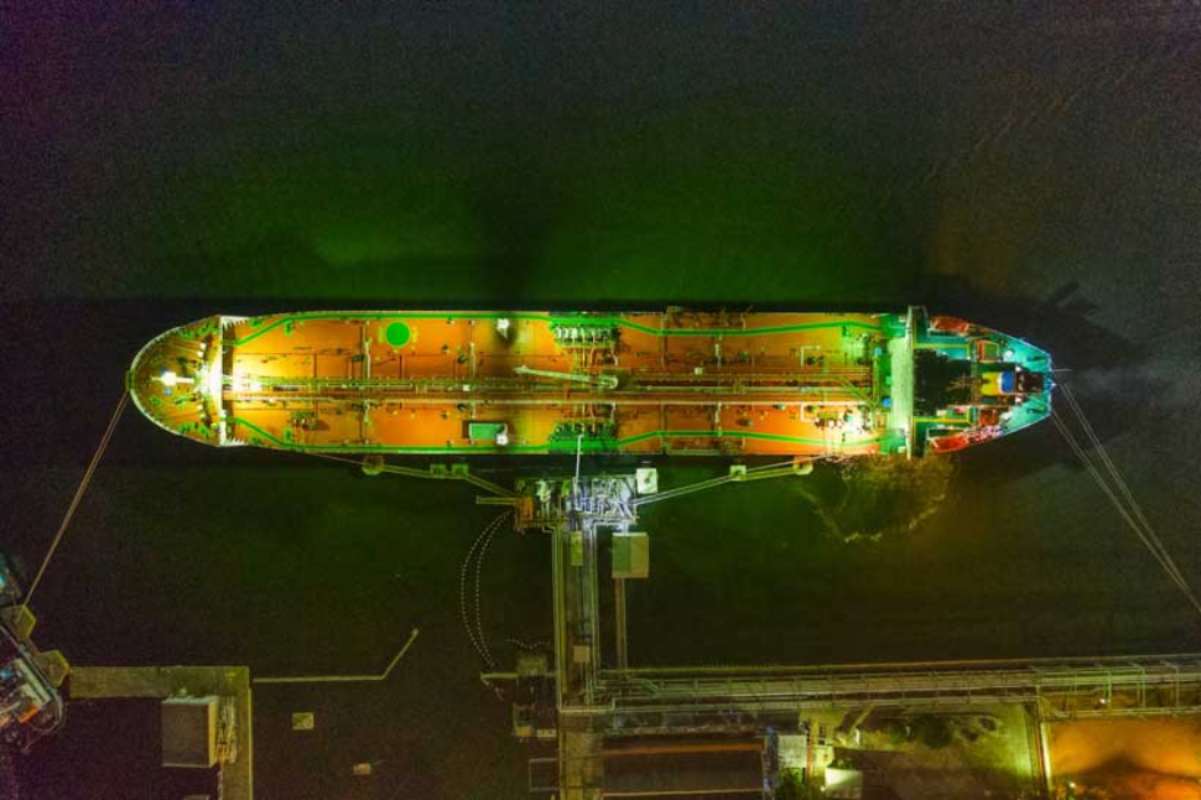
On the eastern Mediterranean coast, Ceyhan is acquiring renewed geopolitical significance.
Türkiye wants to transform the port into a broader energy and trading centre, using its connections with Iraqi oil production and the potential for additional infrastructure.
Its geography offers a significant advantage.
An effective Basra–Ceyhan corridor could allow Iraqi crude to reach the Mediterranean without passing through the Strait of Hormuz.
IEA Executive Director Fatih Birol has described the prospect of such a pipeline as a highly attractive alternative to the vulnerable Gulf route.
However, geography alone does not create an energy hub.
The proposed Basra–Ceyhan connection has not yet become a fully financed project backed by a final investment decision.
There are also important legal and political obstacles.
The history of disputes involving Iraq, Türkiye and Kurdish authorities demonstrates how energy infrastructure can become entangled in questions of sovereignty, transit rights and revenue sharing.
The shutdown of the Kirkuk–Ceyhan pipeline following a 2023 arbitration ruling remains a particularly important example.
In 2026, Türkiye’s state pipeline company BOTAŞ introduced changes to the contractual framework, with the system operating under the Silopi–Ceyhan designation.
The existing infrastructure has considerable nominal transportation capacity, but this does not mean that additional volumes from southern Iraq can immediately flow through it.
New connections, commercial arrangements and political agreements would be necessary.
Türkiye possesses the geographical opportunity. The challenge is converting that opportunity into financed infrastructure, secure transit agreements and reliable long-term oil flows.
Fujairah and Yanbu: The Gulf’s Alternative Export Gateways
The United Arab Emirates and Saudi Arabia have a different advantage.
Unlike proposed corridors that depend on several governments reaching new agreements, both countries already possess major production facilities, state-owned energy companies and established export infrastructure.
Fujairah, located on the Gulf of Oman, lies outside the Strait of Hormuz.
Its position allows oil to be loaded onto tankers without requiring passage through the vulnerable maritime chokepoint.
The UAE has been developing additional pipeline, storage and export capacity to strengthen this strategic advantage.
Yanbu, on Saudi Arabia’s Red Sea coast, serves a different function.
Through the East–West Pipeline, Saudi crude can be transported from the kingdom’s eastern oil-producing regions to export facilities on the Red Sea.
The three locations therefore offer distinct strategic functions:
- Fujairah: access to the Gulf of Oman, supported by oil storage, export infrastructure and maritime services.
- Yanbu: access to the Red Sea through an established cross-country pipeline network.
- Ceyhan: access to the Mediterranean, with the potential to handle additional Iraqi and possibly wider regional crude flows.
The important distinction is that Fujairah and Yanbu are expanding around established production and transportation systems.
Ceyhan’s potential expansion depends more heavily on additional cross-border infrastructure and political agreements.
Yet all three face a common challenge.
Bypassing a dangerous maritime chokepoint does not automatically make an alternative energy route secure.
Pipelines, export terminals and storage facilities can themselves become targets of drones, missiles and other attacks.
Energy security therefore requires not only diversification but also physical protection and operational redundancy.
Guyana: From a 2015 Discovery to 1.1 Million Barrels of Installed Capacity
Guyana offers perhaps the clearest demonstration of the difference between an energy opportunity and an operating energy system.
In 2015, ExxonMobil announced a major offshore oil discovery in the Stabroek block.
First oil followed in December 2019.
On November 16, 2026, ExxonMobil announced the start of production at Uaru, the fifth production development in the Stabroek block.
The milestone increased Guyana’s installed production capacity to approximately 1.1 million barrels per day.
The new Errea Wittu floating production, storage and offloading vessel is designed to process 250,000 barrels per day.
The project is expected to reach its initial full production capacity during the first quarter of 2027.
Guyana’s development illustrates the stages through which energy potential becomes commercial reality:
- Discovery and independent confirmation of substantial resources.
- Participation by major international energy companies.
- Final investment decisions.
- Construction and installation of production infrastructure.
- First oil and the beginning of exports.
- Successive increases in installed production capacity.
Guyana is no longer dependent solely on estimates of what lies beneath its offshore waters.
It has functioning production infrastructure, committed capital and additional projects under development.
That distinguishes it from regions where major energy ambitions remain largely theoretical.
Seven Indicators That Reveal the Next Strategic Energy Hub
Identifying an emerging energy hub requires more than studying government announcements or promotional investment plans.
Seven indicators provide a more reliable framework.
1. A genuine geographical or resource advantage
A location must possess either independently confirmed energy resources or a position that reduces transportation costs, shortens routes or lowers supply risks.
2. A disruption that creates demand for an alternative
The Hormuz crisis demonstrates how quickly a geopolitical shock can increase the strategic value of previously secondary energy corridors.
3. Final investment decisions and construction milestones
This is among the most important indicators.
A final investment decision, or FID, demonstrates that a project has moved beyond feasibility studies and political declarations toward committed capital.
4. Major international partners and long-term buyers
Participation by established energy companies, national oil companies, financial institutions and long-term customers strengthens the commercial foundations of a project.
5. Legal, fiscal and regulatory stability
Pipelines and terminals require investment horizons measured in decades.
Without enforceable transit agreements, predictable taxation and credible dispute-resolution mechanisms, even technically attractive projects can remain stalled.
6. Physical security and operational resilience
Infrastructure protection, alternative transportation options and sufficient storage capacity are increasingly important during periods of geopolitical instability.
7. Trading, storage and industrial depth
A strategic energy hub must ultimately offer more than the physical transit of oil or gas.
Storage facilities, refining capacity, petrochemical production, trading services and potentially regional pricing benchmarks can transform a transit location into a broader commercial centre.
This final distinction is crucial.
A pipeline transports energy. A genuine energy hub can influence how energy is stored, traded, priced and distributed.
Ceyhan Versus Guyana: Two Different Models of Energy Power
Ceyhan and Guyana represent fundamentally different approaches to becoming strategically important energy locations.
Ceyhan’s potential is primarily geographical.
Its position could make it an increasingly valuable Mediterranean outlet for Middle Eastern oil, particularly if alternative routes around Hormuz become a permanent priority.
However, its future expansion depends on infrastructure development, commercial commitments and stable interstate relations.
Guyana’s strategic importance is primarily production-driven.
Its confirmed offshore resources, international partners and successive operating projects have already created significant export capacity.
The comparison reveals three different development profiles:
- Ceyhan: strong geographical potential, but substantial investment and cross-border challenges.
- Guyana: confirmed resources, operating production and continued capital deployment.
- Fujairah and Yanbu: established export infrastructure with expansion potential, alongside continuing physical-security risks.
These are not interchangeable models.
Each serves a different function within the global energy system.
A producing region, a transit corridor and a trading centre can all be strategically significant without competing directly for the same role.
Greece and the Eastern Mediterranean: A Different Kind of Energy Opportunity
The reconfiguration of international energy flows also has important implications for Greece.
Greece is not competing with Guyana as a major new offshore oil producer.
Its advantages lie elsewhere: Mediterranean access, LNG import infrastructure, regional pipeline connections and electricity interconnectors linking southeastern Europe with neighbouring energy systems.
The Revithoussa LNG terminal, the floating LNG infrastructure at Alexandroupolis, cross-border gas pipelines and electricity interconnection projects form part of this wider regional energy network.
These facilities can strengthen Greece’s role as an entry point and redistribution centre for energy supplies reaching southeastern Europe.
However, the existence of infrastructure does not automatically create a globally influential trading hub.
For that to happen, several additional conditions must be met:
- Reliable and commercially competitive energy supplies.
- Long-term transportation and supply agreements.
- Sufficient cross-border capacity.
- Efficient infrastructure operations.
- Market liquidity and a stable regulatory framework.
- Investment in storage, flexibility and system resilience.
The same distinction applies to electricity interconnection projects in the Eastern Mediterranean.
Geographical position creates strategic possibilities.
Completed infrastructure and sustained commercial flows determine whether those possibilities become reality.
The Biggest Market Mistake: Confusing Political Announcements With Committed Capital
Almost every country possessing a major port, pipeline or hydrocarbon resource aspires to become an international energy hub.
But energy markets are not transformed by national strategy documents alone.
They are transformed by actual production, transportation capacity, storage facilities and commercial transactions.
A major oil discovery does not automatically become a producing field.
A proposed pipeline is not equivalent to a financed construction project.
A memorandum of understanding does not guarantee that infrastructure will be built.
And a route that bypasses Hormuz is not necessarily immune to the security risks affecting the wider region.
The decisive moment comes when political intentions turn into binding economic commitments.
Final investment decisions, long-term supply contracts and construction milestones provide stronger evidence of an emerging energy hub than even the most ambitious geopolitical declarations.
This distinction also explains why timing matters.
Early geographical advantages may be visible years before an infrastructure project becomes operational.
But as capital is committed and construction progresses, the commercial opportunity becomes more tangible — and more widely recognised.
The Next Energy Map Will Be Built With Infrastructure, Not Political Slogans
The 2026 energy crisis is accelerating a structural change that began during earlier periods of global energy disruption.
Importing countries are no longer focused exclusively on obtaining the lowest possible price.
They are also concerned with supply security, route diversification, operational flexibility and the ability to maintain deliveries when major corridors are disrupted.
That is increasing the strategic importance of energy infrastructure.
Yet building a genuinely influential hub requires time, capital and political stability.
Ceyhan has geography and the potential to connect additional Iraqi oil supplies with the Mediterranean.
Fujairah and Yanbu possess existing export systems that can be expanded.
Guyana has already transformed offshore discoveries into substantial installed production capacity.
And the Eastern Mediterranean, including Greece’s network of gas and electricity infrastructure, remains a region where new connections could strengthen European energy security.
The next major energy hub will not emerge simply because a government declares it one. It will emerge where geography solves a real supply problem, geopolitical disruption creates lasting demand, and billions of dollars in committed investment turn strategic potential into operational reality.
Source: pagenews.gr
Διαβάστε όλες τις τελευταίες Ειδήσεις από την Ελλάδα και τον Κόσμο