Iran Unveils Underground ‘Missile City’ and Threatens Global Retaliation:Is Tehran Preparing for a Wider War?
 ΧΡΟΝΟΣ ΑΝΑΓΝΩΣΗΣ 14 '
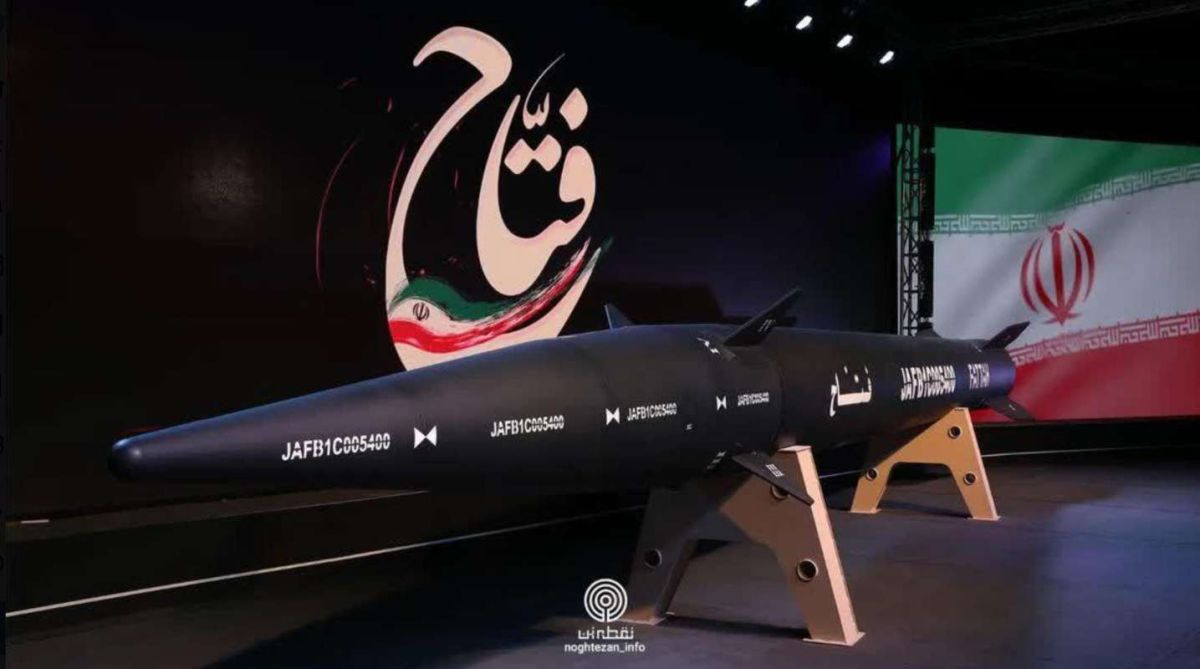
Πηγή Φωτογραφίας: Πηγή αναφοράς: Η υπόγεια «πόλη πυραύλων» Tasnim News Agency/ Οι βαλλιστικοί πύραυλοι Fattah-1/ Φρουροί της Επανάστασης — υπόγειες εγκαταστάσεις



“If the enemy makes another move against us, our response will extend beyond the region.”
With this warning, attributed to senior Iranian military commander Ali Abdollahi, Tehran has raised the stakes in its confrontation with the United States and Israel, signaling that another military escalation could have consequences extending far beyond the Middle East.
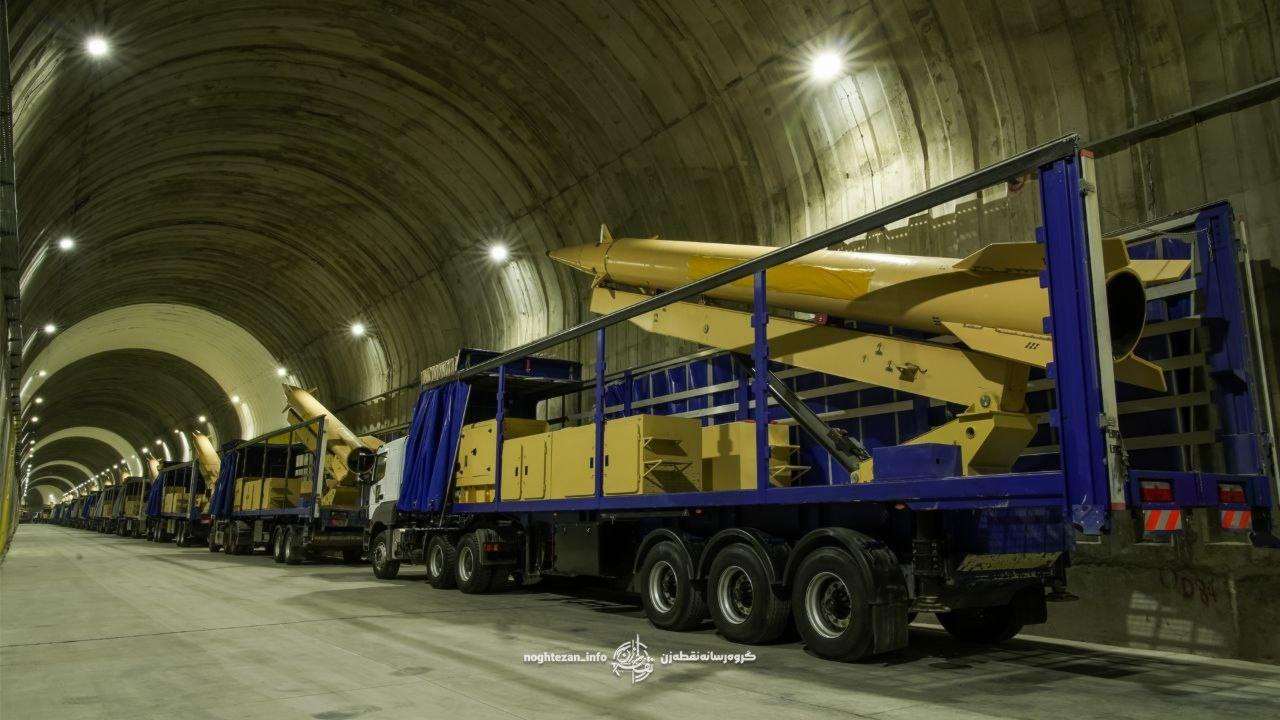
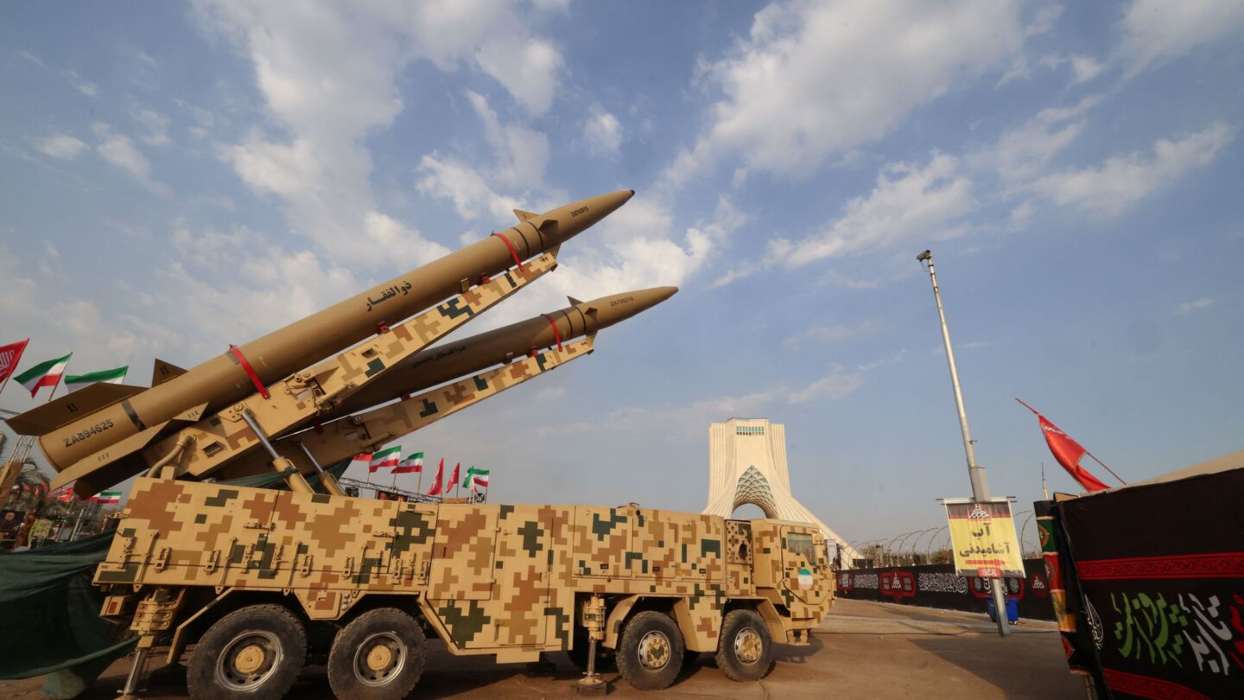
The warning accompanied the unveiling of what Iran described as a massive underground “missile city,” a fortified military complex reportedly housing ballistic missiles, cruise missiles and launch systems operated by the Islamic Revolutionary Guard Corps (IRGC).
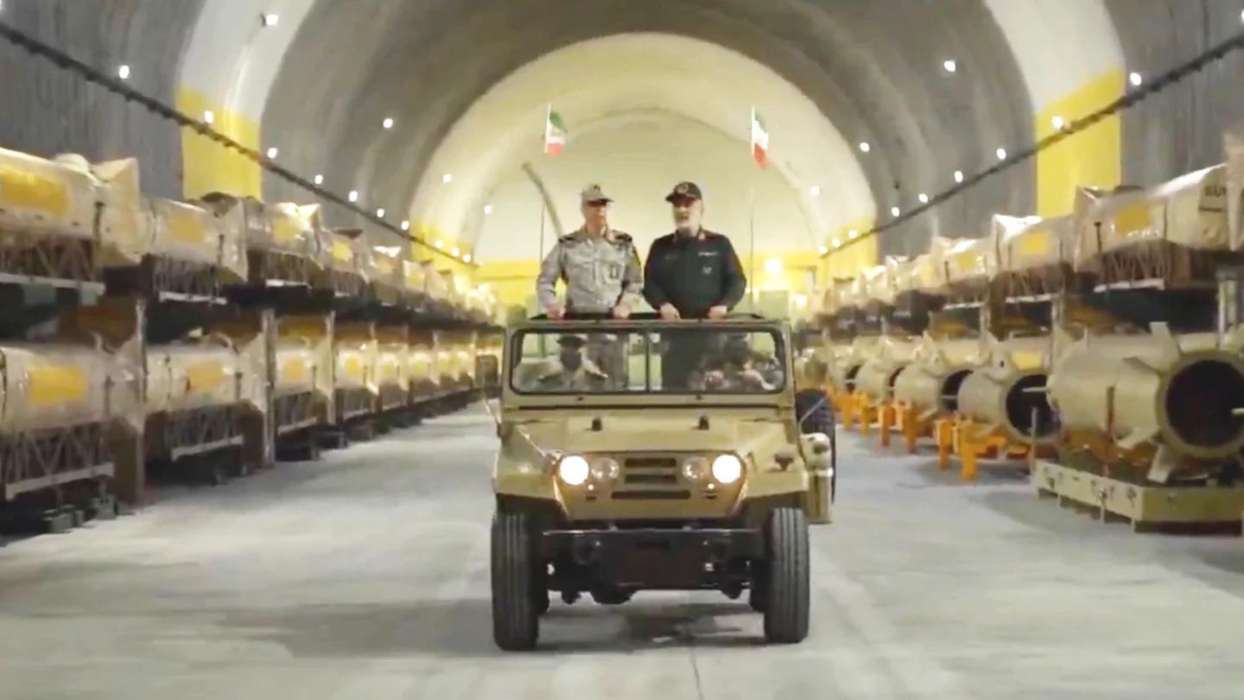
Footage released by Iran’s Tasnim News Agency on November 10 showed long underground corridors containing missile systems, with senior military commanders inspecting the facility.
The images appeared designed to convey a clear strategic message: despite previous military strikes and mounting international pressure, Iran wants its adversaries to believe that its missile capabilities remain operational and capable of delivering a significant retaliatory response.
Yet the precise location, age, operational readiness and overall capacity of the facility have not been independently verified.
That distinction matters.
Tehran is not merely displaying weapons. It is attempting to influence the calculations of Washington and Jerusalem at a moment when military confrontation and diplomatic negotiations remain competing possibilities.
Inside Iran’s Underground Missile City: The Fattah-1 Arsenal
The newly released footage offers a glimpse into Iran’s extensive network of underground military infrastructure.
According to open-source assessments, the facility appears to contain multiple Fattah-1 ballistic missiles, alongside missile components, boosters and maneuvering reentry vehicles.
The Fattah-1 is among Iran’s most heavily promoted advanced missile systems.
Iranian officials have described it as a hypersonic weapon capable of maneuvering during the terminal phase of flight, potentially complicating interception by missile-defense systems.
However, independent verification of its full operational capabilities remains limited.
The ability to reach hypersonic speeds does not, by itself, establish that a missile possesses all the maneuverability and performance characteristics claimed by its manufacturer.
For Tehran, the strategic significance of such systems lies in their potential to challenge regional missile defenses and preserve the credibility of Iran’s retaliatory capabilities.
Underground storage facilities are a central component of that strategy.
By placing missiles, launch equipment and supporting infrastructure beneath the surface, Iran seeks to reduce their vulnerability to aerial surveillance and precision strikes.
The ultimate objective is to maintain what military strategists describe as a credible second-strike capability: the ability to respond even after suffering an initial attack.
The IRGC has also claimed that missile and drone production activities are increasingly being transferred underground.
That assertion, like the precise capabilities of the newly displayed facility, remains independently unverified.
Tehran’s Warning: Retaliation Could Extend Beyond the Middle East
The most consequential element of the announcement was not the footage itself, but the accompanying threat.
Senior Iranian commander Ali Abdollahi warned that another attack on Iran could provoke a response extending beyond the region.
“If the enemy makes another move against us, our response will extend beyond the region,” he said, according to Iran International.
The statement deliberately leaves considerable ambiguity about the geographical scope and nature of any potential retaliation.
Iran did not identify specific targets outside the Middle East or provide evidence of an imminent operation.
Nevertheless, the warning appears intended to expand the perceived risks associated with another military confrontation.
From a strategic perspective, Tehran may be attempting to signal that future escalation could affect international shipping, energy infrastructure and the wider security environment.
The warning could also be designed to influence countries that might otherwise regard a renewed US-Iranian confrontation as a primarily regional issue.
By suggesting that the consequences of war could extend beyond the Middle East, Iran is attempting to transform its military vulnerability into broader geopolitical leverage.
Such rhetoric does not necessarily mean that Tehran intends to carry out attacks outside the region.
It does, however, increase uncertainty for its adversaries and raise the political costs of military escalation.
The Shadow of the Israeli-Iranian Conflict
The unveiling comes against the backdrop of the military confrontation between Iran and Israel and the losses suffered by Iran’s military leadership.
Among the officials inspecting the underground facility was Brigadier General Majid Mousavi, commander of the IRGC Aerospace Force.
Mousavi succeeded Amir Ali Hajizadeh, who was killed during the 2025 conflict with Israel.
The loss of senior commanders and the targeting of Iranian military infrastructure have made the protection and reconstruction of strategic capabilities a priority for Tehran.
The public display of an underground missile facility therefore serves several purposes.
Domestically, it reinforces the Iranian leadership’s narrative of military resilience.
Regionally, it seeks to reassure Iran’s allies and deter its adversaries.
Internationally, it aims to convince Washington that previous strikes have not eliminated Tehran’s ability to retaliate.
Abdollahi reinforced that message by claiming that Iran’s advanced missiles would surprise its enemies through their battlefield effectiveness.
Such statements are part of a broader effort to restore deterrence through a combination of military capability, public messaging and strategic ambiguity.
The central question is whether the displayed arsenal represents substantial operational strength or whether its public presentation is partly intended to compensate for vulnerabilities exposed by previous conflicts.
Both explanations may be relevant.
Washington’s Dilemma: Military Pressure or Diplomatic Engagement?
For the administration of US President Donald Trump, Iran’s missile program remains a major security concern.
Washington must weigh the potential effectiveness of military pressure against the risks of triggering a wider conflict.
Underground missile infrastructure complicates that calculation.
Even a successful strike against selected Iranian facilities would not necessarily eliminate Tehran’s ability to launch retaliatory attacks.
At the same time, the existence of underground installations does not make Iran’s missile arsenal invulnerable.
Their survivability depends on construction, depth, access routes, operational procedures and other factors that cannot be reliably assessed from publicly released footage.
The challenge for Washington is therefore both military and political.
A strategy based primarily on coercion risks encouraging Iran to demonstrate that it cannot be intimidated.
A diplomatic approach, meanwhile, must address concerns over Iran’s nuclear activities, ballistic missiles and regional security policies.
The danger is that both sides may interpret military displays as evidence that additional pressure is necessary, creating a cycle of escalation rather than deterrence.
Qatar’s Diplomatic Gamble: Negotiating Under the Shadow of Missiles
The timing of Iran’s announcement is particularly significant because it coincides with diplomatic efforts involving Qatar.
Doha has sought to maintain channels of communication between Washington and Tehran, drawing on its relationships with both governments.
The diplomatic activity has included contacts between President Trump and Qatari Prime Minister Mohammed bin Abdulrahman Al Thani.
Qatar’s mediation efforts have reportedly explored proposals linking renewed nuclear inspections to changes in US restrictions affecting maritime activity around the Strait of Hormuz.
The details and prospects of any potential arrangement remain uncertain.
For Iran, the combination of military signaling and diplomatic engagement may serve a deliberate purpose.
By emphasizing its retaliatory capabilities, Tehran seeks to strengthen its negotiating position.
Its message to Washington is that a negotiated arrangement could prove less costly than another military confrontation.
Yet the strategy carries risks.
The more aggressively Iran advertises its missile capabilities, the greater the possibility that the United States and Israel will view those capabilities as threats requiring additional military countermeasures.
Diplomacy and deterrence are therefore operating simultaneously, but not necessarily reinforcing one another.
Israel’s Security Calculations: Can Missile Defenses Withstand Another Confrontation?
For Israel, Iran’s ballistic missile arsenal remains a central strategic concern.
The threat is particularly significant when considered alongside Tehran’s nuclear activities and its broader regional military relationships.
Iranian missiles with maneuvering reentry vehicles could present additional challenges for missile-defense systems, depending on their actual performance.
However, claims that such weapons can reliably defeat advanced defenses should be treated cautiously.
No single missile-defense architecture guarantees interception of every incoming threat, just as no missile system can be assumed to penetrate defenses under all operational conditions.
The strategic balance depends on multiple variables, including the number of missiles launched, defensive capacity, intelligence, electronic warfare and operational readiness.
Iran’s underground facilities add another layer of complexity.
They are intended to make it harder for an adversary to locate and neutralize missile assets before launch.
For Israeli military planners, the question is not simply whether Iran possesses missiles, but how many systems could remain operational after a major strike.
The public display of the missile city is designed to influence precisely that calculation.
The Strait of Hormuz: Why Europe’s Economy Is Also at Risk
The implications of another confrontation with Iran extend beyond military security.
The Strait of Hormuz remains one of the world’s most strategically important maritime corridors, connecting major Gulf energy exporters with international markets.
Any renewed escalation could affect shipping insurance costs, commercial navigation and the prices of oil and liquefied natural gas.
Even without a prolonged disruption, heightened security risks can increase volatility across global energy markets.
Europe remains exposed to these fluctuations despite efforts to diversify its energy supplies.
Higher energy prices could increase costs for industry, transport and households, adding pressure to economies already confronting significant geopolitical uncertainty.
For Greece, the consequences would also involve the maritime sector.
Greek-controlled shipping has a major presence in international energy transportation, making the security of critical sea lanes an important economic concern.
A wider confrontation involving Iran would therefore have implications for European energy security and global trade.
Tehran’s warning that retaliation could extend beyond the Middle East is particularly significant because the economic consequences of a regional war are already capable of spreading globally.
A New Phase of Iranian Deterrence?
Iran’s missile-city announcement can be interpreted as part of a broader effort to rebuild its deterrent posture.
The strategy rests on three interconnected elements: protecting military capabilities underground, displaying advanced missile systems and warning adversaries that further attacks would carry substantial consequences.
The public nature of the announcement is important.
Military installations are normally protected through secrecy, yet Tehran has chosen to reveal selected images of its infrastructure.
This suggests that the political value of demonstrating capability is considered significant.
The footage is not necessarily intended to provide an accurate inventory of Iran’s missile arsenal.
Rather, it seeks to shape perceptions.
The Iranian leadership wants its opponents to believe that it retains enough military strength to impose unacceptable costs in a future confrontation.
But the same announcement may also reveal the pressures facing Tehran.
States confident in their deterrent capabilities do not always need to publicize them so extensively.
The display may therefore reflect both genuine military capacity and a perceived need to restore strategic credibility.
The Risk of Miscalculation: Could the Next Conflict Become a Wider War?
The greatest danger surrounding the current confrontation is not necessarily a deliberate decision to launch a large-scale war.
It is the possibility of miscalculation.
Iran may believe that increasingly forceful warnings will discourage further attacks.
The United States or Israel may interpret those warnings as evidence that Tehran is preparing for escalation.
Each side could then adopt measures intended to strengthen deterrence but perceived by the other as preparations for conflict.
Such dynamics have repeatedly complicated international crises.
The involvement of Qatar as a mediator offers a potential mechanism for reducing tensions, but diplomatic progress will depend on whether the principal parties believe that compromise offers greater security than confrontation.
The underground missile city represents one part of this larger strategic contest.
Its military capabilities remain difficult to assess independently.
Its political purpose, however, is unmistakable.
The Geopolitical Bottom Line: Iran Wants the World to Fear the Cost of Another War
Iran’s unveiling of its underground missile facility is not simply a demonstration of military hardware.
It is a calculated attempt to redefine the consequences of another confrontation with the United States and Israel.
By displaying missiles believed to include Fattah-1 systems and warning of retaliation beyond the Middle East, Tehran is seeking to reinforce the credibility of its deterrent capabilities.
At the same time, the announcement exposes the central contradiction of Iran’s current strategy.
The more forcefully it threatens retaliation, the greater the possibility that its adversaries will conclude that additional military pressure is necessary.
The diplomatic efforts led by Qatar therefore carry considerable importance.
They offer a potential alternative to a cycle in which military demonstrations, threats and countermeasures progressively narrow the space for negotiation.
The decisive question is no longer simply how many missiles Iran has hidden beneath its territory. It is whether Tehran, Washington and Jerusalem can prevent their competing deterrence strategies from triggering a conflict that none of them can fully control.
Because if another confrontation expands beyond the region, the consequences could reach global energy markets, international shipping routes and the wider international security system.
That is the message Iran wants the world to hear from its underground missile city: the next war, if it comes, may not remain a Middle Eastern war.
Source: pagenews.gr
Διαβάστε όλες τις τελευταίες Ειδήσεις από την Ελλάδα και τον Κόσμο