American ‘landmine’ for Greek Feta – U.S. calls on Europe to abolish the PDO label
 ΧΡΟΝΟΣ ΑΝΑΓΝΩΣΗΣ 5 '
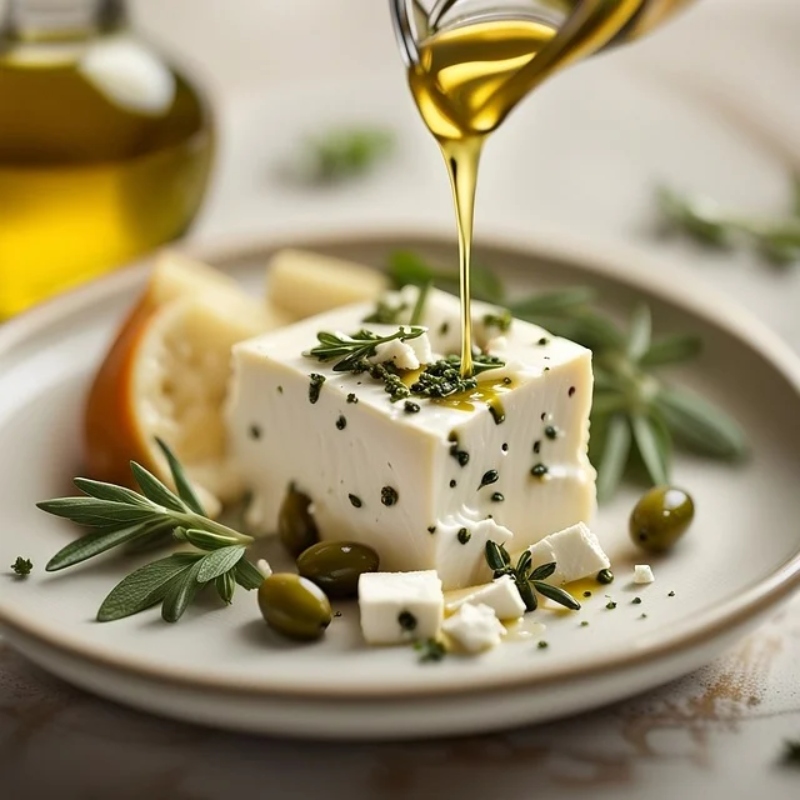
Πηγή Φωτογραφίας: freepik, American ‘landmine’ for Greek Feta – U.S. calls on Europe to abolish the PDO label



The negotiations between the European Union and the United States on tariffs are intensifying, as the 90-day extension window nears its end. Beyond LNG and defense systems, the U.S. is pushing to sell more agricultural products in the European market.
One key obstacle, according to the Americans, is the EU’s Geographical Indications (GI) system, particularly the Protected Designation of Origin (PDO) labels.
Greece in the Crosshairs – Dairy Products at Risk
This issue directly concerns Greece—specifically, Greek dairy producers.
Greek Feta and Italian Parmesan are highlighted by the U.S. Trade Representative (USTR) as typical cases where GIs block American products from gaining access to European and international markets.
According to the 2025 Special 301 Report by the USTR, published last week, GIs are seen as a “significant challenge”:
“The United States is working intensively through bilateral and multilateral channels to promote U.S. market access abroad and to ensure that the EU’s trade initiatives—along with those of its member states, like-minded countries, and relevant international organizations—do not undermine such access. GIs typically involve place names (or terms associated with a place) and identify products as having qualities, reputations, or characteristics essentially linked to that geographical origin.”
The USTR criticizes the EU’s GI agenda for undermining U.S. trademarks and creating barriers for U.S.-made products that use common terms, such as “Parmesan” or “Feta”:
“As a result, American producers are often barred from using those descriptions at all, even when they only resemble them. At best, they can only market products under labels such as ‘like Fontina,’ ‘style Gorgonzola,’ or ‘imitation Feta.’ This is costly, unnecessary, and could reduce consumer demand for non-EU products.”
The USTR operates under the U.S. President and negotiates trade deals directly with foreign governments.
Support from U.S. Dairy Groups
The USTR’s report was welcomed by American dairy industry groups like the Consortium for Common Food Names (CCFN), the National Milk Producers Federation (NMPF), and the U.S. Dairy Export Council (USDEC).
“The EU’s abuse of GIs is nothing more than a trade barrier disguised as intellectual property protection,” said Krysta Harden, USDEC President and CEO. “It unfairly strips American producers of the right to use widely understood terms and limits export opportunities.”
“Last year, the U.S. imported nearly $3 billion more in dairy products from the EU than it exported to Europe,” said Gregg Doud, NMPF President. “The EU’s GI system is a major contributor to this trade imbalance.”
“The EU’s approach to GIs is wholly unacceptable,” said Jaime Castaneda, Executive Director of CCFN. “We urge the U.S. government to push back on these unfair trade tactics and prevent trading partners from caving to EU pressure.”
Risks for Greek Feta in Global Markets
In 2024, Greek feta recorded record export levels—€785 million in value and 97,000 tons in volume.
But U.S. efforts to eliminate feta’s PDO status threaten Greek producers on three fronts:
- In the U.S. market itself, where Greek feta exports are still modest (around 6,500 tons in 2024) but growing rapidly, attracting non-Greek consumers. This growth is now endangered by both:
- Potential U.S. tariffs on EU goods, and
- Competition from products like President Feta, made by Lactalis USA, which is expanding feta production in California.
- In the European Union, where Greek feta dominates as an export product. A potential influx of U.S. (and other) imitation products could erode market share, even if Greek feta remains superior in quality.
- In third countries, where PDO protections give Greece a legal edge. Greece has won legal battles for the “Greekness” of feta abroad (e.g., in Chile). However, the U.S.—as seen in the 2025 Special 301 Report—is lobbying its trade partners not to differentiate between PDO products and generic imitations.
“No American president in modern history has recognized the widespread and harmful barriers faced by U.S. exporters more than President Trump,” said USTR ChiefAmbassador Jamieson Greer, upon submitting the 2025 National Trade Estimate (NTE) report to President Trump and Congress, two days after the 301 Report was published.
Source: pagenews.gr
Διαβάστε όλες τις τελευταίες Ειδήσεις από την Ελλάδα και τον Κόσμο