


Georgiadis Pushes Back: “No EU Override on Greek Justice” as Areios Pagos–EPPO Tension Escalates
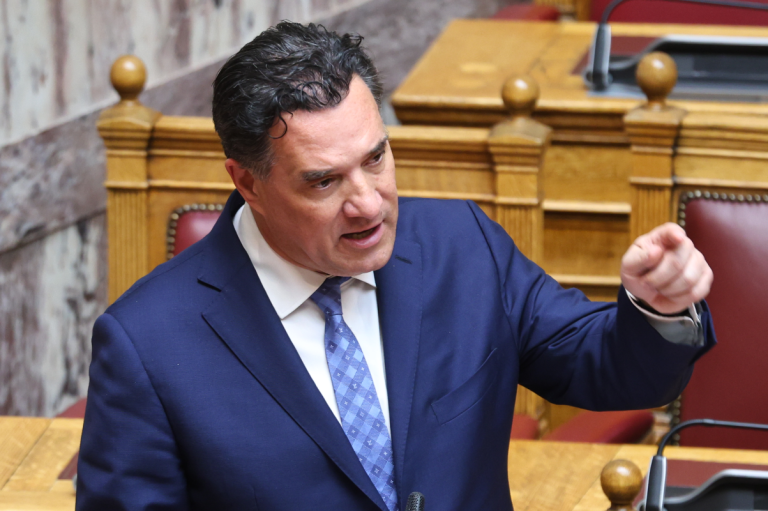
Πηγή Φωτογραφίας: eurokinissi//Georgiadis Pushes Back: “No EU Override on Greek Justice” as Areios Pagos–EPPO Tension Escalates



Key Takeaways
-
Hard constitutional line: Adonis Georgiadis argues that Greek judicial appointments and renewals are strictly governed by the Constitution, not EU-level interpretation.
-
Article 90 at the center: National authority over judicial career progression is presented as non-negotiable constitutional competence of the Hellenic Supreme Court (Areios Pagos).
-
EU institutional counterweight: The European Public Prosecutor’s Office (EPPO), led by Laura Kovesi, operates on the principle of functional independence across member states.
-
Core tension: Whether EPPO decisions on personnel and mandate continuity can indirectly override or pressure national judicial structures.
-
Political undertone: Georgiadis frames the dispute as part of a broader sovereignty vs supranational governance debate, not a purely legal disagreement.
-
Institutional complexity: The Greek side insists that only the national judiciary can decide on judicial status, while the EPPO model relies on EU-level structural autonomy.
-
Implicit concern raised: Whether institutional disputes are being used—intentionally or not—as leverage points affecting renewal decisions and judicial balance.
-
Broader impact: The conflict is increasingly seen as a test case for EU–member state boundaries in justice administration.

Adonis Georgiadis positions the issue as a constitutional safeguard debate, insisting that:
- National courts derive authority from the Constitution
- EU bodies cannot redefine internal judicial hierarchy
- Judicial independence must remain domestically anchored
At stake is not only legal interpretation but institutional hierarchy within the EU framework.
Structural Clash: Two Legal Logics
Two systems operate in parallel:
- Greek constitutional system: centralized judicial governance via the Hellenic Supreme Court (Areios Pagos)
- EU prosecutorial system: decentralized enforcement model under EPPO
The friction arises when operational independence meets constitutional sovereignty.

Institutional Pressure Point: Renewals & Mandates
At the core of the controversy lies a sensitive issue:
- Judicial and prosecutorial term renewals
- Authority over continuation vs termination of mandates
- Potential overlap between national approval and EU functional continuity
This is where legal interpretation turns into institutional influence debate.
The debate is no longer limited to legal technicalities.
It has evolved into a systemic question:
- Who defines the boundaries of judicial independence in the EU?
- Can supranational prosecutorial structures influence national judicial continuity?
- Where does constitutional sovereignty begin and end?

Adonis Georgiadis presents the issue as a red line moment for constitutional authority, warning against any precedent that could dilute the role of the Hellenic Supreme Court (Areios Pagos) in judicial governance.
The real question: cooperation—or constitutional collision?
Source: pagenews.gr
Διαβάστε όλες τις τελευταίες Ειδήσεις από την Ελλάδα και τον Κόσμο








Το σχόλιο σας