EU Funds €277M Rail Upgrade: Greece Builds a New Geopolitical Transport Corridor
 ΧΡΟΝΟΣ ΑΝΑΓΝΩΣΗΣ 4 '
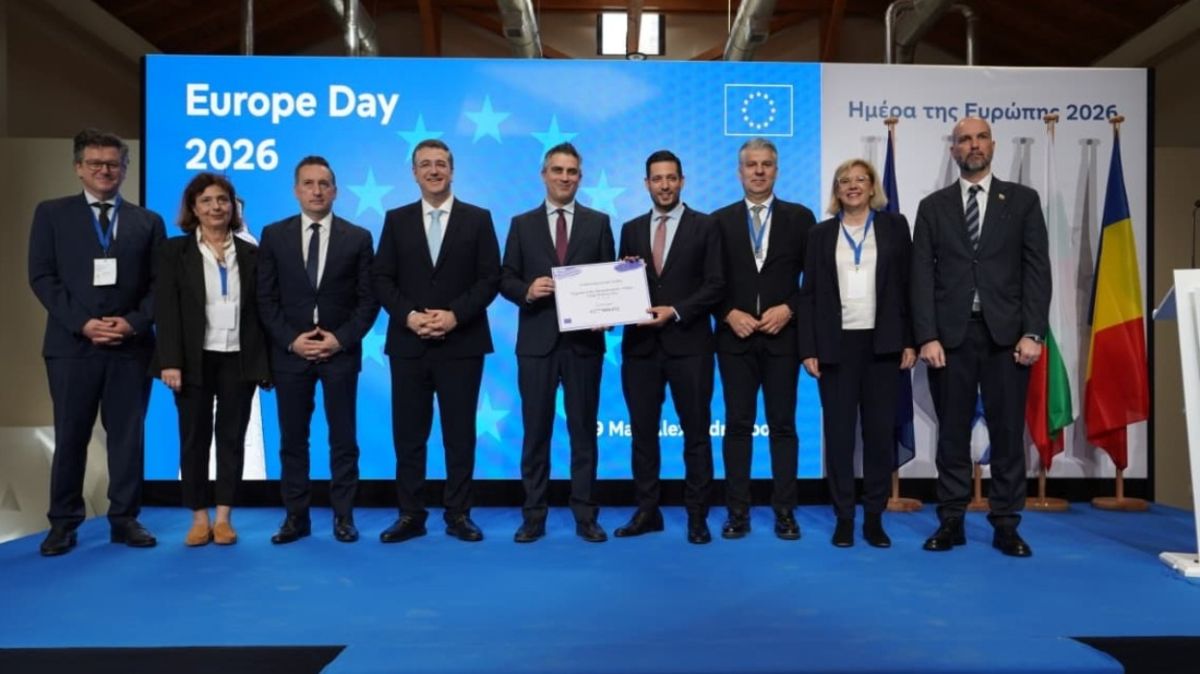
Πηγή Φωτογραφίας: Ministry of public transport//EU Funds €277M Rail Upgrade: Greece Builds a New Geopolitical Transport Corridor



The European Union has allocated €277 million to Greece for the upgrade of the Alexandroupoli–Pythio railway line, a project widely viewed as part of a broader geopolitical and strategic transformation of transport infrastructure in Southeastern Europe.
The symbolic funding handover took place in Alexandroupoli during Europe Day celebrations, with Greek officials receiving the funds from the European Commission in the presence of senior EU and national representatives.
The funding was formally delivered to Greece’s Minister of Infrastructure and Transport Christos Dimas by EU Commissioner for Transport Apostolos Tzitzikostas, alongside Deputy Minister of Transport Konstantinos Kyranakis.
While officially a transport infrastructure project, the railway upgrade is increasingly being framed as part of a larger strategic shift that links Europe’s southern, eastern and northern corridors.
The 68.3-kilometer rail and road corridor between Alexandroupoli and Pythio is part of a wider European transport axis connecting the Aegean Sea with the Black Sea and onward to the Baltic region.
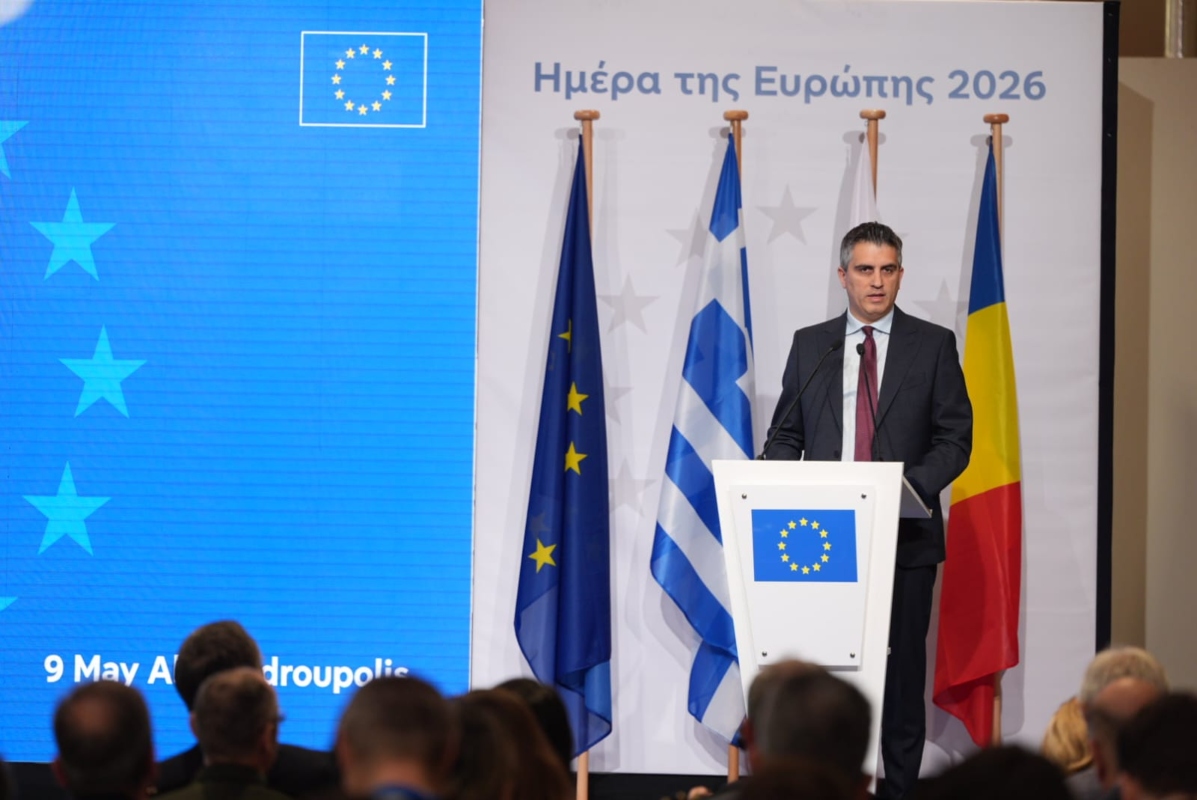
EU officials described the project as essential for strengthening economic integration, regional development and strategic autonomy across Europe’s eastern flank.
“These projects are a link in a major European railway and road axis connecting the Aegean with the Black Sea, Thessaloniki with Bucharest,” said Apostolos Tzitzikostas, emphasizing the project’s cross-border and strategic importance.
Greek officials also highlighted the geopolitical dimension of the investment, framing Greece as a key hub within the Trans-European Transport Network (TEN-T), especially in periods of global instability.
Minister Christos Dimas stressed that Greece sits at a critical crossroads of international transport and energy routes, making infrastructure investment a national priority.
“Greece is at a strategic crossroads of international networks and a connecting link with Europe,” he said, adding that transport infrastructure is essential for economic resilience, security and integration into global supply chains.
The project is part of the broader Baltic–Black Sea–Aegean (BBA) corridor, which aims to establish a continuous north–south transport axis across Europe.
Deputy Minister Konstantinos Kyranakis described the initiative as a historic shift toward regional cooperation, noting that Greece, Bulgaria and Romania are now working jointly after years of fragmented infrastructure policies.
“For decades, countries were not cooperating but blocking each other. Now we are finally working together,” he said.
He also revealed plans for deeper connectivity between Alexandroupoli and Tallinn, effectively linking the southern and northern ends of Europe through a unified rail corridor.
The envisioned Baltic–Black Sea–Aegean axis is expected to strengthen trade flows, improve logistics efficiency and enhance military mobility across the EU’s eastern border region.
Officials also emphasized that the project has a dual-use dimension, meaning it supports both civilian transport and strategic defense mobility—an increasingly important priority in EU planning.
At the same time, the corridor is being positioned as a potential link to global trade routes such as the India–Middle East–Europe Economic Corridor (IMEC), which could reshape international supply chains.
For Greece, the Alexandroupoli–Pythio railway upgrade is more than a transport investment. It is part of a broader strategy to reposition the country as a key gateway between Europe, the Balkans and global maritime routes.
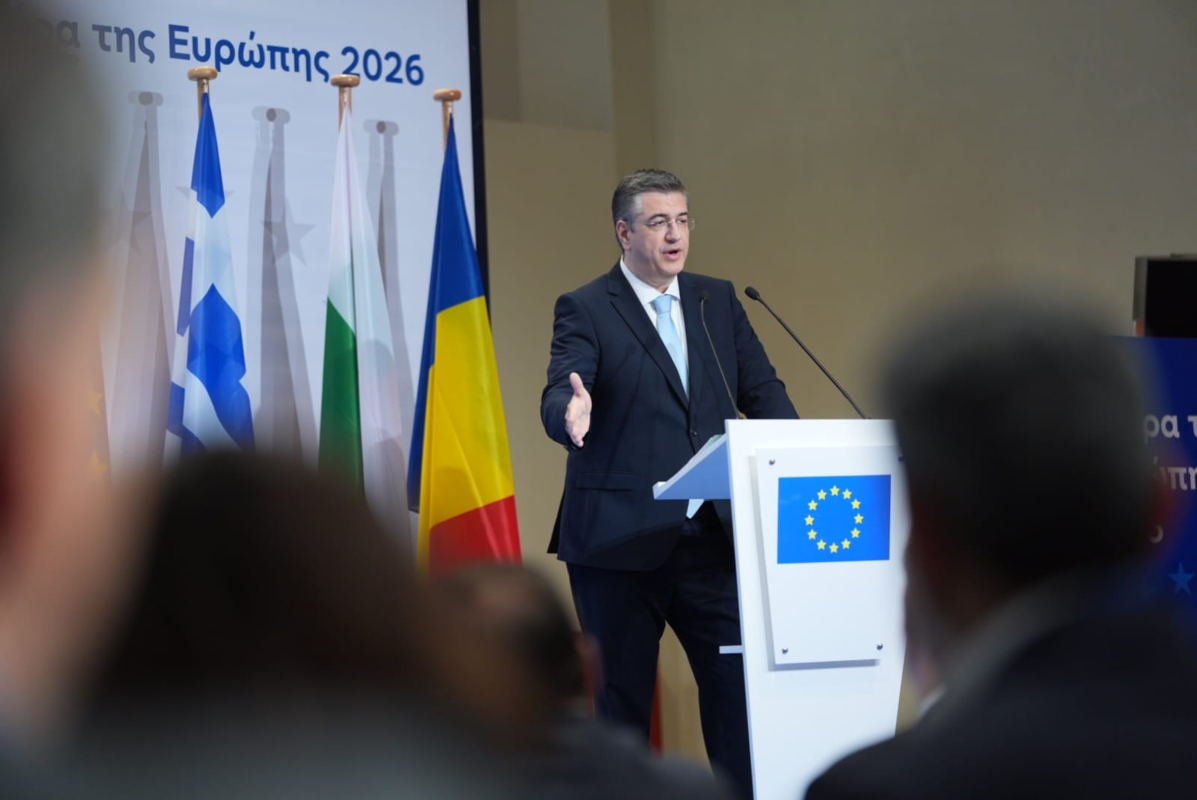
In this context, Alexandroupoli is emerging as a strategic logistics and energy hub, reinforcing its role in Europe’s evolving economic and security architecture.
The broader political message is clear: infrastructure is no longer just about connectivity—it is about influence, resilience and geopolitical positioning in a rapidly changing world.
Source: pagenews.gr
Διαβάστε όλες τις τελευταίες Ειδήσεις από την Ελλάδα και τον Κόσμο