Halki Returns to the Table: Erdogan, Bartholomew and the Geopolitics Behind the Seminary’s Reopening
 ΧΡΟΝΟΣ ΑΝΑΓΝΩΣΗΣ 7 '
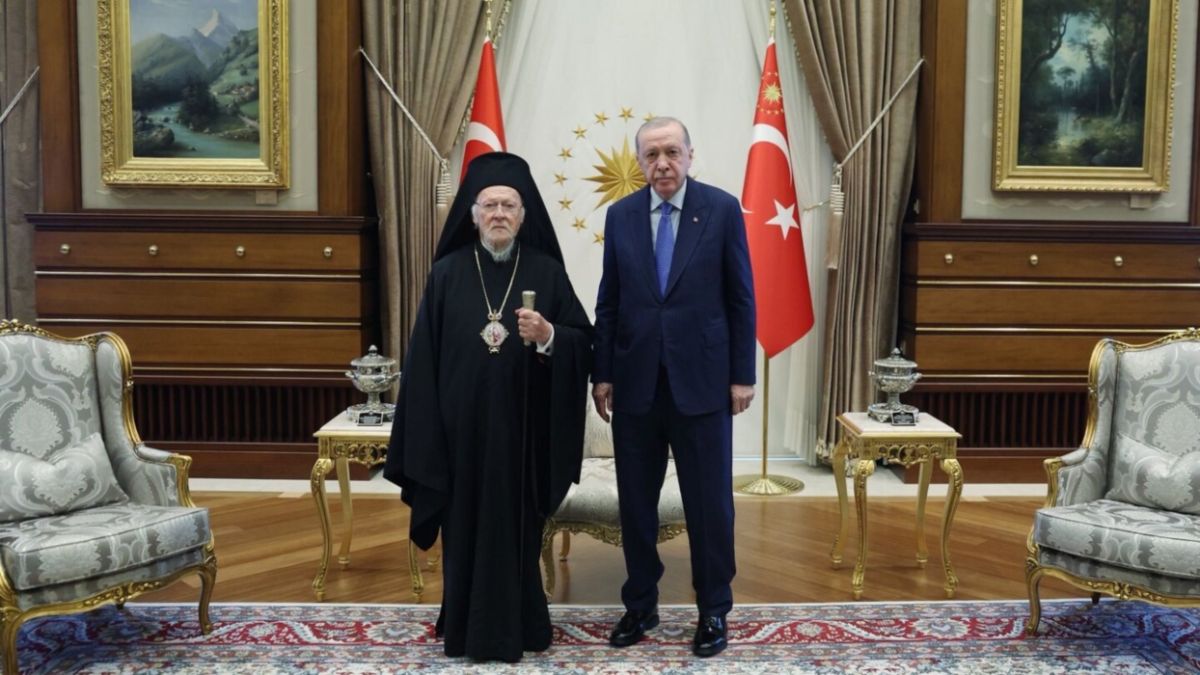
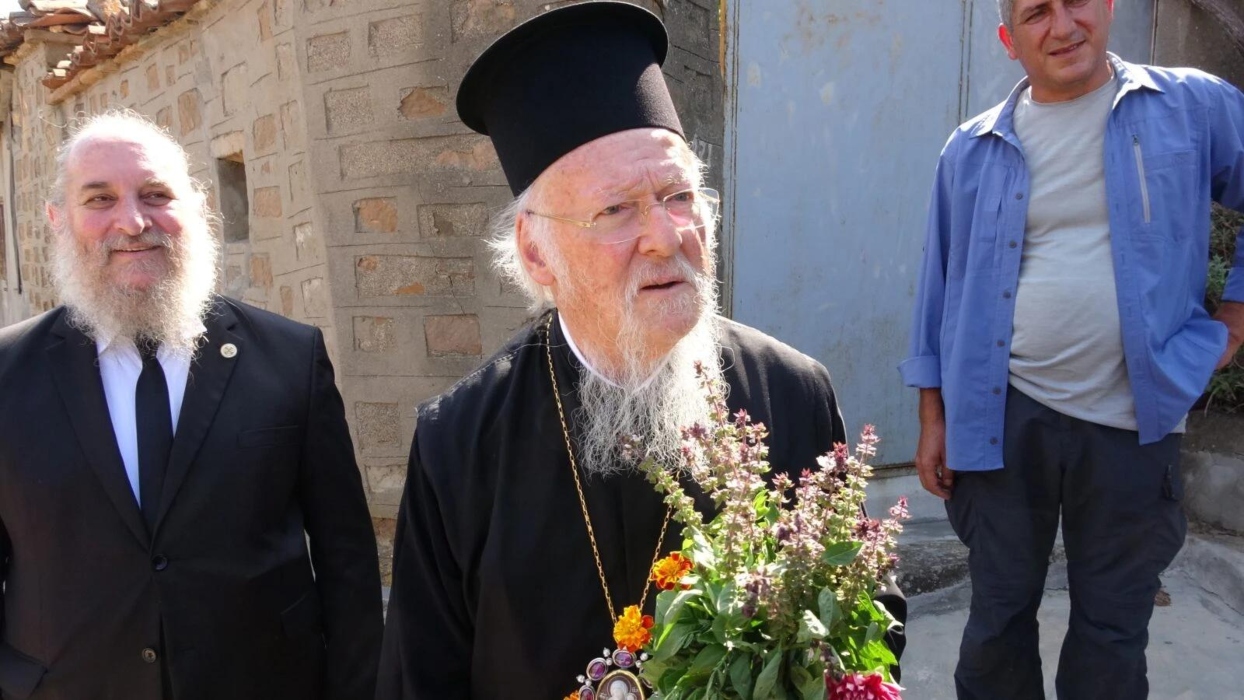
Πηγή Φωτογραφίας: Turkish President Recep Tayyip Erdogan meets with Orthodox Patriarch of Bartholomew at the presidential complex, Ankara, Turkey, June 16, 2026. — Turkish Presidency



Turkish President Recep Tayyip Erdogan’s meeting with Ecumenical Patriarch Bartholomew in Ankara could, under different circumstances, have been viewed as a routine encounter between Turkey’s political leader and the spiritual head of the world’s Orthodox Christians.
But the timing is anything but routine.
The meeting comes at a moment when hopes for the reopening of the Halki Seminary are stronger than they have been in years, while the issue has re-emerged in discussions between Ankara and Washington and against the backdrop of renewed tensions between Turkey and Greece.
Although the Turkish presidency released no details regarding the talks, diplomatic observers believe the future of Halki was among the central topics discussed.
The significance of the meeting is amplified by its proximity to the upcoming NATO Leaders’ Summit, scheduled to take place in Ankara on July 7–8 and expected to be attended by U.S. President Donald Trump.
A School That Became an International Diplomatic Issue
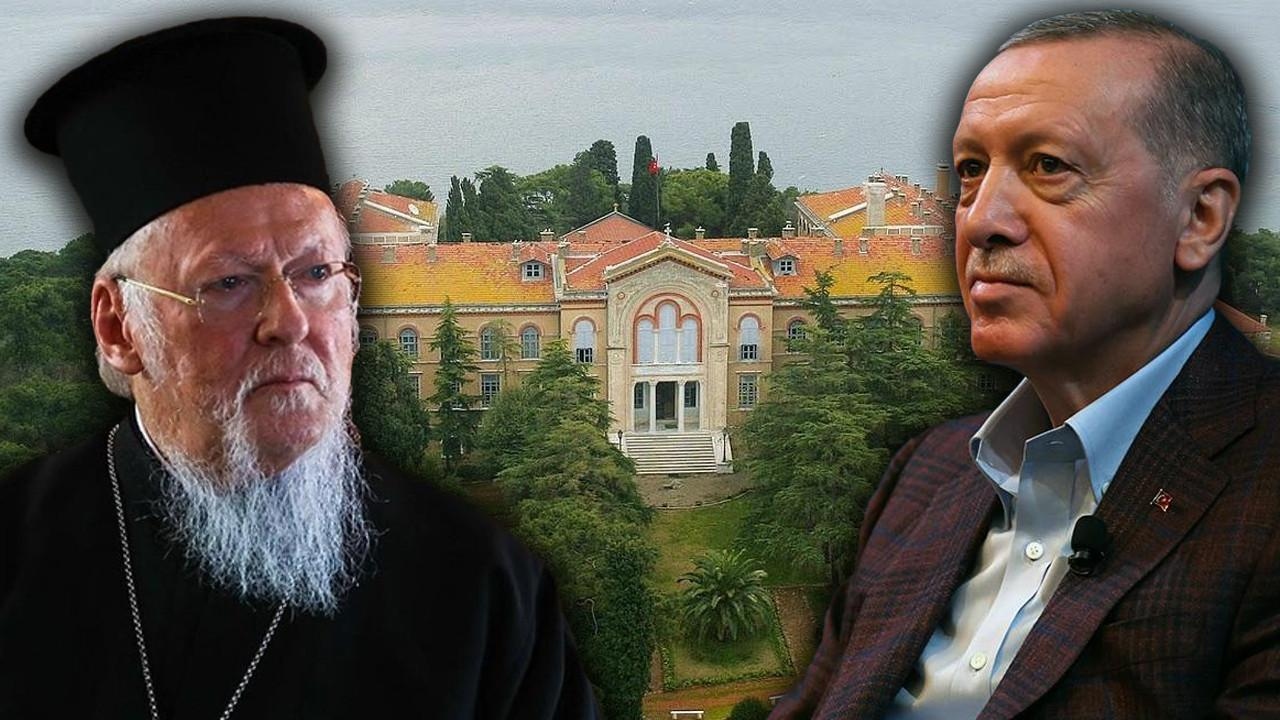
Located on Heybeliada (Halki), one of the Princes’ Islands near Istanbul, the Halki Seminary was founded in 1844 and served for more than a century as the principal theological institution of the Ecumenical Patriarchate.
Generations of Orthodox clergy were educated there, including Patriarch Bartholomew himself.
The seminary was closed in 1971 following a ruling by Turkey’s Constitutional Court requiring all private higher education institutions to come under state control.
The Patriarchate rejected the arrangement, and the school ceased operations.
Since then, its reopening has become one of the most symbolic and politically sensitive issues in Turkey’s relations with the Orthodox world, the United States, and the European Union.
For many Western governments, the closure has long been viewed as a test case for religious freedom and minority rights in Turkey.
The Trump Factor
The issue gained new momentum following Donald Trump’s return to the White House.
According to Patriarch Bartholomew, Erdogan had already instructed Education Minister Yusuf Tekin in 2024 to explore legal and administrative pathways for reopening the seminary.
Bartholomew revealed that Tekin visited Halki in May of that year and that constructive discussions subsequently took place among Turkey’s Ministry of Education, the Higher Education Council, and representatives of the Patriarchate.
Yet the real turning point appears to have been Erdogan’s meeting with Trump at the White House in September 2025.
According to Turkish and American sources, the reopening of Halki was one of the few issues personally raised by the U.S. president during their discussions.
Erdogan’s response attracted significant attention.
“We are ready to do whatever is incumbent upon us regarding the Heybeliada school,” he reportedly told Trump, adding that he would discuss the matter directly with Patriarch Bartholomew upon his return to Turkey.
For many analysts, that commitment injected new political momentum into an issue that had remained frozen for more than half a century.
Where Religious Diplomacy Meets NATO
The broader geopolitical context gives the matter even greater significance.
Turkey is preparing to host one of the most consequential NATO summits in recent years, with discussions expected to focus on Ukraine, the Middle East, Black Sea security, and relations with Russia.
Against that backdrop, reopening Halki could serve as a powerful goodwill gesture toward the United States and Europe.
It would also allow Ankara to improve its international image on questions of religious freedom and minority rights—areas where Turkey continues to face criticism from Western governments and human rights organizations.
For Washington, the issue carries symbolic importance far beyond the Orthodox community itself.
For decades, successive U.S. administrations have encouraged Turkey to reopen the seminary as part of a broader effort to strengthen religious pluralism and democratic norms.
The Greek-Turkish Dimension
The renewed focus on Halki coincides with a period of rising friction between Turkey and Greece.
At the center of recent tensions is a Turkish draft law aimed at codifying Turkey’s territorial waters in the Aegean Sea at six nautical miles, an issue that revives long-standing disputes over maritime boundaries and sovereignty.
Against this backdrop, Patriarch Bartholomew sought to distance minority communities from geopolitical rivalries.
Speaking recently, he argued that tensions between Ankara and Athens should not be projected onto minority populations in either country.
“Greek Orthodox citizens of Turkey want to be treated equally and to feel like an integral part of the country, not as second-class citizens,” he said.
He added that he believed members of the Muslim minority in Greece shared similar aspirations.
His remarks were widely interpreted as a call for both governments to separate minority rights from broader geopolitical disagreements.
Ankara’s Policy of Reciprocity
For Turkey, however, the Halki issue has rarely been viewed in isolation.
Successive Turkish governments have linked the reopening of the seminary to the status of the Muslim Turkish minority in Greece’s Western Thrace region.
Ankara has repeatedly called on Athens to recognize the community’s Turkish identity, permit the election of muftis, and address disputes involving minority schools and religious foundations.
Greece rejects the linkage, arguing that the reopening of Halki is a matter of religious freedom and should not be subject to bilateral bargaining.
Yet in practice, the issue has often been treated as part of a wider diplomatic equation.
The result is that Halki remains caught between principles, politics, and strategic calculations.
A Rare Window of Opportunity
For the first time in many years, several factors appear to be aligning simultaneously.
Trump’s personal intervention, Erdogan’s discussions with Bartholomew, the completion of restoration work at the seminary, and Ankara’s broader effort to improve ties with Western partners have created a political opening that did not previously exist.
That does not mean reopening is guaranteed.
The final decision remains a political one.
And as the history of Halki has demonstrated over the past five decades, political considerations have often proven more difficult to resolve than legal or technical obstacles.
The question today is no longer whether the seminary is physically ready to reopen.
The real question is whether the geopolitical conditions have finally matured enough for Ankara to take a step it has avoided for more than fifty years.
If it does, the reopening of Halki will not simply be a religious event.
It will be a diplomatic signal reaching far beyond Istanbul—from Athens and Brussels to Washington and the wider Orthodox world.
Source: pagenews.gr
Διαβάστε όλες τις τελευταίες Ειδήσεις από την Ελλάδα και τον Κόσμο