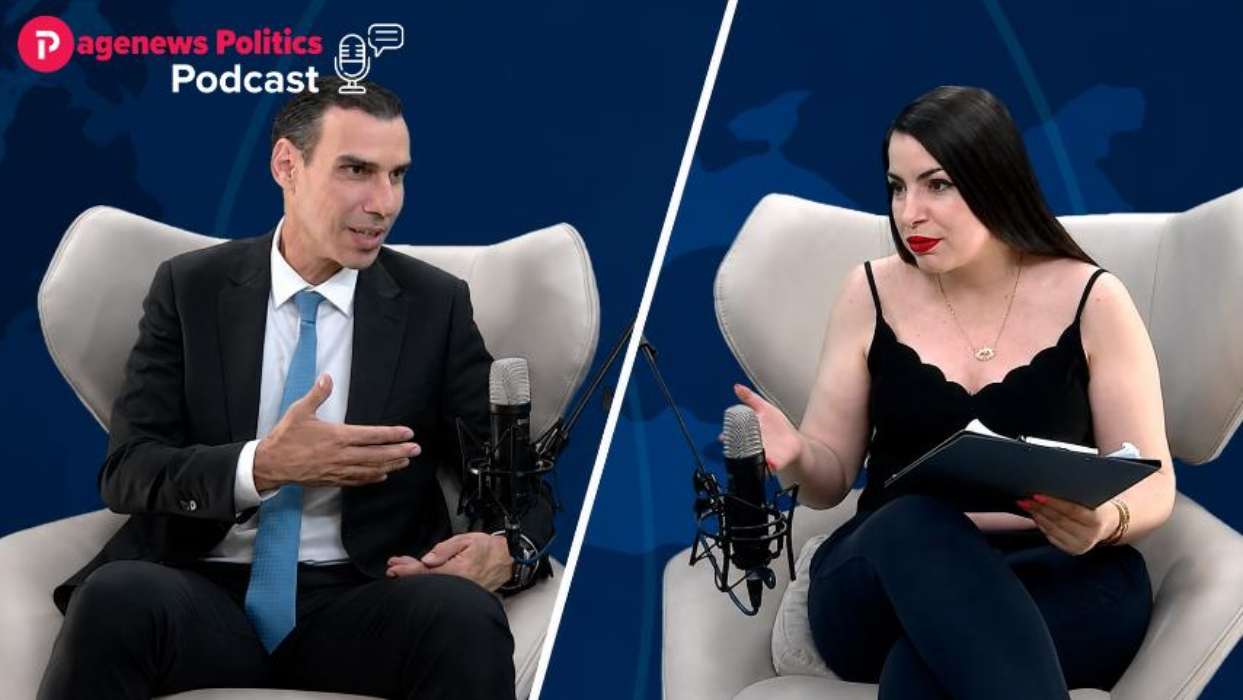
Economist: Exarchou: Greece Is Moving from Recovery to Self-Sustaining Growth
 ΧΡΟΝΟΣ ΑΝΑΓΝΩΣΗΣ 6 '
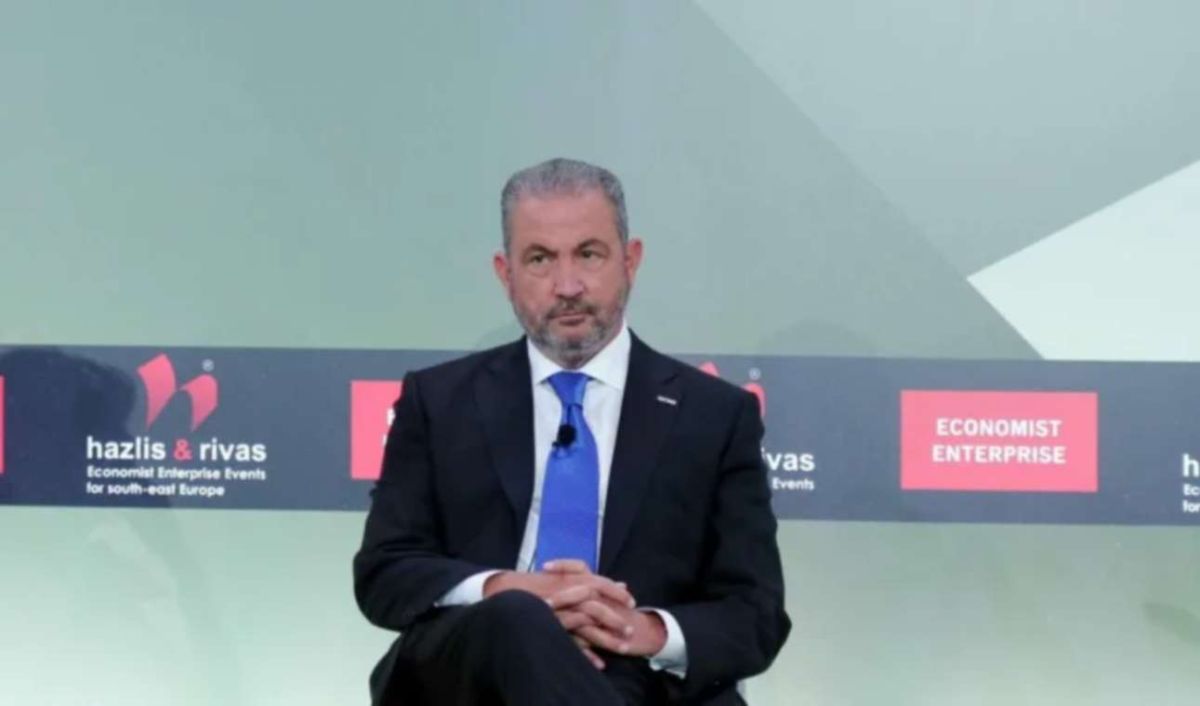
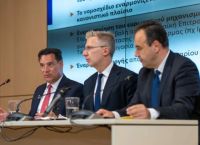
Πηγή Φωτογραφίας: eurokinissi//Economist: Exarchou: Greece Is Moving from Recovery to Self-Sustaining Growth



From recovery to sustainable growth
According to Exarchou, Greece has successfully completed the difficult chapter of economic recovery following years of financial crisis and structural adjustment.
“Greece has completed a successful recovery phase. If we ensure the continuation of private investment and the attraction of foreign capital, the Greek economy can now move into a stronger phase of development based on its own productive foundations, beyond the Recovery and Resilience Facility.”
Rather than relying on extraordinary European funding, Exarchou argued that the country’s future prosperity will depend on productive investments, business confidence and the ability to attract long-term international capital.
For AKTOR, this transition is reflected in its own strategic investment programme.
“Within this new environment, AKTOR is implementing investments worth €3 billion across LNG infrastructure, renewable energy, PPP and concession projects, and construction.”
A fundamental shift in investor confidence
One of Exarchou’s strongest observations concerned the dramatic transformation of Greece’s international reputation among institutional investors.
He described three distinct phases.
Initially, merely being identified as a Greek company discouraged international investors.
“There was a time when simply saying a company was Greek caused foreign investors to leave the table.”
The second phase brought curiosity but little commitment.
“Later, investors were willing to listen to Greek investment stories, but they were still reluctant to commit capital.”
Today, however, the landscape has fundamentally changed.
“Today we are witnessing international investors placing substantial capital in Greece. Throughout my professional career I have never seen such confidence in the Greek economy.”
He cited recent successful capital raises involving Credia Bank, PPC (DEH) and ADMIE as evidence that international markets increasingly view Greece as a credible destination for long-term investment.
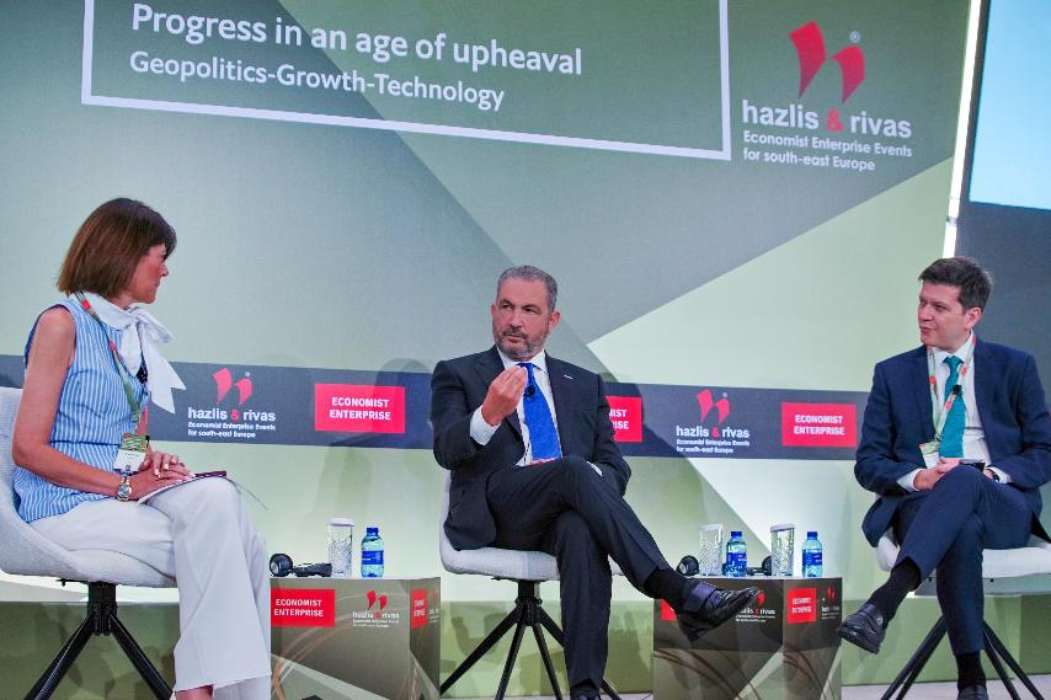
Energy is no longer just economics—it is national security
Exarchou argued that Europe’s experience following Russia’s invasion of Ukraine permanently altered the relationship between energy and geopolitics.
“Energy is security.”
The dependence on Russian natural gas demonstrated how energy can become a geopolitical weapon.
“Europe has learned its lesson—although in a painful way.”
He believes the European Union is now moving in the right direction by diversifying its energy mix and strengthening strategic autonomy.
Greece is emerging as Europe’s strategic LNG gateway
Exarchou devoted particular attention to Greece’s growing geopolitical importance within Europe’s energy architecture.
According to him, Greece anticipated many of today’s challenges earlier than most European partners through investments in infrastructure connected to the Vertical Gas Corridor.
“Greece found itself one step ahead because its infrastructure allows it to become a key transit hub for American LNG.”
He argued that several geopolitical developments now reinforce Greece’s strategic role simultaneously:
- the gradual elimination of Russian gas imports,
- Qatar’s reduced export flexibility due to regional instability,
- Europe’s increasing demand for diversified LNG supplies.
“Long-term LNG contracts remain the only realistic path toward restoring balance in Europe’s energy mix.”
He also praised the Greek government’s support for the Atlantic SEE LNG Trade initiative through DEPA Commercial, describing public-private cooperation as essential for strengthening regional energy security.
Europe must regain competitiveness
While supporting the energy transition, Exarchou offered one of his sharpest critiques of current European industrial policy.
“The Green Transition was designed too quickly and implemented incorrectly.”
He argued that excessive energy costs have undermined European competitiveness.
“Energy prices have become unbearable for both households and businesses.”
Rather than abandoning decarbonisation, he proposed a more pragmatic transition.
“Europe should make temporary compromises that preserve competitiveness while continuing to invest in renewable energy.”
Renewables, he stressed, remain indispensable for strategic autonomy—but they cannot alone guarantee Europe’s energy security.
Strategic autonomy requires stronger European decision-making
Beyond energy, Exarchou addressed Europe’s broader geopolitical position.
Quoting Canadian Prime Minister Mark Carney, he remarked:
“If you are not sitting at the table, you are on the menu.”
For Europe, this means strengthening its strategic sovereignty.
“The European Union must become capable of acting as an equal among the world’s major powers.”
Achieving that objective requires faster decision-making and more effective institutional coordination.
He argued that member states transferred sovereignty to Brussels in order to create a stronger Union, yet that ambition has not been fully realised.
Europe needs industrial champions
Another central theme of Exarchou’s intervention was industrial consolidation.
“Europe needs its own champions.”
He argued that only globally competitive European corporations can withstand growing competition from the United States and China.
Medium-sized economies, he noted, cannot succeed individually against larger geopolitical powers.
“The only way for medium-sized countries to respond to global competition is through the right alliances that strengthen the European Union.”
A new investment cycle for Greece
Exarchou’s intervention reflected a broader belief that Greece has entered a structural turning point.
Rather than discussing short-term macroeconomic indicators, he focused on the country’s long-term transformation.
His central thesis was straightforward:
- Greece has regained international credibility.
- Foreign capital is returning.
- Energy infrastructure is becoming a geopolitical asset.
- Private investment must replace emergency European funding as the engine of growth.
- Europe itself must become stronger, more competitive and strategically autonomous.
The message was ultimately one of confidence rather than complacency.
As Greece moves beyond the era of crisis management and recovery programmes, Exarchou argued that the country’s next chapter will be written by investment, productive capacity, energy security and international competitiveness—foundations capable of sustaining growth long after extraordinary European support has ended.
Source: pagenews.gr
Διαβάστε όλες τις τελευταίες Ειδήσεις από την Ελλάδα και τον Κόσμο