Trump vs Sánchez: Trade, NATO and Iran Become One Strategic Front
 ΧΡΟΝΟΣ ΑΝΑΓΝΩΣΗΣ 6 '
Πηγή Φωτογραφίας: AP Photo//Trump vs Sánchez: Trade, NATO and Iran Become One Strategic Front



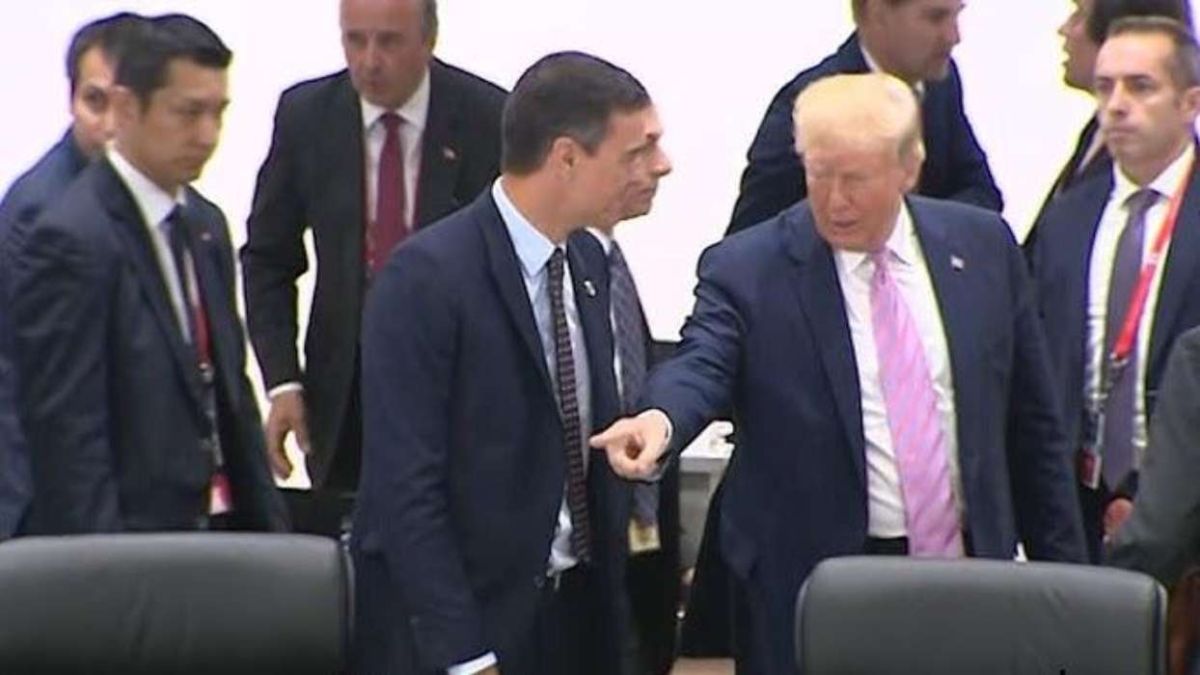
Donald Trump has once again demonstrated that, in his foreign policy, security commitments, trade relations and geopolitical alignment are no longer separate policy areas but components of a single negotiating strategy.
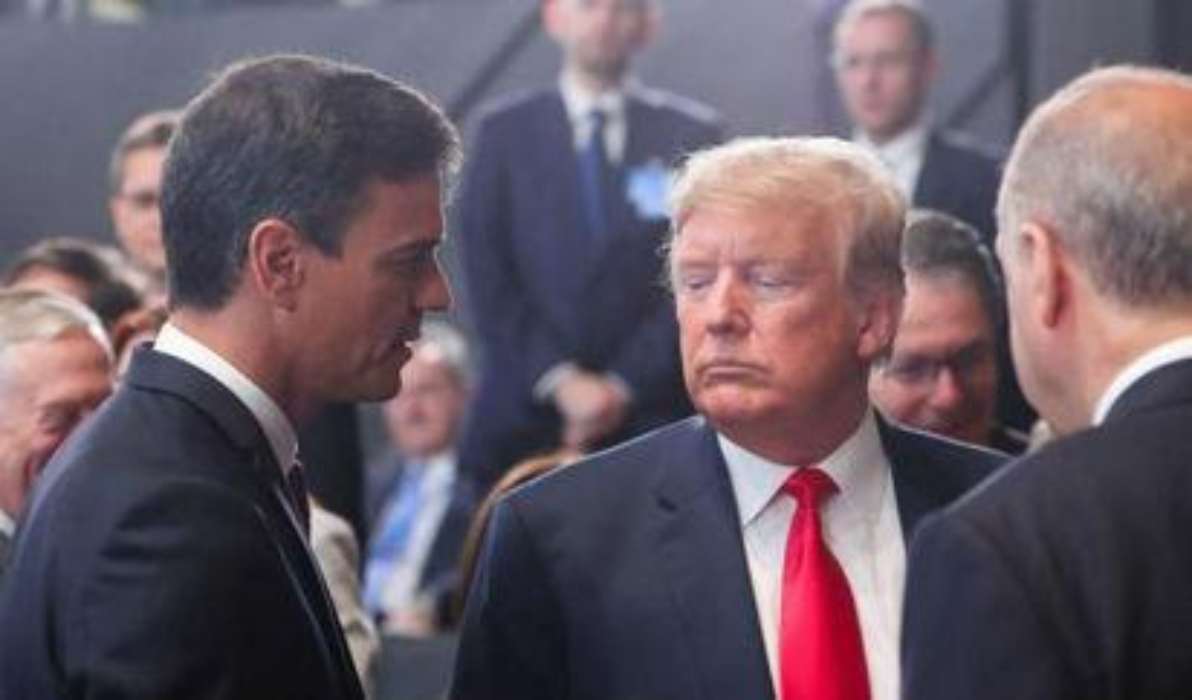
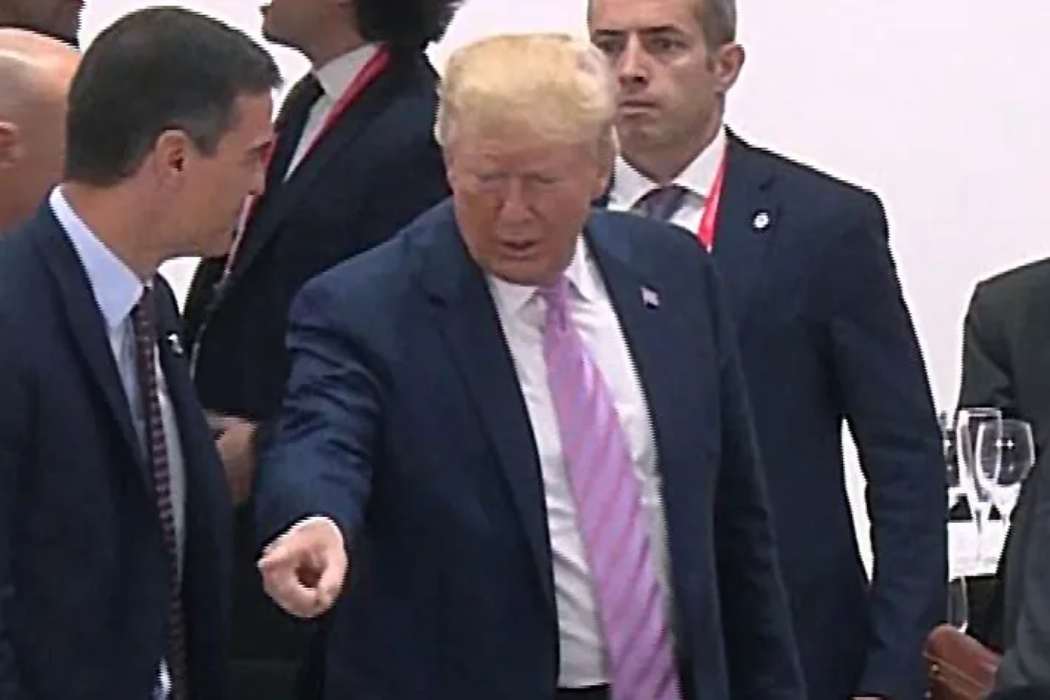
From the NATO Summit in Ankara, Trump publicly instructed Treasury Secretary Scott Bessent to begin preparations for suspending trade with Spain, accusing Madrid of failing to carry its share of NATO’s defence burden and refusing to fully support Washington’s Middle East strategy.
The move immediately raised legal and political questions because the United States cannot negotiate bilateral trade arrangements with Spain independently of the European Union, whose Common Commercial Policy remains an exclusive competence of Brussels.
Yet the significance of Trump’s statement lies less in its immediate legal feasibility than in the political signal it sends.
A New Form of Strategic Pressure
Trump’s remarks reveal a broader evolution in American diplomacy.
For decades, NATO, trade policy and security cooperation were managed through separate institutional frameworks.
Trump increasingly merges them.
Countries unwilling to meet American expectations on defence spending now risk economic pressure.
Those resisting Washington’s geopolitical priorities may face commercial consequences.
The message is straightforward:
Security guarantees are no longer unconditional.
The 5% NATO Debate
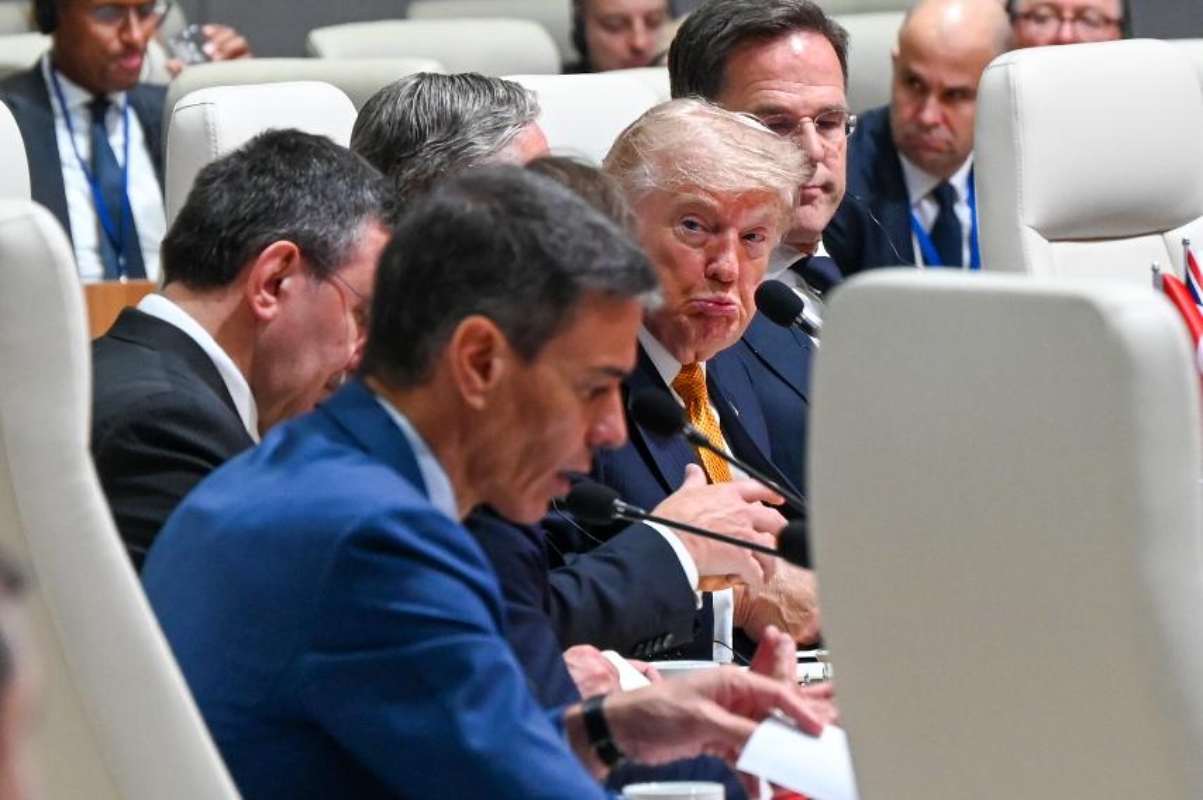
The immediate trigger remains Spain’s refusal to fully embrace NATO’s proposed target of allocating 5% of GDP to defence.
Trump has repeatedly argued that European allies continue to benefit from American military protection while contributing disproportionately less.”I don’t want any trade with them.”
His criticism reflects a central pillar of his foreign policy since returning to office:
American taxpayers should no longer subsidize Europe’s security.
Rutte Tries to Preserve Alliance Unity
NATO Secretary General Mark Rutte attempted to de-escalate the confrontation.
He acknowledged that Spain had significantly increased defence spending during the previous year, reaching approximately 2% of GDP, while emphasizing that further discussions would continue inside the Alliance.
Behind the diplomatic language, however, the disagreement exposes a widening divide between Washington and several European capitals over burden-sharing.
Spain Refuses to Change Course
Madrid reacted calmly.
Prime Minister Pedro Sánchez’s office described Trump’s comments as largely predictable, insisting that bilateral relations remain strong.
Spanish officials also stressed an important institutional reality.
Trade policy is negotiated by the European Union—not by individual member states.
Any attempt by Washington to selectively target Spain would therefore inevitably become an issue between the United States and the European Commission.
Spain also noted that it currently runs a trade deficit with the United States, limiting Trump’s leverage compared with previous tariff disputes involving Germany or France.
Iran Adds a Second Layer to the Dispute
The disagreement extends well beyond defence spending.
Washington remains dissatisfied with Spain’s refusal to authorize the use of its territory and airspace for American military operations connected to Iran.
The issue carries considerable strategic importance.
Spain hosts two major U.S. military facilities in southern Europe that play critical roles in naval deployments and logistical support across the Mediterranean.
Madrid’s reluctance therefore touches not only NATO burden-sharing but also operational planning for potential future contingencies involving Tehran.
Trade as a Foreign Policy Weapon
Trump’s latest intervention reinforces an emerging pattern visible across multiple disputes.
Rather than viewing tariffs and commercial restrictions primarily as economic instruments, the White House increasingly treats them as extensions of national security policy.
This approach has already appeared in negotiations involving:
- China,
- Canada,
- Mexico,
- the European Union,
- and, more recently, countries reluctant to align fully with U.S. strategic priorities.
Trade policy is becoming an instrument of geopolitical leverage.
Europe Faces a Strategic Test
The confrontation also illustrates the limits of American bilateral pressure inside the European Union.
Unlike sovereign trade partners, EU member states cannot negotiate independent commercial agreements with Washington.
Any meaningful restriction on trade with Spain would require a broader confrontation with Brussels.
That significantly raises the political cost for the United States.
It also reinforces the argument increasingly advanced within Europe that greater strategic autonomy requires stronger common institutions capable of responding collectively to external pressure.
The New Logic of Trump’s Foreign Policy
The dispute with Spain reflects something larger than a disagreement over military budgets.
It illustrates the emergence of an integrated American negotiating doctrine where:
- defence spending,
- trade,
- access to military infrastructure,
- sanctions,
- and geopolitical alignment
are treated as interconnected elements of the same strategic equation.
For allies, the message is increasingly clear:
Economic relations can no longer be separated from security commitments.
A Turning Point for Transatlantic Relations
Whether Trump’s threat ultimately translates into concrete commercial measures remains uncertain.
Legally, the obstacles are substantial.
Politically, however, the episode signals a profound shift.
The United States is increasingly asking allies not merely to contribute more financially, but to align more closely with Washington’s global strategic objectives.
In that environment, NATO summits are no longer confined to discussions about defence.
They have become arenas where military commitments, economic policy, energy security and geopolitical loyalty are negotiated simultaneously—reshaping the very foundations of the transatlantic alliance.
Source: pagenews.gr
Διαβάστε όλες τις τελευταίες Ειδήσεις από την Ελλάδα και τον Κόσμο