European Commission Approves Greece €4.77bn Social Climate Plan:Heating Support,Housing,Metro,Social Leasing
 ΧΡΟΝΟΣ ΑΝΑΓΝΩΣΗΣ 8 '

Πηγή Φωτογραφίας: pixabay//European Commission Approves Greece’s €4.77bn Social Climate Plan: Heating Support, Housing, Metro and Social Leasing



The European Commission has approved Greece’s Social Climate Plan, unlocking a major new funding cycle for vulnerable households, housing, public transport and small businesses.
The total package amounts to €4.77 billion for the 2026-2032 period.
Of that:
- €3.58 billion, or 75%, will come from the EU Social Climate Fund
- €1.19 billion, or 25%, will come from national financing
The Greek plan is the fifth national plan approved so far and, according to the Commission, the largest approved to date.
The key point is that this is not an extension of the EU Recovery Fund.
It is a separate instrument designed to cushion the social impact of the EU’s new carbon-pricing system for buildings and road transport, known as ETS2.

default
The Real Story: Europe Is Building a Social Buffer Around the Green Transition
The political challenge behind the plan is straightforward.
As carbon pricing expands into heating and road transport, vulnerable households risk facing higher energy and mobility costs.
The Social Climate Fund was created precisely to offset that pressure.
For Greece, the plan is therefore not only about climate policy.
It is also a large-scale social protection mechanism.
The Commission estimates that the measures can help reduce energy and transport poverty while accelerating the shift away from fossil fuels.
Up to 460,000 Vulnerable Households in Focus
A large share of the plan targets households facing energy poverty.
The aim is to support around 460,000 vulnerable households by reducing their dependence on fossil fuels and cutting long-term energy costs.
The measures include:
- up to 62,000 home renovations
- around 200,000 heat pumps and solar water-heating systems
The policy logic is simple.
Instead of supporting higher energy bills indefinitely, the EU wants to help households permanently reduce consumption.
Heating Support for Up to 800,000 Households
The plan also includes temporary heating support for up to 800,000 vulnerable households per year.
This is designed to cushion the transition once ETS2 begins affecting heating costs.
The support acts as a bridge.
Households receive immediate help with energy costs while longer-term investments in insulation, renovations and cleaner heating systems are being implemented.
2,800 New Social Homes
One of the most important elements of the Greek plan is housing.
The package includes funding for 2,800 energy-efficient social homes.
That includes new low-emission housing as well as the conversion or renovation of public buildings for social housing purposes.
This gives the Social Climate Fund a broader role than a traditional climate instrument.
It becomes part of Greece’s housing policy.
And that matters at a time when housing affordability has become one of the most politically sensitive issues across Europe.
€226.6m for Student Housing
The plan also includes major support for public student housing.
Around €226.6 million will be directed to the renovation of student residences, improving living conditions for approximately 5,930 students.
The policy combines three goals:
energy efficiency,
social inclusion,
and better access to higher education.
Lower energy costs in student residences also reduce the effective cost of studying away from home.
Public Transport Becomes a Major Funding Priority
Transport is the second major pillar of the plan.
Around 300,000 vulnerable transport users are expected to benefit from stronger public transport services.
The package includes:
- more than 200 new electric buses
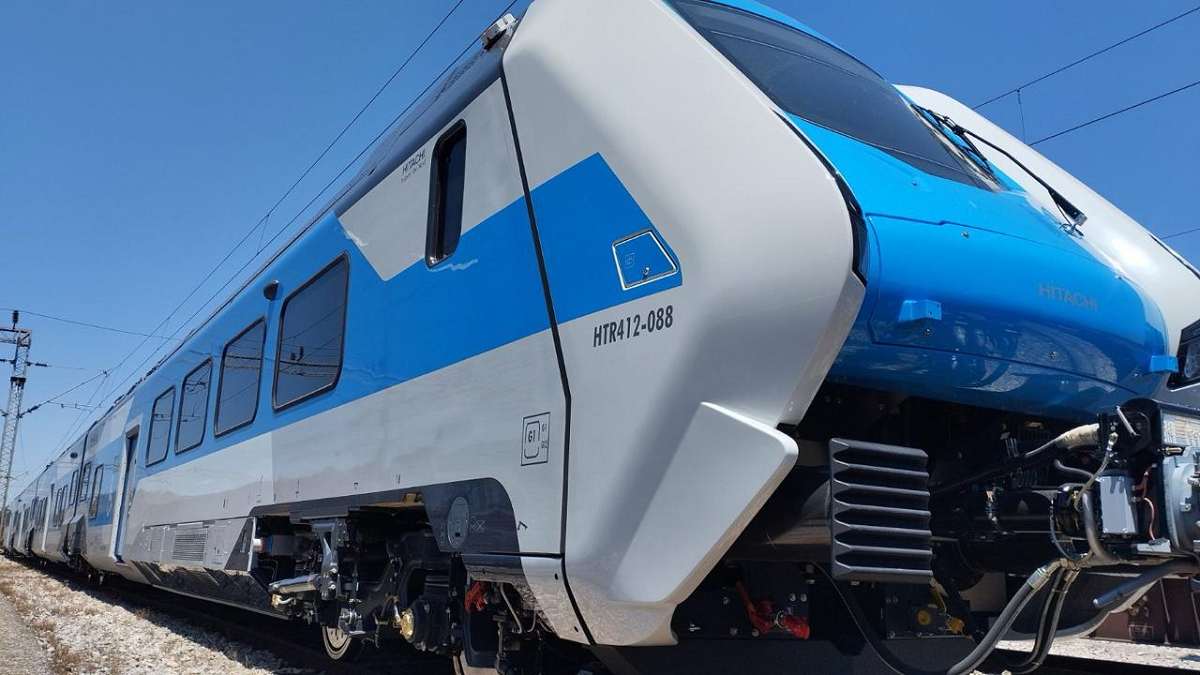
- 22 additional Athens Metro trainsets
- on-demand transport services in remote areas
- new charging infrastructure
The message from Brussels is clear:
the green transition in transport cannot rely only on individuals buying expensive electric cars.
Public transport has to improve at the same time.
Social Leasing: A New Model for Electric Mobility
One of the most innovative measures is the introduction of a social leasing scheme.
The program is designed to help around 15,000 vulnerable households that depend heavily on cars gain access to electric vehicles at an affordable monthly cost.
The idea is particularly relevant outside major city centers.
For many households, a car is not a luxury.
It is essential for work, education and access to basic services.
Social leasing aims to make zero-emission mobility accessible without requiring households to finance the full purchase price of an electric vehicle.
Thousands of New Charging Points
The plan also provides funding for the expansion of public charging infrastructure.
Around 4,400 publicly accessible charging points are expected to be developed.
The aim is to reduce one of the main barriers to EV adoption:
uneven charging infrastructure, especially outside the largest urban centers.
Accessibility Becomes a Core Part of the Plan
The Greek plan gives particular emphasis to people with disabilities.
Funding is expected to support more than 12,000 mobility devices such as:
electric wheelchairs,
mobility scooters,
and similar assisted-mobility equipment.
The plan also includes accessibility upgrades across rail and metro infrastructure.
According to the Commission’s official data, improvements are planned at 33 railway stations and 65 metro stations.
Special School Transport for Students With Disabilities
The package also includes dedicated zero-emission transport for students with disabilities.
This measure is designed to improve access to education while simultaneously modernizing the transport fleet.
It is a clear example of how the fund combines social inclusion with climate policy.
Micro-Enterprises Also Get Their Own Support Package
The plan is not limited to households.
Tens of thousands of vulnerable micro-enterprises are expected to receive support for:
cleaner buildings,
lower energy costs,
sustainable mobility,
and cleaner commercial vehicles.
This is an important political feature of the program.
Small businesses often have far less access to capital than larger companies, even though they are highly exposed to rising energy and transport costs.
The Social Climate Fund aims to prevent them from becoming collateral damage in the green transition.

This Is Not the RRF
This distinction is important.
The Recovery and Resilience Facility dominated the EU funding debate in recent years.
The Social Climate Fund is different.
It has:
a different funding source,
a different political objective,
and a different timeline.
It runs from 2026 to 2032 and is linked directly to revenues generated by the expansion of carbon pricing under ETS2.
Across the EU, the fund is expected to mobilize at least €86.7 billion.
That makes it one of the most important new financial instruments of the post-RRF era.
Political EU: Brussels Is Trying to Prevent a Backlash Against Climate Policy
The European Commission faces a significant political risk.
If the green transition becomes associated with higher heating bills, more expensive fuel and costly mandatory upgrades, public resistance could intensify sharply.
The Social Climate Fund is Brussels’ answer to that problem.
The EU is effectively saying:
carbon will become more expensive,
but part of the revenue will return to vulnerable households and businesses.
That is the core political bargain behind the fund.
Greece’s €4.77bn Plan Is Effectively the Social Insurance Policy for ETS2
The most important part of the Greek package is not any single subsidy.
It is the structure as a whole.
The EU is introducing stronger carbon pricing.
At the same time, Greece will use nearly €4.8 billion to finance:
cheaper heating,
better housing,
social housing,
electric buses,
new metro trains,
affordable EV access,
charging infrastructure,
and support for small businesses.
This is effectively the social insurance policy behind ETS2.
If the model works, Europe may be able to make the green transition socially manageable.
If it does not, carbon pricing in buildings and road transport could become one of the next major sources of political backlash across the EU.
For Greece, therefore, the €4.77 billion package is not simply another European funding envelope.
It is a test of whether the green transition can move forward without placing the heaviest burden on those least able to absorb the cost.
Source: pagenews.gr
Διαβάστε όλες τις τελευταίες Ειδήσεις από την Ελλάδα και τον Κόσμο