Turkey Is No Longer Cheap: Tourists Are Changing Course — and Turks Are Heading to Greece
 ΧΡΟΝΟΣ ΑΝΑΓΝΩΣΗΣ 9 '
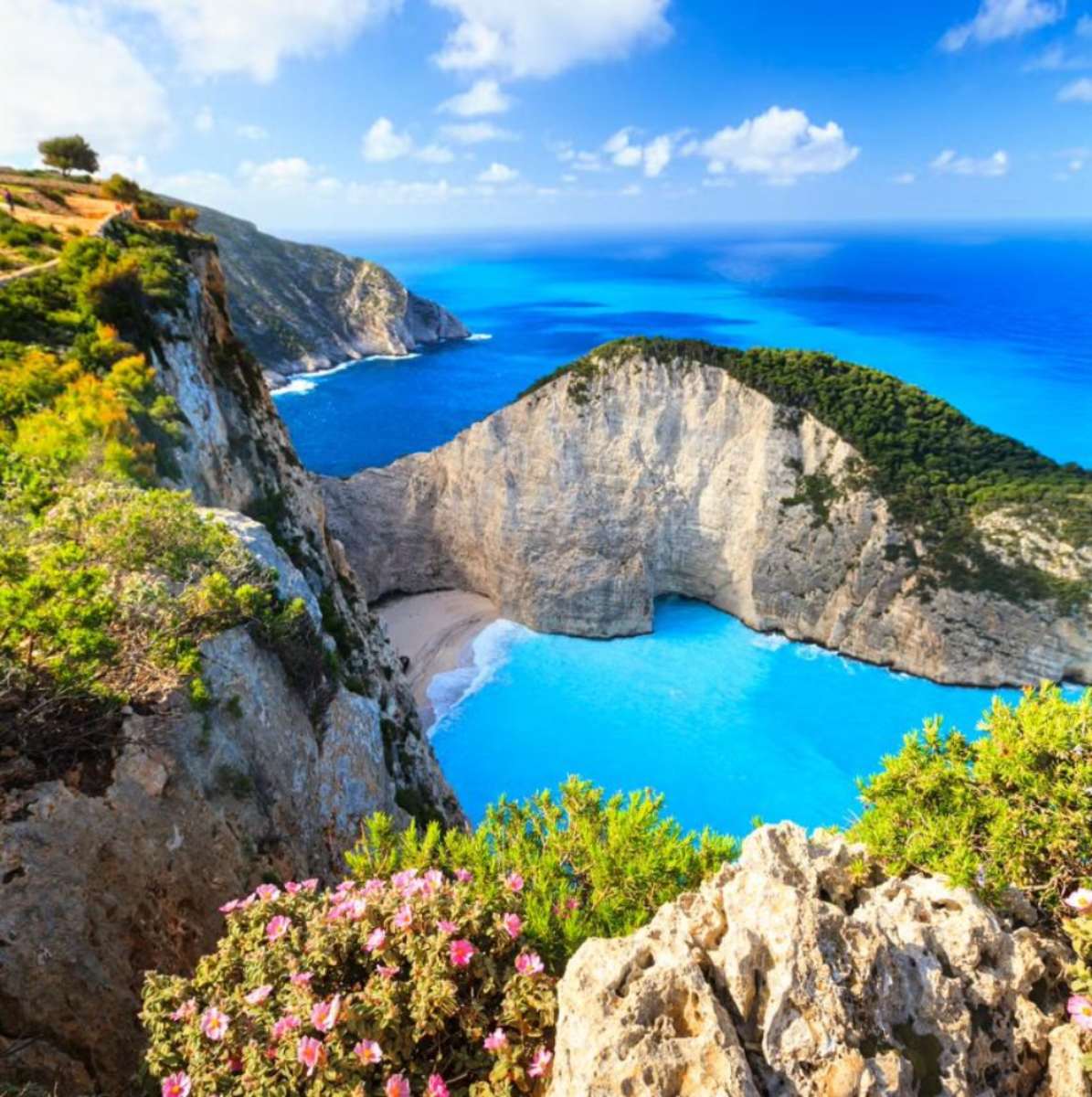
Πηγή Φωτογραφίας: pixabay//Turkey Is No Longer Cheap: Tourists Are Changing Course — and Turks Are Heading to Greece



For decades, Turkey possessed an almost unbeatable weapon in Mediterranean tourism: sun, beaches, huge resorts and all-inclusive holidays at prices that Greece, Spain and Italy often struggled to match.
That advantage is beginning to fade.
Rapid domestic price increases, combined with a Turkish lira that has not weakened as quickly as inflation has risen, have created a new reality. For European visitors paying in euros or sterling, Turkey simply does not feel as cheap as it once did.
And there is an even more striking paradox.
For some Turkish travellers, spending a few days on a Greek island can now be an attractive alternative to holidaying at one of Turkey’s own popular coastal resorts.
This is no longer simply a story about inflation.
It could become a reshaping of tourism competition across the Aegean and Eastern Mediterranean.
Bloomberg: The Era of ‘Cheap Turkey’ Is Fading
Bloomberg has highlighted the shift as higher hotel, restaurant and leisure prices undermine the purchasing power foreign tourists once enjoyed in Turkey.
“Many people thought Turkey was a cheap destination,” says Tony Bassoglu, who operates a villa rental business in Antalya province.
Visitors can still enjoy their holidays, he argues.
The difference is that Turkey is simply no longer as cheap as it used to be.
That distinction matters enormously in an industry where families can compare flights, hotels and package holidays across several countries within minutes.
Price perception can change travel flows surprisingly quickly.
The Lira Paradox
Behind the problem lies one of the central dilemmas facing Turkish economic policy.
Ankara is attempting to contain inflation while preventing uncontrolled depreciation of the lira.
But when domestic prices rise faster than the currency weakens, Turkey becomes more expensive in foreign-currency terms.
The result is a form of tourism inflation.
A British visitor who once converted sterling into lira and immediately felt significantly wealthier in Antalya or Bodrum now enjoys a smaller purchasing-power advantage.
The same applies to eurozone travellers.
For a destination that built much of its international tourism success on an exceptional price-to-quality ratio, that represents a structural challenge.
British Tourists Send the First Warning
The change is beginning to appear in arrival data.
According to Turkish tourism figures cited by Bloomberg, foreign arrivals declined by 3.6% year-on-year in May, 4% in June and another 0.3% in July.
The British market is particularly noteworthy.
UK arrivals fell by around 11% in July compared with a year earlier.
That matters because Britain is one of Turkey’s most important source markets.
Tour operators are also seeing some price-conscious travellers consider alternatives such as Montenegro, Slovenia and Tunisia.
The decisive criterion is returning to where it began:
value for money.
The Bigger Paradox: Turks Are Discovering Greece
Perhaps the strongest sign of the shift is not coming from London.
It is coming from Istanbul, Izmir and Turkey’s Aegean coast.
Nearly 1.5 million Turkish travellers visited Greece in 2025, compared with around 1.2 million in 2024, according to Bank of Greece figures reported by European media.
That represents an increase of roughly 25% in a single year.
A significant share of this traffic is heading to Greek islands lying just across the water from Turkey.
Rhodes.
Kos.
Samos.
Chios.
Lesvos.
Symi.
Kalymnos.
Leros.
And other islands across the Eastern Aegean and Dodecanese.
More Than 260,000 Turks on Just Three Greek Islands
The 2026 figures make the trend even more striking.
By August 20, Chios, Lesvos and Samos had received a combined 261,766 Turkish visitors this year.
And those are only three islands.
Across the Eastern Aegean and Dodecanese, Turkey is increasingly developing into an important tourism market in its own right.
This matters particularly for local economies because proximity creates the possibility of short breaks and repeat visits, potentially extending demand beyond the traditional July-August peak.
For businesses on islands facing the Turkish coastline, this is becoming much more than a marginal tourism flow.
Greece’s Seven-Day Advantage
One of the catalysts has been Greece’s special short-stay visa scheme for Turkish citizens.
Athens secured another one-year extension of the programme from the European Commission from March 31, 2026.
The scheme covers 12 Greek islands:
Kalymnos, Kastellorizo, Kos, Lesvos, Leros, Limnos, Rhodes, Samos, Symi, Chios, Patmos and Samothrace.
Eligible Turkish visitors can obtain a short-term visa at the port of entry for stays of up to seven days, avoiding the full process required for a conventional Schengen visa.
And that reduced friction matters.
For someone living on Turkey’s western coast, Greece is not a distant European holiday.
In many cases, it is a short ferry ride away.
From Tourism Policy to Economic Diplomacy
The scheme is becoming something larger than a tourism initiative.
It is developing into a small but remarkably practical instrument of economic diplomacy between Greece and Turkey.
Prime Minister Kyriakos Mitsotakis has described the programme as “particularly successful”, pointing to the large number of Turkish visitors travelling to the Greek islands.
For Athens, there are two potential dividends.
The first is economic: more tourism revenue for island communities.
The second is political: greater everyday interaction between Greeks and Turks.
Tourism is effectively becoming a form of people-to-people diplomacy across the Aegean.
Why Would a Turk Holiday in Greece?
The answer is no longer simply: to experience another country.
Economics increasingly matters too.
Turkey’s persistent inflation has pushed up the cost of domestic holidays, particularly in premium destinations along the Aegean and Mediterranean coasts.
For someone living in Izmir or western Turkey, the choice can therefore become surprisingly straightforward:
drive several hours to a Turkish resort,
or
take a relatively short ferry to Chios, Samos, Kos or Lesvos.
Once the price difference narrows, Greece gains an extraordinary natural advantage:
it is right across the water.
Turkey Is Still a Tourism Powerhouse
None of this means Turkish tourism is collapsing.
Far from it.
Turkey possesses enormous hotel capacity, sophisticated resorts, powerful tour operators, excellent air connectivity and one of the Mediterranean’s most developed all-inclusive tourism models.
Its problem is more subtle.
Turkey is losing part of the price advantage that made all those strengths even more formidable.
And in tourism, losing a structural competitive advantage can matter far more than experiencing one weak season.
Fewer Tourists, More Revenue?
There is another important economic paradox.
Lower arrivals do not automatically mean lower tourism revenue.
Visitors who continue to choose Turkey are paying higher prices and may therefore generate greater average expenditure per trip.
In the short term, the equation can work:
fewer tourists, more money per tourist.
But the longer-term risk is considerably more serious.
If Turkey becomes more expensive without successfully repositioning itself in consumers’ minds from a value destination to a premium destination, it could find itself in an uncomfortable middle ground:
charging substantially more without convincing travellers that they are receiving substantially more.
Greece Does Not Need to Be Cheaper Than Turkey — It Needs to Offer Better Value
This is where the opportunity for Greek tourism becomes much more interesting.
The wrong response would be for Greece to interpret Turkey’s rising costs as an invitation to enter another race toward lower prices.
It does not need to.
The real opportunity is to compete on value for money.
Better experiences.
Local gastronomy.
Distinctive small businesses and hotels.
Culture.
Island identity.
Safety.
And easy access.
For the Eastern Aegean and Dodecanese in particular, the Turkish market has the potential to evolve from a supplementary source of visitors into a strategically important tourism market.
The numbers suggest that process is already underway.
Nearly 1.5 million Turkish visitors travelled to Greece in 2025.
More than 260,000 had reached just Chios, Lesvos and Samos by August 20 this year.
And the short-stay visa scheme is reducing one of the biggest practical obstacles facing Turkish travellers.
There is an obvious irony for Ankara.
For years, Turkey won European tourists because it was significantly cheaper than Greece.
Now, as Turkish prices rise, Greece is increasingly winning over the Turks themselves.
That could become one of the most interesting shifts on the Aegean tourism map.
Source: pagenews.gr
Διαβάστε όλες τις τελευταίες Ειδήσεις από την Ελλάδα και τον Κόσμο