US Turns the Screw on Iran’s Banking Lifelines: Trump’s Sanctions Move From Threat to Action
 ΧΡΟΝΟΣ ΑΝΑΓΝΩΣΗΣ 11 '
Πηγή Φωτογραφίας: AP Photo//US Turns the Screw on Iran’s Banking Lifelines: Trump’s Sanctions Move From Threat to Action



The United States has entered a more consequential phase of its economic campaign against Iran.
Until now, the Trump administration had largely warned countries, banks, shipping companies and trading groups that continued business with Tehran could expose them to secondary sanctions and potentially jeopardise their access to the US financial system.
Now Washington is beginning to demonstrate what that threat can mean in practice.
On August 28, the US Treasury announced that the Financial Crimes Enforcement Network, or FinCEN, was moving against the United Arab Emirates branches of Egypt’s Banque Misr over alleged links to Iran’s shadow banking network.
The significance goes well beyond one bank.
Washington is effectively sending a message to financial institutions around the world:
Doing business with Iran could ultimately mean losing access to the dollar.
And that is potentially a much more powerful weapon than adding another Iranian company to a sanctions list.
Why the Banque Misr Case Matters
Banque Misr is not an obscure regional institution.
It is one of Egypt’s largest banks.
The American action is specifically directed at its branches in the United Arab Emirates rather than Banque Misr as a whole, an important distinction that Egyptian authorities have also emphasised.
But that actually makes the move more revealing.
Washington is demonstrating that it can target individual nodes within the international financial system without immediately severing an entire banking relationship with an allied country.
The objective appears to be surgical financial deterrence:
punish the channels facilitating Iranian transactions while simultaneously warning every other institution using similar structures.
The $1.8 Billion Shadow-Banking Trail
According to US authorities, Banque Misr’s UAE branches processed approximately $1.8 billion between January 2024 and June 2026 for more than 100 companies potentially associated with Iran’s shadow banking networks.
Those networks are essential to Tehran’s ability to function under sanctions.
When Iranian banks cannot easily access the international financial system, networks of front companies, trading accounts, intermediaries and entities operating in third countries can be used to move money, finance imports and convert export revenues into usable hard currency.
Washington is therefore moving further down the chain.
It is no longer targeting only Iran.
It is increasingly targeting the financial infrastructure that allows Iran to operate internationally despite sanctions.
The Bessent Doctrine: Iran or the Dollar
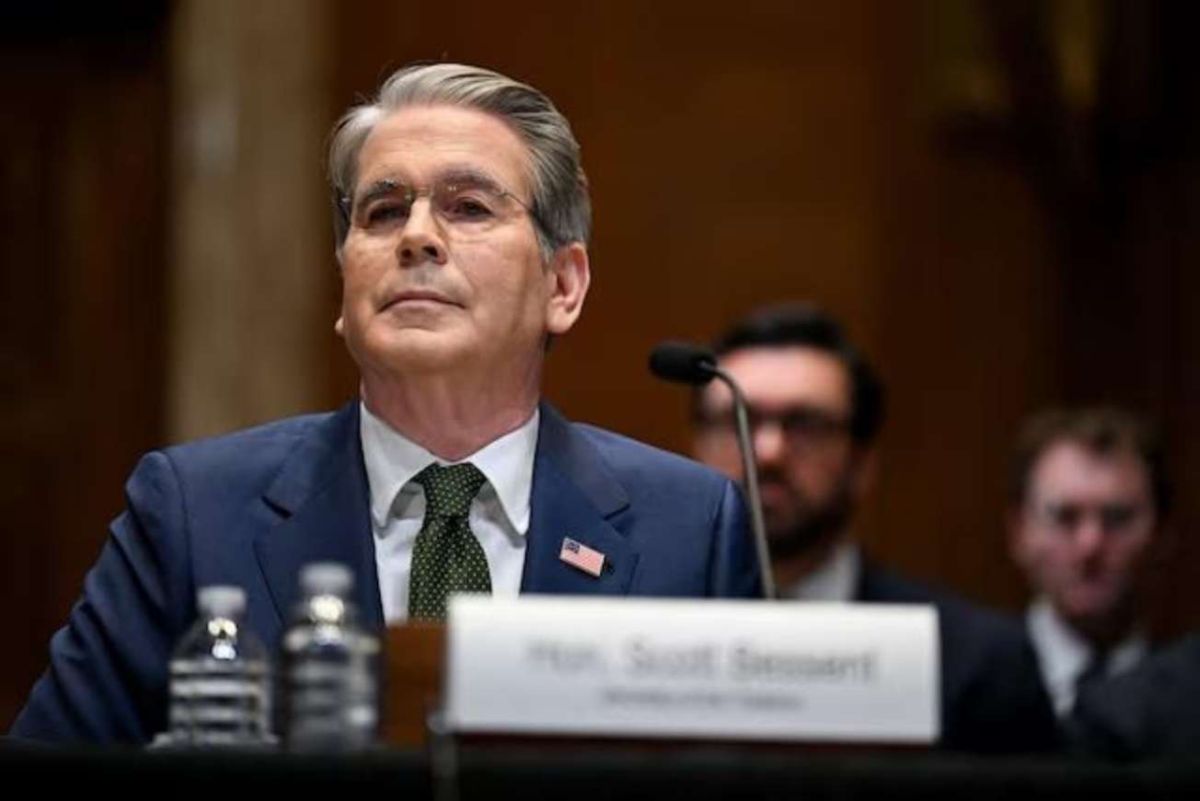
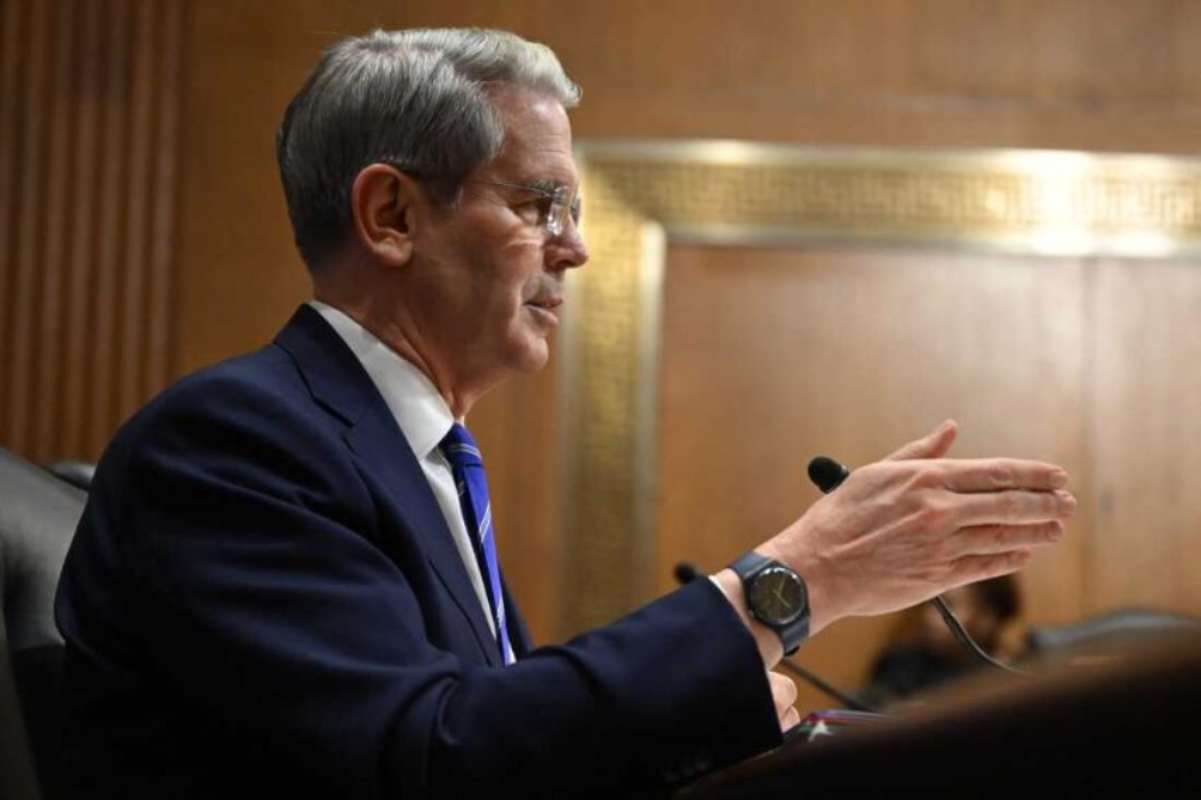
Treasury Secretary Scott Bessent has made the underlying strategy increasingly explicit.
The message is that institutions facilitating Iran cannot assume they will simultaneously retain unrestricted access to the US dollar and the global financial system.
That creates a deliberately asymmetric choice:
Iran or the dollar?
For most internationally active financial institutions, it is hardly an equal choice.
Access to dollar clearing, US correspondent banking and American capital markets is vastly more important than most commercial relationships with Tehran.
That is precisely why secondary sanctions can be so powerful.
Washington does not need every government to agree with US policy toward Iran.
It needs banks to conclude that the cost of defying Washington is greater than the profit available from doing business with Tehran.
From ‘Economic D-Day’ to Enforcement
The action also matters because of its timing.
Earlier in the week, Bessent had signalled a new phase of economic warfare under the administration’s Operation Economic Outcast, warning Iran’s trading partners and financial facilitators that Washington was preparing to escalate.
The administration’s strategy is now becoming clearer.
First comes the warning.
Then deadlines and compliance pressure.
Then targeted enforcement against institutions that Washington believes continue to facilitate Iranian financial flows.
The Banque Misr case therefore functions as something larger than an isolated regulatory action.
It is a warning shot to the international banking system.
Dubai Is Becoming a Critical Financial Battlefield
The location is equally important.
The United Arab Emirates — and Dubai in particular — has long been an important commercial and financial gateway between Iran and the wider global economy.
Trade networks, currency flows, shipping, re-export businesses and financial intermediaries have historically given Tehran access to commercial infrastructure unavailable through its heavily sanctioned domestic banking system.
That makes the UAE a critical pressure point.
If Washington succeeds in making Dubai substantially more difficult for Iranian-linked financial activity, Tehran loses one of its most important external economic lungs.
The objective is therefore not simply to sanction more Iranian entities.
It is to make the international ecosystem surrounding them increasingly unwilling to touch Iranian money.
Washington Is Building a Wider Map
The American action has not stopped with the UAE branches of Banque Misr.
Washington has also targeted entities and individuals linked to Iranian financial activity in jurisdictions including Hong Kong and Dubai.
Taken together, the emerging architecture looks increasingly like a network:
Iran → UAE → Hong Kong → international intermediaries → dollar clearing.
That is important because modern sanctions warfare is fundamentally a network problem.
Closing one Iranian bank achieves relatively little if Tehran can simply reroute transactions through a front company, another jurisdiction and another intermediary.
The more ambitious American strategy is to make each successive layer of circumvention riskier and more expensive.
But the Real Test Is China
There is, however, a much larger question hanging over the entire campaign.
China.
Beijing remains Iran’s most important economic lifeline and the dominant destination for Iranian crude exports.
That means Washington eventually confronts a difficult choice.
Targeting regional intermediaries demonstrates credibility.
Targeting major Chinese banks, refiners, shipping companies or commodity traders would demonstrate something entirely different:
that the Trump administration is prepared to enforce secondary sanctions even when the target is systemically important.
That would be the true test of Operation Economic Outcast.
Why Washington Has Reason to Move Carefully
Secondary sanctions become more powerful as the target becomes larger.
But they also become more dangerous.
Restricting dollar access for a relatively contained banking operation can frighten markets without destabilising the global financial system.
Doing the same to a major Chinese financial institution could trigger retaliation from Beijing, disrupt trade and financial flows, escalate US-China tensions and accelerate efforts to reduce dependence on the dollar.
That creates the fundamental dilemma facing Bessent.
The United States possesses extraordinary financial leverage because so much of the global economy depends on the dollar.
But the more aggressively Washington weaponises that dependence against major economies, the stronger the incentive becomes for those economies to build alternatives.
The weapon is powerful partly because it is not used indiscriminately.
Iran’s Counterargument: US ‘State Terrorism’
Tehran has responded by condemning the latest sanctions and urging other governments not to implement unilateral American measures.
Iran’s political argument is straightforward: third countries are not legally obliged under international law simply to enforce every unilateral US sanction.
But that argument confronts a much harder commercial reality.
International banks do not have to agree politically with Washington.
They only need to fear losing access to the US financial system.
This produces one of the most powerful secondary effects of sanctions: over-compliance.
Banks and companies can withdraw even from transactions that might technically remain permissible simply because the compliance risk becomes too high.
In that sense, the fear generated by one enforcement action can sometimes be economically more important than the enforcement action itself.
Tehran Is Already Under Severe Economic Pressure
The escalation comes as Iran’s economy is struggling under the combined impact of war, sanctions, disrupted trade and restrictions around the Strait of Hormuz.
Iranian officials have acknowledged significant declines in trade, while inflation and pressure on the rial have intensified.
That matters because Washington’s economic strategy is not designed merely to reduce Iranian revenues.
It is intended to alter Tehran’s political calculation.
The theory is straightforward:
the longer financial isolation continues, the more expensive it becomes for Iran to maintain its current negotiating position.
This Is Where Sanctions Meet Hormuz
The financial campaign is unfolding simultaneously with intensive diplomacy over the Strait of Hormuz.
Qatar, Oman and Pakistan have all been involved in efforts to reopen channels between Washington and Tehran and establish conditions under which normal shipping through the Strait could resume.
That creates a striking two-track strategy.
Diplomacy tells Tehran:
There is still a route to a deal.
American sanctions policy tells Tehran:
The price of waiting will continue to rise.
Washington is attempting to make those two messages mutually reinforcing.
The more Iran’s economy deteriorates, the stronger the American expectation that Tehran will eventually accept less favourable terms.
Iran’s strategy is the mirror image: demonstrate that the Islamic Republic can withstand economic pressure longer than Washington expects.
Banque Misr Is the Warning Shot — China Would Be the Real Economic D-Day
The Banque Misr case matters because it changes the psychology of the sanctions regime.
Before August 28, international banks could look at Washington’s threats and ask whether the Trump administration was genuinely prepared to enforce them against third-country financial institutions.
Now they have a concrete reason to take that possibility seriously.
And Washington is using its most powerful economic advantage:
access to the dollar-based financial system.
But this is still not the ultimate test.
Banque Misr is not a major Chinese state-owned bank.
The UAE is not China.
And a regional financial intermediary is not one of the giant refiners buying Iranian crude.
If Washington eventually forces those players to choose between Iran and access to the American financial system, Operation Economic Outcast will enter an entirely different phase.
At that point, the story will no longer be simply about whether Trump can economically isolate Tehran.
It will become a much larger geopolitical experiment:
how far can the United States weaponise the dollar before the rest of the world begins seriously investing in ways to escape it?
That is the real risk — and the real power — behind Washington’s new Iran sanctions offensive.
Source: pagenews.gr
Διαβάστε όλες τις τελευταίες Ειδήσεις από την Ελλάδα και τον Κόσμο