Achilles Shield: Greece and Israel Sign Deal That Redefines Greek Air Defense
 ΧΡΟΝΟΣ ΑΝΑΓΝΩΣΗΣ 11 '
Πηγή Φωτογραφίας: eurokinissi//Achilles Shield: Greece and Israel Sign Deal That Redefines Greek Air Defense



Greece is preparing to cross a major threshold in its defense modernization strategy.
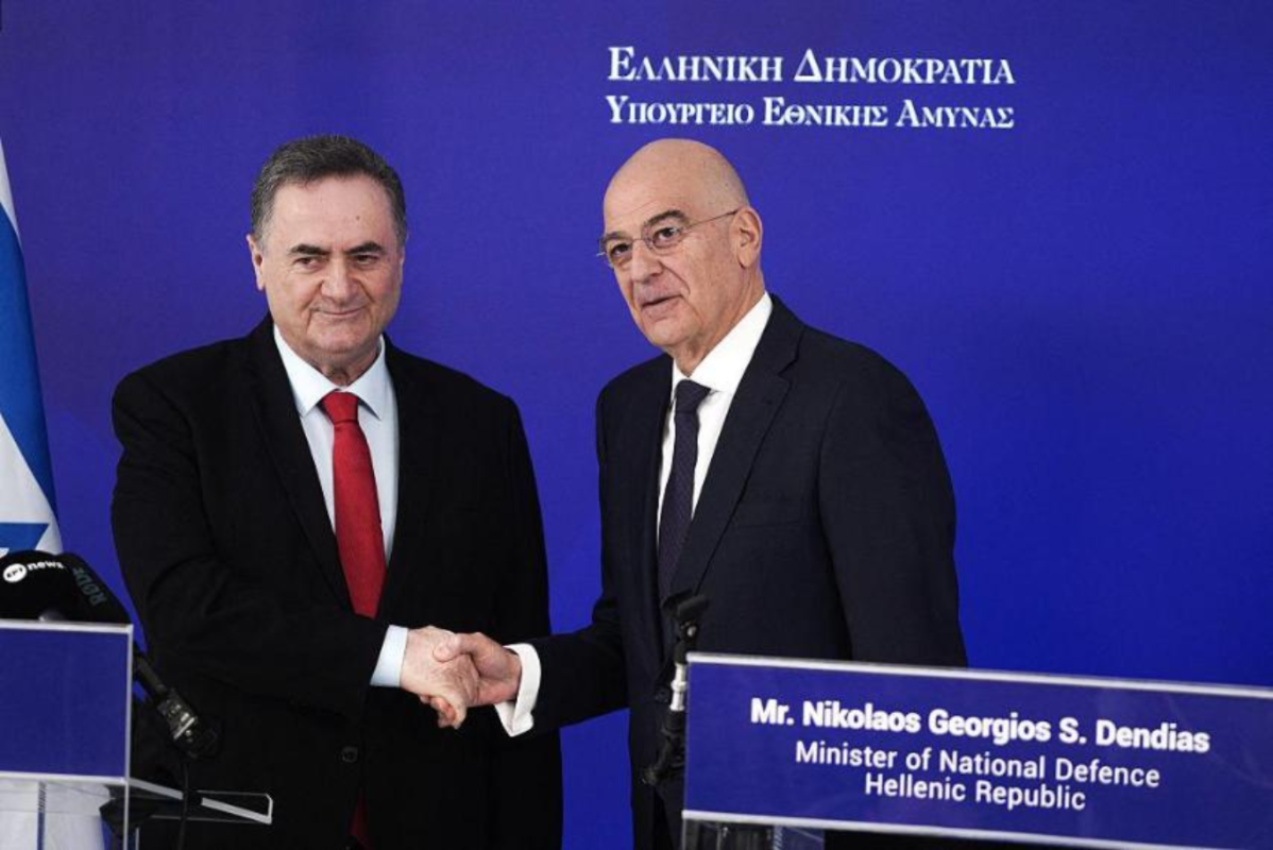
On Monday, August 31, Athens and Israel are expected to sign agreements in Tel Aviv linked to the “Achilles Shield”, the ambitious multi-layered defense architecture designed to transform the protection of Greek territory against aircraft, drones, cruise missiles and ballistic threats.
The agreements are expected to involve Greece’s General Directorate for Defense Investments and Armaments and Israel’s SIBAT, the International Defense Cooperation Directorate of the Israeli Ministry of Defense, alongside the relevant defense companies and agencies.
The air-defense component alone is expected to cost slightly more than €3 billion, with Greek reporting placing the figure at approximately €3.1 billion.
But Achilles Shield is much more than another missile procurement.
Athens is attempting to move from a defense model centered on individual weapons platforms toward a networked, multi-layered architecture in which sensors, radars, command centers and interceptors operate as a single defensive ecosystem.
The €3 Billion Deal — and the Critical 35-Month Timeline
The price tag is substantial. But the implementation schedule is equally important.
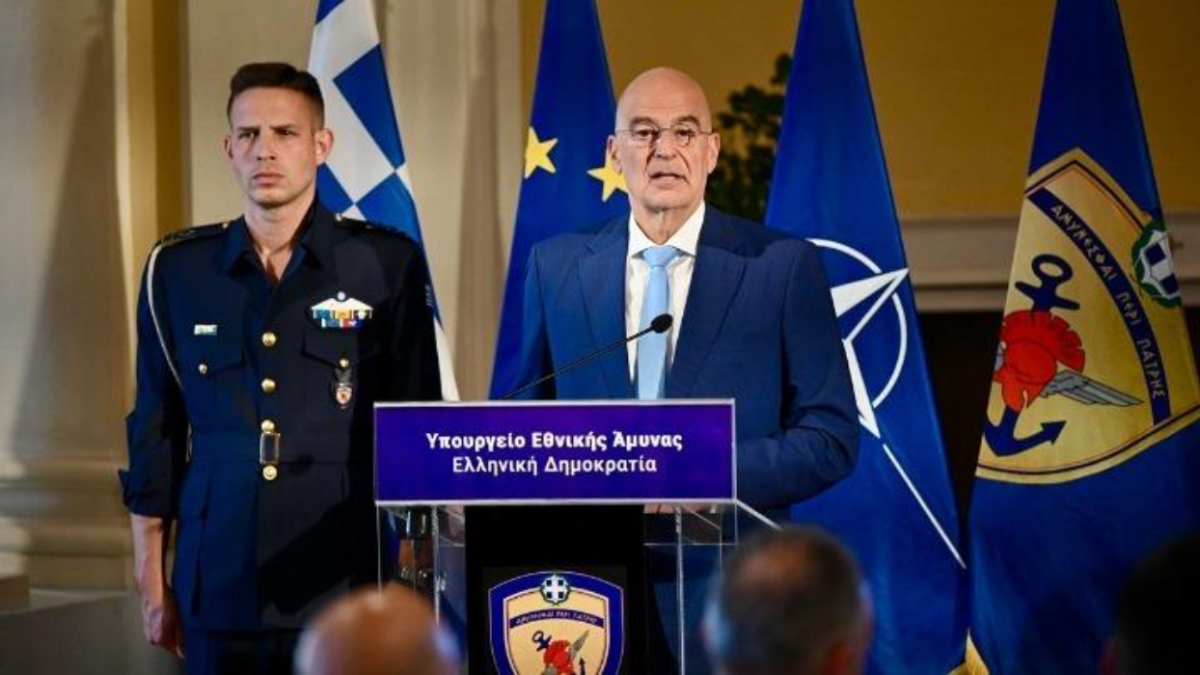
Greek Defense Minister Nikos Dendias has said that the cost of the new anti-aircraft systems “slightly exceeds €3 billion”, while the overall implementation is expected within approximately 35 months, with deliveries taking place progressively.
That means Athens is not designing an air-defense architecture for some distant future.
If the timetable is maintained, Greece could have the core elements of its new defensive network in place in less than three years.
Recent wars have dramatically reinforced the urgency.
Ukraine and the Middle East have demonstrated how inexpensive drones, cruise missiles, ballistic missiles and saturation attacks can threaten even sophisticated militaries and critical infrastructure.
Air and missile defense is no longer simply a supporting military capability.
It has become a central pillar of national deterrence.

Dendias: A Shield Against the Full Spectrum of Modern Threats
Dendias has described the objective in unusually explicit terms.
“We are finally creating a protective shield for Greek territory, with multiple layers of defense against all modern threats, including aircraft, drones, missiles and ballistic missiles.”
The key phrase is “multiple layers.”
Modern air defense cannot depend on a single interceptor.
A low-cost drone flying at low altitude presents a fundamentally different challenge from a ballistic missile approaching at extreme speed.
Using an extremely expensive interceptor against every inexpensive drone would also make the defender economically vulnerable to saturation warfare.
The objective is therefore to create different engagement layers capable of assigning the appropriate defensive weapon to each type of incoming threat.
Israeli DNA at the Heart of Greece’s New Shield
Israel is a natural partner for such a project because it possesses some of the world’s most extensive real-world experience in layered missile defense.
Its architecture has been built around different systems capable of confronting threats at different ranges, speeds and altitudes.
The Greek project is expected to incorporate Israeli missile and radar technologies associated with major defense groups including Rafael Advanced Defense Systems and Israel Aerospace Industries.
But the relationship between Athens and Jerusalem is already moving well beyond procurement.
For 2026, the two countries agreed on a program involving 54 joint activities — 29 in Greece and 25 in Israel — spanning operational interoperability, exercises, unmanned systems, counter-drone capabilities, cyber defense, research and defense innovation.
Dendias has described the relationship as increasingly comprehensive:
“Our defense cooperation now covers the entire spectrum: from operational interoperability and joint exercises to strategic convergence in research, innovation, defense technology and industry.”
That distinction matters.
Greece is not simply buying Israeli weapons.
It is attempting to acquire part of the knowledge architecture behind them.
The Strategic Clause: Greece Wants Control of the Source Code
One of the most important aspects of the entire project may not be a missile at all.
It is software.
Athens has made sovereign access to the source code of the Command & Control system a central condition of its new procurement philosophy.
Dendias has been categorical:
“The Armed Forces do not acquire and will not acquire systems for which we do not possess the source code.”
His reasoning goes directly to the issue of national sovereignty.
“For the Armed Forces to operate a system of such capabilities without being able to intervene in its architecture and evolution makes the country hostage even to the friendliest foreign country or ally. This is absolutely impossible.”
This represents a significant change in Greek defense procurement thinking.
The objective is no longer simply to acquire a sophisticated foreign system and depend indefinitely on its manufacturer.
Athens wants the ability to modify, upgrade, integrate and evolve critical elements according to Greek operational requirements.
In modern warfare, sovereignty over software can become almost as important as sovereignty over weapons.
At Least 25% Greek Participation
There is another strategic condition attached to the project: Greek industry.
The Defense Ministry has set a target for Greek companies to participate at a level of at least 25%.
Applied to a program of approximately €3.1 billion, that could theoretically translate into more than €700 million of industrial activity associated with Greece, depending on the final contractual structure and what is ultimately counted as domestic participation.
The political objective is clear.
Athens wants to move away from the traditional model in which Greece purchases sophisticated foreign weapons while relatively little technological value remains inside the country.
Dendias has repeatedly described the desired transition as one from a “client country” to a state capable of co-producing and eventually producing advanced defense technology.
The crucial question will therefore be the quality of Greek participation.
Assembly and maintenance provide economic value.
But participation in electronics, software, sensors, integration and future upgrades would create something considerably more important: technological sovereignty.
Why Greece Is Changing Its Air-Defense Doctrine
For decades, one of Greece’s most formidable air-defense assets has effectively been the Hellenic Air Force itself.
Greek fighters carry a major share of the responsibility for protecting national airspace.
Achilles Shield is intended to change that balance.
Dendias has argued that a stronger ground-based air and missile defense network can release fourth-, 4.5- and eventually fifth-generation fighters from a significant part of territorial-defense missions, allowing them to concentrate more heavily on deterrence and strategic strike missions.
That becomes particularly important as Greece moves toward the F-35 era while maintaining its expanding fleet of upgraded F-16 Vipers and Rafales.
The strategic division of labor becomes clearer:
Achilles Shield protects the territory.
The combat-air fleet gains greater freedom to project deterrence.
That can change an adversary’s calculations before a conflict even begins.
It Is Not Simply a Greek “Iron Dome”
Calling Achilles Shield a Greek version of Israel’s Iron Dome may be convenient, but it is misleading.
The broader Greek concept is significantly more ambitious.
Athens has described Achilles Shield as a five-layer or multidomain defensive architecture, extending beyond conventional air defense and incorporating protection across land, sea, air, space and cyberspace.
Dendias has also previously described five operational dimensions involving anti-drone, anti-missile, anti-aircraft, anti-ship and anti-submarine capabilities.
The Israeli agreements should therefore be understood as a critical technological and missile-defense component of a much broader transformation of the Greek Armed Forces under Agenda 2030.
Achilles Shield is not one weapon.
It is intended to become an interconnected system of systems.
Greece and Israel Build a New Security Relationship
The agreement also carries geopolitical weight.
Greek-Israeli relations have evolved significantly from conventional bilateral diplomacy toward an increasingly dense security partnership.
Athens also views cooperation with Israel within the broader Greece-Cyprus-Israel-US 3+1 framework, which Greek officials have presented as an architecture contributing to stability in the Eastern Mediterranean.
Dendias has linked Greece’s military modernization directly to the defense of sovereignty and sovereign rights:
“Greece defends its sovereignty, it defends its sovereign rights, without threatening anyone and without claiming anything from anyone.”
He has also said that Agenda 2030 aims to create “the strongest Armed Forces since the establishment of the modern Greek state.”
Achilles Shield is one of the clearest manifestations of that ambition.
The Message to Turkey Does Not Need to Be Written Into the Contract
The agreement is not officially framed as an anti-Turkish project, and it would be misleading to describe it simply in those terms.
Its strategic consequences for the Aegean and Eastern Mediterranean, however, are impossible to ignore.
An effective integrated air and missile defense network changes the calculations of any potential adversary.
It increases the expected cost of air and missile operations.
It complicates saturation attacks involving drones.
It strengthens protection around military bases, command infrastructure, ports, energy facilities and population centers.
And critically, it can reduce the requirement to keep valuable combat aircraft primarily tied to defensive missions.
This is where Achilles Shield could influence deterrence most profoundly.
The purpose of an effective defensive shield is not merely to intercept missiles once war begins.
It is to convince a potential adversary that the military benefits of launching them may never justify the cost.
The Real Test Begins After the Signatures
Monday’s expected signing will therefore be a major milestone — but not the finish line.
Four issues will determine whether Achilles Shield ultimately delivers what Athens expects.
The first is whether the 35-month timetable can be maintained.
The second is whether radars, sensors, interceptors and existing Greek weapons can genuinely operate within a common command architecture.
The third is whether the promised Greek industrial participation produces genuine technological value rather than limited subcontracting.
And the fourth — potentially the most important — is whether Greece obtains the degree of sovereign control over Command & Control architecture and source code that Dendias has made a cornerstone of the new procurement doctrine.
If those objectives are achieved, Achilles Shield will represent much more than another multibillion-euro arms purchase.
It will mark a structural change in the way Greece thinks about national defense.
For decades, Greek deterrence has rested primarily on powerful combat aircraft, warships, ground forces and highly trained personnel.
The emerging architecture adds another dimension: a digitally connected defensive network designed to detect, classify and defeat threats ranging from inexpensive drones to sophisticated ballistic missiles.
And that is the strategic significance of the Greek-Israeli project.
Greece is not simply buying interceptors. It is building a new way to fight — precisely to make the decision to attack Greece far more difficult in the first place.
Source: pagenews.gr
Διαβάστε όλες τις τελευταίες Ειδήσεις από την Ελλάδα και τον Κόσμο