Achilles Shield Ready by 2029: €3 Billion Deal, Drone Dome and 19 Greek Companies
 ΧΡΟΝΟΣ ΑΝΑΓΝΩΣΗΣ 9 '
Πηγή Φωτογραφίας: eurokinissi//Achilles Shield Ready by 2029: €3 Billion Deal, Drone Dome and 19 Greek Companies



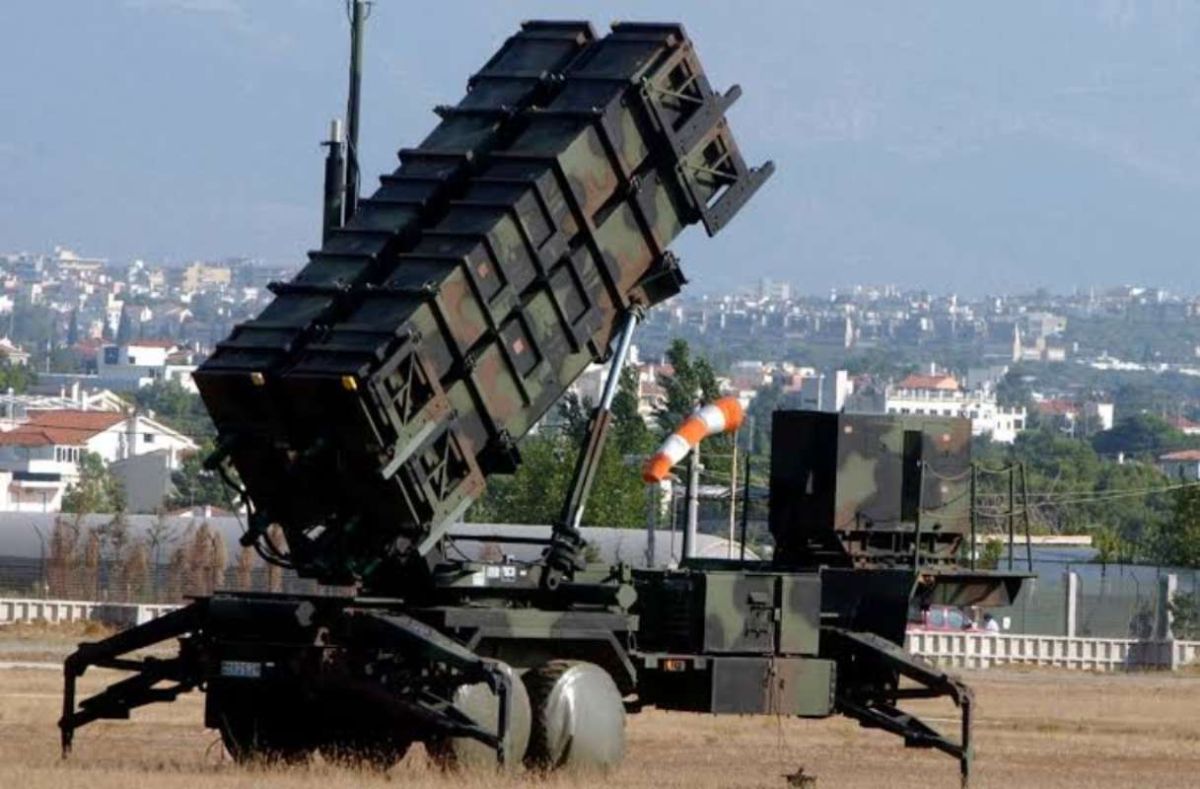
Greece has started the countdown to one of the most consequential transformations of its air-defence architecture in decades.
The Achilles Shield, a €3.035 billion multilayered air, missile and counter-drone defence programme, moved from negotiation to implementation following the signing of the government-to-government agreement between Greece and Israel in Tel Aviv on August 31.
The basic systems are expected to reach full deployment within 35 months, putting the target at the end of July 2029.
But the scale of the agreement goes well beyond the acquisition of Israeli weapons.
According to available information, 19 Greek companies are expected to participate in the programme, with Greek industrial involvement exceeding 25% of its value and potentially approaching €750 million.
Alongside the main agreement, Greece and Israel also signed a separate €26 million contract for Rafael’s Drone Dome counter-UAS systems.
David’s Sling, BARAK MX and SPYDER: Building the Layers
Achilles Shield is not a single air-defence system.
It is designed as an integrated architecture combining different interceptors, radars, sensors and command-and-control capabilities against a broad spectrum of threats.
At its core are three major Israeli missile-defence families.
David’s Sling, developed by the Israel Missile Defense Organization with Rafael as prime contractor, will provide one of the higher-end layers against advanced missile and aerial threats.
BARAK MX, produced by Israel Aerospace Industries, will add another flexible layer capable of responding to multiple categories of aerial threats.
SPYDER, developed by Rafael, will provide additional short- and medium-range air-defence capabilities.
The architecture will also incorporate MMR multi-mission radars produced by ELTA Systems, an IAI subsidiary, providing critical surveillance and target-detection capabilities.
But the most important component may ultimately be the system connecting all of them.
Rafael will develop a new national command-and-control system designed to integrate the different elements of Greece’s air-defence network into a common operational picture.
That is what turns individual weapons into an integrated shield.
Drone Dome: The New Addition to Achilles Shield
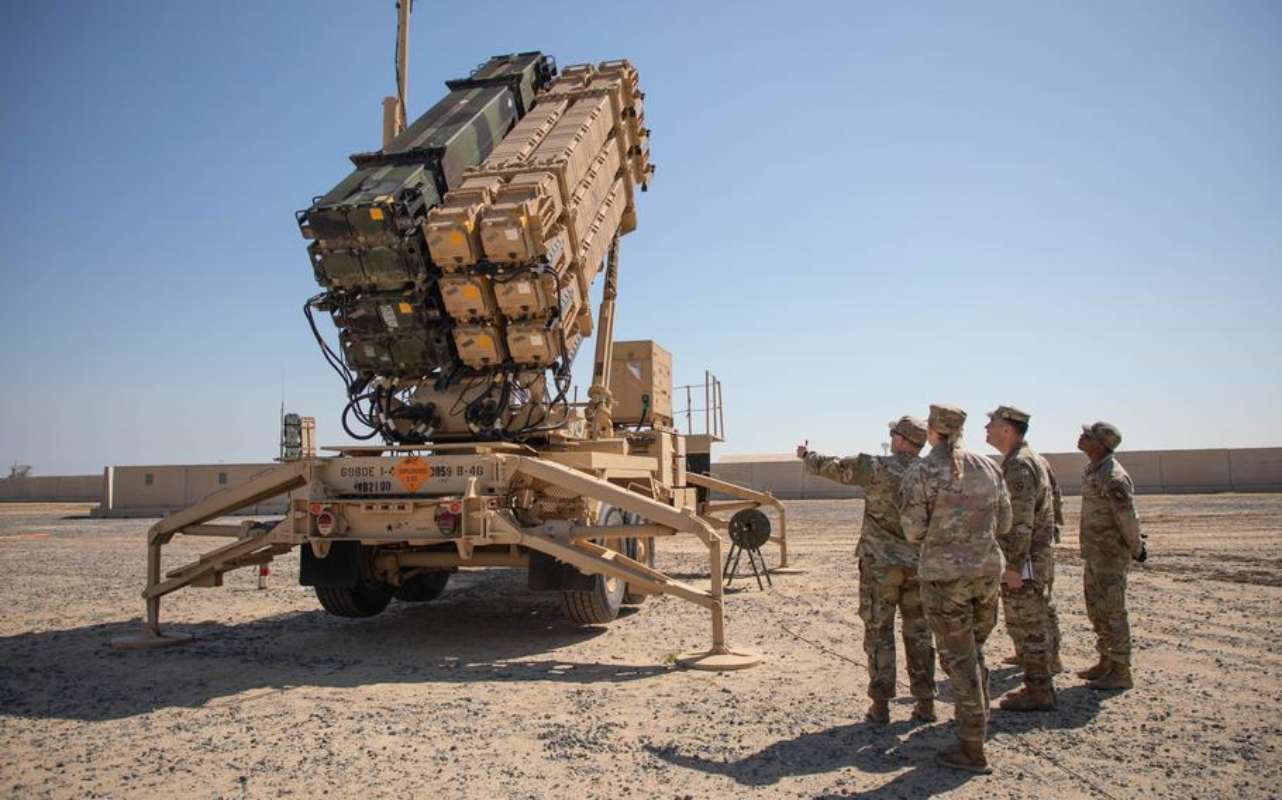
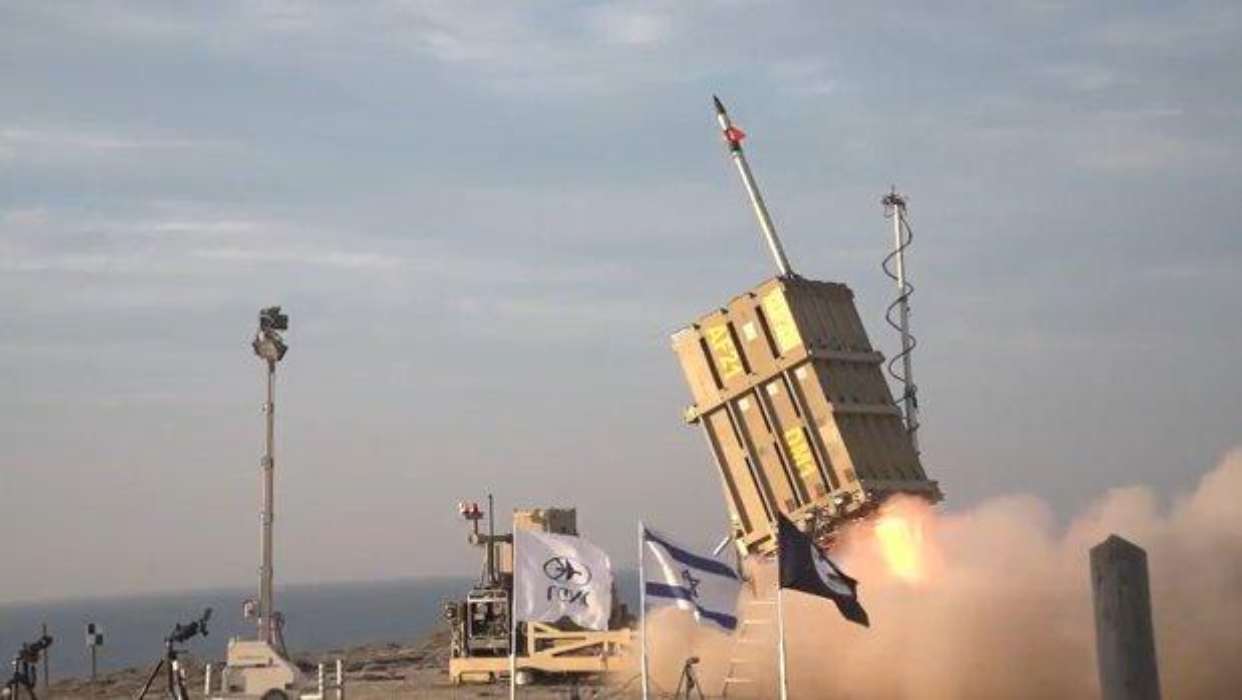
One of the most significant additions to the final package is Rafael’s Drone Dome.
A supplementary agreement worth €26 million was signed for systems designed to protect strategic installations against UAV and drone attacks.
Drone Dome is a Counter-UAS architecture capable of combining radar, electronic intelligence sensors, electro-optical equipment, jamming capabilities and command-and-control functions.
Its modular architecture can support both fixed and mobile configurations and provide 360-degree coverage.
Depending on configuration, hostile drones can be countered through “soft-kill” electronic measures, including interference with communications and navigation, or through “hard-kill” capabilities.
The acquisition reflects one of the clearest lessons from Ukraine and the Middle East: relatively inexpensive drones can threaten military bases, radar installations and critical infrastructure worth hundreds of millions of euros.
Air defence can therefore no longer be designed primarily around aircraft and conventional missiles.
Eastern Aegean and Evros in Focus
Available information indicates that part of Greece’s strengthened counter-drone capability could be deployed to protect sensitive areas in the eastern Aegean and Evros.
The precise geographical deployment has not been detailed in the Israeli Defence Ministry’s public announcement, which officially describes the Drone Dome systems as intended to protect strategic facilities and strengthen existing Greek counter-drone defences.
For Greece, however, the operational logic is clear.
A country with hundreds of islands, extensive borders and widely dispersed military, energy and transport infrastructure requires an air-defence architecture capable of operating across a complex geographical environment.
The €750 Million Greek Industrial Bet
The second major dimension of Achilles Shield concerns Greek industry.
According to available information, 19 Greek companies are expected to participate, with domestic industrial work accounting for more than 25% of the overall programme.
The potential value of the Greek component has been estimated at around €750 million.
Companies reported as being involved include METLEN, Scytalys, Hellenic Defence Systems, Hellenic Aerospace Industry, Prisma Electronics, Ionics, UniSystems and Sthenos, alongside companies operating in technology, energy and related sectors.
The precise allocation of contracts among individual companies has not yet been publicly detailed.
That distinction matters.
Participation in the programme does not by itself establish what portion of manufacturing, maintenance, integration or technological development each company will ultimately receive.
Rafael, IAI and ELTA at the Heart of the Programme
Three Israeli defence-industry players form the technological core of Achilles Shield.
Rafael Advanced Defense Systems is behind David’s Sling, SPYDER and Drone Dome and will also develop the new national command-and-control architecture.
Israel Aerospace Industries produces BARAK MX.
Its subsidiary ELTA Systems will provide the MMR multi-mission radars.
For Israel, the agreement represents a major export milestone.
The Israeli Defence Ministry has described it as the largest defence export agreement in the history of Israel-Greece relations and one of the largest in Israel’s history.
It also represents something strategically significant: rather than exporting an individual weapons platform, Israel is helping another country construct an integrated defence architecture against threats ranging from ballistic missiles to hostile UAVs.
Technology Transfer to Greek Industry
The industrial provisions could ultimately prove as important as the weapons themselves.
Israel’s Defence Ministry has explicitly stated that the government-to-government framework will expand defence-industrial cooperation with Greece, including the transfer of knowledge and technology to Greek industry.
That does not automatically mean that Greece will gain autonomous manufacturing capability for Israeli weapons systems.
But it creates the potential for something deeper than a conventional off-the-shelf procurement.
The critical questions will be how extensive the technology transfer becomes, which components can be produced or supported domestically, and whether Greek facilities created for Achilles Shield could eventually enter Rafael’s or IAI’s international supply chains.
If that happens, Greece could evolve from being primarily a customer into becoming part of a broader defence-production ecosystem.
Why the Agreement Was Signed at an Operational Level
The Tel Aviv signing took place without the presence of Greece’s political leadership.
On behalf of the Greek Ministry of National Defence, the agreement was signed by Major General Ioannis Bouras, Director General for Defence Investments and Armaments.
Israel was represented by Defence Ministry Director General Amir Baram.
Senior Israeli defence and industry officials were also present, including SIBAT chief Yair Kulas, Daniel Gold, Israeli Missile Defense Organization head Moshe Patel, Rafael CEO Yoav Tourgeman and IAI CEO Guy Barlev.
The Greek side therefore kept the ceremony at an institutional and operational level.
That inevitably carries political symbolism at a time when Benjamin Netanyahu’s government faces intense criticism in parts of Europe.
There has, however, been no official Greek statement establishing that political considerations surrounding Netanyahu were the reason for the absence of senior political officials.
Israel, Greece and the Turkish Factor
Behind the technology and the multibillion-euro contracts lies a broader strategic equation.
Israel officially describes Greece as a key strategic partner in the Eastern Mediterranean.
Embedding Israeli technology at the heart of Greece’s future air-defence network will create a relationship extending far beyond the delivery of missiles.
Training, maintenance, software, upgrades, technical support and industrial cooperation will bind the two defence ecosystems together for years.
Turkey inevitably forms part of the strategic background, although Achilles Shield is not officially described as a programme directed against Ankara.
Greece faces a much broader set of emerging aerial and missile threats.
Yet geography matters.
The military balance in the Aegean and Eastern Mediterranean remains a central factor in Greek defence planning, while Turkey itself has developed a formidable domestic UAV and missile industry.
Achilles Shield therefore adds a new dimension to Greek deterrence.
July 2029: The Target
Deliveries are expected to take place progressively, with the main systems scheduled for full deployment within 35 months of the agreement’s activation.
That puts the milestone at approximately the end of July 2029.
By then, Athens aims to have created an integrated network connecting sensors, radars, command systems and multiple interception layers capable of responding to threats ranging from small UAVs to aircraft and ballistic missiles.
That is the real significance of the €3.035 billion programme.
Achilles Shield is not simply another major Greek arms acquisition. It is an attempt to build an integrated national air-defence architecture by 2029 while using Greece’s largest defence agreement with Israel to establish a substantially deeper domestic industrial footprint.
Source: pagenews.gr
Διαβάστε όλες τις τελευταίες Ειδήσεις από την Ελλάδα και τον Κόσμο