Turkey–Israel on a Collision Course? Syria, Erdogan and the Election That Could Shift the Balance
 ΧΡΟΝΟΣ ΑΝΑΓΝΩΣΗΣ 12 '
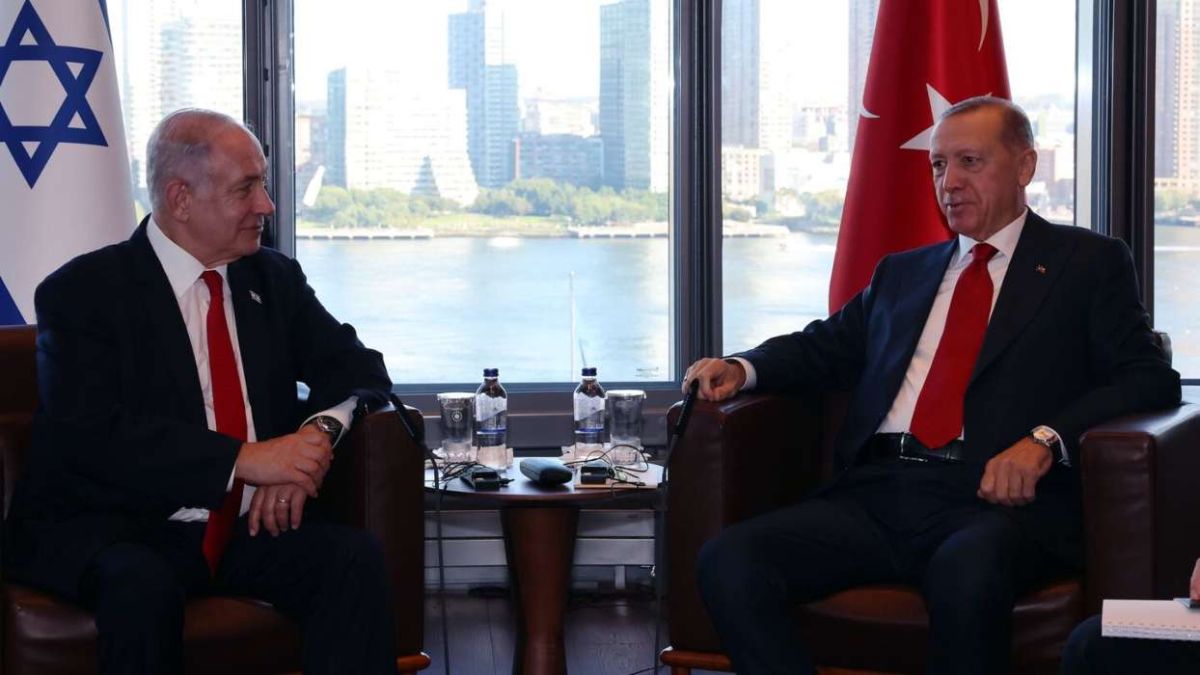
Πηγή Φωτογραφίας: AP Photo//Turkey–Israel on a Collision Course? Syria, Erdogan and the Election That Could Shift the Balance



“What we are all terrified about is an unintended accident that happens along this road.”
The warning delivered by Tom Barrack, the US ambassador to Turkey and presidential envoy for Syria and Iraq, at a security forum in Doha on October 20 captures one of the most serious risks facing the Middle East.
Turkey and Israel, two countries with critical strategic relationships with Washington, are increasingly operating within a regional environment in which their security priorities overlap and sometimes conflict.
The danger identified by Barrack is not necessarily a deliberate decision to go to war.
It is the possibility that military operations, miscalculations or failures of communication could produce an unintended confrontation.
The warning comes as Israel prepares for its October 27 parliamentary election.
For Ankara, the vote has implications far beyond Israeli domestic politics.
It could influence the tone of bilateral relations, the handling of competing interests in Syria and the diplomatic framework through which Washington manages two strategically important partners.
Yet the central question remains unresolved.
Would a change of government in Israel ease tensions with Turkey, or have the differences between the two countries become too deeply rooted in their regional strategies?
Barrack’s warning: The danger of an unintended confrontation
The US envoy’s remarks point to a particular type of security risk.
Two countries do not need to seek war for a military confrontation to occur.
An air operation, a mistaken assessment of another country’s intentions or an incident involving military personnel can create pressure for retaliation.
In Syria, Turkey and Israel approach security from different perspectives.
Ankara prioritizes border security, the Kurdish question and the prevention of armed structures it considers threats to Turkish national security.
Israel focuses on protecting its northern frontier, preventing hostile military capabilities from emerging nearby and maintaining freedom of action against perceived security threats.
These priorities can produce competing military activities within the same geographic environment.
The resulting risk is operational as well as political.
Without reliable communication, actions intended as defensive by one side may be interpreted as threatening by the other.
This is the scenario that makes Barrack’s warning particularly significant.
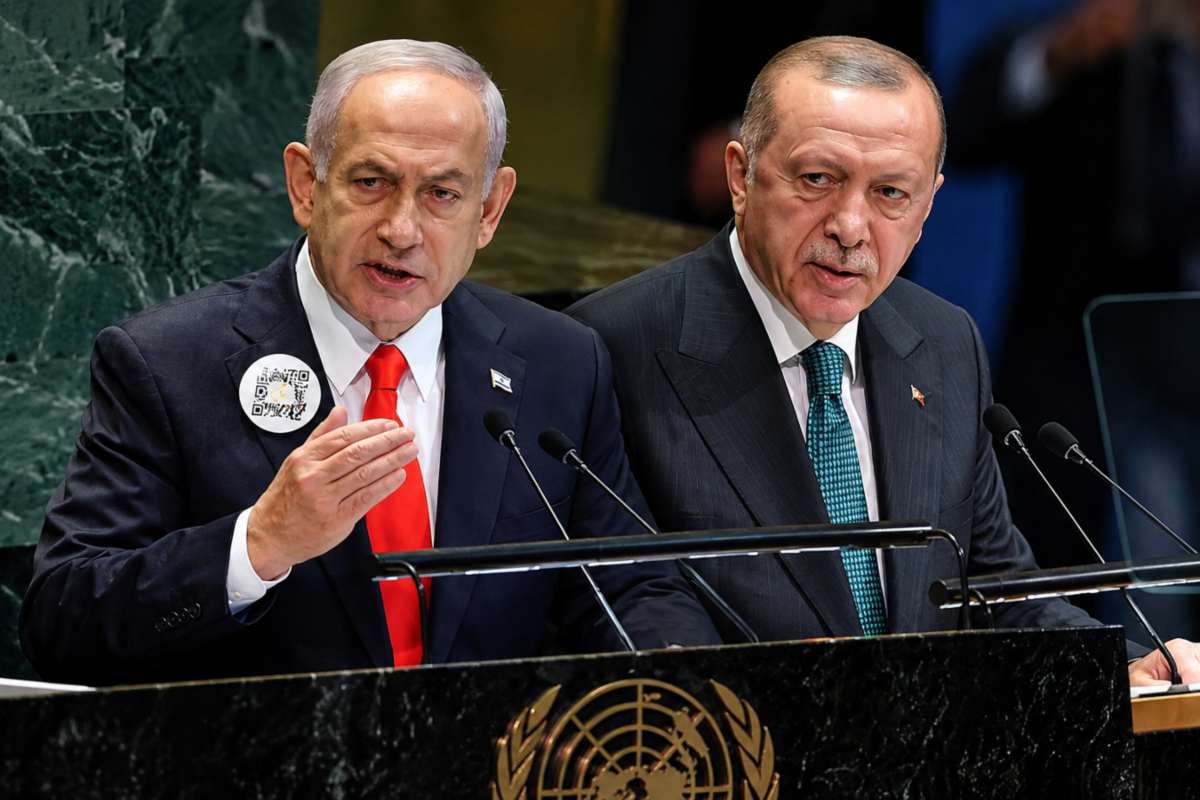
Erdogan versus Netanyahu: A confrontation beyond diplomacy
Relations between Recep Tayyip Erdogan and Benjamin Netanyahu have been marked by years of political confrontation.
Both leaders have exercised power for extended periods and have shaped their countries’ approaches to regional security.
Their public exchanges have become especially hostile over Gaza and Hamas.
Erdogan has described Netanyahu as “even worse than Hitler.”
Netanyahu has called Erdogan an “antisemite dictator” and referred to Turkey as a “new Iran.”
These are political accusations made by the leaders, not independent descriptions of the countries involved.
Their significance lies in the depth of hostility they reveal.
Erdogan has sought to position himself as a prominent defender of the Palestinian cause, frequently condemning Israeli military operations in Gaza.
Netanyahu has expressed strong concerns about Turkey’s regional activities and its relationship with Hamas.
The confrontation therefore combines personal antagonism, domestic political messaging and competing regional interests.
That combination makes diplomatic normalization particularly difficult.
Can Israel’s election change the relationship?
One interpretation of Turkish-Israeli relations holds that meaningful improvement will remain difficult while Erdogan and Netanyahu dominate their respective political systems.
The argument is based partly on the extent to which both leaders have personalized the dispute.
A different Israeli government could adopt a less confrontational diplomatic tone.
It might also reopen communication channels or pursue more structured discussions with Ankara.
However, leadership change alone would not eliminate the underlying security disagreements.
Turkey and Israel would still face competing priorities in Syria.
They would still differ over Hamas and the future of Gaza.
And they would still need to manage their respective regional partnerships.
Likewise, Netanyahu’s continued leadership would not make direct military confrontation inevitable.
The outcome would depend on policy decisions, military coordination and diplomatic engagement.
Syria: The most dangerous strategic flashpoint
Syria represents the most immediate arena in which Turkish and Israeli security interests could collide.
For Turkey, the country is directly connected to border security, Kurdish armed groups, refugee movements and regional influence.
For Israel, Syria is central to the security of its northern frontier and to efforts to prevent hostile forces from establishing threatening military capabilities.
The two countries therefore approach the same territory through different strategic calculations.
Turkey seeks to prevent developments that it considers dangerous along its southern border.
Israel seeks to prevent military threats from emerging in areas relevant to its own security.
The challenge is that these objectives may generate competing operational requirements.
Even if both governments wish to avoid a direct confrontation, military activities could still bring their forces or associated security interests into conflict.
The absence of effective communication would increase the risk of escalation.
Why Washington is deeply concerned
The United States maintains important but different strategic relationships with Turkey and Israel.
Turkey is a NATO member with significant geopolitical influence across the Black Sea, Syria and the wider Middle East.
Israel is a close US security partner, supported by extensive military and diplomatic cooperation.
A direct confrontation between the two would create a major challenge for American regional policy.
Washington would face pressure to manage a crisis involving two countries that play substantial roles in its security strategy.
Such a confrontation could also complicate NATO relations and destabilize the Eastern Mediterranean.
Barrack’s remarks underscore the importance of preventing operational incidents before they become political crises.
The issue is not merely maintaining separate bilateral relationships with Ankara and Jerusalem.
It is also ensuring that the military activities of those partners do not produce dangerous unintended consequences.
Gaza and Hamas: The political dimension of the dispute
Gaza remains one of the principal drivers of Turkish-Israeli tensions.
Erdogan has adopted a strongly critical position toward Israeli military actions and has repeatedly emphasized Palestinian rights.
Israel views Turkey’s relationship with Hamas through the lens of national security and regional diplomacy.
These differences affect bilateral relations well beyond the immediate conflict.
They shape public rhetoric, diplomatic engagement and perceptions of the other country’s strategic intentions.
Even if Israel’s next government adopts a different approach to Ankara, disagreements over Hamas and Palestinian governance would remain significant.
A reduction in hostile rhetoric could create diplomatic space.
But it would not automatically resolve the underlying policy disputes.
Turkey’s regional ambitions and Israel’s security calculations
Turkey has pursued an active foreign policy across several strategic regions, including Syria, the Eastern Mediterranean, Libya and the Caucasus.
Its growing defense industry and diplomatic network have strengthened its ability to influence regional developments.
From Ankara’s perspective, these activities support national security and strategic autonomy.
From Israel’s perspective, an expanding Turkish presence in sensitive areas such as Syria may raise concerns about the regional military balance.
This creates a familiar security dilemma.
Measures described by one state as defensive may be interpreted by another as threatening.
The resulting cycle of suspicion can increase military readiness and reduce opportunities for diplomatic compromise.
The challenge is especially serious in environments where several armed actors operate simultaneously.
The Eastern Mediterranean and the Greek dimension
The deterioration of Turkish-Israeli relations also matters for Greece and Cyprus.
Athens and Nicosia have developed significant cooperation with Israel in energy, defense and regional diplomacy.
At the same time, Greece continues to manage serious disagreements with Turkey over maritime rights and security.
A new Turkish-Israeli crisis could affect the strategic environment in which these relationships operate.
That does not mean Greece or Cyprus would automatically become involved in a confrontation.
However, the Eastern Mediterranean is a region where military developments, energy projects and diplomatic partnerships are closely interconnected.
For Athens, the relevant challenge is to maintain strategic partnerships while avoiding assumptions that disputes between other regional powers will necessarily produce predictable benefits.
The same principle applies to Cyprus, where regional security developments intersect with longstanding questions of sovereignty and international recognition.
The Israeli election and Ankara’s strategic calculations
The October 27 vote creates several possible political contexts for Turkey.
If Netanyahu remains prime minister, Ankara would continue dealing with a leader with whom Erdogan has engaged in repeated public confrontations.
If another political leader forms a government, the diplomatic tone could change.
However, Israel’s security institutions and strategic priorities would remain important influences on policy.
The election therefore matters, but it does not provide a simple solution to the bilateral dispute.
According to polling described by Al-Monitor, neither Netanyahu’s Likud-led bloc nor the main opposition forces were assured of a parliamentary majority ahead of the vote.
Coalition negotiations could consequently become as important as the election result itself.
For Turkey, the identity and political composition of the eventual government will matter more than any single campaign statement.
Three strategic questions facing Ankara
The first question concerns diplomatic communication.
Could the next Israeli government establish a more predictable relationship with Turkey, including channels for managing disagreements?
The second concerns Syria.
Would Ankara and Jerusalem be able to establish reliable mechanisms to prevent military incidents despite their competing interests?
The third concerns Washington.
Could Turkey preserve productive relations with the United States while maintaining its own positions on Gaza, Syria and regional security?
These questions are connected but not identical.
Improved diplomatic rhetoric would not necessarily resolve operational tensions in Syria.
Likewise, successful military deconfliction would not automatically produce agreement over Gaza or Hamas.
A stable relationship would require progress across several areas.
The wider geopolitical stakes
The Turkish-Israeli confrontation illustrates how regional competition can become more dangerous when diplomatic hostility intersects with military activity.
Both countries possess significant military capabilities and maintain important relationships with Washington.
Neither needs to seek a direct war for a crisis to emerge.
The most serious danger identified by Barrack is the possibility of an incident that produces escalation before political leaders can contain it.
This makes communication and operational coordination particularly important.
Israel’s election may influence the political environment in which such mechanisms are developed.
But the underlying strategic challenge will remain regardless of who forms the next government.
A regional rivalry at a critical moment
The dispute between Turkey and Israel cannot be reduced to the personal rivalry between Erdogan and Netanyahu.
Their public exchanges have intensified the confrontation, but the disagreement also involves national security, military operations and competing regional priorities.
For Ankara, the election creates an opportunity to reassess the diplomatic landscape.
For Israel, the next government will need to determine how to manage Turkey’s expanding regional role.
For Washington, the challenge is to prevent disagreements between two important partners from turning into a direct security crisis.
The decisive question is not simply whether Netanyahu remains in power. It is whether Turkey and Israel can establish mechanisms capable of containing their strategic rivalry before an unintended military incident triggers a wider confrontation.
That is the central warning behind Barrack’s remarks — and one of the most important regional issues surrounding Israel’s October 27 election.
Source: pagenews.gr
Διαβάστε όλες τις τελευταίες Ειδήσεις από την Ελλάδα και τον Κόσμο