Michailidou: 50% Upfront for Home Renovations — “Spiti Mou III” Targets 20,000 More Buyers
 ΧΡΟΝΟΣ ΑΝΑΓΝΩΣΗΣ 8 '
Πηγή Φωτογραφίας: eurokinissi//Michailidou: 50% Upfront for Home Renovations — “Spiti Mou III” Targets 20,000 More Buyers



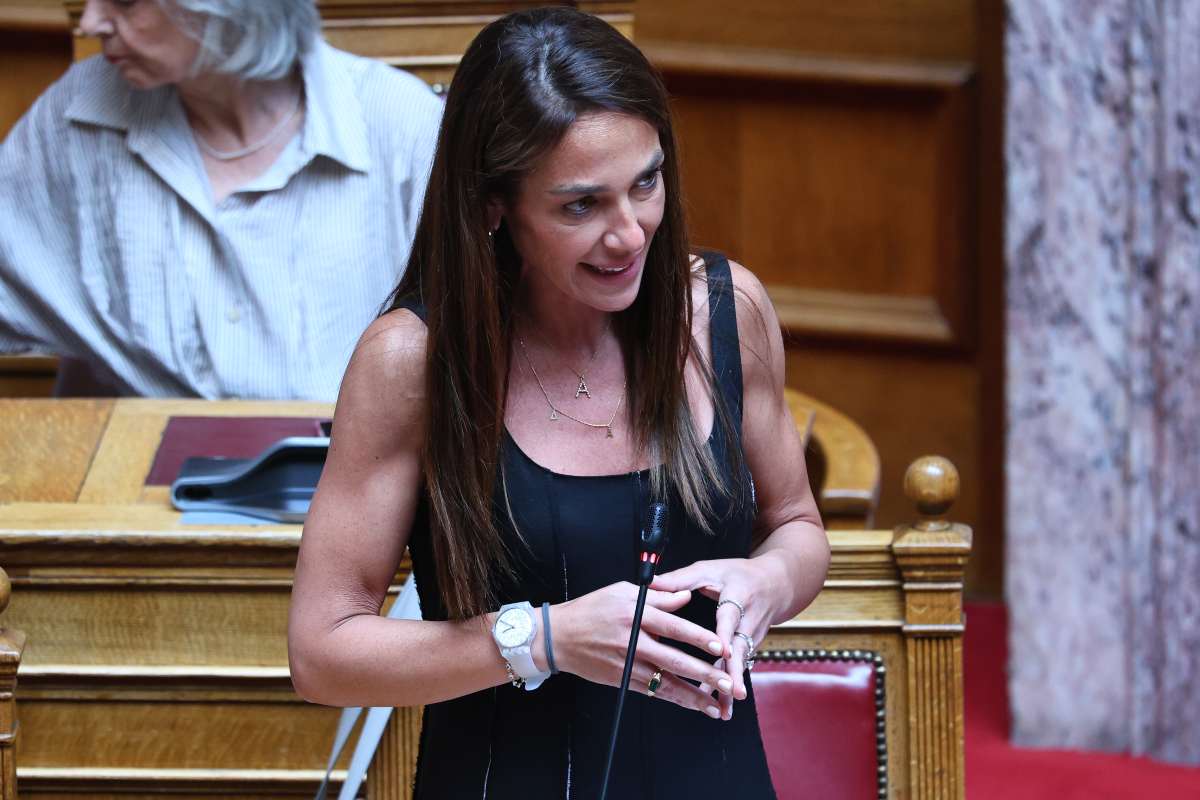
Greece is preparing the next stage of its housing strategy, with Social Cohesion and Family Minister Domna Michailidou setting out a series of measures covering the renovation of homes, first-home ownership and the use of underutilised public property for social housing.
The first milestone comes in October.
Beneficiaries of the housing-renovation programme will begin submitting the necessary documentation and planned expenditure in order to receive 50% of their subsidy upfront, according to the minister.
At the same time, the government is preparing the next generation of its subsidised homeownership programme:
“Spiti Mou III”, targeting another 20,000 beneficiaries.
14,000 Applications to Bring Homes Back Into Use
Michailidou said the application period for the programme covering closed homes ended with approximately 14,000 applications.
“The platform for closed homes that need this funding in order to be renovated also closed yesterday. We had 14,000 applications from people who own a closed property,” she said.
The policy is designed to address one of the contradictions at the heart of Greece’s housing shortage: while families struggle to find affordable homes, a substantial stock of residential property remains unused because owners cannot afford the cost of renovation.
Up to €36,000 — With 80%-95% Subsidies
According to Michailidou, the programme provides subsidies ranging from 80% to 95%, with eligible support reaching as much as €36,000.
The critical new element is how that money will be paid.
Instead of requiring households to finance the entire renovation themselves and wait until the end of the project for reimbursement, the scheme provides a 50% advance payment.
“If you have to wait until the end to get all the money back from the state, few people will take the risk and many will be afraid to proceed,” Michailidou explained.
The Next Stage Begins in October
The next phase begins during October, when beneficiaries will be able to submit documentation and declare their planned expenditure so that the advance can be activated.
The programme also includes a requirement for some form of light energy-efficiency improvement, such as new windows or a solar water heater, depending on the applicable terms.
The aim is not simply to renovate deteriorated homes, but to return more usable and more efficient housing to the market.
“Spiti Mou III” Is Next
Michailidou also confirmed preparations for “Spiti Mou III”, the next generation of Greece’s subsidised homeownership programme.
The target is to help approximately 20,000 additional people acquire a home.
The new programme is being designed with:
- broader eligibility thresholds;
- higher eligible property values;
- larger loan limits;
- and larger homes for bigger families.
The objective is to widen access compared with the earlier phases of the programme and adapt the scheme more closely to current housing prices and family needs.
Another 20,000 People to Find Their Home
According to Michailidou, roughly 20,000 people have already found a home through “Spiti Mou I” and “Spiti Mou II”.
The next programme is intended to add another 20,000 beneficiaries.
The broader objective is to make homeownership accessible at a lower financing cost, particularly for younger households and families that struggle to secure a conventional mortgage on market terms.
Child Benefit: “A Family With Three Children and €26,000 Is Not Rich”
The interview also raised a politically sensitive question about Greece’s A21 child benefit.
Michailidou was presented with the example of a couple earning around €1,000 net each per month, with three children, who had been excluded from the benefit because of the applicable income criteria.
Her response was unequivocal:
“God forbid we should live in a world where we consider a family with three children and €26,000 to be rich. Of course we are not there.”
The minister did not, however, announce a change to the A21 income thresholds.
Instead, she argued that support for families should be assessed across the full range of tax measures, benefits and services rather than through a single allowance.
Michailidou: A21 Is Not the Only Form of Family Support
“You do not support a family only through the child benefit, and the child benefit is not a panacea. Obviously not,” she said.
Michailidou pointed to the wider package of family policies, including the birth allowance, childcare support, vouchers and tax relief.
She also highlighted expanded access to nursery vouchers, particularly for larger families.
“Three Salaries Back” for Families With Three Children
Michailidou placed particular emphasis on the impact of tax reforms on households with children.
“Families with three children receive the equivalent of three salaries back per year from January; families with four children, four salaries back,” she said.
The wording refers to the minister’s assessment of the annual tax benefit for these households. It does not mean that the state literally pays three or four additional monthly salaries as a cash benefit.
Her argument is that the combined annual tax relief can exceed what could realistically be achieved through a large increase in the A21 allowance alone.
Public Property Enters the Housing Strategy
A third major pillar is Social Consideration, the government’s model for using underutilised state-owned land and property to create new housing.
Under the scheme, public assets can be made available to private developers, with part of the resulting housing stock remaining in public hands for social rental.
Michailidou said at least 30% is intended to return to the state for social use, while the private developer retains the remainder.
The policy seeks to achieve two objectives simultaneously: create a permanent stock of social housing and add new homes to the wider market.
First Projects in Athens and Paiania
Michailidou said the first tender is being prepared and specifically referred to a group of smaller properties in Athens and approximately 17 stremmas of land in Paiania.
The Paiania property is among the initial public assets identified for development through the Social Consideration model.
The first wave is intended to test whether public land that has remained unused for years can become part of the answer to Greece’s housing shortage.
The Difficult Side of Social Housing
Michailidou also highlighted a less visible obstacle: local resistance to the development of public land for housing.
She said there are cases in which municipalities or local residents prefer state-owned land to remain green or open space rather than be used for social housing.
She described similar difficulties involving Supported Living Residences for people with disabilities, where local authorities have sometimes resisted the establishment of small residential units.
At the same time, she praised municipalities that have taken the opposite approach — developing housing initiatives themselves or finding homes for teachers, police officers and other essential workers facing severe housing shortages.
Housing and Family Policy Converge
The strategy outlined by Michailidou is built around several different levers.
One is to provide funding to bring empty homes back into use.
Another is to reduce financing costs so more households can buy their first home.
A third is to unlock public property and create new social and private housing supply.
And family policy runs through all three.
For larger households in particular, housing costs, access to childcare and disposable income are increasingly treated as interconnected policy challenges rather than separate issues.
That is also the broader significance of “Spiti Mou III” and the Social Consideration programme: Greece is attempting to move from individual housing subsidies toward a policy that also addresses the underlying shortage of available homes.
The next test comes in October, when the renovation advances begin — followed by the rollout of the next homeownership programme and the first public-property projects.
Source: pagenews.gr
Διαβάστε όλες τις τελευταίες Ειδήσεις από την Ελλάδα και τον Κόσμο