Athens to Skopje: “Remove Irredentist Language from School Textbooks” – Prespa Agreement Back in Focus
 ΧΡΟΝΟΣ ΑΝΑΓΝΩΣΗΣ 6 '
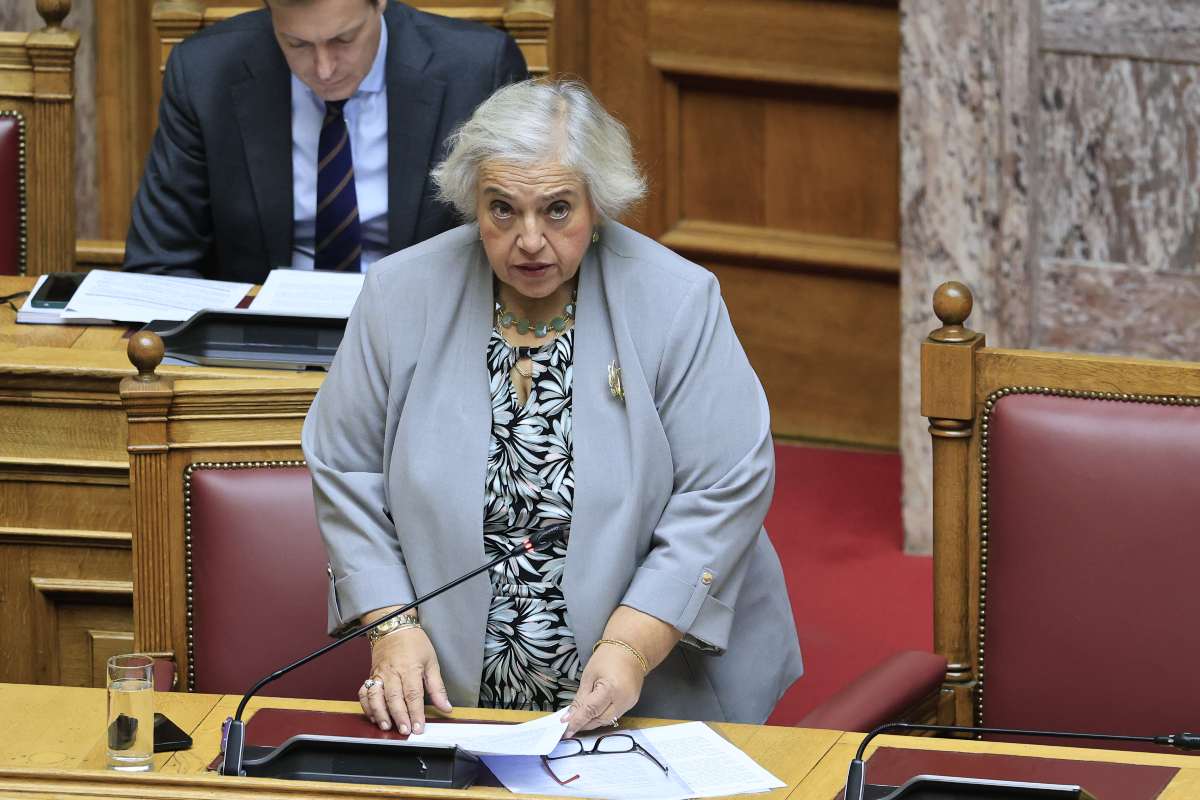
Πηγή Φωτογραφίας: eurokinissi//Athens to Skopje: “Remove Irredentist Language from School Textbooks” – Prespa Agreement Back in Focus



Athens is once again putting the implementation of the Prespa Agreement at the center of relations with North Macedonia — this time over the content of school textbooks.
The Greek side is asking for the removal of references it considers revisionist or irredentist, arguing that such material runs counter to the framework agreed between the two countries.
The issue touches one of the most sensitive aspects of the Prespa Agreement:
that normalization between Greece and North Macedonia was never meant to concern only the country’s name, but also the gradual removal of irredentist references from public discourse, symbols and educational material.
Athens’ message
The Greek government’s position is that wording which could be interpreted as implying territorial, historical or national claims cannot remain in official school material.
Athens argues that the Prespa Agreement created explicit obligations intended precisely to prevent such narratives from resurfacing.
The agreement established the official name “Republic of North Macedonia” for all uses and also included provisions aimed at distinguishing the modern identity of the neighboring state from the ancient Greek Macedonian historical heritage.
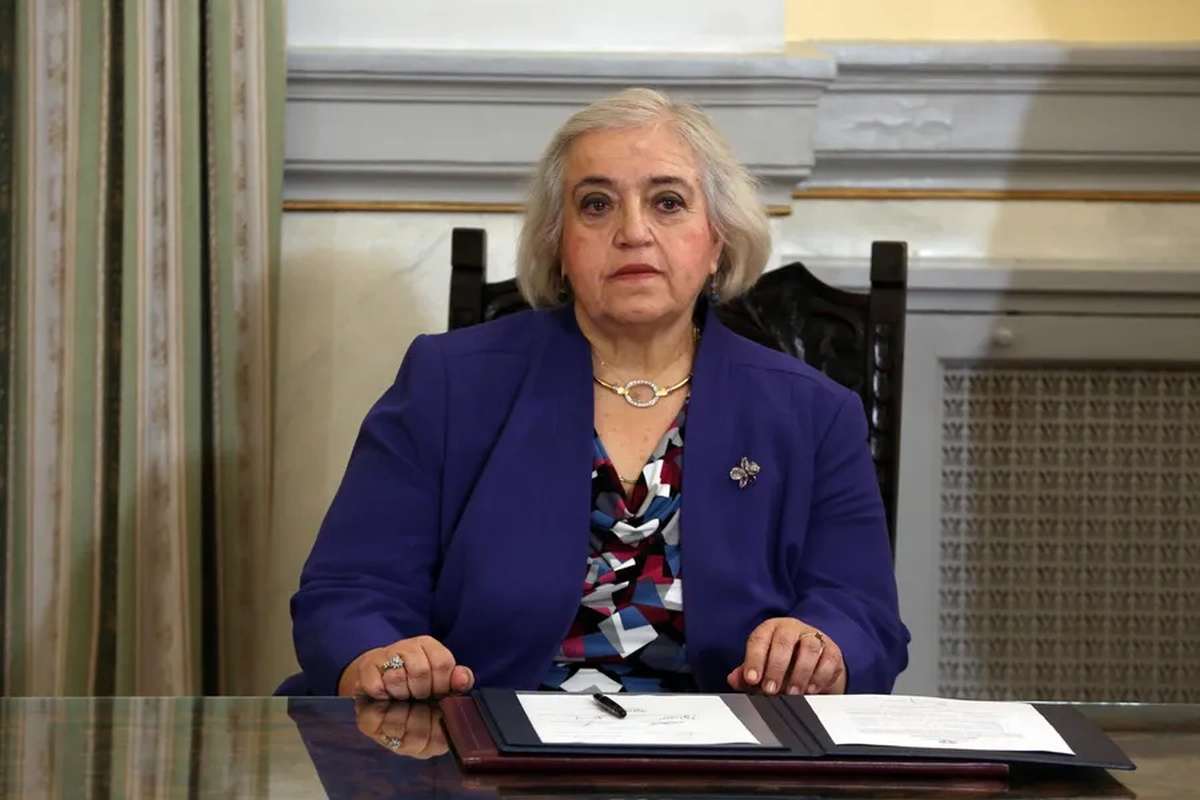
The Prespa Agreement is about more than the name
That is the critical point.
Public debate over Prespa often focuses almost exclusively on the name “North Macedonia.”
But the agreement is much broader.
It includes commitments relating to:
- the avoidance of irredentism,
- use of the constitutional name,
- respect for historical and cultural heritage,
- revision of symbols and references that could be interpreted as implying territorial claims.
That is why school textbooks are so politically sensitive.
For Athens, education is where an international agreement either becomes a long-term change in political culture — or fails to do so.
Greece’s concern over irredentist narratives
The Greek position is that any wording which creates the impression of a broader “unified Macedonia,” historical continuity extending into Greek territory, or claims over populations outside North Macedonia should be removed.
This goes directly to the central objective of the Prespa framework:
eliminating narratives that could be interpreted as territorial or national revisionism.
For Greece, the question is not only what state institutions say today, but what future generations are taught in school.
Schoolbooks have long been a difficult issue
The review of educational material is not a new point of friction in Athens-Skopje relations.
The Prespa Agreement provided mechanisms for cooperation over textbooks, maps and historical references precisely because both sides understood that historical narratives could remain a source of tension even after the naming dispute was formally resolved.
Changing textbooks, however, requires more than a political declaration.
It requires:
time,
political will,
agreement among experts,
and ultimately changes to curricula and teaching material.
Athens links the issue to the EU path
The Greek position carries additional weight because North Macedonia remains a candidate for EU membership.
Greece has repeatedly said that it supports the European future of the Western Balkans, but also insists that full implementation of international agreements is a basic condition for progress.
North Macedonia has been in the accession process for years, and its bilateral relationship with Greece is governed by the Prespa Agreement, which entered into force in 2019.
That means the schoolbook issue is not merely bilateral.
It can also acquire a broader European dimension.
The political climate in Skopje has changed
Tensions surrounding the Prespa Agreement have increased in recent years, particularly after political change in North Macedonia and the return of tougher rhetoric in domestic politics.
Athens has been closely monitoring any departure from:
the constitutional name,
commitments against irredentism,
and the full implementation of the agreement.
That is why the textbook issue has become more important than it may initially appear.
It is not simply about one phrase in one book.
It is about whether a new generation is being educated in the spirit of the agreement or through older nationalist narratives.
Greece sticks to “pacta sunt servanda”
Athens’ basic position remains that international agreements must be respected.
This applies even when a government did not originally support the way the agreement was negotiated.
New Democracy opposed the Prespa Agreement while in opposition, but as a government it has repeatedly stated that the agreement is internationally binding and must be implemented by both sides.
That explains the current line.
Athens is not seeking to reopen the agreement.
It is demanding its full implementation.
The next major test
The issue may become even more important as the EU deepens discussions over enlargement.
Brussels is considering faster and more gradual integration of candidate countries into parts of the single market, but with stronger conditions tied to political and institutional alignment.
In that environment, a long-standing dispute with an EU member state could carry greater weight.
For North Macedonia, that means implementing Prespa is not merely a bilateral matter with Greece.
It may increasingly become part of the wider assessment of its European trajectory.
The core Greek message
Athens is effectively sending two messages to Skopje.
The first:
historical and educational references considered irredentist must be removed.
The second:
European integration cannot proceed as if outstanding obligations under the Prespa Agreement do not exist.
This does not automatically mean a new diplomatic crisis is imminent.
But it does mean that the Prespa Agreement is once again moving from political rhetoric to an actual test of implementation.
And this time, the test is not taking place only in ministries or diplomatic meetings.
It is taking place inside the classroom.
Source: pagenews.gr
Διαβάστε όλες τις τελευταίες Ειδήσεις από την Ελλάδα και τον Κόσμο