Floros on Turkey and Cable: “We Need Nobody’s Permission—If Vessel Is Harassed,Scenarios Are on the Table”
 ΧΡΟΝΟΣ ΑΝΑΓΝΩΣΗΣ 8 '
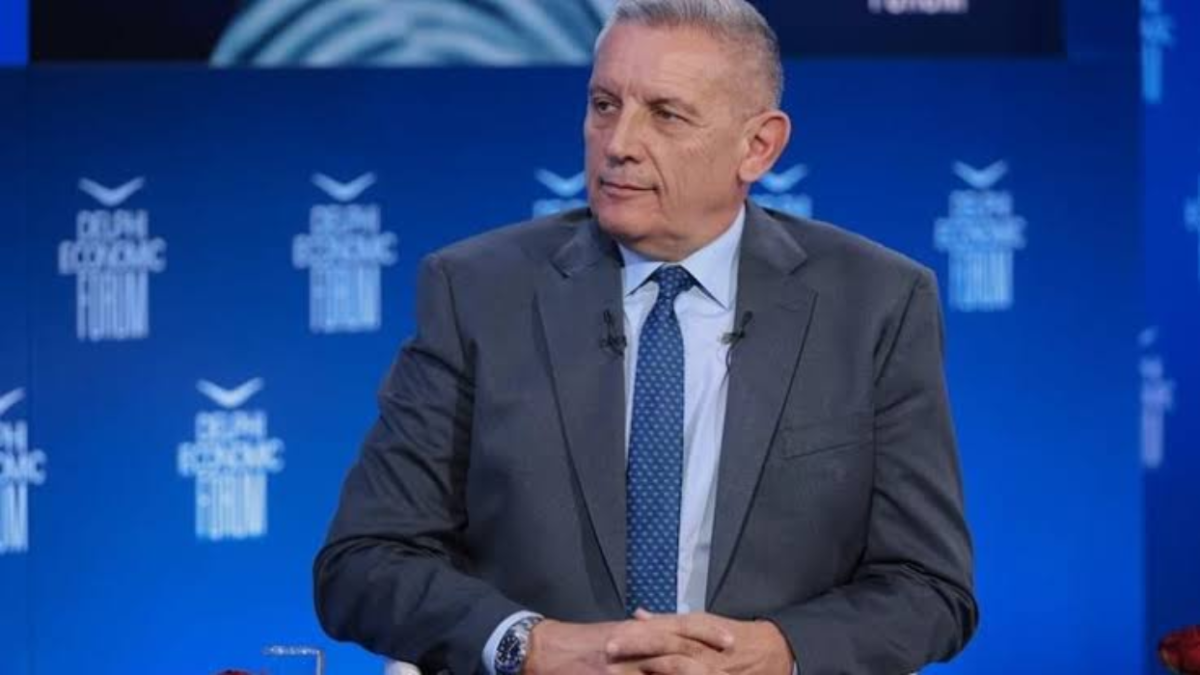
Πηγή Φωτογραφίας: eurokinissi//Floros on Turkey and the Cable: “We Need Nobody’s Permission — If the Vessel Is Harassed, All Scenarios Are on the Table”



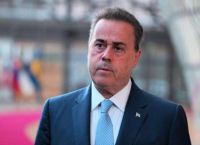
Former Greek defence chief General Konstantinos Floros has delivered a forceful assessment of the Great Sea Interconnector, Turkey’s objections to the project and the options available to Athens should Ankara attempt to interfere with future operations.
Speaking ahead of US Secretary of State Marco Rubio’s visit to Athens, Floros described Turkey as a “deeply” and “structurally revisionist state” and rejected Ankara’s position that Greece requires Turkish permission for cable-related operations.
“Turkey can say whatever it wants. It can say, dream and imagine that it has to authorize everything,” Floros said.
He then made his position explicit:
“As far as this specific issue of the cable is concerned, no one’s permission is required in the first place.”
“Turkey Has Been Informed”
Floros drew a clear distinction between notification and authorization.
He argued that NAVTEX notices exist precisely to inform mariners about operations and temporary restrictions in a particular maritime area.
“NAVTEX notices inform everyone. Now, if Turkey wants some kind of special notification, that will not happen,” he said.
Asked whether Athens would seek Turkish permission, Floros responded:
“Of course it will not ask for permission. Why should it?”
Athens has publicly maintained a similar position: Foreign Minister George Gerapetritis has said that, according to Greece’s interpretation of international law, Turkish permission is neither required nor will it be requested, distinguishing authorization from communication intended to ensure safe navigation.
Floros: The NAVTEX Will Be Issued by Heraklion
The former defence chief went further into the operational and legal aspects of the dispute.
According to Floros, the issue is not which country “permits” the work but which authority is responsible for issuing the relevant navigational notice.
He argued that the Heraklion station has the relevant responsibility on the Greek side, while Larnaca is responsible for the corresponding Cypriot area.
Floros also described notices issued by Antalya outside what he considers its area of responsibility as “null and void” and therefore invalid.
Turkey disputes Greece’s interpretation and has maintained that activities in maritime areas Ankara considers part of its continental shelf require prior coordination.
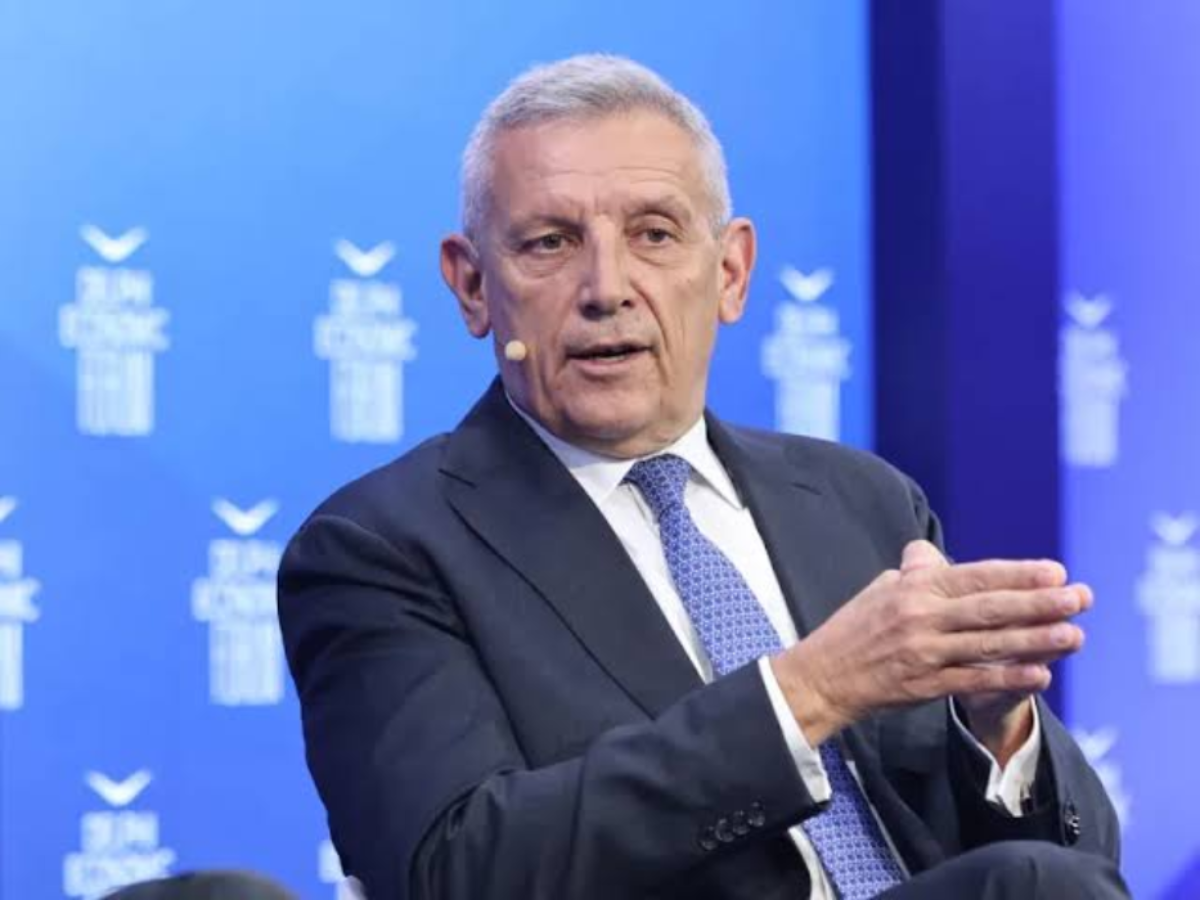
“If the Vessel Is Harassed, All Scenarios Exist”
The strongest part of Floros’ intervention came when he was asked what could happen if Turkish forces again appear in the area when cable-related operations resume.
The former Chief of Defence referred to the Greek government’s stated position that the project will proceed and argued that Greece possesses both diplomatic and operational instruments to protect its interests.
“Greece has all the tools — both verbal and in the forums to which it can appeal — but also the capabilities and means on the ground to assert its interests and defend them,” Floros said.
He then described the scenario more directly:
“The NAVTEX will be issued by Heraklion, the vessel will go and do its job. If it is harassed, all scenarios and all plans exist to support it.”
Floros did not disclose operational details or claim that a specific military response has already been decided.
His remarks referred instead to existing contingency planning and capabilities that could be considered depending on developments on the ground.
“Greece Has Done It Before — I Was Chief and I Know”
To explain what he meant by capabilities “on the ground,” Floros pointed to the 2020 Greek-Turkish crisis in the Eastern Mediterranean.
“Greece has done it before,” he said.
Floros, who was serving as Chief of the Hellenic National Defence General Staff at the time, added:
“When we deployed the fleet, I was Chief and I know, because I ordered it, naturally with the approval and within the framework established by the government. We mobilized the Armed Forces to support our national interests.”
He said Greek forces remained deployed until the Turkish side withdrew.
His comments refer to the 2020 crisis involving the Turkish research vessel Oruc Reis, when Greek and Turkish naval forces were deployed across the Eastern Mediterranean amid a sharp escalation in tensions.
The Kasos Precedent: “Everything Will Be Judged by the Outcome”
Floros was also questioned about the 2024 Kasos incident, when Turkish warships appeared in the area during survey operations linked to the electricity interconnector.
He was cautious when asked to assess the Greek government’s handling of that episode, saying he did not know the operational details.
But he repeatedly stressed one principle:
“Everything will be judged by the outcome.”
The Kasos episode remains an important reference point in the current GSI debate because it demonstrated how a technically focused energy project can quickly become entangled in the wider Greek-Turkish maritime dispute.
October Could Become the Next Test
The discussion also turned to reports that operations could resume later in October.
Floros did not present a specific date as confirmed.
“We will see what happens and how it happens,” he said, while expressing his own belief that the project will ultimately move forward.
That distinction is important: Floros’ expectation that the cable work will proceed is his assessment, rather than confirmation of a finalized operational timetable.
Why Rubio’s Athens Visit Matters
The second major element of Floros’ intervention was the arrival of Marco Rubio.
Floros emphasized that the US Secretary of State has extensive familiarity with Eastern Mediterranean security issues from his long career in the US Senate.
“He knows the issues very well,” Floros said, referring to Rubio’s involvement in congressional initiatives concerning the Eastern Mediterranean and US-Greek defence relations.
Floros also attached significance to the sixth US-Greece Strategic Dialogue, recalling that as Chief of Defence he had been personally involved in preparing the defence component of previous rounds.
“His arrival here is a very important event. The sixth Strategic Dialogue, which is the reason he is coming here, is also very important,” Floros said.
Defence, LNG and Energy Security
According to Floros, the agenda extends well beyond Greek-Turkish relations.
He pointed to a broader set of strategic issues including defence and security, the Vertical Gas Corridor, US LNG, energy security, electrical interconnections and regional stability.
This is precisely where the Great Sea Interconnector acquires significance beyond its technical characteristics.
For Athens, the project is tied not only to electricity connectivity but also to the wider geopolitical architecture of the Eastern Mediterranean.
Turkey, the S-400 and the F-35 Question
Floros also highlighted the continuing importance of the S-400/F-35 dispute between Washington and Ankara.
He argued that US legislation remains a significant obstacle for Turkey as long as the Russian-made S-400 air-defence system remains an unresolved issue.
Floros also pointed to Rubio’s long-standing involvement with Eastern Mediterranean security policy as a senator, arguing that this background makes his presence in Athens particularly significant.
“Rubio is not just anybody,” Floros said, describing him as a US official with a long record of involvement in the very regional issues now confronting Athens and Ankara.
“Defending Your Interests Is Your Own Duty”
Despite emphasizing Greece’s strategic relationship with the United States and the importance of its partnerships, Floros ended with a point directed squarely at Athens.
“Defending your interests is your own duty and your own priority,” he said.
His argument is that Greece should use its alliances, international law and diplomatic channels while simultaneously retaining the capacity to protect its interests on the ground if circumstances require it.
On whether the electricity interconnector will ultimately proceed, Floros offered his own unequivocal assessment:
“I believe it will happen.”
That remains Konstantinos Floros’ assessment. The real test will come when operations resume — and with how Ankara chooses to respond.
Source: pagenews.gr
Διαβάστε όλες τις τελευταίες Ειδήσεις από την Ελλάδα και τον Κόσμο