Mitsotakis Sets Six-Month Election Horizon — Cost of Living, Debt Relief and the Cyprus Cable
 ΧΡΟΝΟΣ ΑΝΑΓΝΩΣΗΣ 7 '
Πηγή Φωτογραφίας: eurokinissi//Mitsotakis Sets Six-Month Election Horizon — Cost of Living, Debt Relief and the Cyprus Cable



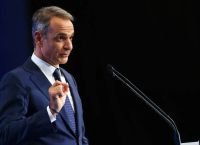
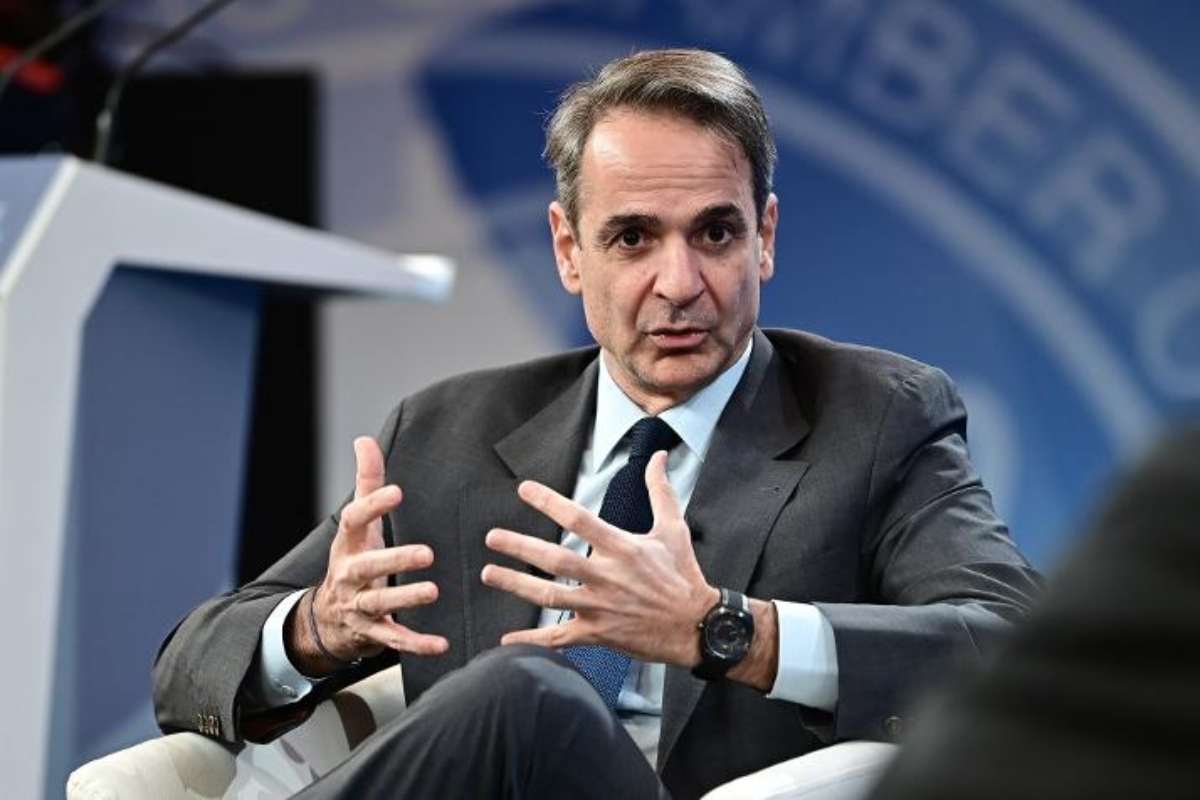
Kyriakos Mitsotakis has brought the cost-of-living message of the American elections into Greece’s domestic debate, setting out a six-month government agenda ahead of the polls.
In his November 8 weekly review, the prime minister identifies 90 priorities and argues that completing government commitments will allow voters to judge his administration’s overall record.
The agenda combines household relief with national security. Price reductions, borrower protections and agricultural payments feature alongside the Greece–Cyprus electricity interconnector, international partnerships and military procurement.
His acknowledgment of household pressures is explicit:
“High prices continue to put pressure on households in our country, despite improvements in several economic indicators.”
The statement recognizes the political challenge facing the government: stronger headline economic figures must translate into improvements people can feel in their budgets.
The US election lesson and 1,000 basic products
Mitsotakis notes that living costs were among American voters’ main concerns, connecting the international election result with his government’s domestic priorities.
He announces the extension of the National Price Reduction Initiative until the end of the year, covering approximately 1,000 basic products, including everyday foods.
He also emphasizes market inspections to ensure that announced reductions reach consumers.
“Consumers should know that the reductions being announced are implemented in practice,” he says.
The prominence of the issue reflects the importance of purchasing power as Greece approaches its next election.
A 3% interest rate and penalties of up to €5 million
On private debt, Mitsotakis highlights two measures added to legislation containing 16 favorable provisions.
From December 1, vulnerable and eligible debtors restructuring through the out-of-court mechanism will receive a fixed interest rate of 3% throughout their repayment arrangements.
For a €100,000 debt repaid over 20 years, his illustrative comparison puts potential savings at €20,200 for secured debt and €28,000 for unsecured debt. Those figures concern that example rather than a uniform saving for every borrower.
He also announces a tenfold increase in the maximum fine the Bank of Greece can impose on loan servicers for serious violations, from €500,000 to €5 million.
“It matters that these particular provisions secured broader support in parliament, beyond the government majority,” he writes.
In his wider assessment, Mitsotakis cites at least 27 banking-system interventions since 2019 and approximately €150 million in annual savings from reductions in fees and charges.
He also points to declining nonperforming loans on bank balance sheets and private debt equivalent to 96.6% of GDP, compared with a European average of 119.3%.
Greece and Cyprus authorize the cable surveys
On the Great Sea Interconnector, Mitsotakis describes Friday’s licensing decision and navigational warning as important steps toward implementation.
His message on jurisdiction is direct:
“Greece and Cyprus are the countries authorizing the survey work.”
He emphasizes the project’s European status and the participation of French companies, linking electricity connectivity with energy self-sufficiency, regional cooperation and stability.
Turning to Washington, he argues that Greek–American relations transcend electoral cycles. He welcomes the election of Greek Americans and highlights government relationships with figures expected to serve on important defense and foreign-policy committees.
“No untouchable areas”: The organized-crime record
Mitsotakis gives considerable attention to the Organized Crime Directorate’s first two years.
According to the figures he presents, the service has:
- Handled more than 1,500 cases.
- Brought charges against more than 5,400 people.
- Dismantled 259 criminal groups.
He cites fuel and tobacco smuggling networks, corruption in public services and cases involving public employees and police officers. Charges concern the investigative and judicial process; they are not equivalent to convictions.
“There are no untouchable areas, nor individuals exempt from scrutiny. The law must apply to everyone, without qualifications,” he says.
Agricultural payments: Deadlines for applications and disbursements
The prime minister acknowledges difficulties during the transition to the new agricultural-subsidy system, particularly in submitting applications.
He says payments are already being made to approximately 40,000 beneficiaries. Advance payments are scheduled by November 30, with final settlements in December.
Farmers who have not yet applied can use the extension until Tuesday, November 10.
Mitsotakis connects the effort to resolve technical problems with action against fraudulent subsidies, addressing both payment delays and demands for stronger oversight.
Ninety priorities and a €1,000 minimum-wage target
The clearest electoral timetable appears in his description of the government’s priorities:
“For the next six months, until the elections.”
The list includes another minimum-wage increase, housing measures, improvements in health and education, and major infrastructure projects.
The target of a €1,000 minimum wage by early 2028 extends beyond the six-month pre-election agenda.
On investment, Mitsotakis cites ten projects worth €226.2 million, supported by more than €104 million in state assistance and expected to create over 400 jobs.
He also outlines plans to simplify investment procedures and regulate algorithmic decision-making affecting platform workers, including transparency, human oversight and personal-data protection.
Healthcare and municipalities
For people insured through EOPYY, Mitsotakis highlights mandatory uploads of examination results to the Digital Repository and the services available through myEOPYYapp.
These include pharmacy appointments, requests for home delivery of high-cost medicines and reimbursement submissions.
For municipalities, he repeats the “6+2” initiatives announced at the local-government conference:
- €300 million for recycling projects.
- €240 million for overdue energy debts.
- A doubling of annual state funding for school-building maintenance.
- €50 million for batteries supporting local renewable-energy consumption.
Two further commitments remain conditional. Annual road funding of €200 million depends on fuel-market normalization, while a special municipal electricity tariff is linked to easing energy-market disruption.
Defense, regional projects and cultural returns
On defense, Mitsotakis refers to the procurement of three KC-390 aircraft, with an option for another three, and the delivery of two additional MH-60R Seahawk helicopters.
He also presents a training and certification program for journalists covering war zones, beginning with 25 public-media journalists.
His Peloponnese tour includes transport and environmental projects, alongside a new 96-place university residence in Tripoli.
Cultural initiatives include the restoration of the Byzantine church at Maximianoupolis and the return of 48 ecclesiastical treasures from Bulgaria after 109 years.
He closes by highlighting Eurobank’s support for working mothers and Telekom’s speed upgrades affecting approximately 700,000 connections.
The political objective behind the six-month agenda is expressed in his own words:
“Our aim is to complete what we have committed to, so that citizens can judge us on the entirety of our work.”
Source: pagenews.gr
Διαβάστε όλες τις τελευταίες Ειδήσεις από την Ελλάδα και τον Κόσμο