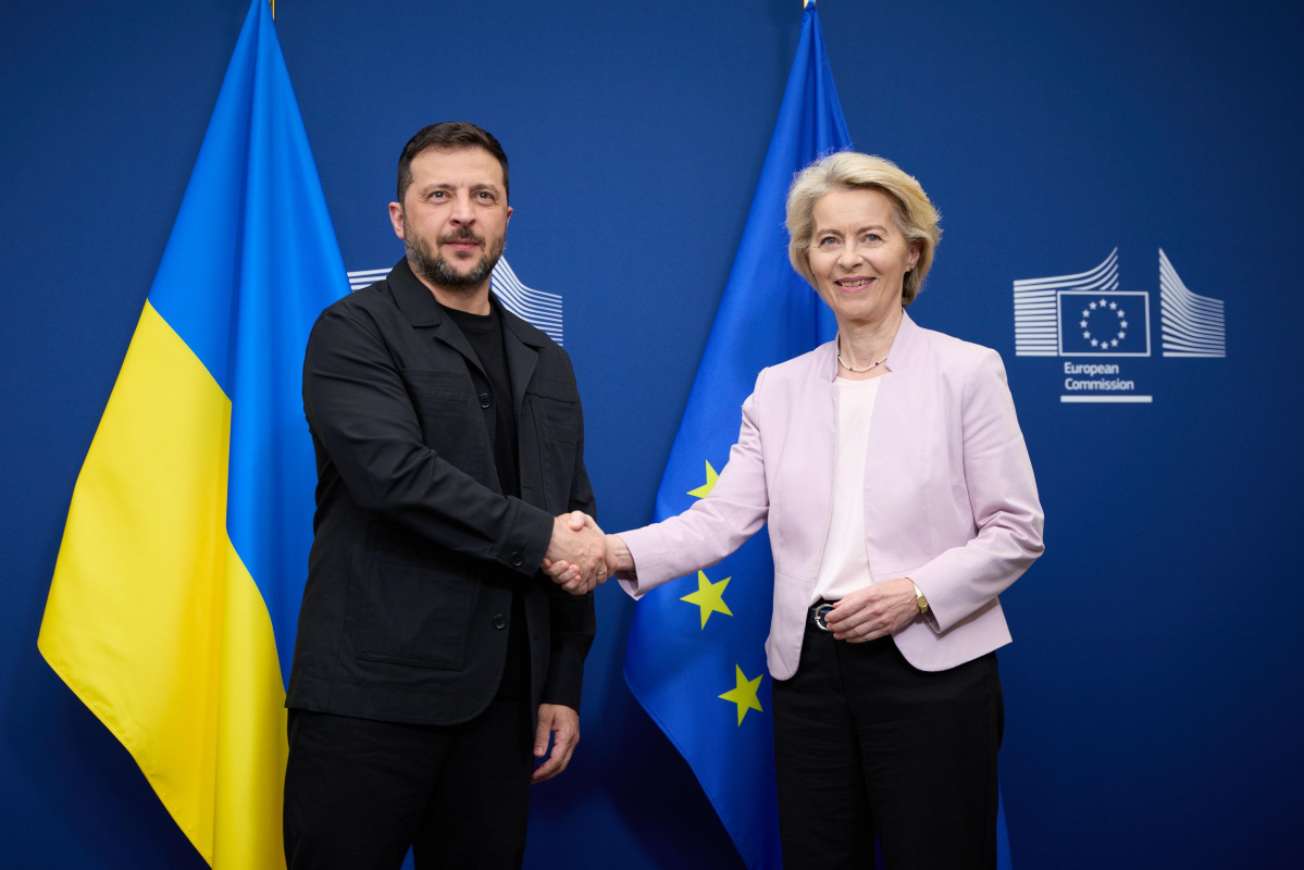
The European Union is preparing another major financial intervention to support Ukraine as Russia’s continuing war places increasing pressure on Kyiv’s economy, public finances and military capabilities.
The European Commission has proposed a new €45 billion loan for 2027, designed to ensure that Ukraine can continue funding essential government operations while meeting its growing defence requirements.
The proposal contains a politically significant provision: repayment would be linked to future war reparations from Russia.
Brussels is therefore attempting to address two challenges simultaneously: providing Ukraine with immediate financial resources while establishing a framework under which Russia would ultimately bear responsibility for repayment.
However, the arrangement raises a fundamental question.
How can Europe finance Ukraine’s survival today when the money expected to repay the loan depends on future reparations that have not yet materialised?
The proposal comes as the European Union seeks to maintain long-term financial assistance to Kyiv despite the growing cost of the war and uncertainty surrounding a potential diplomatic settlement.
Why Ukraine Needs Another €45 Billion
According to the European Commission’s assessment, Ukraine faces an estimated €70 billion financing gap in 2027.
The proposed €45 billion loan would cover approximately two-thirds of that requirement.
Additional funding is expected from international partners.
The financing gap reflects the severe economic consequences of Russia’s continuing military campaign.
Ukraine must maintain its armed forces, repair damaged infrastructure, finance essential public services and sustain government operations while large parts of its economy remain disrupted by the war.
Military expenditure continues to absorb substantial resources.
At the same time, Russian attacks on infrastructure and economic facilities have increased the cost of maintaining essential services.
For Brussels, Ukraine’s financial stability is inseparable from its ability to defend itself.
A major fiscal crisis could undermine military operations, weaken public institutions and place additional pressure on Ukrainian society.
The proposed loan is therefore intended to provide greater predictability at a time when Kyiv’s financial requirements remain exceptionally high.
€25 Billion for Defence, €20 Billion for Ukraine’s Budget
The European Commission’s proposal divides the financing into two principal components.
Up to €25 billion would be allocated to military assistance, while up to €20 billion would support Ukraine’s general budget.
The distinction reflects the two interconnected priorities of European support.
The first is maintaining Ukraine’s capacity to resist Russian military operations.
The second is preventing economic instability from undermining the functioning of the Ukrainian state.
Budgetary assistance would help Kyiv preserve resources for public services and essential government expenditure.
Military financing would address the growing need for weapons, ammunition and advanced defence technologies.
Both components are considered essential to sustaining Ukraine’s ability to withstand a prolonged conflict.


The Drone War Is Reshaping Ukraine’s Military Spending
A particularly important element of Ukraine’s future defence requirements concerns unmanned aerial systems.
European Commissioner for Defence and Space Andrius Kubilius has warned that Ukraine will need to devote a significant proportion of its military budget to drones.
The assessment reflects expectations that Russia will substantially increase its own deployment of unmanned systems.
Drones have become central to modern battlefield operations, performing reconnaissance, surveillance and strike missions.
Their increasing use creates demand not only for additional unmanned aircraft but also for electronic warfare systems, air defence capabilities and technologies designed to counter incoming attacks.
For Ukraine, maintaining sufficient resources for these capabilities is essential to its military operations.
For the European Union, the growing importance of drones reinforces the need for predictable financing and sustained defence production.
The changing character of the war is therefore influencing how European assistance is structured.
Who Will Repay the Loan? The Russian Reparations Clause
One of the most consequential features of the proposal concerns repayment.
Under the Commission’s framework, Ukraine would repay the loan through future war reparations from Russia.
The arrangement seeks to connect European financial assistance with Moscow’s responsibility for the damage caused by the war.
However, the mechanism involves significant uncertainty.
The payment of war reparations depends on future legal, diplomatic and financial developments.
There is no guarantee that Russia will make such payments within a particular timeframe.
Consequently, the existence of a reparations clause does not mean that the European Union already possesses the funds needed for repayment.
This distinction is central to understanding the proposal.
Brussels is establishing financing arrangements today while linking the eventual repayment obligation to developments that remain uncertain.
That is why the plan also includes financial guarantees and provisions involving immobilised Russian assets.
Frozen Russian Assets: A Potential Source of Repayment
The European Union has reserved the possibility of using immobilised Russian cash and associated profits to repay the loan.
Large amounts of Russian sovereign assets have remained immobilised under sanctions imposed following the full-scale invasion of Ukraine in February 2022.
These assets have become a major focus of discussions over how to finance Ukraine’s defence and reconstruction.
However, their use raises complex legal and financial questions.
Immobilising an asset does not automatically transfer its ownership.
There is also an important distinction between using profits generated by immobilised assets and directly accessing the underlying principal.
The Commission’s proposal provides for potential repayment mechanisms involving Russian assets, subject to the applicable legal and financial conditions.
It does not mean that all immobilised Russian funds have already been confiscated or made available for unrestricted use.
The issue is particularly sensitive because it involves sovereign property, international financial arrangements and the legal consequences of sanctions.
For Brussels, the challenge is to establish a credible financing mechanism without undermining the legal foundations of the European financial system.
How the New €45 Billion Loan Relates to the Existing €90 Billion Programme
The latest proposal follows an earlier agreement by EU leaders on a €90 billion loan programme covering 2026 and 2027.
The European Commission has presented the new €45 billion package as additional support, rather than a replacement for the previously agreed programme.
This distinction is important because the two financing arrangements form part of a broader European effort to meet Ukraine’s financial requirements.
However, not every EU member state is participating in the earlier arrangement on identical terms.
The Czech Republic, Hungary and Slovakia will not contribute financially to that programme under the agreed framework.
Their position illustrates the political and financial differences that continue to exist within the Union over support for Ukraine.
Despite these divisions, the Commission is seeking broad political backing for the additional loan.
The challenge will be converting that support into the formal approvals needed to implement the new financing arrangements.
Von der Leyen Seeks Support From All 27 EU Members
European Commission President Ursula von der Leyen has expressed confidence that the proposal can secure support from all 27 member states.
The Commission’s position reflects the continuing political commitment among European governments to support Ukraine.
Nevertheless, the proposal must pass through the EU’s legislative and budgetary procedures.
It consists of two components requiring approval through the relevant European institutions, including EU governments and the European Parliament.
A related amendment to the EU budget requires unanimous support.
This creates a potential political obstacle.
Even when member states agree on the overall objective of supporting Ukraine, disagreements can arise over financing arrangements, budgetary guarantees and the distribution of financial responsibilities.
The negotiations will therefore test the EU’s ability to maintain unity over a major financial commitment.
EU Funding Comes With Anti-Corruption and Rule-of-Law Conditions
The proposed loan is not intended to provide unconditional financing.
Disbursements would depend on Ukraine’s progress in specific reform areas.
These include the rule of law, anti-corruption measures and public financial management.
The conditions are intended to strengthen accountability and ensure that European financial assistance is accompanied by institutional safeguards.
The European Union has already linked major financial support programmes to reforms in governance, public administration and financial oversight.
In Ukraine’s case, these requirements carry additional importance because of the scale of the funding and the exceptional conditions created by the war.
Brussels is seeking to balance urgent financial needs with longer-term institutional development.
The conditions also reflect the broader importance of governance reforms to Ukraine’s relationship with the European Union.
What Happens to Interest Payments From 2028?
Under the proposal, Ukraine would technically become responsible for interest payments beginning in 2028.
However, the European Union plans to provide a subsidy to cover these costs.
The objective is to prevent debt-servicing expenses from placing additional pressure on Ukraine’s already strained public finances.
This arrangement would allow Kyiv to benefit from financing without immediately bearing the full cost of interest payments.
Nevertheless, the subsidy would create financial obligations within the European framework.
The overall cost will depend on the final borrowing terms, applicable interest rates and the duration of the support mechanism.
Therefore, the financial implications of the loan extend beyond its €45 billion principal amount.
Non-EU Countries Could Help Guarantee the Financing
Another feature of the proposal would allow countries outside the European Union to participate.
Eligible partners with strong credit ratings could provide guarantees supporting the EU budget in connection with Ukraine financing.
The arrangement is designed to broaden the pool of financial support and strengthen the credibility of the loan mechanism.
Participation by highly rated international partners could provide additional reassurance to financial markets.
It would also allow non-EU governments to contribute through a coordinated European framework.
According to the Commission’s proposal, this mechanism could support up to an additional €5 billion in borrowing, subject to the relevant guarantees and conditions.
The provision reflects Brussels’ efforts to mobilise international support beyond the Union’s own membership.
The Bigger Question: Who Pays While the War Continues?
The proposed €45 billion loan highlights the central financial dilemma facing Europe.
Ukraine needs immediate and predictable assistance to maintain its military capabilities and essential state functions.
Yet the war’s duration, the scale of future reconstruction needs and the prospect of Russian reparations remain uncertain.
The Commission is attempting to address these challenges through a combination of borrowing, budgetary guarantees, reform conditions and potential repayment from Russian assets.
The arrangement has both economic and geopolitical implications.
For Ukraine, the funding could provide critical resources in 2027.
For the European Union, it represents another major commitment to sustaining Kyiv’s financial and military resilience.
For Russia, the proposed repayment structure reinforces Europe’s position that Moscow should ultimately bear responsibility for the financial consequences of the war.
But until reparations are paid or alternative repayment resources become available, the financial guarantees supporting the programme remain essential.
The European Union wants Russia to pay the final bill for the war. For now, however, Europe must establish the financing, provide the guarantees and secure the political agreement needed to keep Ukraine funded.
Source: pagenews.gr