The Blue Wave Hits Europe: Trump on the Defensive, Far Right on the Rise — The Battle for 2027
 ΧΡΟΝΟΣ ΑΝΑΓΝΩΣΗΣ 15 '
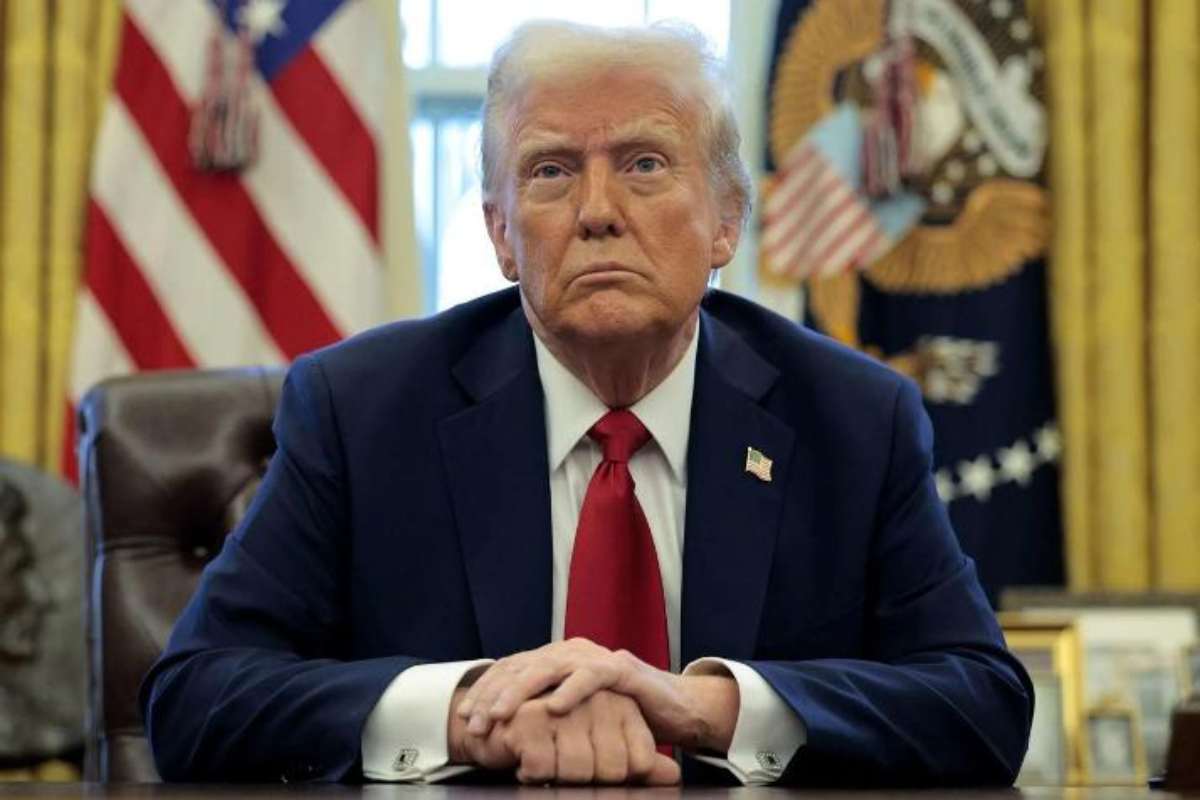
Πηγή Φωτογραφίας: AP Photo//The Blue Wave Hits Europe: Trump on the Defensive, Far Right on the Rise — The Battle for 2027



The American electorate has changed the balance of power in Washington. But has it changed the political trajectory of Europe?
The Democratic “blue wave” in the November 3 midterm elections delivered a major institutional setback to Donald Trump, depriving Republicans of control of both the Senate and the House of Representatives.
For European capitals, the results offered a measure of relief after two years of increasingly turbulent transatlantic relations.
Yet the central question confronting Brussels, Paris, Berlin and Rome is far more complicated.
Will a Democratic-controlled Congress restrain Trump’s confrontational approach to Europe, or will a politically weakened president increasingly turn to foreign policy to demonstrate his authority?
The answer could determine the future of European security, the war in Ukraine, transatlantic trade and the political fortunes of Europe’s nationalist movements.
Washington’s Political Earthquake: 44 Republican House Seats Flip
The scale of the Democratic victory was significant.
According to election reporting available by November 11, Democrats had captured 44 Republican-held seats in the House of Representatives and eight Republican-held Senate seats.
Republicans, meanwhile, had flipped two Democratic-held House seats.
The result gives Democrats control over congressional committees, investigative hearings and important elements of the legislative agenda.
But it does not give them complete control over American policymaking.
Trump retains presidential veto powers and substantial executive authority, particularly in diplomacy and national security.
Congress can scrutinize, obstruct and negotiate. It cannot simply replace the president’s foreign policy with its own.
That distinction matters enormously for Europe.
A Democratic Congress could make some presidential initiatives more difficult to implement, particularly where new legislation or funding is required.
But Trump retains considerable room for maneuver in negotiations with Russia, relations with NATO allies and diplomatic initiatives involving Ukraine.
The Democratic victory also reveals an increasingly diverse political coalition.
Figures such as James Talarico in Texas, Abdul El-Sayed in Michigan and Jon Ossoff in Georgia represent different currents within the party, ranging from progressive activism to more moderate political approaches.
Their priorities are not necessarily identical.
Healthcare, affordability, housing, economic inequality and institutional accountability are likely to dominate the domestic agenda.
Restoring a harmonious relationship with Europe may not be Washington’s immediate priority.
Nathalie Tocci: Europe Could Become the Target of Trump’s Anger
One of the strongest warnings has come from Nathalie Tocci, a professor at Johns Hopkins SAIS Europe and a senior research fellow at Bocconi University.
Writing in The Guardian on November 9, Tocci argued that Trump’s electoral humiliation could make relations with Europe more difficult rather than less confrontational.
Her assessment rests on a broader ideological conflict.
Trump and the MAGA movement have frequently portrayed European liberal democracies as representatives of the political and cultural establishment they oppose at home.
In that worldview, Europe is not merely a trading partner or a collection of military allies.
It is also an ideological adversary.
Tocci warned that Trump’s hostility toward Europe could intensify as his domestic political opponents gain strength.
Such a development could produce renewed tariff disputes, tensions over NATO commitments and further uncertainty surrounding Ukraine.
The wider implication is that Europe cannot base its long-term strategy on the expectation that American politics will eventually return to its previous patterns.
Even a future Democratic administration would face domestic pressures over defense spending, industrial competition and economic security.
Ukraine: Abu Dhabi Exposes Europe’s Strategic Vulnerability
The negotiations over Ukraine represent the most immediate test of the new transatlantic environment.
Talks in Abu Dhabi, beginning on November 10 under American mediation, brought representatives of Washington, Moscow and Kyiv into a diplomatic process whose outcome could reshape European security.
Yet Europe’s role in those negotiations has remained a central political controversy.
French Foreign Minister Jean-Noël Barrot sought to address those concerns ahead of the meetings.
“The Europeans will be adequately represented. France will be in Abu Dhabi to participate in these discussions,” he said on November 8.
The statement reflected Paris’s determination to ensure that decisions affecting European security are not negotiated exclusively between Washington and Moscow.
However, European diplomatic contacts with the Ukrainian delegation were organized separately from the central trilateral discussions.
Ukraine’s chief negotiator, Rustem Umerov, emphasized the importance of coordination with European partners and developing a shared understanding of the next steps.
The issue extends far beyond diplomatic protocol.
Who will guarantee Ukraine’s security?
Who will monitor a potential ceasefire?
What role will NATO play?
And will European governments be expected to finance and implement arrangements they did not meaningfully help negotiate?
For France, Germany, the United Kingdom and the European Union, these are fundamental strategic questions.
Macron and Merz: Europe’s Strategic Autonomy Returns to the Forefront
For French President Emmanuel Macron, the American electoral shift reinforces a longstanding argument: Europe must become more capable of defending its own interests.
Macron has consistently advocated greater European strategic autonomy in defense, technology and industrial production.
That does not necessarily mean abandoning NATO.
Rather, it means reducing Europe’s vulnerability to changes in American political leadership.
German Chancellor Friedrich Merz faces a related but distinct challenge.
Germany must strengthen European defense capabilities while preserving its commitments to NATO and managing domestic economic pressures.
Berlin’s strategic priorities include defense investment, military-industrial production and continued support for Ukraine.
But the difficulty lies in transforming national commitments into a coherent European strategy.
France and Germany may share broad objectives, yet their approaches to defense financing, industrial cooperation and relations with Washington do not always coincide.
The result is a European Union increasingly aware of its vulnerabilities but still struggling to agree on how to address them.
Germany: The AfD Reaches 27% Despite MAGA’s Defeat
The latest German polling illustrates why the American Democratic victory cannot automatically be interpreted as a broader retreat of nationalist politics.
According to the November DeutschlandTrend survey conducted by Infratest dimap among 1,297 respondents, Alternative for Germany (AfD) stood at 27%, compared with 20% for the CDU/CSU.
The Greens registered 16%, the Social Democrats 13% and the Left Party 11%.
These figures indicate that the AfD retains substantial electoral support despite the Republican defeat in the United States.
AfD co-leader Alice Weidel has also sought to distance herself from particular Trump policies, especially American tariffs, Greenland-related tensions and military intervention in Iran.
This does not necessarily represent a comprehensive ideological break with MAGA.
It demonstrates, however, that European nationalist parties are increasingly willing to defend their domestic political interests even when those interests conflict with Washington.
German voters concerned about immigration, energy prices, industrial competitiveness and living standards are responding primarily to domestic conditions.
The political grievances sustaining the AfD do not disappear because Republicans lose elections in America.
France: Le Pen and Bardella Prepare for the 2027 Presidential Contest
In France, attention is already turning toward the 2027 presidential election.
Marine Le Pen and Jordan Bardella, the leading figures of the National Rally, remain influential within the country’s nationalist electorate.
A November Elabe survey recorded exceptionally strong favorable ratings for both politicians among voters associated with Le Pen and Éric Zemmour: 91% for Le Pen and 87% for Bardella.
These figures measure favorable perceptions within that particular political electorate, not nationwide voting intentions.
Nevertheless, they highlight the National Rally’s continued strength.
The party has increasingly focused on purchasing power, immigration, public debt and national sovereignty.
Both Le Pen and Bardella have also sought to avoid becoming politically dependent on Trump’s popularity.
American trade policies that damage French producers or increase costs for consumers are difficult to defend in a French election campaign.
The National Rally’s strategy therefore involves maintaining its nationalist identity while emphasizing its independence from American decisions.
For Macron’s political camp and France’s fragmented left, the challenge is not simply to criticize Trump.
It is to offer credible domestic answers to the economic grievances on which the National Rally has built its appeal.
Giorgia Meloni: Between Washington and Brussels
Italian Prime Minister Giorgia Meloni occupies a particularly complex position.
She maintains relationships with American conservative political circles while simultaneously operating within the European Union’s institutional framework.
Italy’s interests include export competitiveness, energy security, industrial investment and stability in the Mediterranean.
American tariffs and broader transatlantic tensions therefore create tangible economic risks.
Meloni’s challenge is to preserve access to Washington without weakening Italy’s influence in Brussels.
Her approach demonstrates the limits of treating Europe’s nationalist and conservative parties as a single political bloc.
Unlike opposition parties, Meloni must reconcile ideological preferences with the responsibilities of governing a major European economy.
Her political survival depends not only on cultural or nationalist issues but also on Italy’s economic performance and its relationships with European partners.
Spain: Sánchez, Feijóo and Abascal Face a Crucial November Election
Spain is preparing for a particularly important political test on November 29, following Prime Minister Pedro Sánchez’s decision to call an early election.
The contest comes amid widespread concerns over housing affordability, wages and the cost of living.
Sánchez’s Socialists face the conservative People’s Party, led by Alberto Núñez Feijóo, and the nationalist Vox party, headed by Santiago Abascal.
A polling average published on November 9 presented the following picture:
| Party | Polling average |
|---|---|
| People’s Party (PP) | 31.1% |
| Socialist Party (PSOE) | 27.1% |
| Vox | 18.9% |
| Frente Amplio | 7.0% |
| Podemos | 1.8% |
The figures suggest a political environment markedly different from the United States.
While American Democrats have gained ground, Spain’s conservative and nationalist parties remain competitive.
Abascal has explicitly rejected the idea that Spain’s political future should be interpreted through American election results.
“We are in Spain, not Michigan,” he said after the US midterms.
His remark captures a broader reality.
European nationalist movements may share ideological themes with MAGA, but their electoral success depends on national circumstances.
Housing shortages, wage pressures and dissatisfaction with incumbent governments can sustain opposition movements regardless of developments in Washington.
Poland and Central Europe: MAGA’s European Allies Face New Questions
In Poland, President Karol Nawrocki has cultivated a close political relationship with Donald Trump.
The American electoral reversal introduces new uncertainty into that relationship.
Poland remains one of Ukraine’s most important European supporters and considers Russian military aggression a direct threat to its security.
Any American diplomatic settlement perceived as granting Moscow excessive concessions would therefore create serious concerns in Warsaw.
Polish political leaders must balance their relationships with American conservatives against the country’s long-term security priorities.
A similar challenge exists elsewhere in Central Europe.
In the Czech Republic, Prime Minister Andrej Babiš and his coalition partners must reconcile nationalist political positions with the country’s European and NATO commitments.
The underlying problem is that ideological alignment with Washington does not always translate into compatible national interests.
Blanche Leridon: Democrats Will Not Necessarily Put Europe First
Blanche Leridon, an analyst at France’s Institut Montaigne, has offered another important perspective.
She argues that the Democratic takeover of Congress should not be mistaken for an immediate restoration of transatlantic harmony.
The Democratic Party contains significant divisions between progressive and centrist factions, particularly on foreign policy.
Its priorities are likely to focus heavily on domestic political battles.
Leridon also warns against concluding that nationalist and populist movements are retreating across the Western world.
A crucial distinction exists between parties already exercising power and those seeking to win it.
Incumbents must defend their records.
Opposition parties can mobilize dissatisfaction with economic conditions and political institutions.
This distinction helps explain why the Republican defeat does not necessarily weaken France’s National Rally, Germany’s AfD or Spain’s Vox.
Their political appeal is shaped by different national circumstances.
Generation Z, Housing and the Demand for Political Renewal
Beyond the immediate geopolitical consequences, the American elections have reopened a wider debate about democratic renewal.
Younger voters are increasingly concerned about housing affordability, employment insecurity, inequality and the influence of major technology companies.
These issues are not unique to the United States.
Across Europe, younger generations face rising housing costs, uncertain employment prospects and growing frustration with established political institutions.
The challenge for mainstream parties is to translate that dissatisfaction into credible policies.
Progressive movements often emphasize redistribution, public services and corporate accountability.
More moderate parties focus on economic stability, investment and institutional reform.
Nationalist movements, meanwhile, frequently frame these same grievances around immigration, sovereignty and opposition to political elites.
The political competition is therefore not simply between democracy and authoritarianism.
It is also a contest over which parties can offer convincing answers to economic insecurity and declining trust.
Three Political Realities After America’s Blue Wave
The American election has created three simultaneous developments.
First, Trump’s domestic political position has weakened. A Democratic-controlled Congress can intensify scrutiny of his administration and complicate parts of his legislative agenda.
Second, Europe remains exposed to American foreign-policy decisions. Ukraine, trade and defense are areas in which presidential authority and diplomatic initiatives continue to matter.
Third, European nationalist movements retain independent sources of electoral support. Germany’s AfD, France’s National Rally and Spain’s Vox are responding to domestic political and economic pressures, not simply following American trends.
These realities make a continent-wide political reversal far from inevitable.
Europe’s political landscape remains fragmented, shaped by different electoral systems, coalition arrangements and national priorities.
The Next Battle: Can Europe Shape Its Own Future?
The Democratic victory has changed the balance of power in Washington.
It has not eliminated the uncertainty surrounding American foreign policy.
Nor has it removed the economic and political grievances sustaining nationalist movements across Europe.
The coming months will be shaped by developments in the Ukraine negotiations, American trade policy, European defense investment and national election campaigns.
For Europe’s leaders, the challenge is twofold.
They must manage relations with an American president whose domestic position has weakened but whose international authority remains significant.
At the same time, they must address the economic insecurity and political dissatisfaction driving electoral volatility at home.
The blue wave is a turning point for American politics. Whether it becomes a turning point for Europe will depend far more on European decisions than on the outcome of a single election across the Atlantic.
The fundamental question is no longer simply whether Donald Trump can be politically constrained.
It is whether Europe can develop the strategic confidence, economic resilience and democratic credibility required to shape its own future.
Source: pagenews.gr
Διαβάστε όλες τις τελευταίες Ειδήσεις από την Ελλάδα και τον Κόσμο