Venezuela’s Oil Deal Reshapes the Map: Essequibo, Chevron and the OPEC Bombshell
 ΧΡΟΝΟΣ ΑΝΑΓΝΩΣΗΣ 8 '

Πηγή Φωτογραφίας: AP Photo//Venezuela’s Oil Deal Reshapes the Map: Essequibo, Chevron and the OPEC Bombshell



Three developments that appear to belong to different geopolitical files are beginning to converge into a single energy story.
Washington’s new oil relationship with Venezuela.
Caracas’s debate over its historic place inside OPEC.
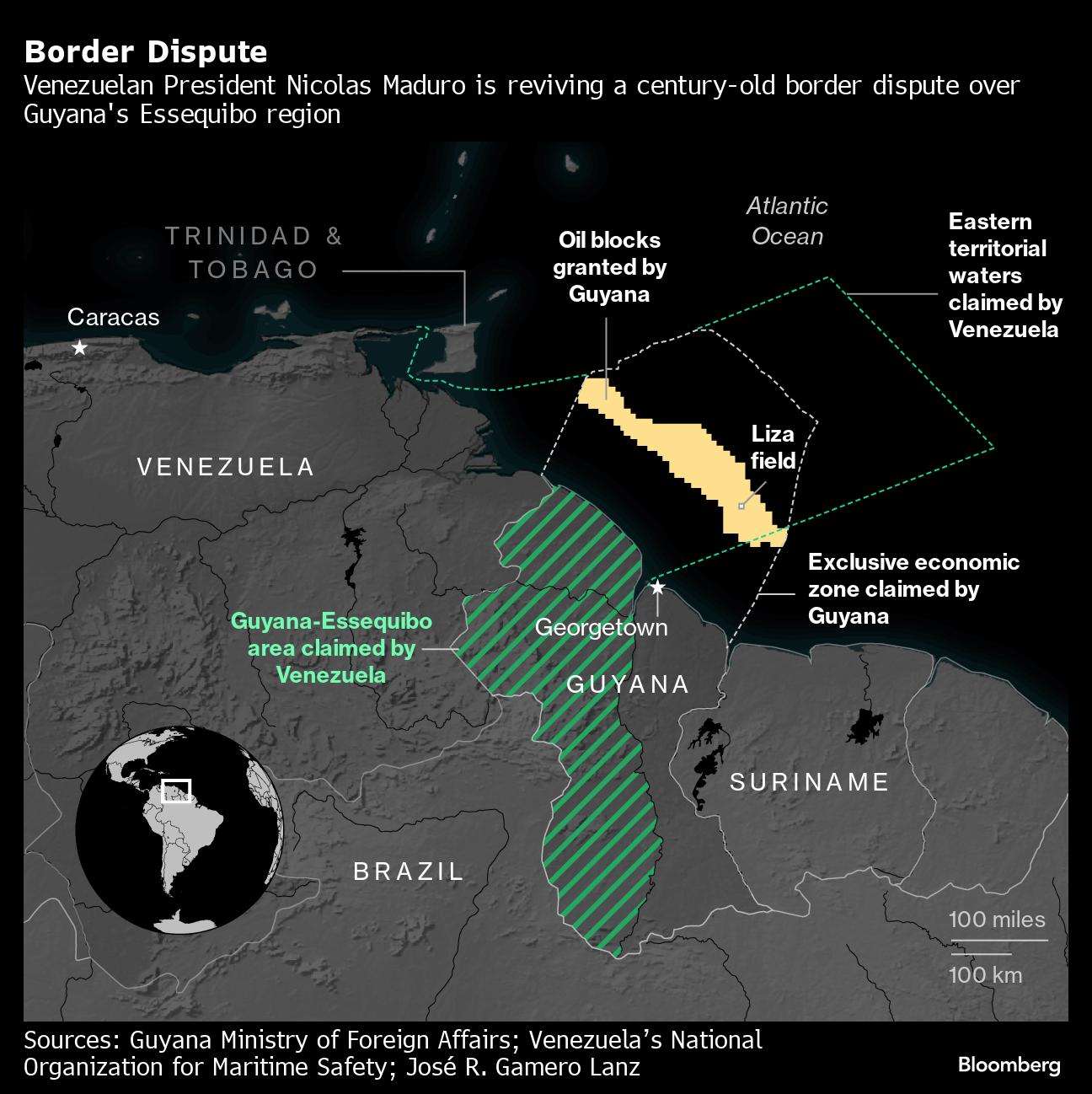
And Venezuela’s long-running claim over Essequibo, the resource-rich territory that accounts for roughly two-thirds of neighboring Guyana.
The common denominator is oil.
And more than any other company, Chevron now connects the pieces.
From Chávez to Guyana: The Irony Behind the Oil Boom
Guyana’s extraordinary transformation into an oil producer can be traced partly to decisions made in Venezuela almost two decades ago.
In 2007, Hugo Chávez’s government nationalized major oil projects, pushing ExxonMobil out of key Venezuelan assets.
The American oil major redirected its attention elsewhere.
Then came the breakthrough.
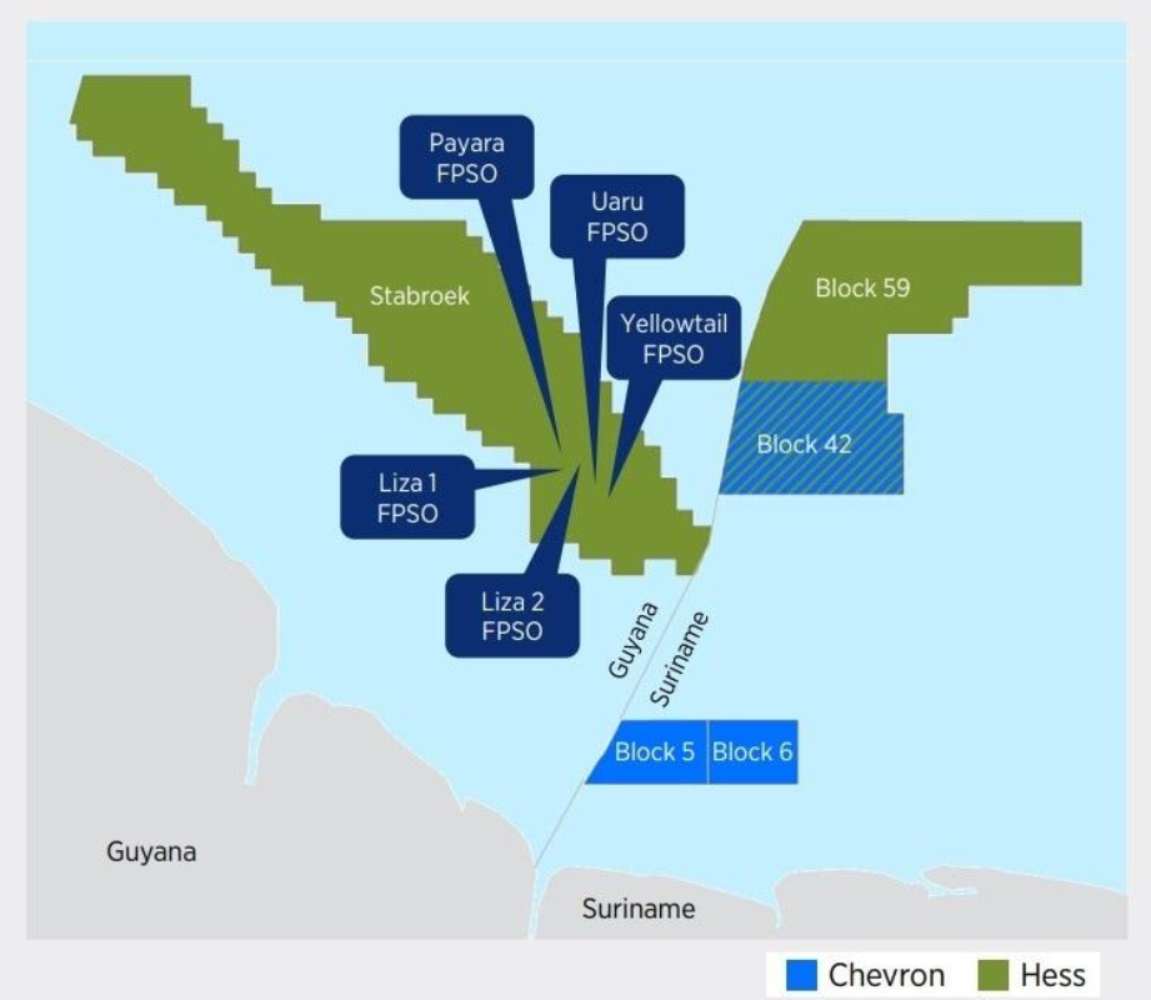
In 2015, ExxonMobil discovered oil offshore Guyana in the Stabroek Block, triggering one of the most important new petroleum developments of the 21st century.
Guyana has since become one of the world’s fastest-growing oil producers, with output approaching 1 million barrels per day and the potential for substantially higher production by the end of the decade.
And right beside this extraordinary energy story sits Essequibo.
Essequibo Is No Longer Just a Border Dispute
The Venezuela–Guyana dispute dates back to the 19th century.
Oil fundamentally changed its strategic importance.
For Caracas, Essequibo carries historical, territorial and nationalist significance. For Guyana, the dispute is now inseparable from the country’s sovereignty and its emergence as a major energy producer.
The case has reached the International Court of Justice, but the two governments remain fundamentally divided over the process.
Guyana has said it will respect the Court’s judgment.
Caracas rejects the ICJ’s jurisdiction and maintains that the dispute should be resolved under the Geneva Agreement through direct negotiations.
That leaves a potentially dangerous territorial flashpoint sitting alongside one of the world’s most important emerging offshore oil provinces.
Chevron Is Now on Both Sides
This is where the equation becomes much more interesting.
Chevron has a longstanding presence in Venezuela through its partnerships with state-owned PDVSA.
At the same time, its acquisition of Hess gave the US major exposure to Guyana’s giant Stabroek development.
One of America’s largest energy companies therefore has commercial interests on both sides of one of South America’s most sensitive territorial disputes.
That changes Washington’s incentives.
Stability between Caracas and Georgetown is no longer solely a foreign-policy objective.
It increasingly becomes an issue of energy security, investment protection and future oil supply.
Could Oil Actually Become a Brake on War?
There is a strong economic argument for de-escalation.
A Venezuela seeking American capital, technology and access to international markets has far more to lose from military confrontation with Guyana than an economically isolated Venezuela did.
Washington has even stronger reasons to prevent a conflict that could simultaneously threaten Venezuelan production, Guyanese offshore assets and US corporate interests.
Commercial interdependence could therefore become a stabilizing mechanism.
But politics can push in precisely the opposite direction.
Why the Oil Deal Could Make Essequibo More Dangerous
The more concessions a government makes to Washington on oil, the greater its domestic need may become to demonstrate that it is not retreating on sovereignty.
That makes Essequibo politically valuable.
It can function as a nationalist counterweight.
If an adverse ICJ development coincides with domestic criticism over Venezuela’s oil arrangements with the United States, Caracas could have an incentive to harden its rhetoric or revive military and naval pressure around the disputed territory.
The paradox is striking.
Oil could become either the mechanism that prevents a Venezuela–Guyana conflict or the political fuel that makes one more likely.
The Bigger Shock Could Come From OPEC
The second front has potentially much larger consequences for global energy markets.
Venezuela was one of OPEC’s five founding members in 1960 and for decades ranked among the organization’s most important political players.
Sanctions, underinvestment and collapsing production subsequently reduced its influence dramatically.
A revival of Venezuelan output would reverse that equation.
If US capital and technology help restore production capacity, Caracas could eventually face a fundamental choice: rebuild its influence from inside OPEC and accept collective production discipline, or seek greater freedom to pump?
For Washington, the second option would be far more consequential.
The Scenario Riyadh Would Be Watching
A Venezuela capable of expanding production without strict OPEC quota discipline could become a powerful additional source of Atlantic Basin supply.
More barrels from the Western Hemisphere would diversify global oil flows and potentially reduce OPEC+’s ability to influence prices through coordinated production cuts.
And Venezuela would not be acting in isolation.
Guyana is already outside OPEC and expanding rapidly. Brazil is increasing production. The United States and Canada remain energy giants, while Argentina’s Vaca Muerta continues to emerge as another major source of supply.
Add a revitalized Venezuela to that picture and a much larger energy bloc begins to take shape.
From the Persian Gulf to the Atlantic Basin
For decades, the political centre of gravity in oil markets was concentrated around the Persian Gulf.
A second centre is increasingly emerging across the Americas:
United States – Canada – Brazil – Guyana – Argentina – and potentially Venezuela.
This is not a formal alliance and these countries do not share a common production policy.
But their combined supply growth matters.
The greater the volume of responsive non-OPEC production available from the Americas, the harder it becomes for OPEC+ to dominate the global supply equation.
That has implications not only for Saudi Arabia.
It matters enormously for Russia as well.
Moscow’s partnership with Riyadh inside OPEC+ depends partly on the group retaining enough market power to influence global prices through coordinated supply management.
A major Venezuelan comeback outside tight quota discipline would complicate that calculation.
Three Scenarios From Here
The most likely path is that the OPEC question moves faster than Essequibo. Caracas could seek greater freedom over production while allowing the territorial dispute to remain frozen within the international legal process. Changing an energy strategy is politically much easier than abandoning a historic sovereignty claim.
The more dangerous scenario runs in the opposite direction. An adverse judicial development for Venezuela, combined with domestic anger over concessions to Washington, could trigger renewed nationalist mobilization around Essequibo. In that case, the oil agreement would paradoxically make the border more dangerous rather than safer.
The third — and strategically most significant — scenario would see Washington explicitly connect the two files. Support for rebuilding Venezuela’s energy sector could gradually be linked to de-escalation around Essequibo and greater independence from OPEC+ production diplomacy.
That would transform commercial leverage into geopolitical leverage.
What Trump Is Really Buying
If such a strategy succeeds, Washington’s prize would not simply be access to Venezuelan barrels.
It would be the emergence of a much larger Western Hemisphere oil-production system, increasingly connected to American companies and less dependent on decisions made by OPEC+.
That would amount to a significant shift in the geopolitics of energy.
But there is an important limit.
Economic interdependence does not automatically erase territorial nationalism. Governments under domestic pressure can still decide that sovereignty politics matters more than commercial logic.
That is why the next major signal may not come from the Brent price at all.
It may come from OPEC — or from The Hague.
If Caracas moves first toward greater independence from OPEC, it will suggest that the new oil relationship is primarily rewriting Venezuela’s energy strategy. If Venezuela instead begins softening its position on Essequibo, it would be the clearest indication yet that Washington is turning oil into geopolitical leverage.
Source: pagenews.gr
Διαβάστε όλες τις τελευταίες Ειδήσεις από την Ελλάδα και τον Κόσμο