Adonis Georgiadis: “The European Public Prosecutor’s Office Threatens National Sovereignty”
 ΧΡΟΝΟΣ ΑΝΑΓΝΩΣΗΣ 4 '
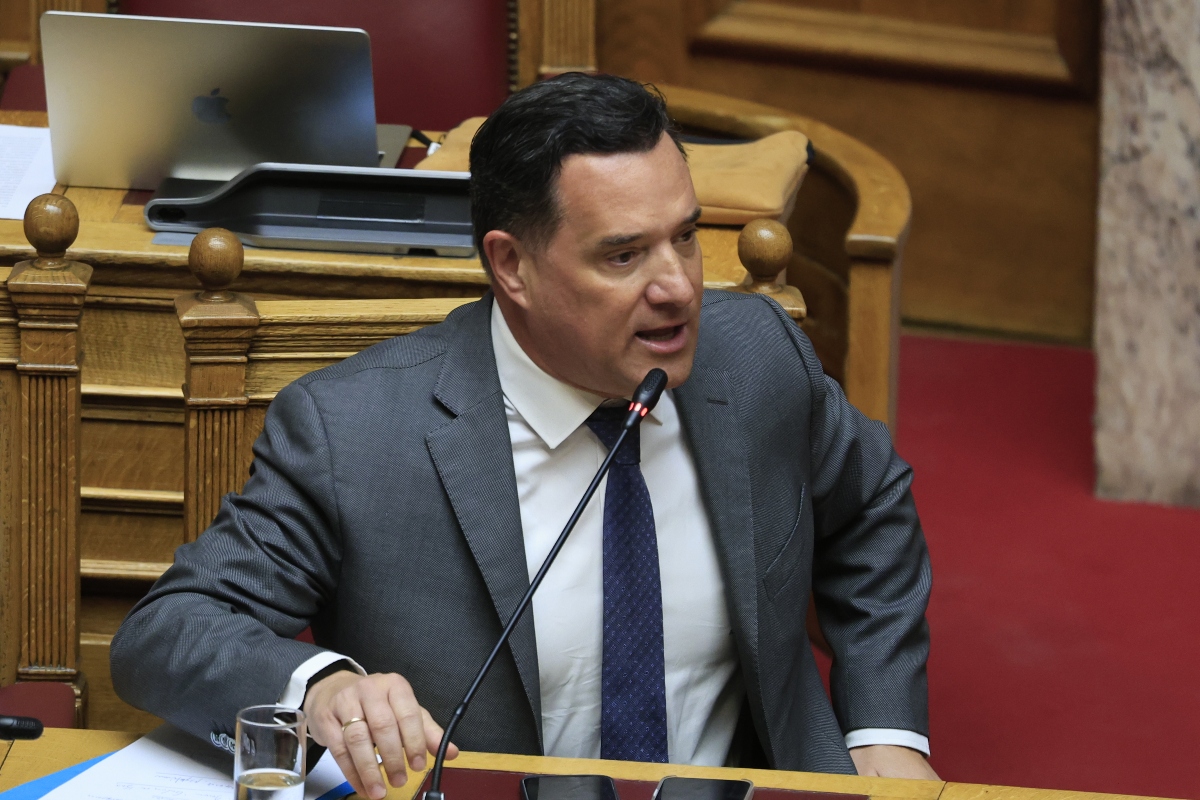
Πηγή Φωτογραφίας: eurokinissi// Adonis Georgiadis: “The European Public Prosecutor’s Office Threatens National Sovereignty”



Key Takeaways from the Statement
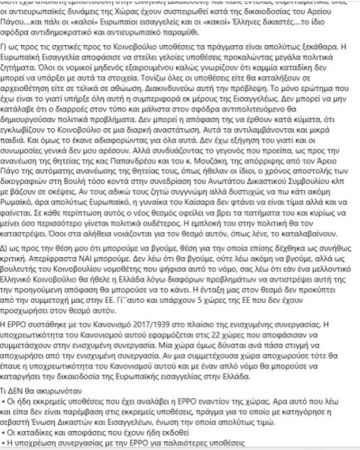
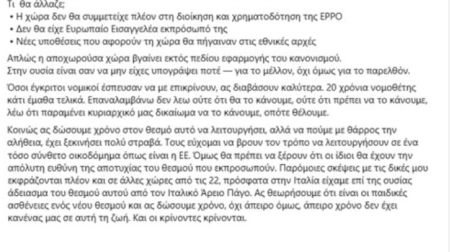
- Europe is not above criticism → Adonis Georgiadis declares himself pro-European, but rejects blind acceptance of institutions.
- The European Public Prosecutor’s Office is positive… but not flawless → He acknowledges the role of the European Public Prosecutor’s Office, yet insists it must be rigorously evaluated.
- A matter of national sovereignty → Transferring judicial authority is seen as a major institutional step—not a mere technicality.
- Risk of institutional conflict → He warns of potential friction between national justice systems and European mechanisms.
- Right to free expression → He defends the right of politicians to publicly disagree—even within government ranks.
- Attack on “political hypocrisy” → He criticizes those who now appear pro-European despite past anti-EU positions.
- Core message → “Yes to Europe — but with limits, oversight, and institutional balance.”
At a time when public debate in Greece is often reduced to simplistic labels, Adonis Georgiadis attempts something more substantive: opening a serious institutional discussion about the role of the European Public Prosecutor’s Office.
And he does so clearly:“Europe is not above criticism.”
His Core Argument
Georgiadis starts from a principle that is hard to dispute:
Support for the European Union does not equal submission.
On the contrary: True Europeanists have a duty to correct its flaws.
This leads to his central point:If the European Public Prosecutor’s Office does not function properly, it may create more problems than it solves.
The “Critical” Institutional Issue
In the most substantive part of his argument, he draws on classical state theory:
- Executive power
- Legislative power
- Judicial power
- (plus the monopoly on legitimate force, as described by Max Weber)
He emphasizes:“Transferring judicial authority beyond the state is not a simple matter.”
This is not mere rhetoric—it reflects foundational political theory.
Why He Sees a Problem
Georgiadis identifies a specific risk:Conflict between national institutions and European mechanisms
His reasoning:
- The EPPO operates at a supranational level
- But it is implemented within national legal systems
- Therefore, friction is structurally possible
These concerns are not isolated—they are widely discussed within the European Union.
The Political Dimension
He does not limit himself to technical criticism. He also challenges the political narrative:Those who once opposed Europe now present themselves as its defenders.
Through this, he highlights what he sees as: hypocrisy in public discourse
The Deeper Questions Raised
Beyond current events, his intervention raises fundamental issues:
- How much sovereignty can a state transfer?
- Who ultimately controls European institutions?
These are not partisan questions—they lie at the core of European integration.
Adonis Georgiadis does not reject Europe.On the contrary:
He advocates for a more mature, accountable European Union
His position can be summarized in one line:“There is no progress without criticism.”
Final Assessment
- This is not an anti-European stance
- It is a call for institutional scrutiny
- It addresses an issue many prefer to avoid
And that is precisely why it provokes such strong reactions.
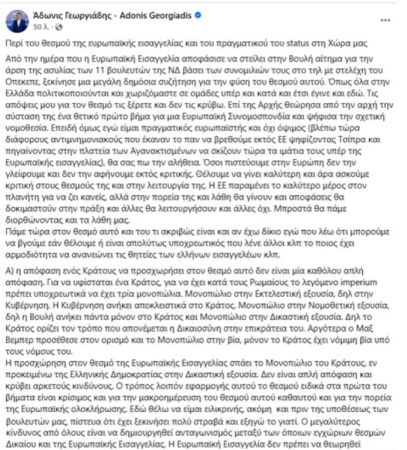
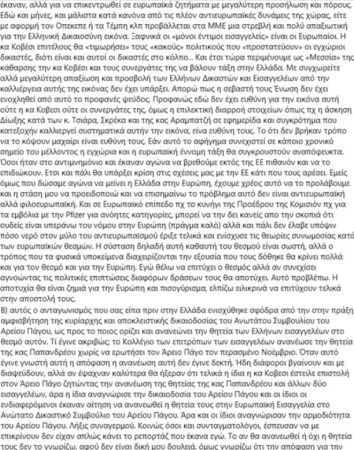
Από το πρωί σε όλα τα κανάλια ακούω τους δημοσιογράφους να ρωτούν συναδέλφους μου βουλευτές της Νέας Δημοκρατίας, εάν συμφωνούν με την «επίθεση» μου στον θεσμό της Ευρωπαϊκής Εισαγγελίας κλπ για να τους βγάλω όλους από την δύσκολη θέση έγραψα μόλις στην σελίδα μου στο Facebook…
— Άδωνις Γεωργιάδης (@AdonisGeorgiadi) April 18, 2026
Source: pagenews.gr
Διαβάστε όλες τις τελευταίες Ειδήσεις από την Ελλάδα και τον Κόσμο