Europe on Alert: From the Middle East to Cyprus, the EU’s New Defense Doctrine Emerges
 ΧΡΟΝΟΣ ΑΝΑΓΝΩΣΗΣ 4 '
Πηγή Φωτογραφίας: AP Photo//Europe on Alert: From the Middle East to Cyprus, the EU’s New Defense Doctrine Emerges



Nicosia at the center of strategic recalibration
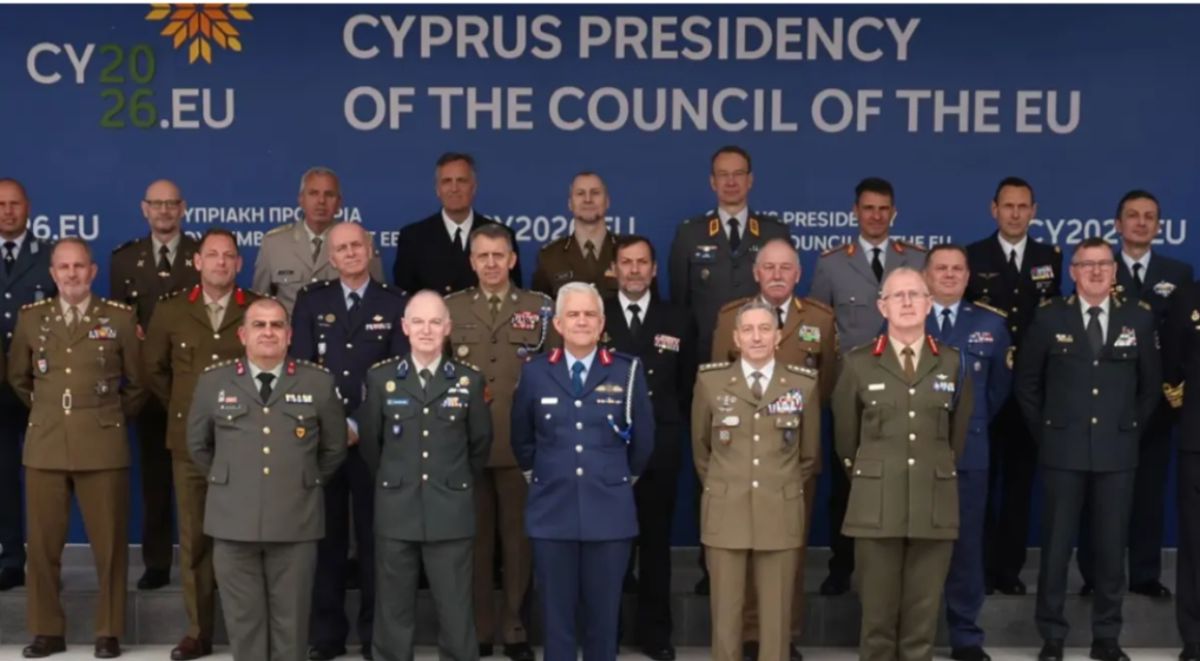
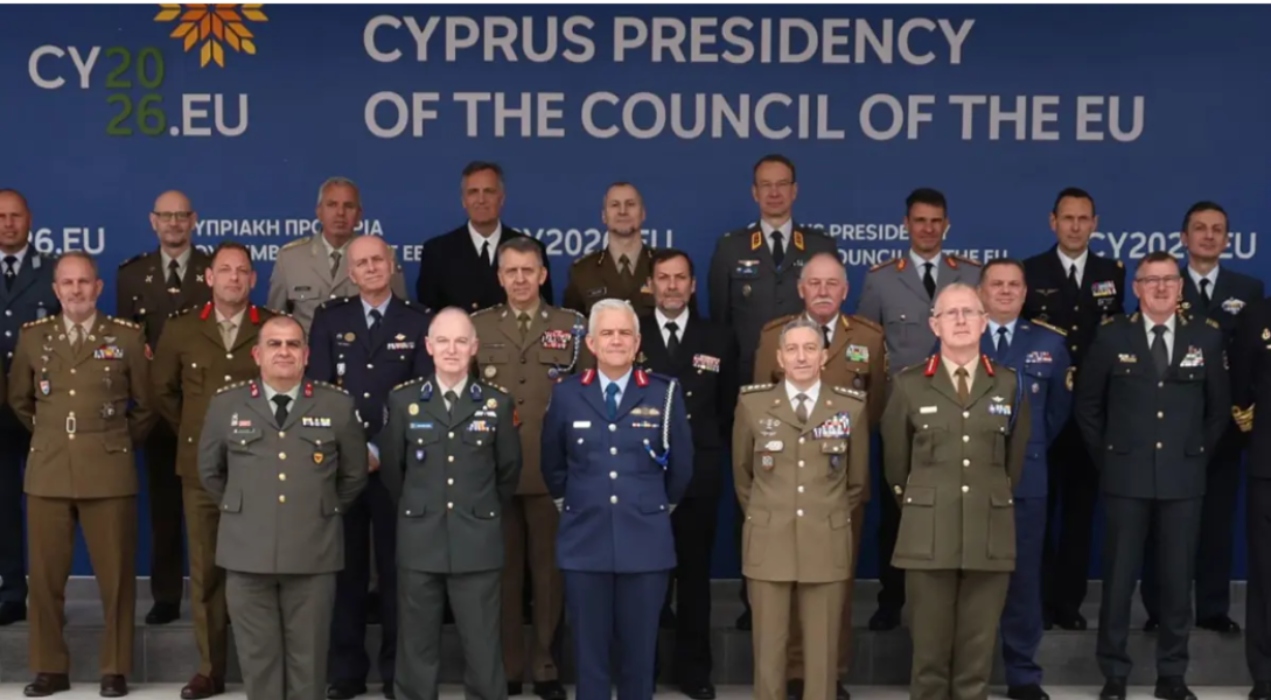
At a time of mounting global instability, the meeting of the European Union Military Committee in Nicosia (April 15–17, 2026) was far from procedural. It reflected a broader effort by the European Union to redefine its role as a credible security actor in an increasingly volatile international system.
The choice of Cyprus is no coincidence. Positioned at the crossroads of Europe, the Middle East, and North Africa, the island has become a frontline observation point for regional crises and strategic competition.
A complex geopolitical backdrop
Discussions unfolded against the backdrop of escalating tensions in the Middle East and persistent threats to global trade routes. The President of the European Commission, Ursula von der Leyen, recently emphasized:
“Peace cannot be taken for granted… safeguarding freedom of navigation is a vital European interest.”
This concern is tied to:
- instability in key maritime corridors
- disruptions to energy supply chains
- the rise of hybrid threats, including cyberattacks and covert operations
The EU increasingly recognizes that its security perimeter extends well beyond its borders.
Key statements and strategic messaging
According to official remarks during the meeting:
“Strengthening the EU’s defense capability is a strategic priority.”
“The Cypriot Presidency aims to enhance the Union’s Security and Defence Policy.”
The presence of Seán Clancy, who paid tribute at the military cemetery of Makedonitissa Tomb, underscored both symbolic continuity and operational cohesion.
Military representatives also visited facilities of the Cyprus National Guard and the observation post on Ledra Street, where they were briefed on the current politico-military situation.
From soft power to hard capability
The meeting highlighted a clear transition: the EU is gradually complementing its traditional “soft power” approach with credible military capabilities.
The European External Action Service has already pointed to:
- capability gaps exposed by high-intensity conflicts
- the need for increased defense investment
- the importance of military mobility and resilience
Emerging threats now include:
- attacks on subsea infrastructure
- cyber warfare
- weaponization of migration
- challenges to international maritime law
Cyprus as a strategic hub
The visit confirmed Cyprus’s evolving role within EU defense planning. Beyond being a member state, it is increasingly viewed as:
- a forward monitoring post
- a bridge between Europe and the Middle East
- a logistical and operational hub
Its geographic position makes it crucial for:
- energy security
- evacuation and crisis-response missions
- EU naval operations in the Eastern Mediterranean
Analysis: Where is Europe heading?
Three key trends emerge from the Nicosia meeting:
1. Strategic autonomy—still in progress The EU is seeking greater independence in defense, while maintaining cooperation with NATO.
2. Integrated security approach Military, technological, and diplomatic tools are being combined into a unified framework.
3. Eastern Mediterranean in focus The region is becoming a central arena for geopolitical competition and EU engagement.
The European Union is entering a new phase—more realistic, more strategic, and increasingly security-oriented. The meeting in Cyprus was not merely symbolic; it sent a clear signal:
Europe is preparing for a world where power—and not just principles—will shape outcomes
Source: pagenews.gr
Διαβάστε όλες τις τελευταίες Ειδήσεις από την Ελλάδα και τον Κόσμο