Six Takeaways from the European Political Community in Armenia: Europe Under Strategic Pressure
 ΧΡΟΝΟΣ ΑΝΑΓΝΩΣΗΣ 5 '
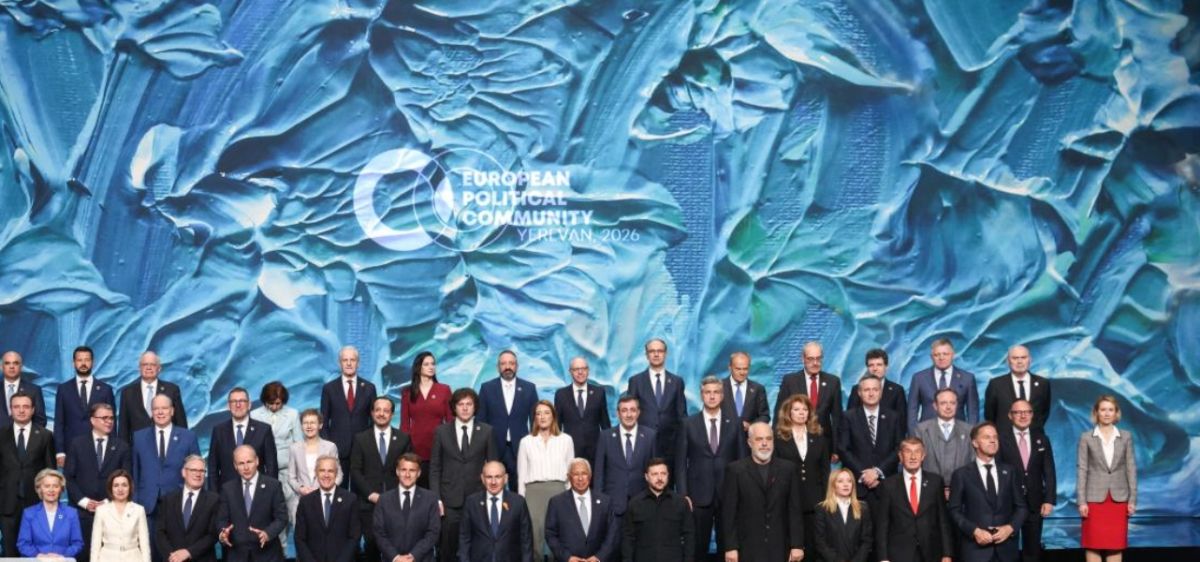
Πηγή Φωτογραφίας: AP Photo//Six Takeaways from the European Political Community in Armenia: Europe Under Strategic Pressure



Transatlantic tension returns to the surface
One of the most striking dynamics was the visible strain in US–European relations following controversial remarks by German Chancellor Friedrich Merz regarding the role of the United States in the recent Iran conflict.
The fallout reportedly triggered US measures including troop repositioning discussions and renewed tariff threats on European exports, particularly automobiles.
Although European leaders avoided direct escalation, NATO officials acknowledged growing friction and uncertainty in the transatlantic relationship. The underlying message in Yerevan was clear: Europe can no longer assume automatic alignment with Washington on security and trade.
2. Mark Carney signals a “post-American West”
The participation of Canadian Prime Minister Mark Carney marked a symbolic shift, as he became the first non-European leader to attend an EPC summit.
Carney positioned Canada as part of a broader coalition of mid-sized powers seeking to defend a rules-based international order amid increasing US–China rivalry.
His message emphasized that global governance will increasingly be shaped by flexible coalitions rather than traditional alliances, suggesting a more fragmented but multipolar Western sphere.
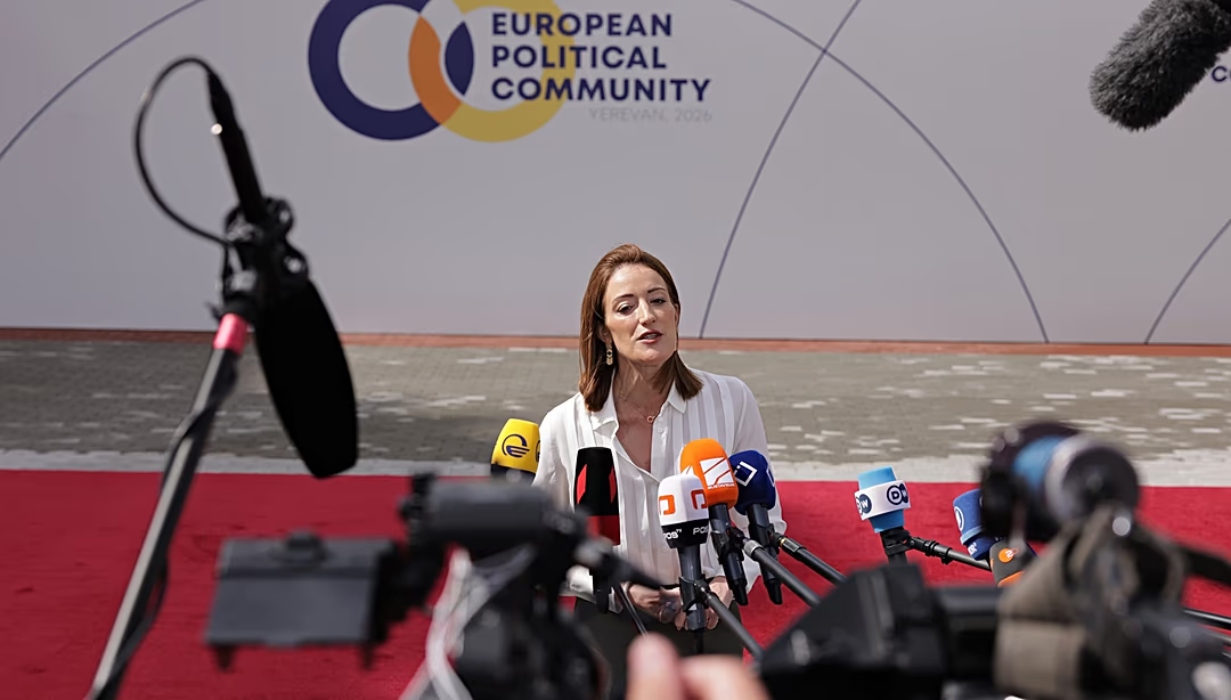
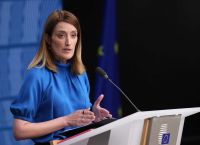
Roberta Metsola in Armenia. Anthony Pizzoferrato/Copyright 2026 The AP. All rights reserved.
3. Ukraine pushes for unity and acceleration of EU integration
Ukrainian President Volodymyr Zelenskyy used the summit to reinforce calls for sustained military assistance and faster EU accession talks.
A central theme of his intervention was the need for a unified European diplomatic position on negotiations with Russia. Zelenskyy warned that fragmented approaches risk weakening Europe’s leverage and strategic coherence.
The broader implication is that Ukraine is now actively shaping EU foreign policy debates, not merely responding to them.
4. Diplomatic confrontation between the EU and Azerbaijan
Tensions briefly surfaced after Azerbaijan’s president launched criticism of the European Parliament, accusing it of bias and misinformation.
The response from European Parliament President Roberta Metsola reaffirmed the institution’s democratic legitimacy and independence, underscoring ongoing friction between Brussels and Baku.
Despite this, the fact that Armenia and Azerbaijan both engaged in the same diplomatic environment was viewed as a sign of cautious progress in a historically volatile regional conflict.
5. Energy dependency becomes Europe’s central vulnerability
Energy security dominated much of the discussion, particularly in the context of global supply disruptions linked to Middle Eastern instability and constrained maritime routes.
European Commission President Ursula von der Leyen warned that external dependency on fossil fuels has become a structural vulnerability for the EU.
French President Emmanuel Macron expanded the argument by highlighting Europe’s broader dependencies, including security reliance on the United States and economic exposure to China.
The shared conclusion was that Europe’s strategic autonomy remains incomplete and increasingly urgent.
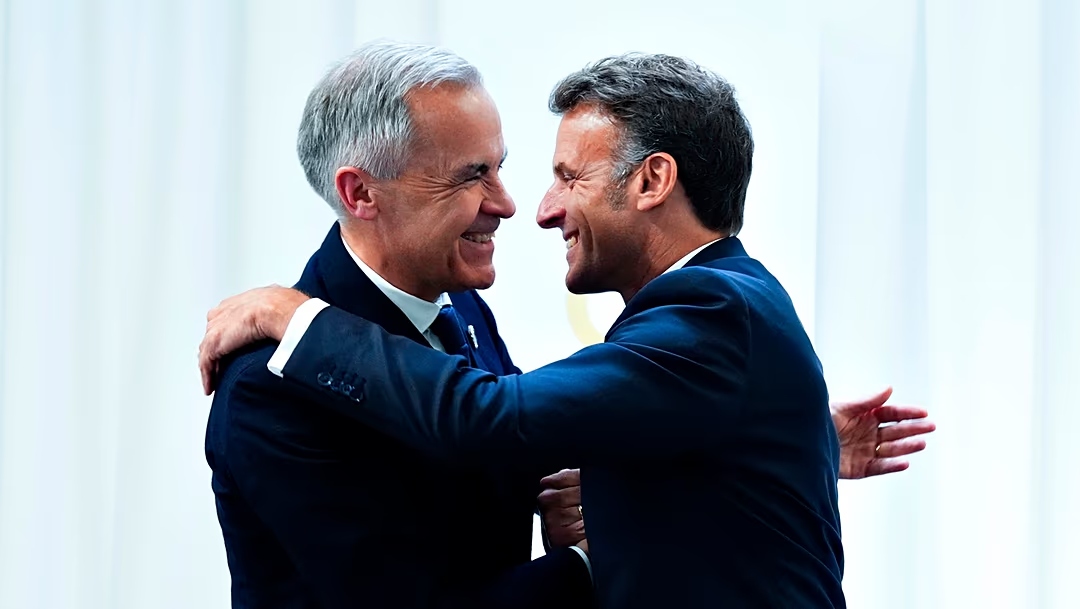
Mark Carney hugging Emmanuel Macron. Sean Kilpatrick/AP
6. EU–UK reset gains momentum after Brexit
The summit also served as a platform for renewed EU–UK engagement, with discussions focused on Britain’s potential participation in European defence and Ukraine support mechanisms.
Negotiations include financial contributions linked to joint procurement and possible access to EU defence funding programmes.
This signals a pragmatic post-Brexit recalibration, driven less by political reintegration and more by shared security interests.
A continent managing overlapping crises
The Yerevan summit highlighted a Europe operating under sustained geopolitical pressure across multiple fronts:
- war in Ukraine and unresolved confrontation with Russia
- instability in the Middle East affecting energy flows
- uncertainty in transatlantic relations
- rising systemic dependence on external powers
Mark Carney hugging Emmanuel Macron. Sean Kilpatrick/AP
Rather than producing formal agreements, the European Political Community is increasingly functioning as a strategic coordination space where Europe tests responses to a rapidly fragmenting global order.
The key takeaway from Yerevan is not consensus, but recognition: Europe is no longer operating in a stable international system, but in a contested environment where security, energy, and diplomacy are tightly interlinked.
Διαβάστε όλες τις τελευταίες Ειδήσεις από την Ελλάδα και τον Κόσμο