New power axis in the Eastern Mediterranean: Greece–Cyprus–Israel shift regional balances against Turkey
 ΧΡΟΝΟΣ ΑΝΑΓΝΩΣΗΣ 5 '
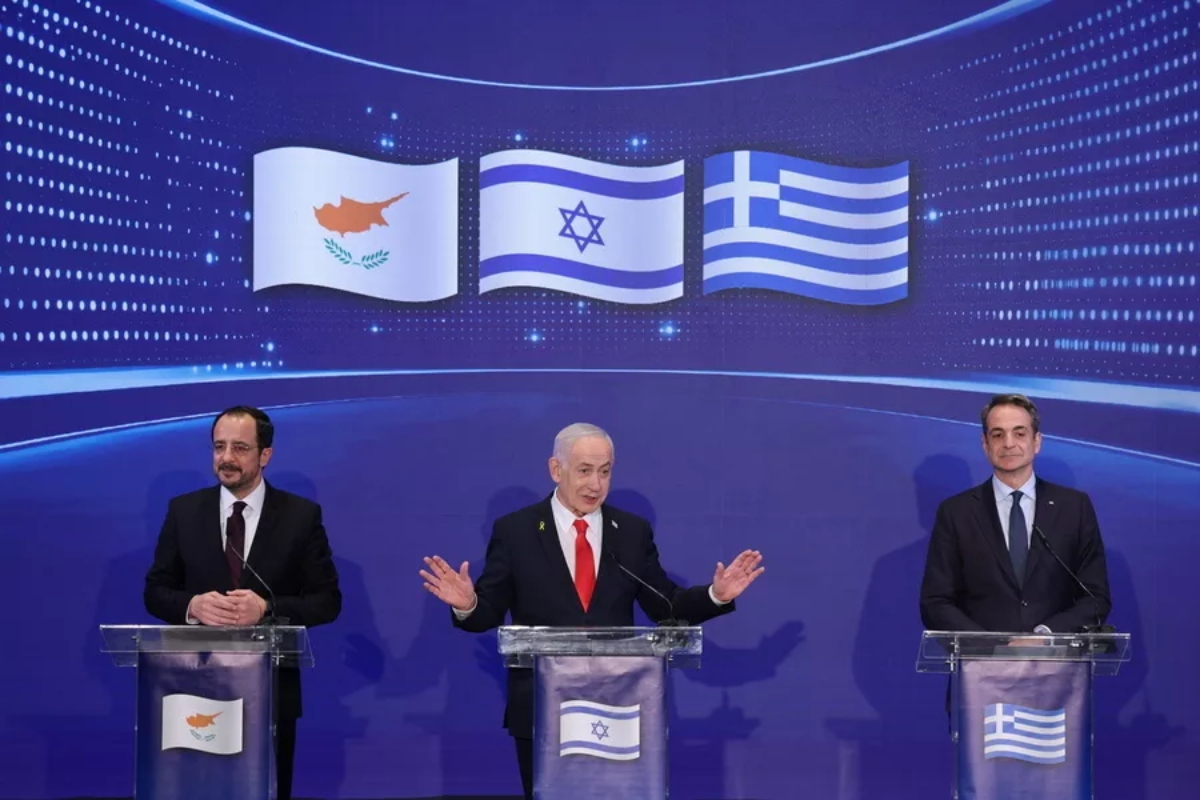
Πηγή Φωτογραφίας: eurokinissi//New power axis in the Eastern Mediterranean: Greece–Cyprus–Israel shift regional balances against Turkey



The growing alignment between Israel, Greece, and Cyprus is no longer being treated in analytical circles as a situational diplomatic partnership, but rather as the early formation of a structural geopolitical axis in the Eastern Mediterranean, according to commentary published in Israeli media and cited by regional analysts.
Israeli academic and political analyst Neil Bar argues that this development reflects a broader transformation in regional power dynamics, particularly as Turkey reassesses its position in an evolving strategic environment.
From cooperation to strategic architecture
The Greece–Cyprus–Israel relationship has gradually evolved from issue-based cooperation—focused primarily on energy, maritime security, and defense coordination—into what analysts increasingly describe as a strategic framework with political weight.
As Bar notes:
“The Israel–Greece–Cyprus axis is gaining real strategic depth and is functioning as a counterbalance to Turkey’s regional ambitions.”
This shift suggests that the trilateral format is no longer confined to technical or sectoral cooperation, but is increasingly perceived as a geopolitical structure with long-term implications.
Turkey’s reaction and strategic concern
According to the analysis, Ankara views this emerging alignment as a direct challenge to its regional aspirations.
Turkey is described as:
- recognizing the consolidation of the axis
- attempting to limit its institutional deepening
- increasing diplomatic and communicational pressure on Athens and Nicosia
However, the same analysis argues that Turkish reactions do not weaken the axis—instead, they reinforce its perceived strategic relevance.
In this interpretation, Ankara’s response serves as indirect confirmation that the trilateral cooperation has reached a level of geopolitical significance it can no longer ignore.
Post-October 7 regional transformation
The shift is also framed within the broader restructuring of the Middle East and Eastern Mediterranean after October 7 and subsequent regional escalations.
Analysts highlight three key structural changes:
- a relative weakening of Iran’s regional influence
- the emergence of a strategic vacuum
- intensified competition among regional powers for influence and leadership
This environment has created space for alternative regional alignments, particularly among states seeking stability, energy security, and defense coordination.
From technical cooperation to political alignment
Originally established through cooperation in:
- energy infrastructure (including gas and LNG projects)
- maritime and regional security
- defense exercises and intelligence sharing
the trilateral format is now increasingly interpreted as evolving into a broader political-strategic configuration.
This transformation is particularly evident in the regularization of high-level summits, joint military exercises, and coordination mechanisms that extend beyond sectoral interests.
Information warfare and competing narratives
The analysis also highlights the role of competing narratives in regional diplomacy.
Turkish media, particularly pro-government outlets, are described as promoting the idea that Greece functions as a “Trojan Horse” for Israeli influence within NATO and the EU.
The fact that such narratives are often published in English is interpreted as an attempt to:
- shape international perception
- influence global audiences beyond domestic Turkish politics
- frame the trilateral axis as externally driven rather than regionally rooted
The role of Turkish diplomacy
Foreign Minister Hakan Fidan’s statements toward Greece and Cyprus are also referenced within this broader context of strategic messaging.
However, Athens and Nicosia are portrayed as rejecting external pressure and maintaining that their foreign policy decisions are sovereign and independent.
At the same time, both countries continue to deepen cooperation with Israel across multiple strategic domains.
Core geopolitical conclusion
The central conclusion of the analysis is that: the intensity of Turkey’s reaction is itself evidence of the axis’ strategic significance.
In other words, the more Ankara contests the alignment, the more it is seen as confirming its emergence as a real geopolitical factor rather than a symbolic partnership.
Implications for the Eastern Mediterranean
If the current trajectory continues, analysts identify three major long-term implications:
1. Energy geopolitics Natural gas corridors, LNG infrastructure, and undersea pipelines increasingly become strategic assets rather than purely economic projects.
2. Security architecture Enhanced intelligence sharing, joint exercises, and defense interoperability deepen regional military coordination.
3. Diplomatic realignment A more structured balance of power emerges vis-à-vis Turkey’s regional influence.
Outlook
The Greece–Cyprus–Israel axis is increasingly being framed not as a temporary diplomatic arrangement, but as an emerging regional strategic bloc.
Turkey, according to the analysis, does not dismiss this development—it actively responds to it, suggesting that it is already being treated as a structural geopolitical challenge to its regional ambitions.
Source: pagenews.gr
Διαβάστε όλες τις τελευταίες Ειδήσεις από την Ελλάδα και τον Κόσμο