Adonis Georgiadis: The Next Healthcare Battle Is Not Spending—It Is Innovation
 ΧΡΟΝΟΣ ΑΝΑΓΝΩΣΗΣ 5 '
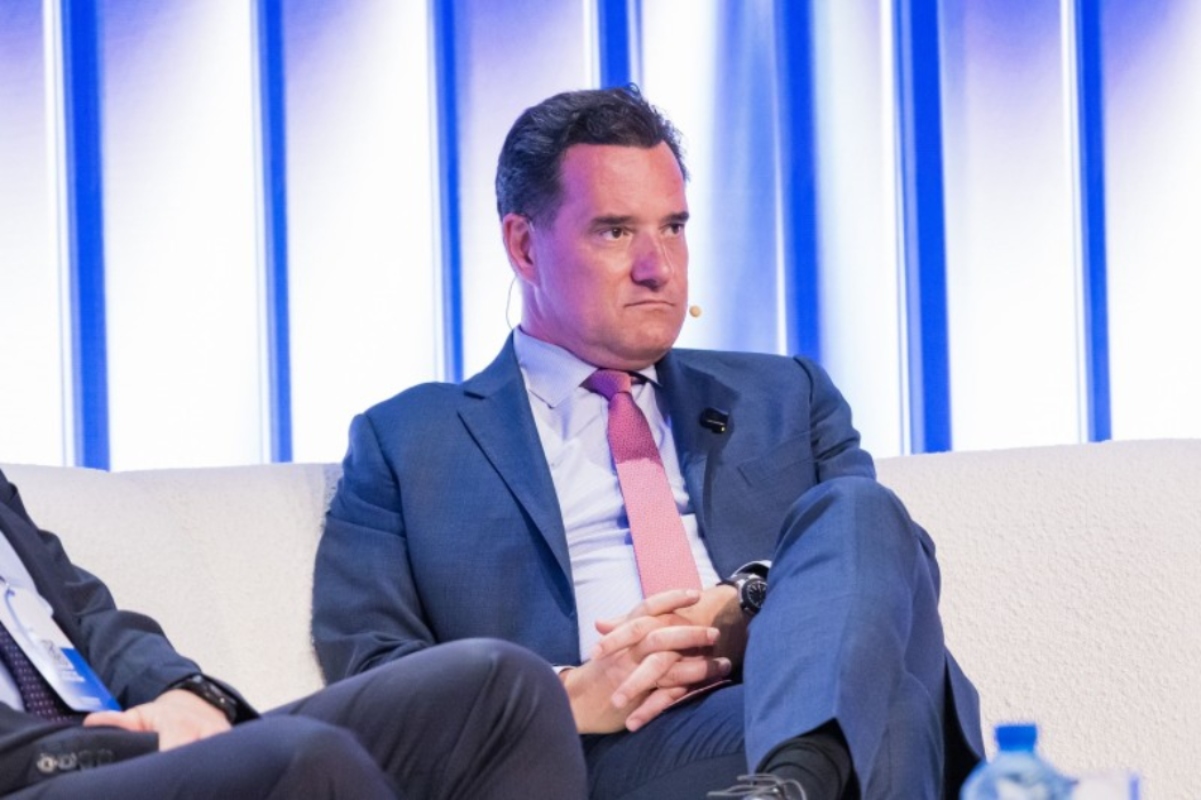
Πηγή Φωτογραφίας: Ministry of Health//Adonis Georgiadis: The Next Healthcare Battle Is Not Spending—It Is Innovation



The global healthcare debate is changing.
For decades, policymakers focused primarily on controlling costs and expanding access. Today, a different question is emerging: how can governments keep pace with the unprecedented speed of medical innovation?
That was the central theme underlying the intervention of Health Minister Adonis Georgiadis at the 3rd SFEE Summit, where discussions extended well beyond Greece’s domestic healthcare agenda and into the broader geopolitical and economic implications of pharmaceutical innovation.
The New Geopolitics of Healthcare
According to Georgiadis, the pharmaceutical industry is entering a historic turning point.
The rapid emergence of advanced biologics, personalized medicines, gene therapies and breakthrough treatments is transforming healthcare at a pace few governments anticipated only a few years ago.
The challenge is no longer the lack of therapeutic options.
The challenge is how to pay for them.
Even the wealthiest nations are struggling to adapt to a reality in which innovation is arriving faster than traditional healthcare financing models can accommodate.
The United States, despite possessing the world’s largest healthcare market, continues to face intense debates over drug affordability and reimbursement mechanisms.
Against this backdrop, Greece—like every European nation—must strike a delicate balance between ensuring patient access to cutting-edge treatments and preserving fiscal sustainability.

Access to Medicines as a Strategic Policy Choice
Georgiadis emphasized that guaranteeing access to essential medicines remains a core responsibility of government.
His reference to Greece’s relatively low level of pharmaceutical shortages carried significance beyond operational management.
It reflected a broader policy philosophy that views pharmaceutical availability as an element of national resilience.
In an era marked by supply-chain disruptions, geopolitical tensions and growing competition for critical healthcare resources, medicine security is increasingly being discussed alongside energy security and food security.
Governments are no longer merely purchasing pharmaceuticals.
They are safeguarding strategic healthcare capabilities.
Greece’s Pharmaceutical Industry and Europe’s Search for Strategic Autonomy
Particularly noteworthy was the minister’s confidence in the competitiveness of Greece’s pharmaceutical sector.
As the European Union seeks to reduce strategic dependencies on external suppliers, domestic production capacity is becoming an increasingly valuable asset.
The pharmaceutical industry is no longer viewed solely as an economic sector.
It is emerging as a pillar of Europe’s broader effort to strengthen technological sovereignty, industrial resilience and innovation capacity.
This debate carries growing importance as Europe attempts to remain competitive against the United States and Asia in biotechnology, life sciences and advanced healthcare technologies.
For Greece, the development of a stronger pharmaceutical ecosystem represents both an economic opportunity and a strategic imperative.

The Digital Transformation of Public Healthcare
Perhaps the most consequential announcement made by Georgiadis concerned the nationwide implementation of electronic prescribing within public hospitals beginning on July 1.
While appearing technical in nature, the reform represents a fundamental shift in healthcare governance.
For the first time, authorities will be able to monitor prescribing patterns across hospitals with greater precision, analyze treatment pathways in real time and evaluate the effectiveness of healthcare spending through comprehensive data collection.
The initiative reflects a broader international trend.
Across advanced healthcare systems, data-driven decision-making is becoming as important as funding levels or infrastructure investments.
The ability to understand how treatments are prescribed, utilized and evaluated is increasingly seen as essential for both clinical outcomes and financial sustainability.
The Defining Policy Challenge of the Next Decade
Beneath the minister’s remarks lies a much larger political and economic question.
How can democratic societies finance a medical revolution that is capable of extending lives, curing previously untreatable diseases and dramatically improving health outcomes, while simultaneously placing unprecedented pressure on public budgets?
This is not merely a Greek challenge.
It is a challenge confronting healthcare systems across the Western world.
The answer will shape not only the future of healthcare delivery but also the broader relationship between innovation, public finance and social cohesion.
As medical science accelerates, governments will increasingly be judged not by whether innovation exists, but by whether citizens can realistically access it.
The healthcare debate of the next decade may therefore be defined less by hospitals and budgets, and more by a fundamental question: who will be able to afford the future of medicine?
Source: pagenews.gr
Διαβάστε όλες τις τελευταίες Ειδήσεις από την Ελλάδα και τον Κόσμο