Athens Ankara Heading for a New Storm?Six Flashpoints Could Reshape the Eastern Mediterranean This Autumn
 ΧΡΟΝΟΣ ΑΝΑΓΝΩΣΗΣ 11 '
Πηγή Φωτογραφίας: eurokinissi//Athens and Ankara Heading for a New Storm? Six Flashpoints That Could Reshape the Eastern Mediterranean This Autumn



August may traditionally be a quieter month for European diplomacy, but behind closed doors preparations are already under way for an unusually consequential autumn.
Athens, Nicosia and Ankara are entering a period in which several diplomatic and strategic files will converge almost simultaneously. Greek-Turkish relations, the Cyprus question, EU–Turkey ties, maritime boundaries, Libya and the changing defence architecture of Europe are all moving onto the agenda at a time when the wider Eastern Mediterranean remains exposed to instability.
The wars and crises surrounding the region have also changed the strategic environment. Developments in the Middle East, Syria and Ukraine have reinforced the importance of energy routes, maritime infrastructure and military readiness, while Europe is attempting to strengthen its own defence capabilities.
For Greece and Turkey, therefore, the autumn will not simply be another round of diplomatic contacts.
It could become a test of whether the relative calm between the two countries can be converted into lasting stability — or whether the unresolved disputes beneath the surface will again dominate the relationship.
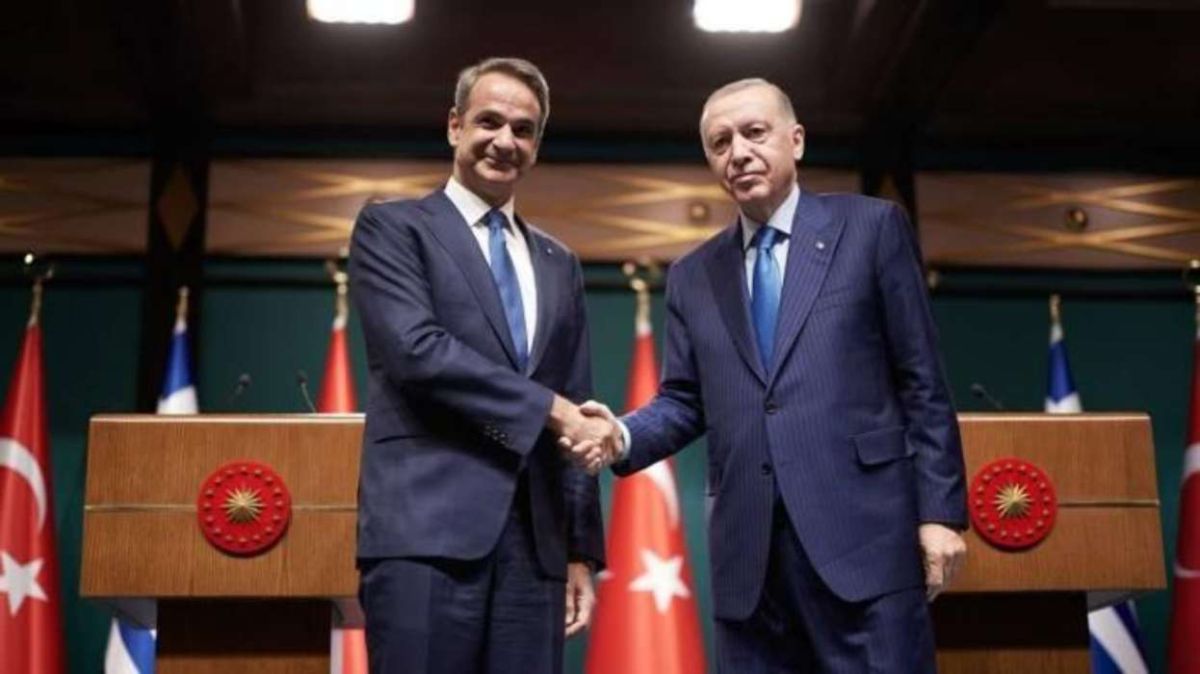
1. New York: Will Mitsotakis and Erdoğan Meet Again?
The United Nations General Assembly will provide the first major diplomatic stage.
The presence in New York of Greek Prime Minister Kyriakos Mitsotakis, Cypriot President Nikos Christodoulides and Turkish President Recep Tayyip Erdoğan creates an obvious opportunity for high-level contacts.
A new Mitsotakis–Erdoğan meeting has not been formally confirmed. Nevertheless, September remains a natural window for such an encounter should Athens and Ankara decide that the political conditions are appropriate.
That possibility carries additional significance after last year’s planned meeting on the sidelines of the UN General Assembly ultimately failed to take place, with the two governments offering different explanations for its cancellation.
Athens continues to argue that maintaining open channels with Ankara is strategically preferable to returning to permanent crisis management.
That, however, does not mean Greece is prepared to change its fundamental position.
Foreign Minister George Gerapetritis has repeatedly argued that dialogue and de-escalation must remain anchored in international law. Greece maintains that the only bilateral dispute capable of being submitted to legal settlement concerns the delimitation of the continental shelf and Exclusive Economic Zone.
Turkey maintains a much broader agenda.
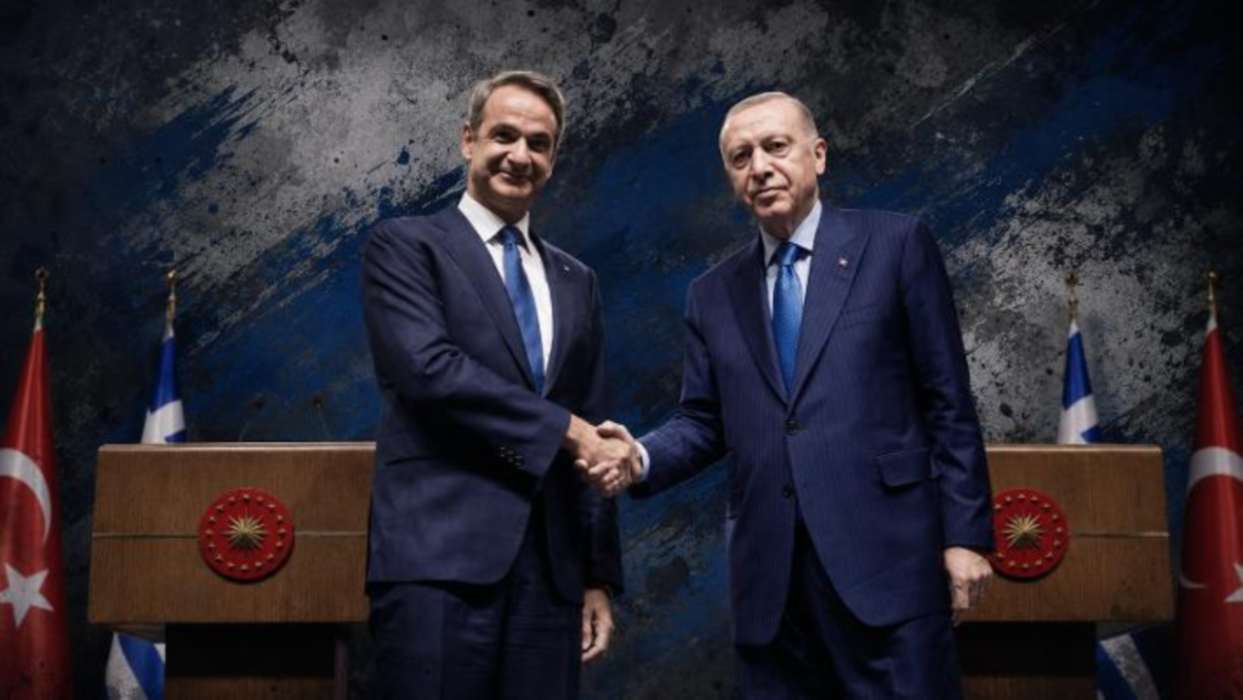
That fundamental difference remains the structural weakness beneath the Greek-Turkish détente.
The question this autumn will therefore not merely be whether Mitsotakis and Erdoğan shake hands in New York, but whether their governments can prevent disagreements elsewhere from overwhelming the diplomatic process.
2. Cyprus Returns to the Diplomatic Front Line
The second major test concerns Cyprus.
Nicosia is seeking to preserve the diplomatic momentum generated through the United Nations and to create conditions that could eventually allow substantive negotiations to resume.
A new meeting between President Christodoulides and Turkish Cypriot leader Tufan Erhürman is expected to form part of preparations for another expanded diplomatic format.
The Republic of Cyprus continues to support the resumption of negotiations from the point at which previous talks ended and within the framework established by UN resolutions and previous convergences.
The fundamental disagreement, however, remains formidable.
Turkey and the Turkish Cypriot side have increasingly emphasised sovereign equality and a two-state approach, while the internationally recognised framework remains based on a bizonal, bicommunal federation.
That leaves the UN attempting to bridge positions that are not simply technically different but based on competing visions of Cyprus’s political future.
For Athens, Cyprus remains inseparable from the broader architecture of Greek-Turkish relations.
A breakthrough could strengthen regional détente. A new deadlock could rapidly spill back into the relationship between Greece and Turkey.
3. Europe Holds a Powerful Card: Turkey’s Relationship With the EU
The third battlefield will be Brussels.
Turkey has long sought the modernisation of its Customs Union with the European Union, which dates from 1995. Ankara wants an expanded framework covering sectors including services, agriculture and public procurement.
There are strong economic arguments for modernisation.
Turkey remains deeply integrated into European manufacturing and supply chains, while the EU is Ankara’s most important economic partner. Yet the issue has never been purely commercial.
Brussels continues to connect deeper engagement with Turkey to the broader political relationship, including rule-of-law concerns, regional stability and good-neighbourly relations with EU member states.
For Greece and Cyprus, that creates leverage.
Athens does not oppose a more functional European relationship with Turkey in principle. But it wants European incentives to remain connected to Turkish behaviour in the Aegean and Eastern Mediterranean.
Nicosia has an even more direct interest because any substantial strategic upgrading of EU–Turkey relations inevitably intersects with the unresolved Cyprus problem.
Migration, visa liberalisation and defence cooperation add further layers to the equation.
The result is an increasingly transactional relationship:
Turkey wants greater access to Europe. Europe increasingly needs Turkey on security, migration and regional geopolitics. Greece and Cyprus want that mutual dependence to come with conditions.
4. The “Blue Homeland” Has Not Disappeared
One of the most sensitive issues for Athens remains Turkey’s maritime doctrine.
Reports concerning possible Turkish legislation on maritime jurisdiction areas have attracted attention in both Greece and Brussels, even though the precise form and timetable of any initiative remain uncertain.
The European Union has reiterated the importance of respect for international law, the sovereign rights of member states and good-neighbourly relations.
For Athens, however, the broader strategic issue extends beyond any single Turkish bill.
The “Blue Homeland” — Mavi Vatan — doctrine remains embedded in Turkey’s strategic discourse, reflecting Ankara’s expansive conception of its maritime interests across the Aegean and Eastern Mediterranean.
That becomes particularly sensitive whenever energy exploration, seabed infrastructure or maritime delimitation returns to the agenda.
The Great Sea Interconnector linking Greece and Cyprus adds another strategic dimension. What is formally an energy infrastructure project also intersects with competing interpretations of maritime jurisdiction.
Athens insists that sovereign rights and infrastructure projects conducted in accordance with international law cannot be subject to coercion or threats by third countries.
This is where the diplomatic détente faces its hardest test.
Dialogue can manage rhetoric. It becomes considerably harder when ships, cables, military assets and competing maritime claims occupy the same waters.
5. Greece Is Building a Different Military Balance
Diplomacy is only one side of Athens’s strategy.
The other is deterrence.
Greece is moving through one of the most significant military modernisation cycles of recent decades, while simultaneously attempting to integrate that effort into Europe’s emerging defence architecture.
The arrival of the FDI/Belharra frigates represents a major qualitative upgrade for the Hellenic Navy.
Following the entry of the first frigate, Kimon, into Greek service, the second FDI, Nearchos, is expected around October 2026, with Formion scheduled to follow later in the year.
Their importance extends beyond the number of new hulls.
The programme strengthens Greece’s air-defence-at-sea, anti-submarine and network-centric capabilities, increasing the Navy’s ability to operate across both the Aegean and the wider Eastern Mediterranean.
At the same time, Athens is looking towards Europe’s new defence financing instruments.
Under SAFE — Security Action for Europe — Greece has secured €787.7 million, with potential applications including air defence, counter-drone systems, ammunition and the strengthening of domestic defence production.
But Turkey again appears inside this debate.
Ankara wants deeper involvement in Europe’s emerging defence ecosystem. Athens argues that participation by third countries in European defence structures cannot be disconnected from respect for EU members’ sovereign rights and the principles of good-neighbourly relations.
The argument is strategically important.
Europe is rearming. Turkey possesses one of NATO’s largest militaries and an increasingly sophisticated defence industry. Greece does not want European strategic autonomy to evolve in a manner that indirectly strengthens a country that continues to maintain claims against an EU member.
The debate over Turkey’s place in European defence could therefore become one of the least visible — but most consequential — Greek-Turkish disputes of the coming years.
6. Libya: The Maritime Chessboard South of Crete
The sixth front lies south of Crete.
Greece and Libya have continued technical contacts concerning the delimitation of maritime zones, with a third round of talks held in Athens on July 27.
No final agreement or timetable has been announced.
The continuation of the process is nevertheless important for Athens because Libya occupies a central position in the maritime geometry of the Eastern Mediterranean.
Greece maintains that islands generate maritime rights under the Law of the Sea and rejects the legal validity of the 2019 Turkey–Libya maritime memorandum where it affects Greek sovereign rights.
Turkey sees that agreement very differently.
That makes Greek-Libyan negotiations about considerably more than bilateral relations between Athens and Tripoli.
A future delimitation agreement could alter the diplomatic landscape surrounding the Turkish-Libyan memorandum, offshore energy exploration and the competing maritime claims south of Crete.
For Greece, the objective is to move the dispute from geopolitical confrontation towards legal delimitation.
Whether Libya’s fragmented political environment will permit that remains another question.
The Eastern Mediterranean’s Fragile Calm
Taken individually, none of these six fronts necessarily points towards an imminent crisis.
Taken together, however, they reveal how crowded the geopolitical calendar has become.
New York could reopen direct leader-level diplomacy. Cyprus could either regain momentum or fall into another prolonged deadlock. Brussels must decide how far it wants to move towards Ankara. Turkey’s maritime doctrine remains a source of friction. Greece’s military modernisation is changing the deterrence equation. And Libya remains intertwined with the battle over maritime jurisdiction.
There is also a larger transformation taking place.
The Eastern Mediterranean is no longer shaped only by traditional territorial disputes. Energy infrastructure, electricity interconnectors, defence-industrial cooperation, European financing, critical sea lanes and access to regional markets are increasingly becoming instruments of geopolitical power.
That makes the Greek-Turkish relationship simultaneously more interconnected and potentially more combustible.
Athens is pursuing a dual strategy: maintaining dialogue with Ankara while strengthening alliances, military capabilities and legal-diplomatic positions.
Turkey, meanwhile, remains too large, strategically important and economically interconnected with Europe to be isolated — but continues to advance regional ambitions that frequently collide with Greek and Cypriot interests.
The diplomatic question this autumn is therefore bigger than whether another Mitsotakis–Erdoğan meeting takes place.
It is whether Athens and Ankara can keep their competition inside diplomatic boundaries while the strategic map around them is being redrawn.
And with Cyprus, the Aegean, Libya, European defence and the Eastern Mediterranean all moving simultaneously, there may be very little room for miscalculation.
Source: pagenews.gr
Διαβάστε όλες τις τελευταίες Ειδήσεις από την Ελλάδα και τον Κόσμο