Britain Escalates Energy Pressure on Russia as G7 Opens New Economic Front
 ΧΡΟΝΟΣ ΑΝΑΓΝΩΣΗΣ 6 '
Πηγή Φωτογραφίας: AP Photo//Britain Escalates Energy Pressure on Russia as G7 Opens New Economic Front



Britain’s New Energy Offensive Against Russia
As global markets celebrate the prospect of peace in the Middle East and the reopening of the Strait of Hormuz, another geopolitical battle is quietly intensifying.
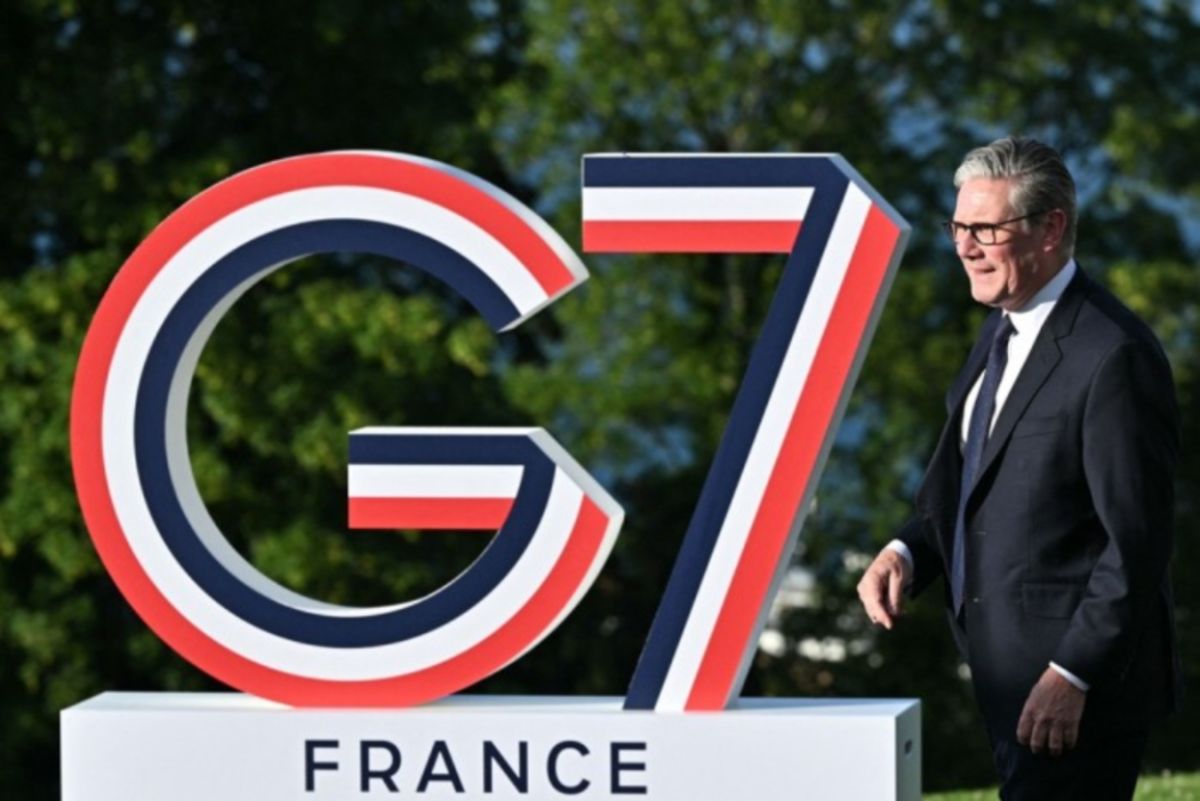
At the G7 summit, the United Kingdom unveiled a new package of energy sanctions against Russia, signaling that despite shifting headlines, Western governments remain determined to squeeze the Kremlin’s most important source of income: energy exports.
The timing is significant.
With oil prices retreating from wartime highs following the preliminary US-Iran agreement, Western leaders believe they have a rare opportunity to increase pressure on Moscow without triggering another global energy shock.
For London, the objective is straightforward: reduce Russia’s ability to finance its war in Ukraine by targeting the infrastructure that allows its oil exports to keep flowing despite years of sanctions.
The Shadow Fleet Is Back in the Crosshairs
The centerpiece of the British strategy is Russia’s so-called “shadow fleet” — the network of aging tankers, shell companies, and opaque shipping arrangements that Moscow has used to circumvent Western restrictions on oil exports.
Since the introduction of sanctions and price caps, the shadow fleet has become a critical lifeline for Russian energy revenues.
While Western governments have repeatedly imposed restrictions, Russia has managed to adapt, rerouting exports and creating alternative transportation networks that keep crude flowing to buyers across Asia and beyond.
British officials now argue that enforcement, not just sanctions, has become the decisive battleground.
The latest measures are designed to make it harder for Russian-linked vessels, intermediaries, and energy traders to operate within the global financial and maritime system.
A Shift From Sanctions to Enforcement
The new package reflects a broader evolution in Western strategy.
In the early stages of the Ukraine war, governments focused on announcing ever-larger sanctions packages. Today, policymakers increasingly acknowledge that the challenge lies in enforcement.
The question is no longer how many sanctions exist on paper.
The question is whether Russia can continue finding ways around them.
By targeting shipping networks, insurance structures, and logistical support systems, Britain hopes to close loopholes that have allowed Russian oil exports to remain surprisingly resilient despite years of restrictions.
This marks a transition from symbolic pressure to operational disruption.
Why Energy Still Matters
Four years into the conflict, energy remains the foundation of Russia’s economic resilience.
Despite sanctions, oil and gas exports continue to generate substantial revenues for the Russian state, helping finance military expenditures and stabilize government finances.
The Kremlin has successfully redirected much of its energy trade toward non-Western markets, particularly in Asia, reducing the impact of Europe’s gradual disengagement from Russian hydrocarbons.
That reality explains why energy remains at the center of Western economic strategy.
For London and its allies, reducing Russia’s energy income remains one of the few tools capable of creating meaningful long-term pressure on Moscow.
Keeping Ukraine at the Center of the Agenda
There is also a political dimension to Britain’s move.
The Iran agreement and the dramatic developments in the Middle East have shifted international attention away from Ukraine, raising concerns among European governments that support for Kyiv could gradually lose urgency.
By announcing new sanctions during the G7 summit, London is sending a clear message: the war in Ukraine remains a strategic priority, regardless of developments elsewhere.
British policymakers are particularly concerned that falling energy prices and easing geopolitical tensions could reduce the sense of crisis that has helped sustain Western unity over the past several years.
The sanctions package serves as a reminder that the conflict in Europe remains unresolved.
The New Geography of Economic Warfare
The latest measures also highlight how the confrontation between Russia and the West has evolved.
The battlefield is no longer limited to eastern Ukraine.
It now extends across shipping routes, financial institutions, insurance markets, commodity trading houses, and global energy networks.
Economic warfare has become just as important as military confrontation.
In this environment, tankers can be as strategically important as tanks.
The United Kingdom is betting that targeting the arteries of Russia’s energy trade will gradually weaken Moscow’s ability to sustain a long conflict.
Whether that strategy succeeds remains uncertain.
Russia has repeatedly demonstrated its capacity to adapt to sanctions, develop alternative trading mechanisms, and exploit divisions within the global economy.
Yet Britain’s latest move suggests that Western governments are not preparing for a quick resolution.
They are preparing for a prolonged contest of economic endurance.
A New Phase in the Energy War
The significance of the latest sanctions extends beyond Russia itself.
They reflect a broader reality of twenty-first-century geopolitics: energy remains one of the most powerful instruments of statecraft.
The struggle over oil flows, shipping lanes, and financial access is increasingly shaping the balance of power between nations.
For the UK, the goal is not merely to punish Russia.
It is to reshape the economics of the war.
And as the G7 summit demonstrates, that battle is far from over.
Source: pagenews.gr
Διαβάστε όλες τις τελευταίες Ειδήσεις από την Ελλάδα και τον Κόσμο