Gerapetritis from Sarajevo: Western Balkans at the Heart of Greece’s EU Strategy
 ΧΡΟΝΟΣ ΑΝΑΓΝΩΣΗΣ 5 '
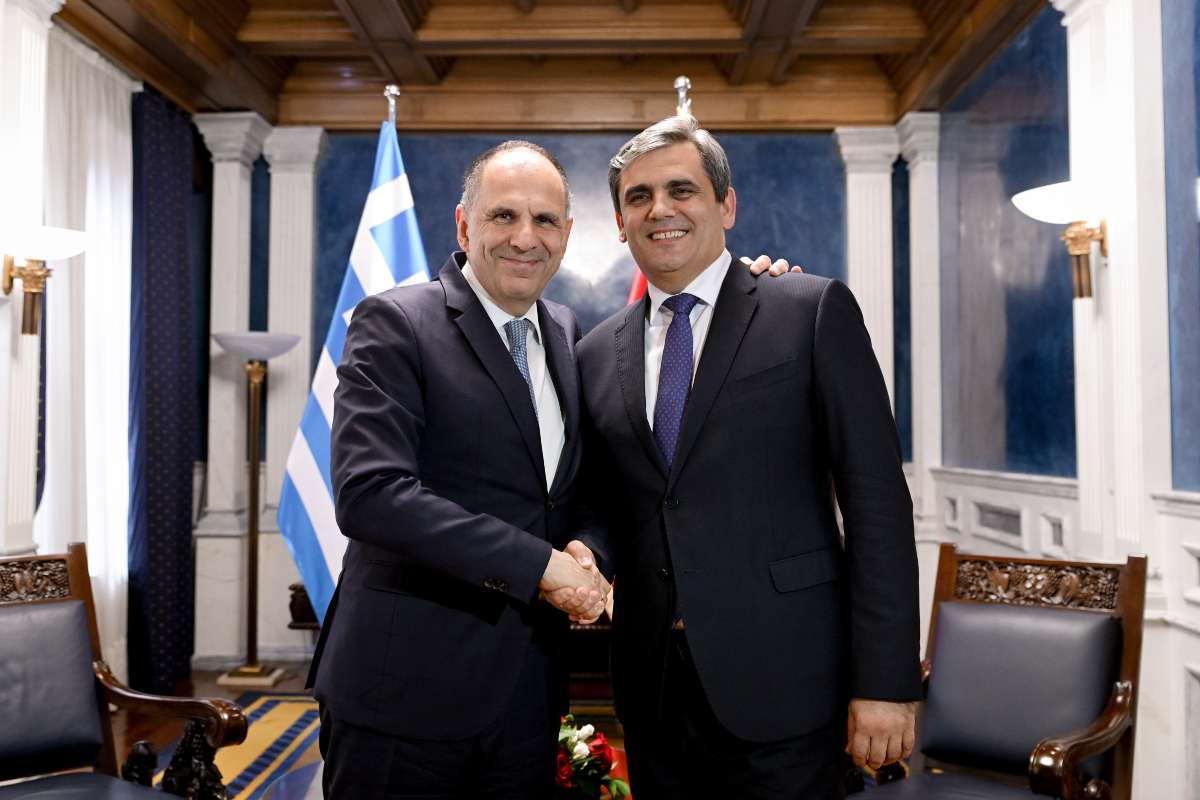
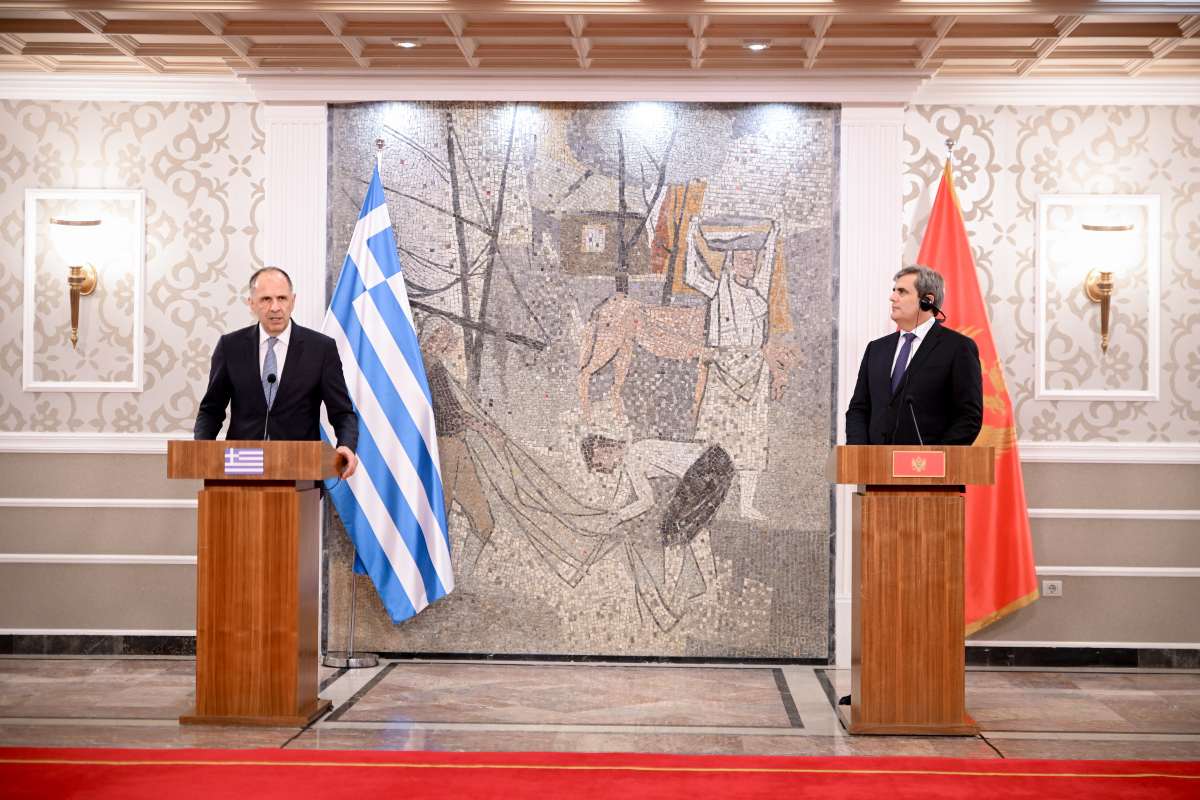
Πηγή Φωτογραφίας: eurokinissi/Gerapetritis from Sarajevo: Western Balkans at the Heart of Greece’s EU Strategy



As the European Union reassesses its strategic priorities amid rising geopolitical uncertainty, Greece is seeking to place the Western Balkans back at the center of the European agenda.
Speaking in Sarajevo following his meeting with Bosnia and Herzegovina’s Foreign Minister Elmedin Konaković, Greek Foreign Minister George Gerapetritis reiterated Athens’ longstanding support for the European future of the region, framing enlargement as both a political necessity and a strategic investment in European stability.
“The accession of the Western Balkans to the European Union is high on the agenda of Greece’s upcoming Presidency of the Council of the European Union in the second half of 2027, and we will work hard to achieve tangible results by the end of our term,” Gerapetritis stated.
His remarks underline Greece’s intention to assume a more active role in revitalizing the enlargement process at a time when Brussels is increasingly viewing the Western Balkans through the lens of security, resilience, and geopolitical competition.
The Greek minister also referred to the Delphi Declaration signed last April, describing it as a strong political signal that the European path of the region remains firmly on track.
“The path towards European Union membership is truly irreversible,” he stressed, sending a message that the EU perspective remains open to the countries of the region provided they continue advancing reforms and meeting their commitments.
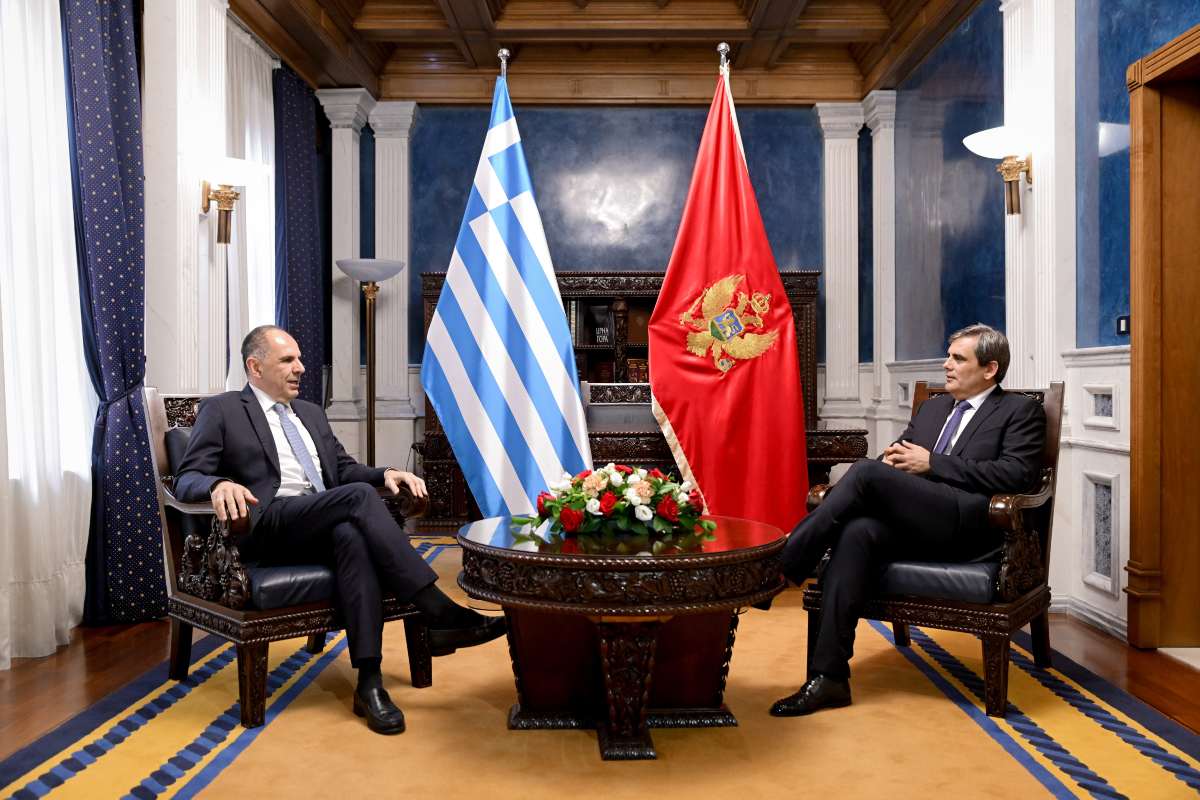
Gerapetritis emphasized that the Western Balkans represent far more than a neighboring region for Europe. In his view, they constitute a critical pillar for continental security and long-term prosperity.
“It is time for the countries of the region to respond to the current momentum and make full use of their potential as an area of peace and prosperity, as well as a region of particular importance for Europe’s security,” he said.
Athens continues to present itself as a consistent advocate of enlargement, recalling its historic role since the 2003 Thessaloniki Agenda, which first established a clear European perspective for the Western Balkans.
“EU enlargement must regain its momentum and credibility,” the Greek Foreign Minister argued, noting that enlargement has once again emerged as a top strategic priority for the European Union.
At the same time, he made clear that the accession process remains conditional upon the fulfillment of specific criteria and reforms.
“It requires the fulfillment of all necessary conditions in accordance with the EU acquis, the principles of the rule of law, international law, and good-neighborly relations,” he emphasized.
Particular attention was given to Bosnia and Herzegovina, a country whose European aspirations remain closely linked to broader questions of stability in the Western Balkans.
“The people of Bosnia and Herzegovina know better than anyone the consequences that nationalism, revisionism, and extremist voices can bring to the Balkans—something we must prevent and avoid,” Gerapetritis noted.
The statement was widely interpreted as a broader warning against the resurgence of divisive political narratives across the region, at a time when Europe is increasingly concerned about external influence and internal fragmentation in the Western Balkans.
Looking ahead, the Greek Foreign Minister called for a future built on cooperation rather than historical divisions.
“We cannot ignore historical wounds. However, we must build upon the elements that unite us,” he said.
Beyond political dialogue, the two ministers also discussed strengthening bilateral cooperation in trade, investment, energy, tourism, education, and culture. A key outcome of the visit was the announcement that direct flights between Athens and Sarajevo will resume on a regular basis starting next October, a move expected to deepen economic and people-to-people ties.
GEOPOLITICAL INTELLIGENCE
Gerapetritis’ visit to Sarajevo reflects Greece’s broader effort to reassert itself as a central European actor in the Western Balkans. At a time when the region has become a field of strategic competition involving the European Union, Russia, Turkey, and other international players, Athens is positioning itself as a bridge between Brussels and the Balkan capitals.
The message from Sarajevo was clear: for Greece, the integration of the Western Balkans is no longer merely an enlargement issue—it is a strategic imperative for the future security, stability, and geopolitical cohesion of Europe.
Source: pagenews.gr
Διαβάστε όλες τις τελευταίες Ειδήσεις από την Ελλάδα και τον Κόσμο