Mitsotakis: “The U.S. Is Not Leaving NATO – Legal Barriers Still Block Turkey’s F-35 Return”
 ΧΡΟΝΟΣ ΑΝΑΓΝΩΣΗΣ 6 '
Πηγή Φωτογραφίας: eurokinissi//Mitsotakis: “The U.S. Is Not Leaving NATO – Legal Barriers Still Block Turkey’s F-35 Return”



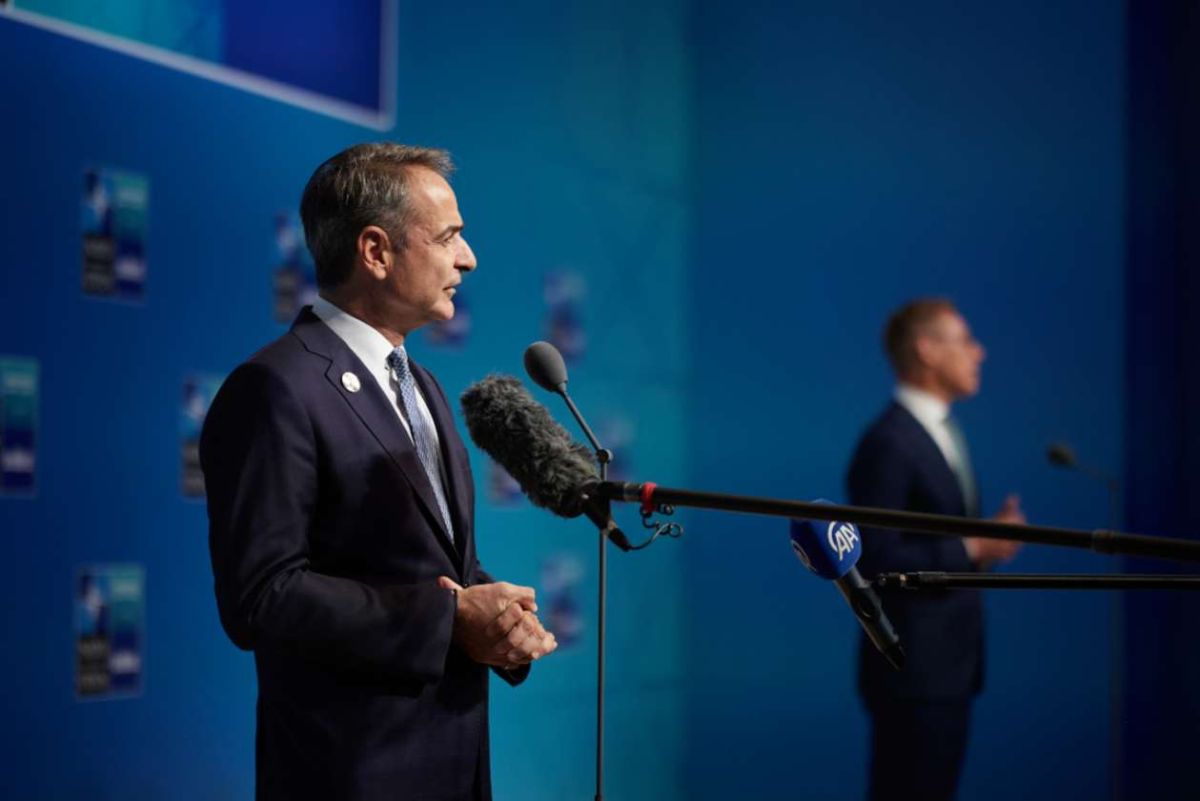
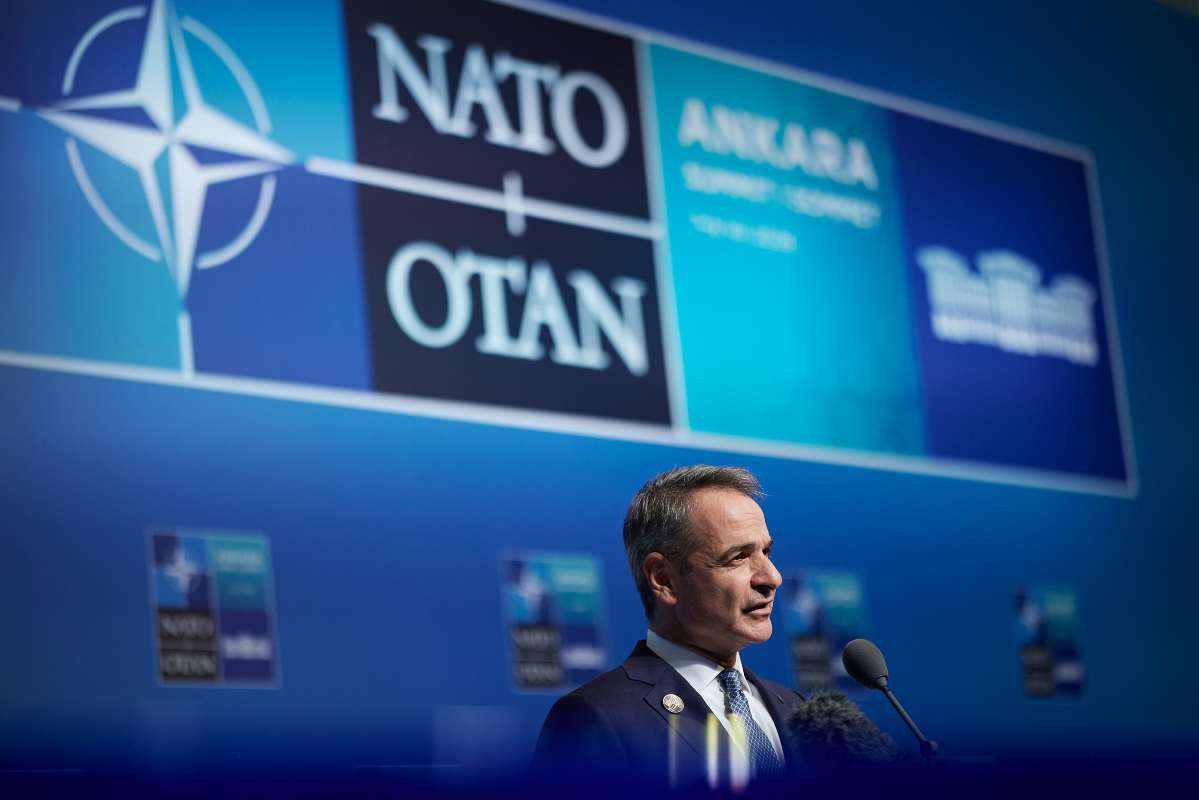
Following the conclusion of the NATO Summit, Greek Prime Minister Kyriakos Mitsotakis argued that the Alliance is entering a new strategic era, one in which Europe assumes greater responsibility for its own defense while preserving the transatlantic bond with the United States.
“There is no chance the United States leaves NATO”
Mitsotakis firmly dismissed speculation that Washington could withdraw from NATO under President Donald Trump.
According to the Greek Prime Minister, Trump’s remarks during the Summit demonstrated strong support for the Alliance after European allies committed to significantly increasing defense spending.
Mitsotakis recalled that Trump had been calling for greater European burden-sharing since his first presidential term, arguing that recent geopolitical developments—including Russia’s invasion of Ukraine—have finally convinced Europe that it must assume greater responsibility for its own security.
A stronger European pillar inside NATO
The Prime Minister emphasized that strengthening NATO’s European pillar has become a strategic necessity rather than a political aspiration.
Europe, he argued, must become a more capable military actor while remaining fully committed to the transatlantic alliance.
He linked this effort to the broader debate over European strategic autonomy and the operational implementation of the European Union’s mutual defense clause.
Greece already exceeds NATO benchmarks
Mitsotakis highlighted Greece’s position among NATO’s leading defense spenders.
According to official NATO data, Greece has already surpassed the 3% of GDP benchmark for core defense spending—well ahead of many European allies that aim to reach similar levels by 2035.
He stressed that Greece’s geopolitical environment has long required sustained investment in national defense, making Athens one of NATO’s most consistent contributors.
F-35s: Turkey still faces legal obstacles
Addressing renewed speculation about Turkey’s possible return to the F-35 program, Mitsotakis avoided commenting on future U.S. decisions.
Instead, he pointed to the existing legal framework in Washington.
According to the Prime Minister, significant legal obstacles remain in U.S. legislation, as Turkey’s exclusion from the program was directly linked to its acquisition of the Russian S-400 air defense system—a system considered incompatible with the security architecture of the F-35.
Meanwhile, Greece’s own program continues as planned.
Greek pilots are expected to begin training on the F-35 in 2027, while the Hellenic Air Force continues upgrading its F-16 fleet to the Viper configuration and has already inducted 24 Rafale fighter jets.
“We do not tell the U.S. whom to sell weapons to”
Mitsotakis reiterated that Greece does not interfere in American defense export decisions.
However, he also delivered a clear message of reciprocity:
“It is not Greece’s role to tell the United States where to sell defense systems. Likewise, we do not accept others telling us what we should or should not purchase to strengthen our Armed Forces.”
Casus belli: “A historical anachronism”
The Prime Minister again called on Turkey to abandon its longstanding casus belli declaration.
He described the 1995 Turkish parliamentary resolution authorizing military action should Greece extend its territorial waters as a “historical anachronism” incompatible with today’s efforts to build good-neighborly relations.
According to Mitsotakis, maintaining a formal threat of war contradicts both the Athens Declaration and the spirit of cooperation expected among NATO allies.
Middle East and the Strait of Hormuz
On developments in the Middle East, Mitsotakis expressed cautious optimism.
He said he hopes negotiations between the United States and Iran will resume and that the current ceasefire framework can be preserved.
As one of the world’s leading maritime nations, Greece, he stressed, has a strategic interest in protecting freedom of navigation.
He described keeping the Strait of Hormuz open—without tolls or restrictions—as a priority not only for Greece but for Europe and the global economy.
He also indicated that Greece would be prepared to participate in any future multinational maritime security mission in the Strait, should NATO or allied partners decide to launch one.
A €28 billion defense modernization plan
Mitsotakis reiterated that Greece is already implementing a €28 billion long-term defense modernization program.
The program includes new frigates, fighter aircraft, advanced missile systems, and investments aimed at revitalizing Greece’s domestic defense industry, shipyards, and high-tech defense startups.
According to the Prime Minister, maintaining credible military deterrence is “the price of freedom” and an essential requirement for safeguarding Greece’s sovereignty.
Kyriakos Mitsotakis used the NATO Summit to reinforce Greece’s position as a reliable security provider rather than simply a frontline state. His message rested on three strategic pillars: strengthening NATO through a more capable Europe without weakening the U.S. commitment; maintaining dialogue with Turkey while firmly defending Greek sovereign rights; and accelerating Greece’s military modernization regardless of Ankara’s future procurement decisions. By emphasizing the legal constraints surrounding Turkey’s potential return to the F-35 program while avoiding direct confrontation with Washington, Athens seeks to frame its national security concerns within NATO’s broader strategic architecture rather than as a purely bilateral dispute.
Source: pagenews.gr
Διαβάστε όλες τις τελευταίες Ειδήσεις από την Ελλάδα και τον Κόσμο