US to drop Syria from terror blacklist
 ΧΡΟΝΟΣ ΑΝΑΓΝΩΣΗΣ 6 '
Πηγή Φωτογραφίας: AP Photo//US to drop Syria from terror blacklist



From Rogue State to Strategic Partner? Why Washington Is Rewriting Syria’s Place in the Middle East
The End of a 47-Year Strategic Doctrine
Few U.S. foreign policy decisions carry as much geopolitical weight as removing a country from the State Sponsors of Terrorism list.
Syria has remained on that list since 1979.
Through the Cold War, the Iraq wars, the Assad era and the Syrian civil war, Washington consistently treated Damascus as part of the regional architecture supporting militant organizations hostile to U.S. interests.
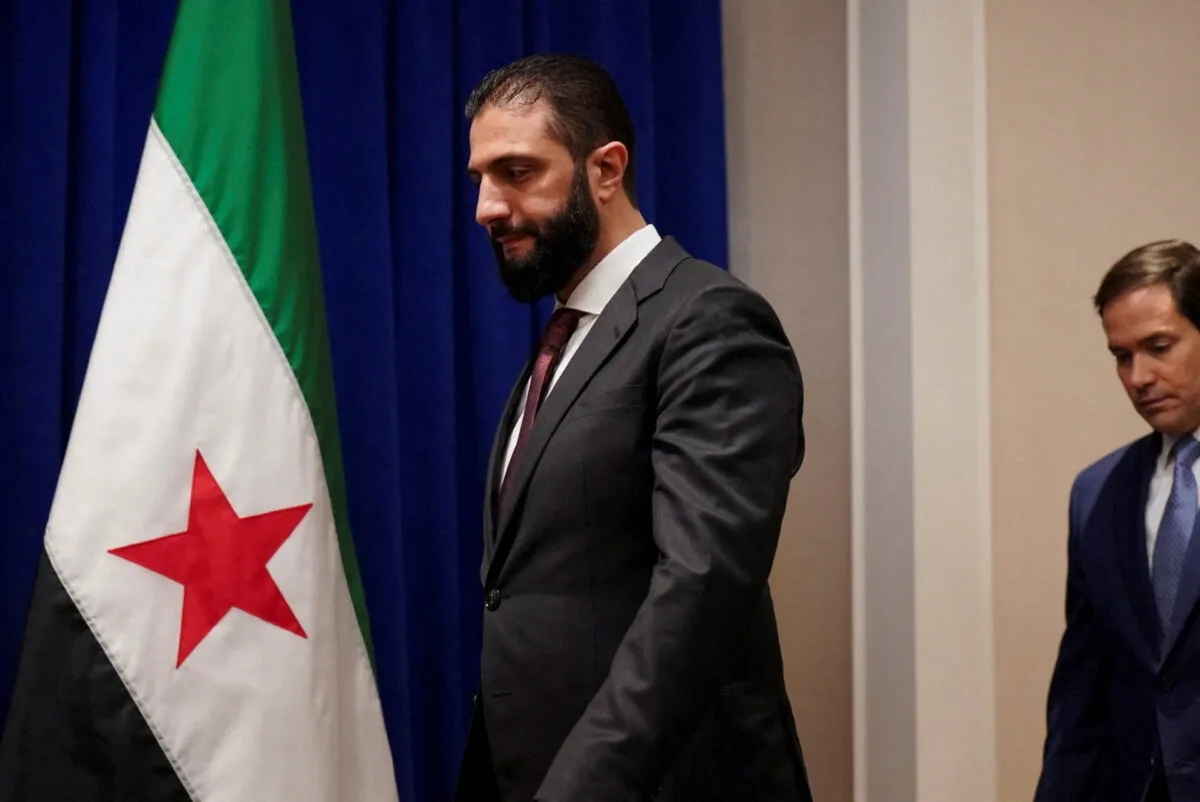
Secretary of State Marco Rubio has formally notified Congress that the Trump administration intends to rescind Syria’s designation. Unless Congress intervenes within the statutory review period, Damascus will leave one of the most restrictive U.S. sanctions frameworks in modern history.
This is not simply a legal adjustment.
It represents the political recognition that post-Assad Syria is no longer being treated as the Syria Washington sought to isolate for nearly five decades.
This Is Really About Iran
Publicly, Washington argues that Syria deserves an opportunity to rebuild after years of war.
Strategically, however, the calculation runs much deeper.
The United States sees President Ahmed al-Sharaa as an opportunity to pull Damascus permanently away from Tehran’s orbit.
For decades, Syria served as Iran’s principal Arab ally, the logistical corridor connecting Tehran with Hezbollah in Lebanon and the central pillar of the so-called “Axis of Resistance.”
Removing Syria from the terrorism list is therefore not simply about Syria.
It is about dismantling one of Iran’s most valuable geopolitical assets.
Trump Is Betting on Regime Transformation
Donald Trump has made little effort to conceal his confidence in Syria’s new leadership.
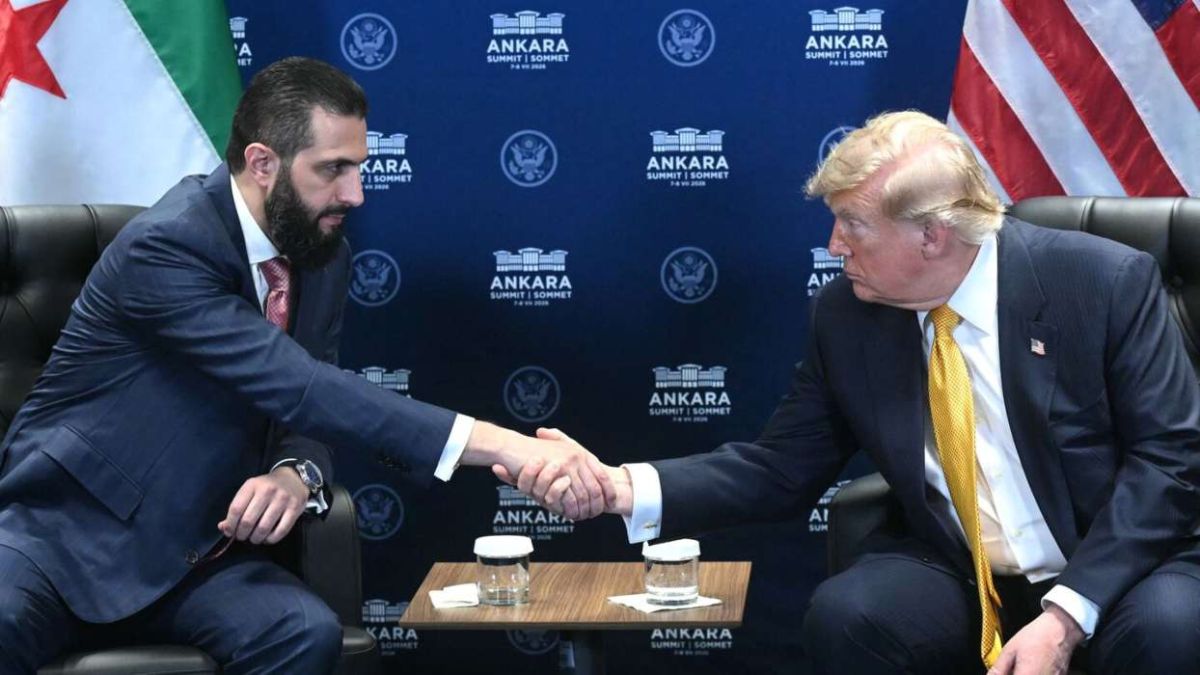
Following his meeting with Ahmed al-Sharaa during the NATO summit in Ankara, Trump publicly praised the Syrian president.
“He’s doing an unbelievable job in unifying Syria.”
Those remarks reveal a significant strategic shift.
For decades, American policy focused on containing Damascus.
Today, Washington is attempting to strengthen it.
The objective is straightforward:
A stable Syria integrated into regional diplomacy is viewed as less dangerous than a fractured Syria dominated by Iranian proxies or extremist organizations.
Economics Becomes Strategy
Removing Syria from the terrorism list carries enormous practical consequences.
The designation has long discouraged:
- international investment,
- multilateral development financing,
- foreign banking activity,
- insurance coverage,
- reconstruction projects,
- private-sector engagement.
Its removal opens the possibility for Gulf sovereign wealth funds, Western companies and international financial institutions to participate in Syria’s reconstruction.
Economic normalization is becoming an instrument of geopolitical competition.
Washington is effectively trying to anchor Syria inside a new regional economic architecture before rival powers do.
Moscow and Tehran Stand to Lose
Not everyone benefits from Syria’s diplomatic rehabilitation.
Russia risks losing part of the political leverage it accumulated during the Syrian civil war.
Iran potentially loses far more.
For Tehran, Syria has never been merely an ally.
It has been the strategic bridge connecting Iran to Lebanon, the Mediterranean and Hezbollah.
If Damascus increasingly aligns itself with Gulf states, Turkey and the United States, Iran’s regional deterrence architecture could be fundamentally weakened.
That explains why developments in Damascus are being watched as closely in Tehran as they are in Washington.
A New Middle East Is Taking Shape
The Syrian decision reflects a broader transformation in American regional strategy.
Washington is gradually moving away from permanent military engagement and toward strategic realignment through diplomacy and economic integration.
The emerging architecture increasingly links together:
- Saudi Arabia,
- the Gulf states,
- Syria,
- Turkey,
- Israel,
- and selected Western partners.
Rather than isolating Damascus indefinitely, the United States now appears to believe that incorporating Syria into this evolving framework better serves long-term regional stability.
Whether that calculation succeeds remains uncertain.
But the direction of travel is unmistakable.
Rehabilitation Does Not Mean Stability
Removing Syria from the terrorism list does not erase the country’s profound internal challenges.
The economy remains devastated.
State institutions remain fragile.
Armed groups continue operating in several regions.
Questions surrounding governance, accountability and political reconciliation remain unresolved.
Nor does Washington’s recognition automatically guarantee international acceptance.
For many Western governments, normalization will remain conditional on Syria’s ability to consolidate internal stability and prevent extremist groups from re-emerging.
The geopolitical opening has begun.
Its success is far from guaranteed.
From a Western Political Intelligence perspective, Washington’s decision is less about rewarding Damascus than about reshaping the regional balance of power.
The Trump administration appears to have concluded that the strategic value of integrating Syria into a Western-backed regional order now outweighs the benefits of maintaining decades of diplomatic isolation.
The move simultaneously advances several U.S. objectives:
- reducing Iranian influence,
- encouraging Gulf investment,
- facilitating Syria’s reconstruction,
- strengthening regional stability,
- and creating new diplomatic alignments after the Assad era.
The most important question is no longer whether Syria deserves to leave Washington’s terrorism blacklist.
It is whether Syria is becoming the newest battleground in the strategic competition between the United States and Iran—not through war, but through reconstruction, investment and political realignment.
Source: pagenews.gr
Διαβάστε όλες τις τελευταίες Ειδήσεις από την Ελλάδα και τον Κόσμο