Greece’s New Marine Parks: A Green Strategy with Geopolitical and Energy Implications
 ΧΡΟΝΟΣ ΑΝΑΓΝΩΣΗΣ 6 '
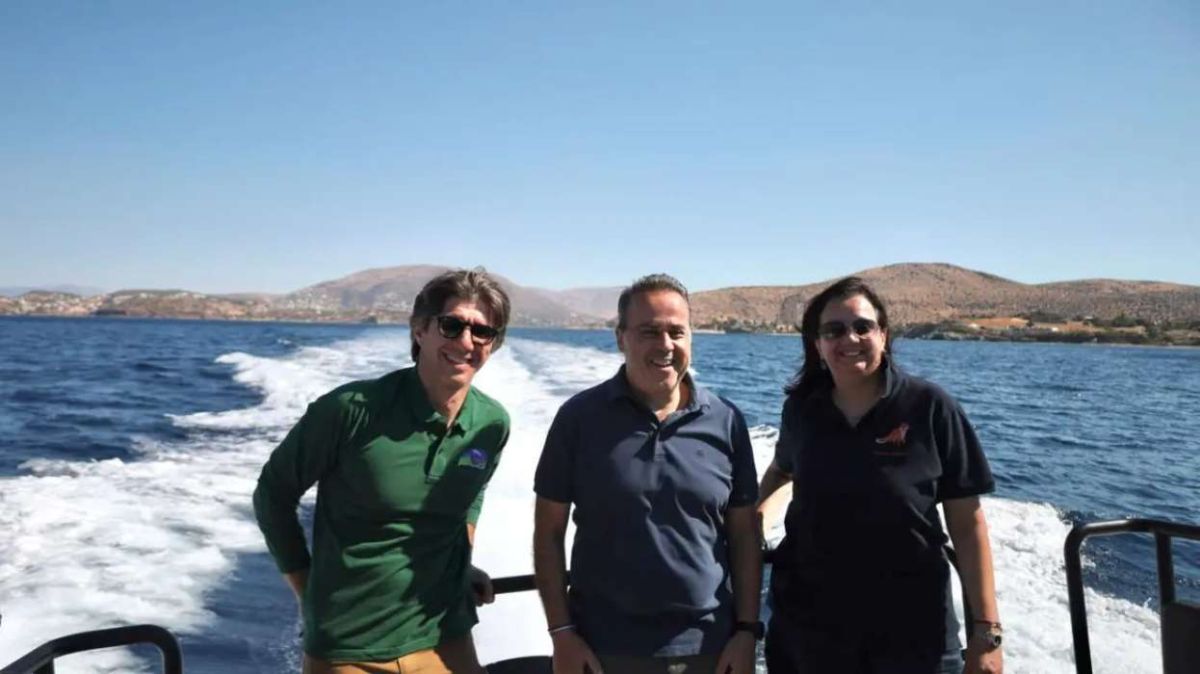
Πηγή Φωτογραφίας: Press Office //Greece's New Marine Parks: A Green Strategy with Geopolitical and Energy Implications



The creation of the South Aegean Marine Park – Southern Cyclades represents far more than another environmental initiative. It marks a strategic shift in how Greece views its maritime domain—one where biodiversity conservation, energy policy, maritime security and geopolitical interests increasingly converge.
With Environment and Energy Minister Stavros Papastavrou signing the Presidential Decree establishing the marine park, Greece has taken another step toward fulfilling the commitment announced by Prime Minister Kyriakos Mitsotakis at the Our Ocean Conference to significantly expand the country’s protected marine areas.
The decree will now be submitted to the Council of State for legal review, while a second Presidential Decree establishing the Ionian Marine Park is expected in the coming weeks.
According to the government, Greece is on track to protect more than 35% of its territorial waters by early 2027, exceeding the European Union’s target of protecting 30% of marine areas by 2030.
“EU member states are required to protect 30% of their seas by 2030. Greece will exceed 35% within the first months of 2027,” Papastavrou stated.
Marine Conservation Becomes Geopolitical Strategy
Marine protected areas are no longer viewed solely through an environmental lens.
Across Europe, they have become strategic assets, reinforcing maritime governance, protecting critical ecosystems and strengthening national resilience in increasingly contested seas.
For Greece, whose geography is defined by thousands of islands and one of Europe’s longest coastlines, marine policy is closely linked to:
- maritime security;
- sustainable fisheries;
- offshore renewable energy;
- tourism;
- shipping;
- scientific research;
- and the exercise of sovereign rights under the United Nations Convention on the Law of the Sea (UNCLOS).
As geopolitical competition intensifies in the Eastern Mediterranean, environmental governance is becoming an increasingly important component of national strategy.
The Blue Economy as a National Asset
The initiative also reflects Europe’s growing emphasis on the Blue Economy—the sustainable use of ocean resources for economic growth and environmental protection.
Greece’s economy depends heavily on maritime activities.
Shipping, tourism, fisheries, offshore energy, marine biotechnology and coastal infrastructure collectively generate a substantial share of national income.
Protecting marine ecosystems is therefore no longer viewed as an obstacle to economic development but as a prerequisite for long-term competitiveness.
Healthy seas support tourism, preserve fisheries, strengthen coastal resilience and create favorable conditions for future investments in offshore wind farms and marine innovation.
Protection Requires Enforcement
Designating protected areas is only the first step.
Effective management requires monitoring, enforcement and operational capabilities.
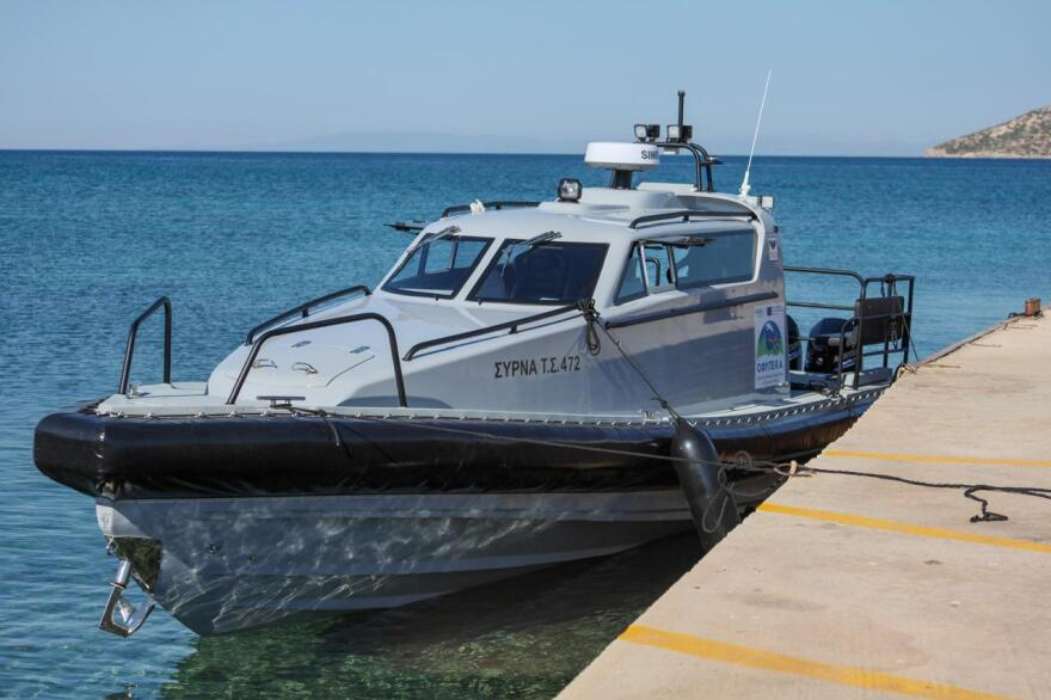
To support this effort, the Natural Environment and Climate Change Agency (OFYPEKA) has received the first of three new high-speed patrol vessels financed through Greece’s Recovery and Resilience Facility (RRF).
The vessel, named “Syrna”, after the small Aegean islet, will patrol protected marine areas and strengthen surveillance capabilities across the South Aegean.
Designed to operate safely even under difficult weather conditions, the vessels will improve biodiversity monitoring and enable rapid intervention against illegal fishing, pollution incidents and other environmental threats.
“For Greece, the sea is not simply part of the environment. It is part of our history, our culture and our national identity,” Papastavrou emphasized.
Strengthening Environmental Institutions
Alongside new equipment, the government is expanding institutional capacity.
A new General Directorate for Protected Marine Areas is being established within OFYPEKA, while more than 300 permanent environmental officers will be recruited to oversee conservation efforts across Greece.
The new personnel will operate in protected areas stretching from Karpathos to Prespa, reflecting the government’s broader effort to modernize environmental governance.
“For the first time, OFYPEKA is being strengthened with more than 300 permanent staff members who will work every day to protect Greece’s natural environment,” the minister noted.
The Energy Dimension
The timing of the initiative is also significant from an energy perspective.
Greece is preparing for major investments in offshore wind energy, while hydrocarbon exploration continues south of Crete and in parts of the Ionian Sea.
Clearly defined marine protected areas help establish a more coherent maritime spatial planning framework, reducing potential conflicts between environmental protection, fisheries, shipping routes and future energy infrastructure.
Rather than limiting economic activity, protected zones can provide greater legal certainty for investors by clarifying where industrial development is compatible with environmental objectives.
In this sense, marine conservation becomes an enabling factor for sustainable energy planning.
A European Leadership Role
The European Union’s Biodiversity Strategy for 2030 requires member states to protect at least 30% of their marine territories.
By aiming to surpass that threshold three years ahead of schedule, Greece is seeking to position itself among Europe’s environmental frontrunners.
The South Aegean and forthcoming Ionian Marine Parks are also expected to strengthen Greece’s profile in international climate diplomacy and ocean governance initiatives, reinforcing the country’s role within broader EU environmental policy.
The Real Challenge Begins Now
Creating marine parks is ultimately easier than managing them.
Their success will depend not on the number of hectares designated as protected, but on whether they receive adequate scientific monitoring, enforcement, funding and long-term management.
As climate change, biodiversity loss and geopolitical competition increasingly intersect, Greece is attempting to transform environmental policy into a strategic national asset.
The challenge now is to ensure that these marine parks become more than legal designations.
If effectively managed, they could become a cornerstone of Greece’s blue economy, energy transition and maritime strategy—demonstrating that environmental protection and national interests are no longer competing priorities but mutually reinforcing objectives.
Source: pagenews.gr
Διαβάστε όλες τις τελευταίες Ειδήσεις από την Ελλάδα και τον Κόσμο