Turkey Becomes NATO’s Strategic Pivot as Global Security Architecture Shifts
 ΧΡΟΝΟΣ ΑΝΑΓΝΩΣΗΣ 6 '
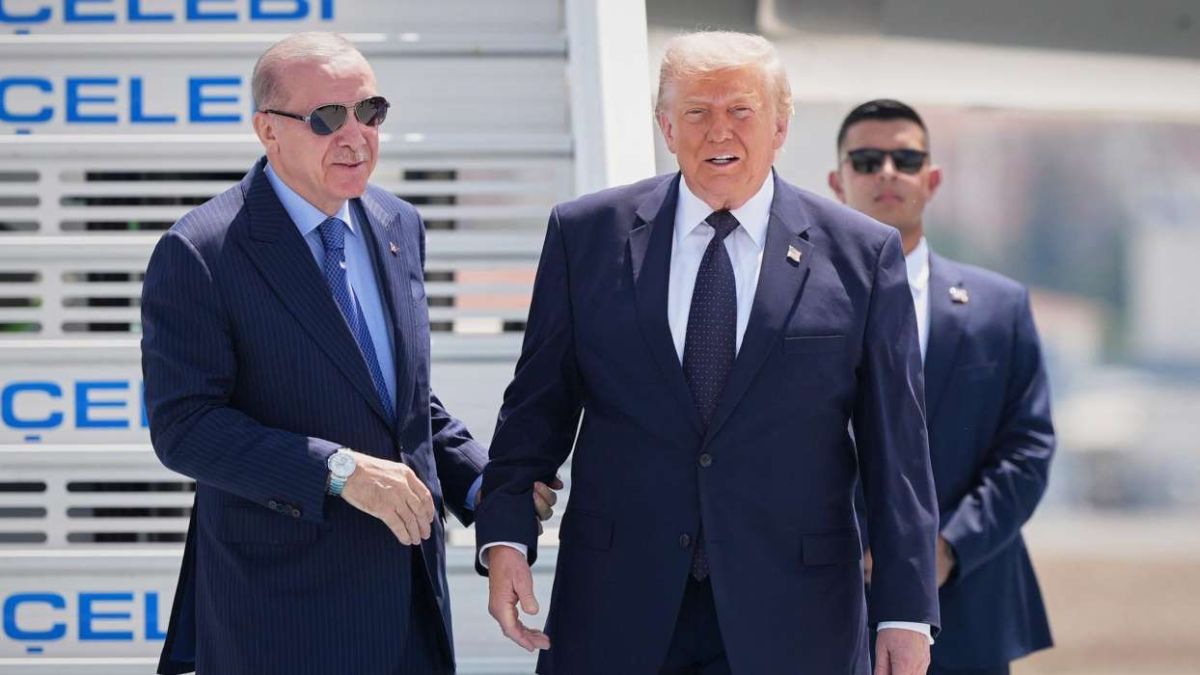
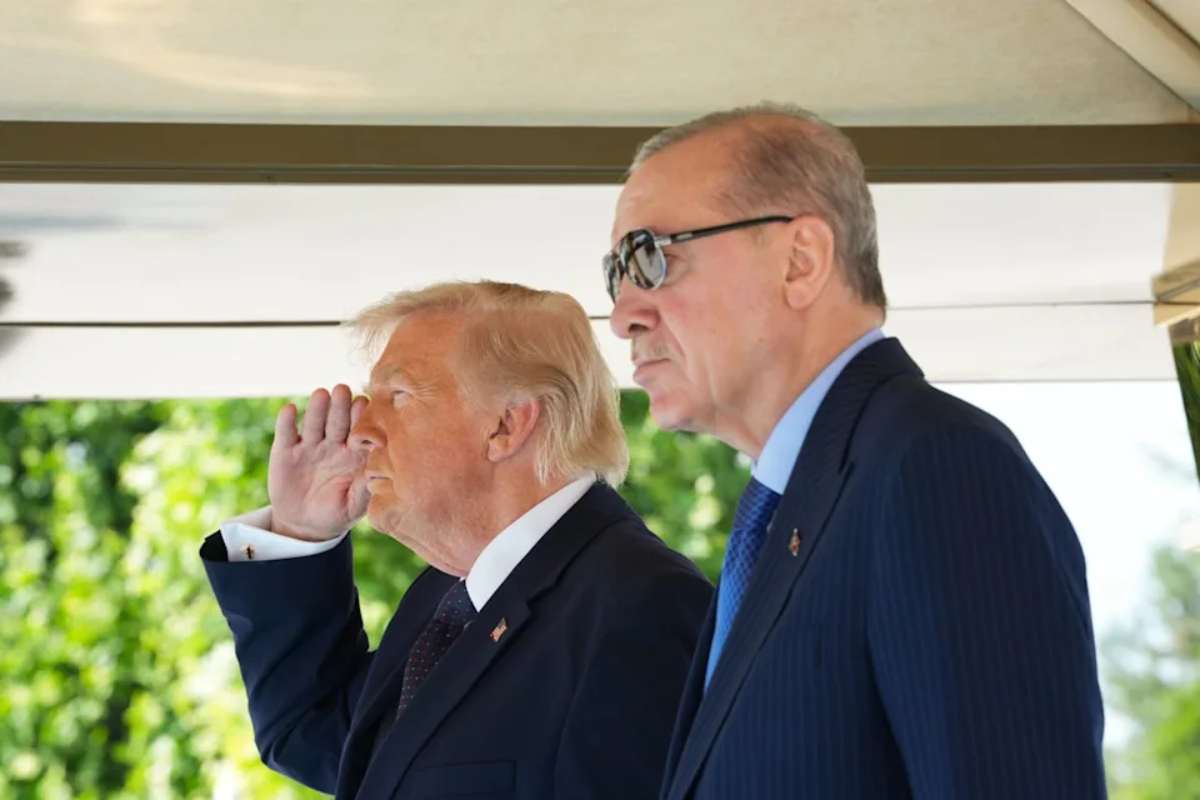
Πηγή Φωτογραφίας: AP Photo//Turkey Becomes NATO’s Strategic Pivot as Global Security Architecture Shifts



For much of the past decade, Turkey occupied an uneasy position within NATO. Disputes over the purchase of Russia’s S-400 missile system, tensions with Washington over Syria, disagreements in the Eastern Mediterranean, and President Recep Tayyip Erdoğan’s increasingly independent foreign policy often fueled speculation about Ankara’s long-term commitment to the Western alliance.
Today, that narrative is rapidly changing.
The NATO Summit in Ankara underscored a new strategic reality: Turkey is no longer simply another member of the alliance—it is becoming one of its central pillars.
U.S. President Donald Trump’s warm rhetoric toward Erdoğan, discussions surrounding Turkey’s potential return to the F-35 fighter jet program, and growing expectations that Washington could eventually ease CAATSA sanctions all signal a broader strategic recalibration rather than a temporary political thaw.
The shift reflects changing geopolitical priorities—not changing personalities.
Geography Has Become Turkey’s Greatest Strategic Asset
Turkey’s growing importance stems less from military strength than from geography.
Few countries occupy a position as strategically valuable.
Turkey sits at the crossroads of:
- Europe and Asia;
- the Black Sea and the Mediterranean;
- the Caucasus and the Middle East;
- NATO’s eastern flank and critical global energy corridors.
As conflicts continue to destabilize Ukraine, the Levant, the Red Sea and the wider Middle East, Ankara has become the only NATO member capable of projecting influence simultaneously across all these theaters.
For Washington and European capitals alike, that geographical advantage has become increasingly difficult to replace.
The Success of Turkey’s Multi-Alignment Strategy
Turkey’s enhanced status is not accidental.
For more than two decades, Ankara has pursued what many analysts describe as a multi-alignment strategy.
Rather than choosing between competing global powers, Turkey has deliberately cultivated relationships with each of them.
It remains a core NATO member while simultaneously:
- maintaining extensive energy cooperation with Russia;
- expanding trade with China;
- strengthening political and defense ties across the Gulf;
- conducting military operations in Syria, Iraq, Libya and the South Caucasus;
- acting as mediator in multiple regional conflicts.
This strategic flexibility has often frustrated Western policymakers, but it has also positioned Turkey as one of the few countries able to communicate with virtually every major geopolitical actor.
NATO Is Entering a New Strategic Era
The Ankara Summit also reflected the emergence of what many defense analysts now call “NATO 3.0.”
Unlike the post-Cold War alliance focused primarily on peacekeeping and crisis management, the new NATO is preparing for an era of simultaneous geopolitical competition.
Its priorities now include:
- deterring Russia;
- securing maritime trade routes;
- protecting critical infrastructure;
- strengthening Arctic security;
- countering cyber threats;
- managing instability across the Middle East.
In virtually every one of these areas, Turkey occupies a pivotal position.
The F-35 Debate Signals Strategic Reconciliation
Perhaps the clearest symbol of this evolving relationship is the renewed discussion over Turkey’s potential participation in the F-35 program.
Should Washington move toward restoring defense cooperation, it would represent far more than an arms agreement.
It would acknowledge that completely alienating Turkey carries far greater strategic costs than maintaining difficult political disagreements.
American policymakers increasingly recognize that pushing Ankara further away would only strengthen Russian and Chinese influence in one of the world’s most sensitive geopolitical regions.
Europe Also Needs Turkey
The strategic reassessment extends beyond Washington.
Europe’s drive to diversify away from Russian energy has elevated Turkey’s importance as a transit hub connecting the Caspian Basin, Central Asia and the Eastern Mediterranean with European markets.
Meanwhile, migration management remains heavily dependent on cooperation between Brussels and Ankara.
European leaders may continue to criticize aspects of Turkey’s domestic politics, but they increasingly acknowledge that the continent’s security architecture cannot function effectively without Turkish participation.
Implications for Greece
For Greece, Turkey’s enhanced role within NATO presents both challenges and opportunities.
Ankara’s growing strategic importance does not diminish Athens’ own value within the Alliance.
Instead, it reinforces Greece’s importance as a pillar of stability in the Eastern Mediterranean.
Athens is therefore expected to continue strengthening:
- its strategic partnership with the United States;
- defense cooperation with France;
- regional security initiatives involving Cyprus, Egypt and Israel;
- investments in deterrence and military modernization.
Rather than competing for influence, both Greece and Turkey are becoming increasingly important—albeit for different strategic reasons.
A New Balance of Power
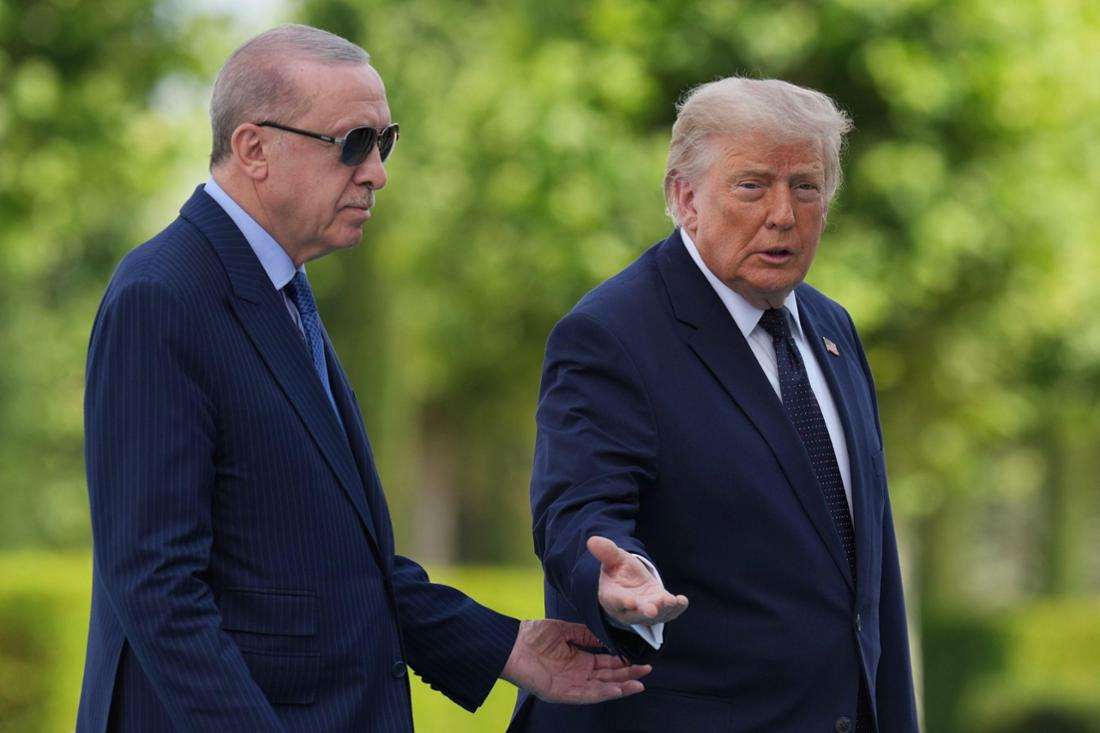
Turkey’s emergence as NATO’s indispensable partner is not the result of improved personal chemistry between Erdoğan and Trump.
It is the product of profound structural changes in international politics.
The wars in Ukraine and the Middle East, the race for secure energy corridors, growing competition with China, and the fragmentation of the international order have all restored geography to the center of global strategy.
In this new environment, Turkey possesses something that no technological innovation or diplomatic initiative can replicate: a unique geographical position at the intersection of Europe, Asia and the Middle East.
The central question facing NATO is therefore no longer whether it can work with Turkey.
It is whether the Alliance can successfully adapt to an increasingly unstable world without placing Turkey at the heart of its future strategic architecture.
Source: pagenews.gr
Διαβάστε όλες τις τελευταίες Ειδήσεις από την Ελλάδα και τον Κόσμο