Turkey’s F-35 Strategy: The UAE’s Role, Erdoğan’s S-400 Exit Plan and the Growing Debate Inside NATO
 ΧΡΟΝΟΣ ΑΝΑΓΝΩΣΗΣ 17 '
Πηγή Φωτογραφίας: AP Photo//Turkey’s F-35 Strategy: The UAE’s Role, Erdoğan’s S-400 Exit Plan and the Growing Debate Inside NATO



Ankara Searches for a Way Out of the S-400 Deadlock
Turkey is attempting to resolve one of the most difficult disputes in its relationship with the United States: the presence of Russian S-400 air defense systems on Turkish territory and Ankara’s exclusion from the F-35 stealth fighter program.
According to officials familiar with the negotiations, Turkey is discussing the possible transfer of the S-400 systems to the United Arab Emirates.
Such an arrangement could allow Ankara to argue that the Russian system no longer poses a direct security threat to the F-35, because it would no longer be operated alongside the American aircraft on Turkish soil.
The proposal remains highly complex and no final agreement has been reached. It would require political approval from Washington, consent from Moscow and security guarantees for Abu Dhabi.
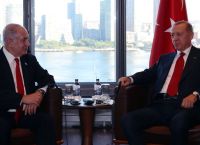
Nevertheless, the talks point to a significant change in President Recep Tayyip Erdoğan’s approach. After years of defending the S-400 purchase as a sovereign and irreversible decision, Ankara now appears willing to examine options that would remove the systems from Turkey.
Why the S-400 Purchase Cost Turkey the F-35
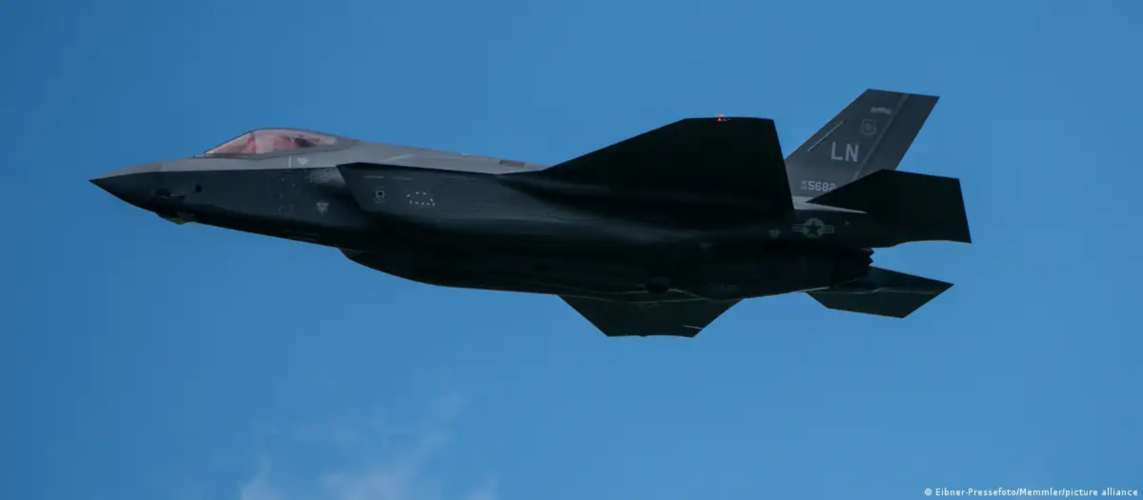
Turkey was originally a major partner in the multinational F-35 program.
Turkish defense companies produced components for the aircraft, while Ankara had planned to purchase a substantial fleet of F-35s to modernize its air force.
That partnership collapsed after Turkey acquired the S-400 system from Russia.
In 2019, the United States removed Turkey from the F-35 program, arguing that the simultaneous operation of the S-400 and the F-35 would create an unacceptable intelligence risk.
Washington fears that the Russian system’s radars could collect sensitive information about the F-35’s radar signature, electronic profile, flight behavior and stealth characteristics.
That data, U.S. officials have warned, could eventually be transferred to Moscow and used to improve Russian detection and targeting capabilities.
The United States later imposed sanctions on Turkey under the Countering America’s Adversaries Through Sanctions Act, known as CAATSA.
Why the UAE Has Become Central to the Plan
The United Arab Emirates could become the key intermediary in Ankara’s effort to resolve the dispute.
Abu Dhabi has both the financial resources and the strategic motivation to consider acquiring an advanced long-range air defense system.
The Emirates have sought to reinforce their defenses against ballistic missiles, cruise missiles and drones following repeated regional attacks and the growing military confrontation involving Iran and its allies.
From Turkey’s perspective, transferring the S-400 systems to the UAE could achieve several objectives.
It would remove the Russian equipment from NATO territory, reduce the danger of technical interaction with F-35 aircraft and provide Ankara with a politically acceptable alternative to destroying or surrendering the systems to the United States.
It could also deepen Turkey’s economic and defense relationship with the Gulf states, particularly at a time when Erdoğan is seeking greater investment and strategic cooperation from the region.
For the UAE, however, taking possession of the S-400 would carry serious diplomatic risks.
The UAE’s Own F-35 Dilemma
The UAE previously reached an agreement in principle to purchase F-35 aircraft from the United States, but the process has remained frozen for several years.
American concerns have included technology security, the Emirates’ defense relationships with other powers and the presence of Chinese telecommunications infrastructure.
The transfer of Turkish S-400 systems to the UAE would therefore create a strategic contradiction.
Abu Dhabi could end up assuming the same political and technological burden that has prevented Turkey from acquiring the F-35.
Before accepting the systems, the Emirates would likely demand assurances from Washington that the transaction would not trigger sanctions or permanently damage their prospects of acquiring advanced American aircraft.
The United States would also seek guarantees that the S-400 radars could not collect data from U.S. or allied aircraft operating in the Gulf.
Russia Holds One of the Keys
Turkey cannot simply sell or transfer the S-400 systems without considering Russia’s position.
Major arms-export agreements normally contain restrictions on resale or transfer to third countries. Any move involving the UAE would probably require formal or informal Russian approval.
Moscow would be deeply concerned about the possibility that the system could fall under American technical supervision.
Russia would also understand that removing the S-400 from Turkey could facilitate a broader strategic rapprochement between Ankara and Washington.
The Kremlin could therefore demand political, economic or military concessions in return for approving the transfer.
These might include guarantees that U.S. experts would not gain access to the system, new Turkish-Russian defense arrangements or concessions in energy and regional diplomacy.
Erdoğan’s relationship with Russian President Vladimir Putin could be decisive.
Turkey has maintained ties with Moscow despite supporting Ukraine with drones, armored vehicles and naval platforms. Ankara has also attempted to position itself as a mediator in the Russia-Ukraine war.
Trump’s Intervention Changes the Political Climate
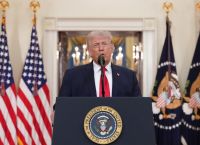
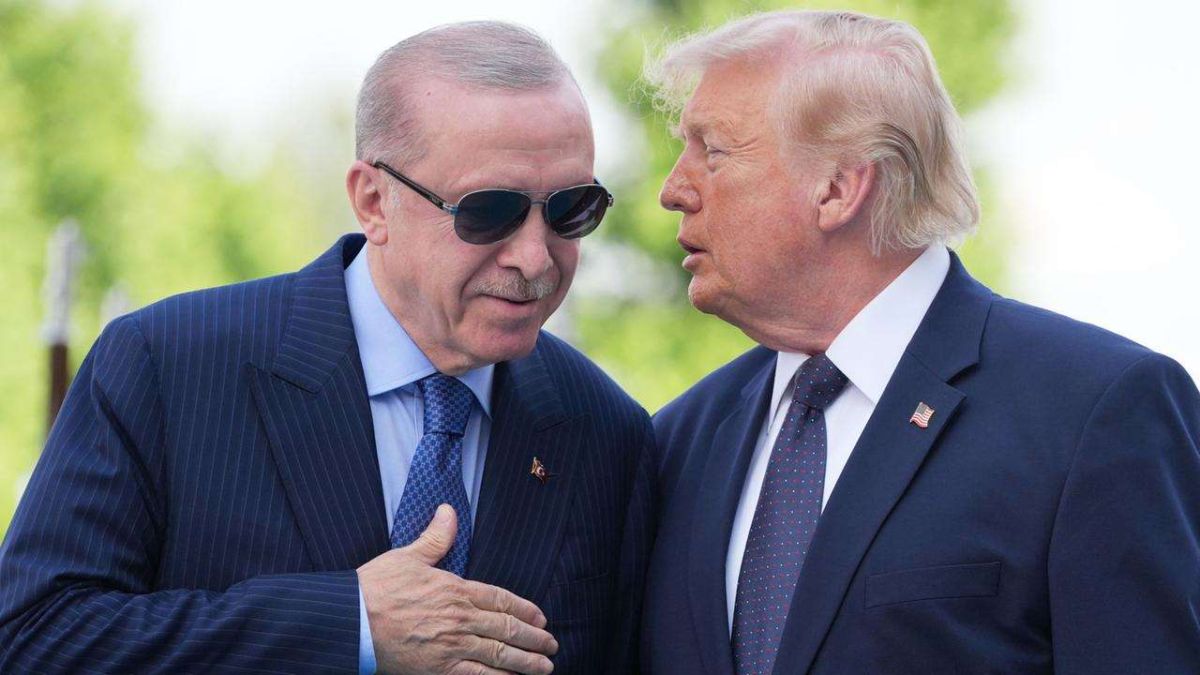
Turkey’s effort has gained momentum because of President Donald Trump’s willingness to reconsider the defense relationship with Ankara.
Trump views Erdoğan as an important geopolitical partner with influence in the Middle East, the Black Sea, Syria and the war between Russia and Ukraine.
The U.S. president has indicated that his administration is examining the possibility of lifting restrictions and allowing Turkey to purchase the F-35.
For Trump, bringing Ankara back into closer alignment with Washington could reduce Russian and Chinese influence over Turkey.
It could also strengthen NATO’s southeastern flank, where Turkey controls the Bosporus, hosts important allied facilities and maintains one of the alliance’s largest armed forces.
However, the White House cannot resolve the issue alone.
“This Time We Really Feel Closer”
Turkish officials have publicly expressed growing optimism.
Deputy Foreign Minister and Turkey’s ambassador to NATO Levent Gümrükçü said Ankara and Washington were closer than before to resolving their disagreements over CAATSA sanctions and the F-35 program.
“This time we really feel closer. We feel that we might be able to resolve this issue and leave that problem behind us.”
He said the matter had become a priority after Trump returned to office and that the two countries had created a joint political and military working group.
Gümrükçü acknowledged that a deal involving the F-35 could become possible if the S-400 problem were removed.
He did not provide details about the proposed terms or a timetable, but said the working group was examining options designed to address both Washington’s legal requirements and Ankara’s political and financial concerns.
The negotiations, he added, were not limited to Turkey’s return to the F-35 program.
They were part of a broader effort to establish much deeper defense-industrial cooperation between the two allies.
Turkey Wants Guarantees Before Giving Up the S-400
Ankara is unlikely to transfer the S-400 systems first and then wait for Washington to decide whether to approve the F-35 sale.
The Turkish government wants a binding sequence of reciprocal steps.
That could include the removal of CAATSA sanctions, formal approval for the purchase of F-35 aircraft, an agreed delivery schedule and possible restoration of Turkish defense companies to parts of the aircraft’s production chain.
Turkey would also seek clarity over the money it previously paid into the F-35 program and the economic losses suffered by its defense industry after its removal.
Years of disputes over American weapons sales have left Ankara deeply suspicious of congressional delays and political conditions.
Gümrükçü nevertheless said Turkey had greater confidence in the current U.S. administration than it had shown toward previous governments.
“For the first time in the last 10 to 15 years, we have full confidence in the United States administration that, when we reach an agreement, they will fulfill their part of the deal.”
Congress Remains the Biggest Obstacle
Even if Trump and Erdoğan reach a political understanding, Turkey’s return to the F-35 program would still face significant legal and congressional barriers.
U.S. legislation restricts the transfer of the aircraft to Turkey while it possesses the S-400 system.
The administration would also need to certify that Turkey had met the conditions required for lifting CAATSA sanctions.
Congress has the power to delay, restrict or block major arms sales.
Several lawmakers remain skeptical of Ankara’s foreign policy and question whether transferring the S-400 to another country would be enough to demonstrate a lasting strategic shift.
Some members of Congress have cited Turkey’s actions toward Greece and Cyprus, its regional military interventions and its relations with Russia as reasons for opposing its return to the program.
Democratic Representative Dina Titus, a senior member of the Congressional Hellenic Caucus, has supported efforts to prevent Turkey’s readmission.
Critics argue that removing the S-400 is necessary but may not be sufficient.
Concerns in Greece and Cyprus
The possible sale of F-35 aircraft to Turkey would directly affect the military balance in the Aegean and the Eastern Mediterranean.
Greece is already moving forward with its own F-35 acquisition, while also operating Rafale fighters and upgrading its F-16 fleet to the Viper standard.
Athens sees the F-35 as a central component of its future deterrence strategy.
Turkey’s return to the same program would reduce the technological advantage Greece hopes to establish over the coming years.
The aircraft would provide Ankara with advanced stealth, intelligence-gathering, electronic warfare and deep-strike capabilities.
Greek and Cypriot concerns extend beyond the technical performance of the aircraft.
They are connected to Turkey’s disputes with Greece over the Aegean, the Turkish parliament’s longstanding casus belli over a possible extension of Greek territorial waters, Ankara’s maritime claims and the continued presence of Turkish forces in Cyprus.
Athens and Nicosia are therefore expected to press Washington for strict conditions and safeguards.
They would seek assurances that advanced American aircraft could not be used against another NATO ally or in operations that destabilize the Eastern Mediterranean.
Israel Fears an Erosion of Its Air Superiority
Israel is also watching the negotiations closely.
The Israeli Air Force already operates a customized version of the F-35 and considers air superiority essential to national security.
Israel’s military advantage in the Middle East has long been protected by U.S. policy requiring that major arms sales preserve Israel’s qualitative military edge.
Relations between Turkey and Israel have deteriorated sharply, while their strategic interests increasingly collide in Syria and the Eastern Mediterranean.
Israeli officials are likely to worry that a Turkish F-35 fleet could complicate Israel’s operational freedom and alter the balance of air power in the region.
Those concerns are influential in Congress, where support for Israel remains a major factor in decisions involving advanced weapons sales.
The Debate Inside NATO
The S-400 crisis has been one of the most serious internal security disputes in NATO in recent years.
Turkey is among a very small group of countries—including China and India—that have acquired the Russian system.
For NATO officials, its presence in Turkey creates three principal concerns.
The first is the security of sensitive data involving F-35s and other allied aircraft.
The second is the risk of any connection between a Russian system and NATO’s integrated air defense and command structures.
The third is the potential presence of Russian technicians or advisers on the territory of a NATO member.
Many alliance officials would welcome the physical removal of the S-400 from Turkey.
It would eliminate a major technical vulnerability and reduce a source of tension between Ankara and its allies.
Others, however, fear that a rapid return to the F-35 program could reward Turkey without securing a deeper and more permanent change in its strategic behavior.
Some allies would want guarantees that Ankara would not purchase similar Russian systems in the future.
They could also demand stronger Turkish alignment with NATO sanctions, export controls and defense planning.
Why Erdoğan Wants the F-35
Turkey faces an increasingly difficult military aviation challenge.
Its F-16 fleet remains the backbone of the Turkish Air Force, but many aircraft require modernization or eventual replacement.
At the same time, Greece is expanding and modernizing its fleet, Israel is increasing the number of F-35s it operates and several European states are investing in fifth-generation combat aircraft.
Turkey is developing its domestically produced KAAN fighter, but full operational maturity and large-scale production will require time, money and access to advanced technology.
The F-35 could fill the gap until the KAAN becomes fully operational.
It would give Turkey access to low-observable technology, advanced sensors, networked warfare and long-range precision-strike capabilities.
For Erdoğan, the aircraft also has symbolic importance.
Returning to the program would demonstrate that Turkey had overcome American sanctions without publicly capitulating to Washington.
It would also help repair the economic damage inflicted on Turkish defense companies when they were removed from the F-35 supply chain.
Other Solutions Considered in the Past
The UAE proposal is not the first attempt to resolve the S-400 problem.
American and Turkish officials have previously discussed storing the systems without activating them, placing them under international supervision or transferring them to another country.
After Russia’s invasion of Ukraine, there were also suggestions that the systems could be sent to Kyiv.
Another option involved allowing U.S. military personnel to secure or disable the equipment so that it could no longer threaten American aircraft.
None of those proposals advanced.
Turkey resisted arrangements that would appear to undermine its sovereignty, while Russia opposed any move that could expose the system to U.S. technical examination.
The UAE option may be more politically acceptable because Ankara could present it as a commercial and strategic transfer rather than a surrender.
It could also be described as part of a broader effort to strengthen Gulf defenses against missiles and drones.
A Wider Defense Bargain
The negotiations are likely to extend well beyond the F-35.
Turkey wants a broader restructuring of defense relations with the United States.
That could include access to American air defense systems, industrial cooperation, technology sharing and the reintegration of Turkish companies into Western supply chains.
Washington, in return, wants to reduce Ankara’s dependence on Russian military technology.
A comprehensive agreement could therefore involve the transfer of the S-400, the lifting of CAATSA sanctions, the sale of F-35s and possible cooperation involving Patriot air defense systems.
It could also include restrictions preventing Turkey from acquiring additional Russian strategic weapons.
Such a bargain would represent one of the most important changes in Turkish-American relations in years.
The possible transfer of Turkey’s S-400 systems to the United Arab Emirates is far more than an arms transaction.
It is an attempt to restructure the strategic relationship among Turkey, the United States, Russia and the Gulf states.
Erdoğan is trying to convert a major foreign-policy liability into leverage.
Rather than simply abandoning the S-400, he wants to exchange its removal for the lifting of sanctions, access to the F-35 and a deeper relationship with the American defense industry.
For the UAE, the arrangement could provide additional air defense capabilities and enhance its diplomatic influence with both Ankara and Washington.
It could also, however, further complicate Abu Dhabi’s own ambitions to obtain American stealth aircraft.
For the United States, the choice is difficult.
Allowing Turkey back into the F-35 program could strengthen NATO’s southeastern flank and remove a Russian system from allied territory.
A deal without strict conditions, however, could weaken the credibility of U.S. sanctions and create the impression that purchasing advanced Russian weapons carries only temporary consequences.
For Greece, Cyprus and Israel, the issue is fundamentally about regional power.
A Turkish F-35 fleet would significantly enhance Ankara’s ability to project force across the Aegean, the Eastern Mediterranean and the Middle East.
The decisive institution remains the U.S. Congress.
Trump can generate political momentum and Erdoğan can offer to remove the S-400, but any final arrangement will require legal certification, congressional scrutiny and assurances to concerned allies.
Turkey may now be closer to the F-35 than at any point since its removal from the program.
But the UAE proposal opens only a possible path. It does not guarantee that Washington, Congress or NATO’s most concerned members will allow Ankara to complete the journey.
Source: pagenews.gr
Διαβάστε όλες τις τελευταίες Ειδήσεις από την Ελλάδα και τον Κόσμο