Greece Raises Its Shield Against Iran: F-16s in Cyprus, Patriots for Souda and Bulgaria
 ΧΡΟΝΟΣ ΑΝΑΓΝΩΣΗΣ 10 '
Πηγή Φωτογραφίας: AP Photo//Greece Raises Its Shield Against Iran: F-16s in Cyprus, Patriots for Souda and Bulgaria



The conflict with Iran is moving dangerously close to Europe’s neighbourhood — and Greece is finding itself much nearer to the front line than it would like.
Reports that Tehran has examined scenarios for strikes against US military facilities in southeastern Europe have triggered renewed concern in Athens, with Cyprus and Bulgaria among the locations reportedly assessed as potential targets if Washington dramatically escalates its attacks on Iran.
The reports do not mean that an Iranian attack on Europe is imminent or has been ordered.
Rather, they point to contingency plans that could be activated in response to a major new US assault on critical Iranian infrastructure.
But even contingency planning changes the security equation.
Because the geographical distance separating the Middle East war from Europe is becoming increasingly narrow.
Athens Strengthens Its Defensive Shield
Greece has already moved significant military assets into the wider region during previous phases of the crisis.
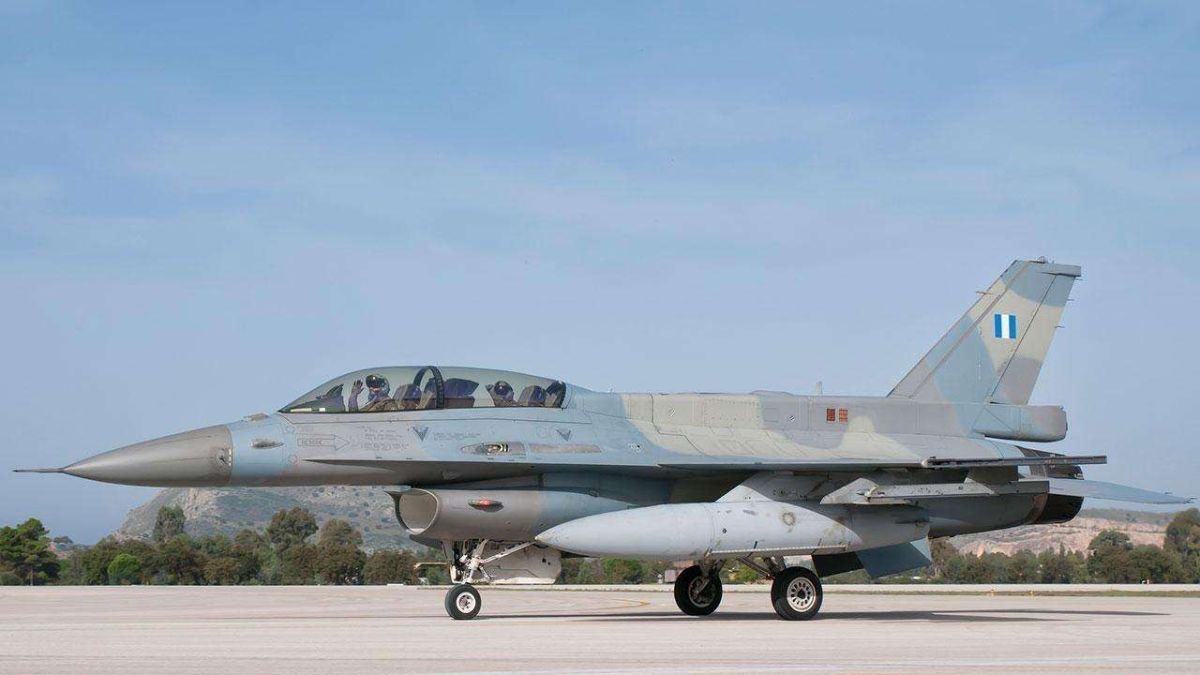
Following Iranian drone attacks targeting the British sovereign base area at Akrotiri earlier this year, Athens deployed F-16 fighter jets to Cyprus, alongside Greek naval assets.
Greek military deployments in and around Cyprus subsequently continued as Athens adjusted its air-defence posture across the Eastern Mediterranean.
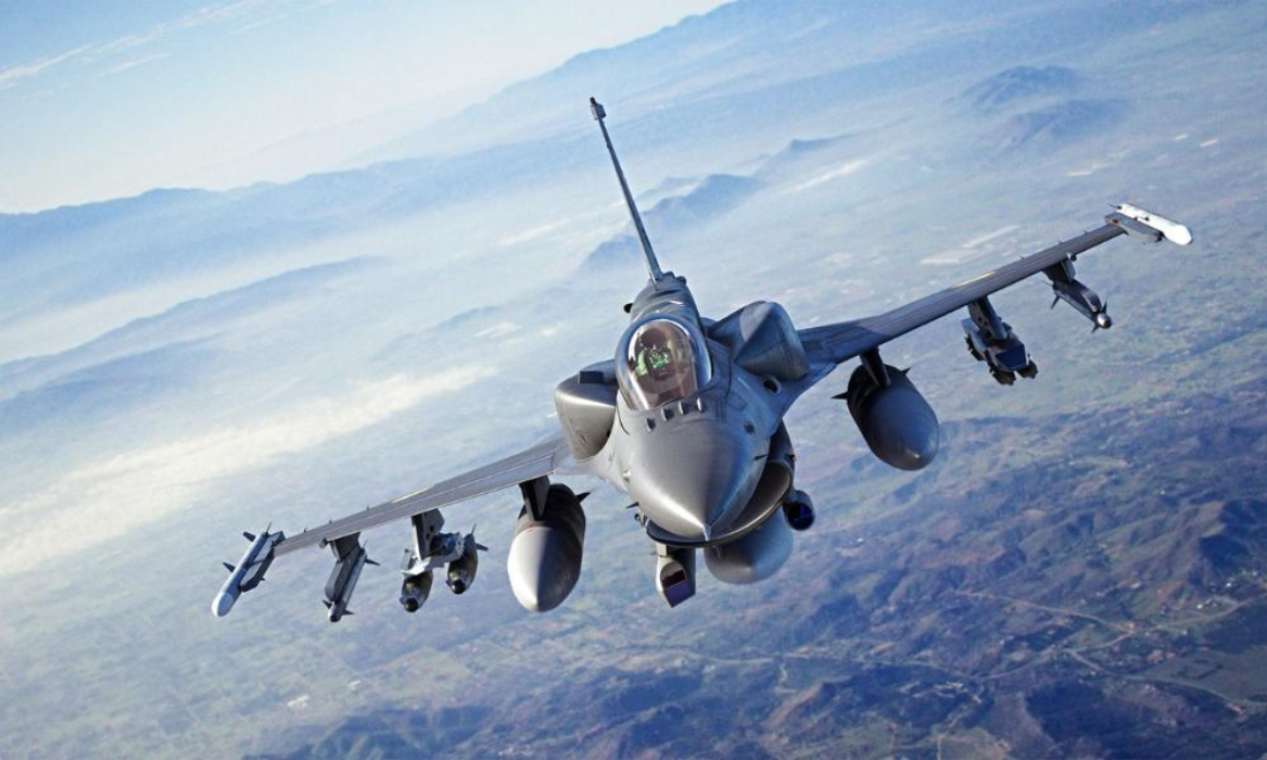
According to the latest information emerging from Athens, two Greek F-16 Vipers remain in Cyprus as part of the country’s defensive presence.
That is important.
Greece is not beginning its contingency planning from scratch.
It already has a military footprint close to one of the areas now mentioned in Iranian threat assessments.
Cyprus Moves From the Rear to the Front Line
Cyprus occupies perhaps the most sensitive position in the emerging security picture.
Its geography places the island at the heart of the Eastern Mediterranean, only a relatively short distance from the Middle East.
It is also home to the British Sovereign Base Areas of Akrotiri and Dhekelia, while Western military operations across the region make the island strategically important far beyond its size.
That explains why reports that Cyprus has featured in Iranian contingency planning are being treated seriously.
For Athens, the issue has two dimensions.
The first is the defence and security of the Republic of Cyprus.
The second is preventing the Middle East confrontation from spreading into the Eastern Mediterranean.
And if Iran were to broaden its target set beyond the immediate Middle East, Cyprus would inevitably become one of the most strategically exposed locations in Europe.
Bulgaria Appears on Tehran’s Radar
The reference to Bulgaria is equally significant.
Iranian military planners have reportedly assessed potential strikes against US-linked facilities in southeastern European countries, with Bulgaria specifically mentioned.
The strategic implications would be enormous.
An Iranian strike on a military installation on Bulgarian territory would mean that the conflict had crossed decisively into European and NATO territory.
That is where Greece could acquire another role.
Information from Athens indicates that the Greek government would consider positively a Bulgarian request for assistance with missile defence should Sofia formally seek such support.
There is, however, an important distinction:
no confirmed Bulgarian request should be treated as having already been made.
For the moment, this remains contingency planning.
The Patriot Card
That brings Greece’s Patriot missile-defence systems into the equation.
The systems are no longer merely theoretical assets for Athens.
A Greek Patriot battery deployed in Saudi Arabia has accumulated operational experience in a combat environment, giving Greek personnel direct experience in confronting the missile and drone threats that increasingly define modern warfare in the Middle East.
This matters because the potential threat facing Cyprus, Bulgaria or critical installations in Greece would not necessarily resemble a conventional air campaign.
It could involve ballistic missiles, cruise missiles and long-range drones, potentially arriving simultaneously and attempting to overwhelm air defences.
That is precisely the environment in which layered missile defence becomes critical.
Souda Bay Moves to the Centre of the Equation
Then there is the most strategically sensitive location on Greek territory:
Souda Bay.
The facilities in Crete constitute one of the most important US and NATO military hubs in the Eastern Mediterranean.
Souda’s location gives Western forces access to the Mediterranean, North Africa and the Middle East, making it extraordinarily valuable during regional crises.
But strategic value brings exposure.
As Tehran considers — even at the level of contingency planning — options for retaliating against US military infrastructure beyond the Middle East, protecting Crete becomes increasingly important for Greek defence planners.
According to information circulating in Athens, strengthening the missile-defence coverage of Souda is among the options that could be considered if the threat environment deteriorates further.
Any major redeployment of Greek air-defence assets would require the appropriate military and political decisions.
Crucially, there is no evidence that Iran has specifically designated Souda Bay as a target.
But Athens can no longer afford to plan only for the most likely scenario.
It must also prepare for the most dangerous one.
The Greece-Cyprus-Bulgaria Defence Arc
A new strategic triangle is consequently emerging:
Cyprus – Crete – Bulgaria.
Greek combat aircraft are deployed in Cyprus.
Crete hosts Souda Bay, a critical Western military hub.
Further north, Bulgaria is a NATO ally now mentioned in reports about possible Iranian military contingency planning.
Greece lies geographically at the centre of this arc.
That increases Athens’ strategic importance to NATO.
But it also increases Greece’s responsibilities — and potentially its exposure.
NATO Faces a Different Kind of Threat
For decades, NATO’s southeastern flank prepared primarily for conventional military scenarios.
The threat environment is now becoming considerably more complicated.
Ballistic missiles.
Long-range drones.
Cruise missiles.
Cyberattacks.
Sabotage.
And attacks against critical energy, communications and military infrastructure.
Iranian planners have reportedly even examined scenarios involving subsea fibre-optic cables around the Strait of Hormuz in the event of further escalation.
Modern deterrence therefore involves much more than fighter aircraft and frigates.
It increasingly requires protecting an entire network of military, digital, energy and communications infrastructure.
For Greece, sitting at the crossroads between Europe and the Eastern Mediterranean, that challenge is particularly acute.
How Real Is the Iranian Missile Threat to Europe?
This is where caution is essential.
The fact that Iran has examined a military scenario does not mean Tehran has decided to execute it.
Military establishments routinely develop contingency plans for situations that never materialise.
Analysts also caution that while Iran possesses missiles capable of threatening parts of southern and southeastern Europe, its ability to deliver sustained, highly effective strikes decreases as distances grow.
The threat can therefore be described as serious without portraying an Iranian attack on Europe as inevitable.
Yet the calculation for European governments is changing.
Even a limited capability to reach European territory forces defence planners to prepare for that possibility.
And preparations themselves can reshape military deployments across NATO’s southeastern flank.
Greece Is Becoming an Air-Defence Hub
This is where Greece’s strategic role is evolving.
Greek fighters have been deployed to Cyprus.
Greek Patriot crews have accumulated operational experience in Saudi Arabia.
Karpathos and Crete have assumed growing importance in the air-defence architecture of the Eastern Mediterranean.
And Souda Bay remains one of the West’s most important military facilities in the region.
Taken together, these developments are gradually turning Greece into a critical node in southeastern Europe’s air and missile-defence network.
That gives Athens greater strategic weight in Washington, Brussels and NATO.
But strategic importance always comes with a price.
The more indispensable a country becomes to Western military operations, the more seriously it must consider the possibility that its infrastructure could become relevant to an adversary’s calculations.
Athens Faces a Difficult Balance
Greece has long sought to present itself as a pillar of stability in the Eastern Mediterranean while remaining a close US ally and a committed member of NATO.
As the Middle East conflict expands geographically, maintaining distance from its military consequences becomes increasingly difficult.
Athens therefore faces a delicate balancing act.
It must strengthen the defence of Greece, support Cyprus and contribute to NATO’s southeastern security architecture — without allowing defensive preparations to pull the country unnecessarily deeper into an uncontrolled regional escalation.
That balance becomes harder with every new round of confrontation between Washington and Tehran.
From the Persian Gulf to the Eastern Mediterranean
This is ultimately the most important message behind the latest threat assessments.
The geography of the conflict is changing.
For years, Europe’s debate about Iran centred primarily on the Persian Gulf, the Strait of Hormuz, Israel and US bases across the Middle East.
Now Cyprus and Bulgaria are entering the conversation.
And between them sits Greece.
There is no confirmed indication that an Iranian attack against Greek territory is imminent.
Athens nevertheless has every reason to prepare for a security environment in which the unthinkable is becoming increasingly plausible.
Because if the US-Iran confrontation genuinely breaks beyond the traditional boundaries of the Middle East, Cyprus, Crete and NATO’s southeastern flank could suddenly find themselves on the front line.
And in that scenario, Greek F-16s and Patriot batteries would no longer represent only instruments of deterrence.
They could become part of Europe’s first defensive shield against a Middle East war threatening to spill into the Eastern Mediterranean.
Source: pagenews.gr
Διαβάστε όλες τις τελευταίες Ειδήσεις από την Ελλάδα και τον Κόσμο