Gerapetritis Warns Turkey: “Greece Will Fully Exercise Its Sovereign Rights”
 ΧΡΟΝΟΣ ΑΝΑΓΝΩΣΗΣ 8 '

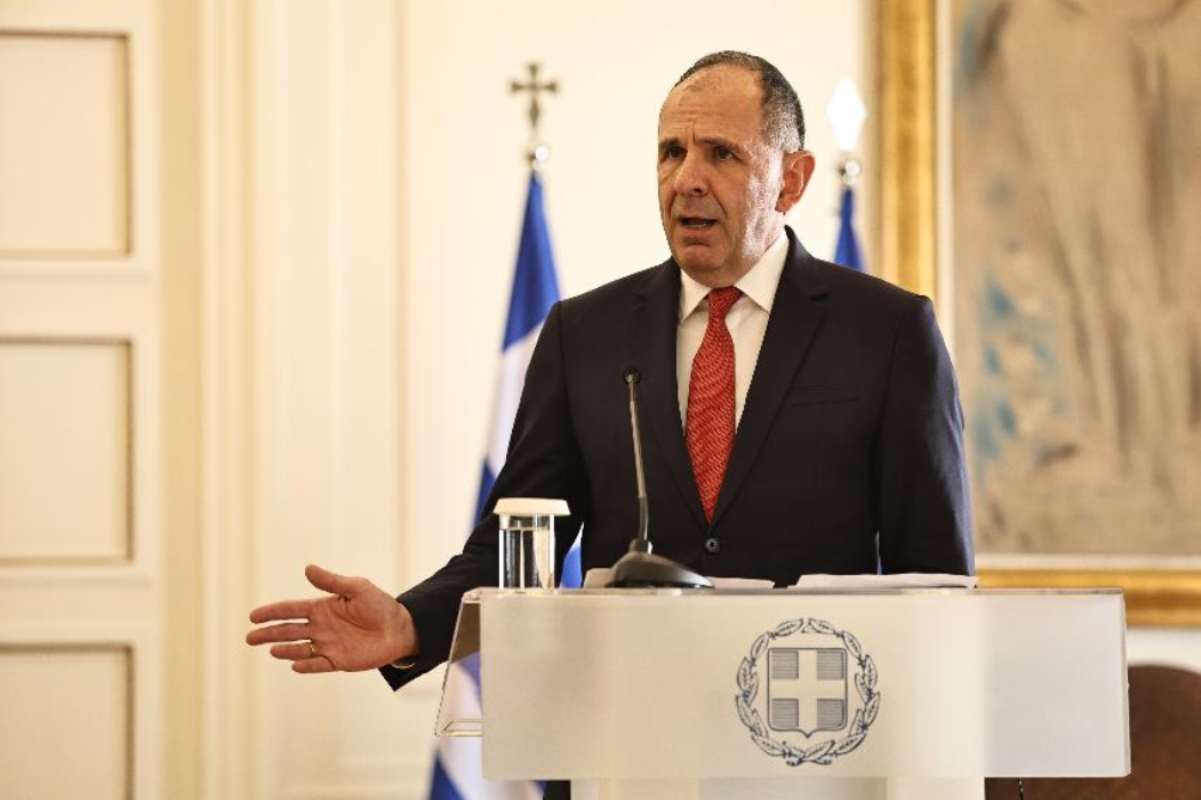
Πηγή Φωτογραφίας: eurokinissi//Gerapetritis Warns Turkey: “Greece Will Fully Exercise Its Sovereign Rights”



Greek Foreign Minister Giorgos Gerapetritis sent an unusually explicit message to Ankara, declaring that Greece intends to fully exercise its sovereign rights and has both the diplomatic and military power to respond should Turkey attempt to challenge them.
Speaking to OPEN, Gerapetritis defended the government’s “calm waters” strategy toward Turkey but stressed that dialogue should not be confused with retreat.
“We remain vigilant, but we are not worried. And we are not worried because we have the strength to enforce our national interests in any field,” he said.
His remarks come amid renewed tensions in Greek-Turkish relations and growing debate in Athens over whether the period of relative calm in the Aegean is approaching its limits.
“Calm waters” do not mean concessions
Gerapetritis rejected the argument that maintaining open channels with Ankara has constrained Greece’s ability to defend its positions.
According to the foreign minister, de-escalation was never an end in itself but rather a mechanism for managing relations between two neighboring states.
“With every neighbor, we have an obligation to talk,” he said, while stressing that “calm waters do not mean, under any circumstances, that we have retreated from our fundamental national positions.”
The government’s argument is that Greece used the period of lower tension not to remain passive but to strengthen its diplomatic, economic and military position.
Gerapetritis pointed to the Maritime Spatial Planning framework, marine parks, exploitation of offshore resources, stronger international alliances and Greece’s expanding diplomatic footprint as evidence that Athens has increasingly taken the initiative.
“Greece no longer watches. Greece acts,” he declared.
And he added:
“The era of inertia for Greece is definitively over.”
Kasos: Frigates and F-16s if necessary
The clearest warning came when Gerapetritis was asked about Kasos and the possibility that Turkey could attempt to interfere with surveys or cable-laying operations in the area.
His answer was categorical.
“It goes without saying that Greece will fully exercise its sovereign rights. Today more than ever.”
Pressed on whether that could include the deployment of Greek warships and aircraft, Gerapetritis explicitly left the military option on the table.
“Yes, if necessary, of course there will be a frigate and there will also be the upgraded F-16s.”
The statement is politically significant because it links Athens’ diplomatic position directly to its growing deterrence capabilities.
Gerapetritis argued that Greece’s military position today cannot be compared with that of seven years ago, pointing to the modernization of the Armed Forces and the country’s broader defense investments.
Athens: We will respond from a position of strength
The foreign minister insisted that Greece would continue talking to Turkey even while responding to provocations.
“We will respond to the challenges, and we will respond from a position of strength,” he said.
Gerapetritis cited the reduction in airspace violations compared with earlier periods and lower migration flows toward the eastern Aegean islands as tangible benefits of the de-escalation strategy.
At the same time, he acknowledged that Turkish actions Greece considers provocative have not disappeared.
Athens, he argued, must therefore combine deterrence with communication, particularly at a moment of intense instability across the wider region.
Cutting communication channels altogether, he warned, could become dangerous in the current geopolitical environment.
A message to those demanding a tougher line
Gerapetritis also addressed domestic critics who accuse the government of being excessively cautious toward Turkey.
His message suggested that further Greek initiatives may be coming.
“For anyone who wants a tougher stance, let them hold their breath a little longer,” he said.
According to the foreign minister, Athens has “an entire menu of options” available and has demonstrated that it can exercise its rights not only diplomatically but also on the ground.
The remark appears designed to reverse the opposition’s criticism of the “calm waters” strategy: the government is presenting dialogue not as weakness, but as one component of a broader strategy backed by military power.
Gerapetritis hits back at PASOK
The foreign minister also responded sharply to criticism from PASOK spokesperson Kostas Tsoukalas, describing the opposition’s approach as irresponsible and suggesting it reflected either insufficient knowledge or political superficiality.
He revealed that Athens has already formally briefed European institutions on Turkey’s latest actions.
According to Gerapetritis, further diplomatic démarches are expected, while Greece will also raise the issue through the appropriate channels at the EU Foreign Affairs Council.
The government is therefore seeking to operate on two levels: reinforcing deterrence in the field while simultaneously increasing diplomatic pressure within Europe.
Answer to Samaras and Karamanlis
Gerapetritis also addressed criticism of the “calm waters” policy from former prime ministers Antonis Samaras and Kostas Karamanlis.
Regarding Samaras, he rejected the suggestion that Turkey has created new faits accomplis at Greece’s expense.
“Turkey has not imposed any fait accompli, nor could it do so,” he said.
He also recalled that previous Greek governments maintained dialogue with Recep Tayyip Erdoğan and Ankara even during periods of heightened Turkish activity.
Gerapetritis similarly rejected claims that Athens’ dialogue policy has helped “whitewash” Turkey internationally.
“Was Turkey whitewashed and admitted to SAFE? The answer is no. Was Turkey whitewashed and admitted to the F-35 program? The answer is no,” he said.
F-35s: Washington knows Greece’s red lines
The possibility of Turkey eventually acquiring F-35 fighter jets was another key issue.
Gerapetritis acknowledged that Greece cannot determine the defense agreements of other sovereign states.
However, he pointed to the dramatic reversal that has occurred over recent years: Turkey was once an industrial partner in the F-35 program while Greece remained outside it; today, Athens is moving ahead with its own F-35 acquisition while Ankara remains excluded.
Within the Greece-US strategic relationship, he said, Athens expects its security concerns to be taken seriously.
“Greek sensitivities will always be taken into account,” he said, adding that these positions are communicated to Washington at every level.
Patriots in Saudi Arabia: Return remains on the table
Gerapetritis also addressed the future of the Greek Patriot battery deployed in Saudi Arabia, amid discussions over whether the system should return to Greece.
He rejected suggestions that the decision would necessarily be driven by Riyadh’s evolving regional partnerships, stressing that Greece’s strategic relationship with Saudi Arabia extends beyond temporary geopolitical developments.
The final decision, however, will be based on operational requirements.
“If we judge that it is necessary for the battery to return to Greece, we will do so,” Gerapetritis said.
“If we judge that our geopolitical, diplomatic and operational needs require it to remain there, it will remain there.”
Dialogue backed by deterrence
The broader message from Athens is increasingly clear: Greece does not intend to abandon dialogue with Turkey, but neither does it intend to allow dialogue to restrict the exercise of its sovereign rights.
The Mitsotakis government is attempting to establish a doctrine built around three simultaneous tracks — open communication with Ankara, diplomatic pressure through Greece’s alliances and credible military deterrence.
Kasos could become an important test of whether that doctrine can withstand renewed pressure in the Aegean and Eastern Mediterranean.
For now, Gerapetritis’ warning leaves little ambiguity about the message Athens wants Ankara to hear:
Greece will continue talking — but if necessary, the frigates and F-16s will also be there.
Source: pagenews.gr
Διαβάστε όλες τις τελευταίες Ειδήσεις από την Ελλάδα και τον Κόσμο