Israel Recalibrates Syria Strategy: Netanyahu Explores Security Deal With Damascus as Turkey Looms Large
 ΧΡΟΝΟΣ ΑΝΑΓΝΩΣΗΣ 8 '
Πηγή Φωτογραφίας: AP Photo//Israel Recalibrates Syria Strategy: Netanyahu Explores Security Deal With Damascus as Turkey Looms Large



Israel appears to be recalibrating its Syria strategy, shifting from an almost exclusively coercive posture toward a more complex approach that combines military red lines with renewed exploration of a security arrangement with Damascus.
The change comes after Israel’s Aug. 18 strikes on the Abu al-Duhur airbase in northern Syria — an attack that sharply escalated tensions not only with Damascus but also with Ankara. Israel said it acted because it believed Syria was preparing to permit a Turkish military deployment at the facility, something both Syria and Turkey have denied.
Behind the emerging diplomatic track is a larger strategic concern: Turkey’s rapidly expanding influence in post-Assad Syria and the risk that Israeli and Turkish forces could eventually find themselves on opposite sides of the same battlefield.
From airstrikes to a possible security deal
Despite the latest confrontation, Damascus says negotiations with Israel could soon restart.
Syrian Foreign Minister Asaad al-Shaibani said the talks had been frozen since the outbreak of the Iran war but expressed an expectation that discussions would resume. According to Shaibani, the two sides had previously come close to agreement on a framework that would halt Israeli attacks and address Israel’s military presence on Syrian territory.
The Syrian government is drawing an important distinction between a security agreement and a broader peace settlement.
President Ahmed al-Sharaa has publicly said Damascus wants a security arrangement capable of preventing further confrontation with Israel while preserving Syria’s claims over the Golan Heights.
For Israel, however, any understanding now inevitably intersects with another question: How far will Turkey be allowed to extend its military footprint inside Syria?
Turkey becomes Israel’s new Syrian red line
The fall of Bashar al-Assad fundamentally changed Israel’s strategic map.
Iran and Hezbollah are no longer the only actors dominating Israeli calculations in Syria. Ankara has become one of President Sharaa’s most important external partners, helping train Syrian forces and rebuild state and military institutions.
Israel fears that a permanent Turkish military infrastructure — particularly radar systems, drones or air-defense capabilities — could severely restrict its freedom of operation over Syria.
Israeli officials remain skeptical of Turkish and Syrian assurances that Ankara does not intend to establish new military bases. Israeli security sources have argued that Turkey had considered deploying radar systems and attack drones under Syrian cover, although Ankara rejects those claims.
Netanyahu has publicly drawn the line.
“We will not tolerate a Turkish military establishment in Syria that threatens Israel,” the Israeli prime minister said following the Abu al-Duhur strikes.
Damascus insists Israel’s interpretation is wrong.
Shaibani said Turkish officers had visited Abu al-Duhur as part of military training and cooperation but maintained that there was no plan for a permanent Turkish deployment at the airbase
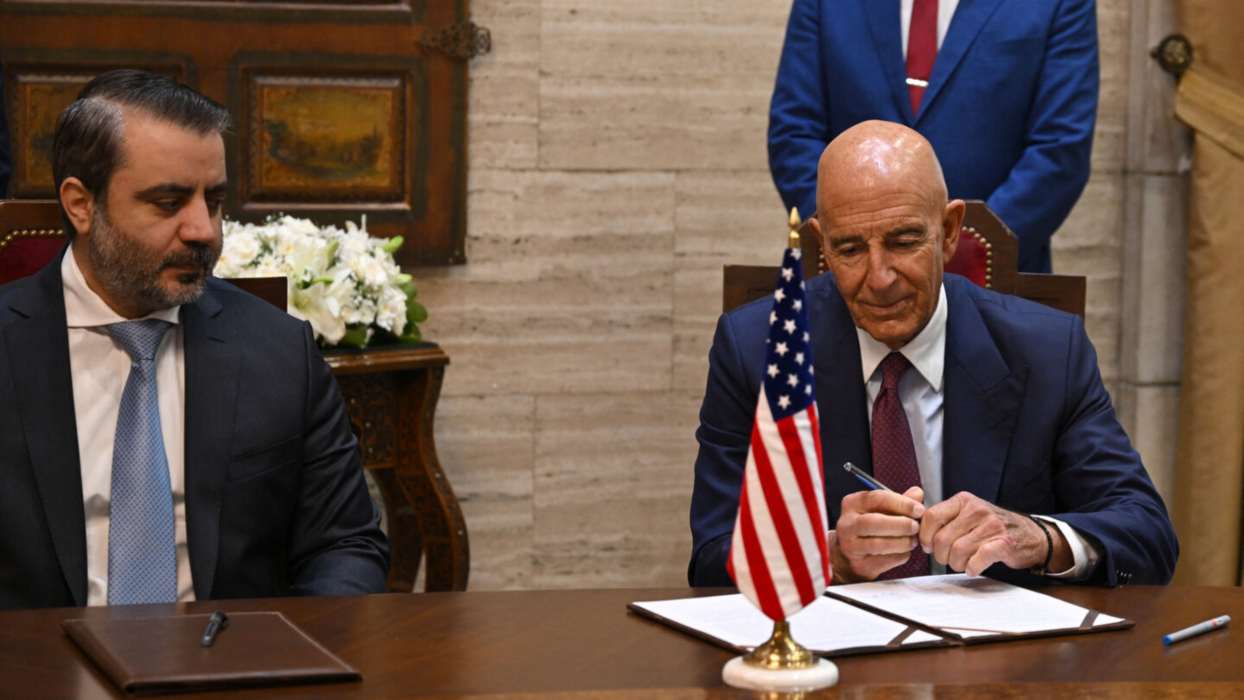
Washington steps between Israel and Turkey
The United States is now attempting to prevent the dispute from becoming something considerably more dangerous.
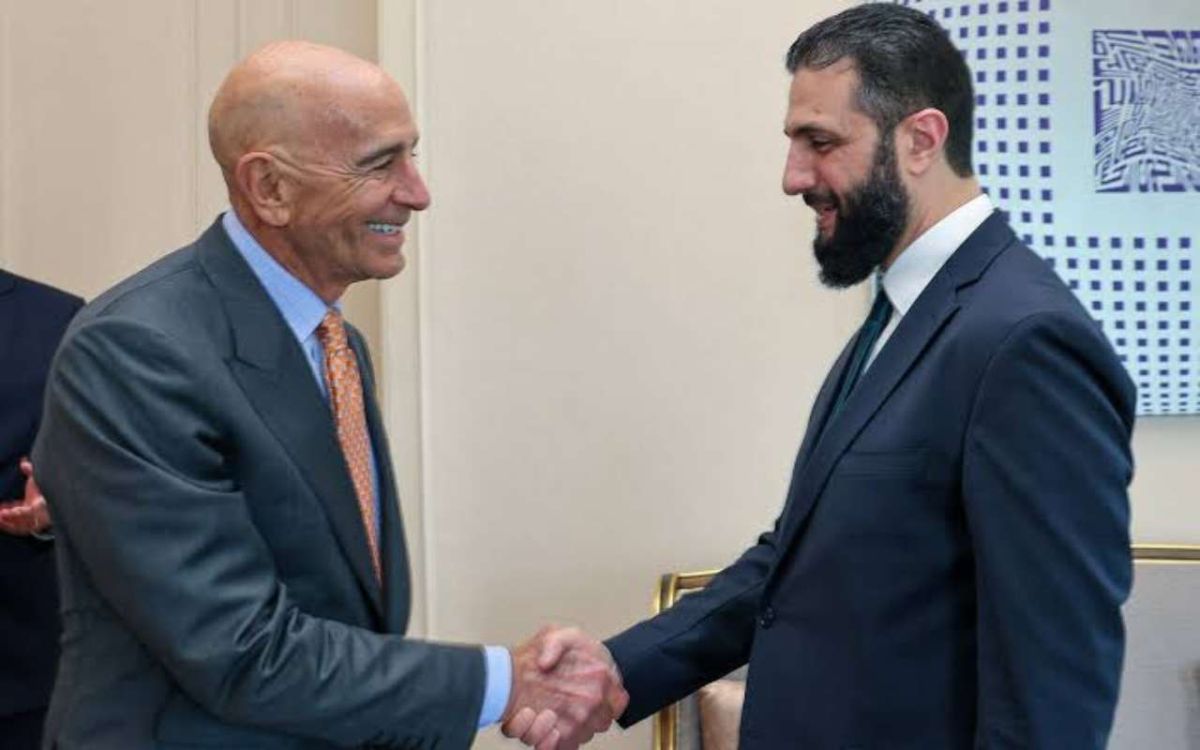
U.S. special envoy Tom Barrack has confirmed that Washington is working on a deconfliction mechanism involving Israel, Turkey and Syria, designed to prevent miscalculations or accidental military escalation.
Barrack described the Israeli strike as an “unnecessary escalation” and stressed the need for a stronger communications architecture among the three governments.
The danger became particularly clear during the Abu al-Duhur operation.
According to Barrack, Turkey had not been warned about the Israeli attack and could have interpreted Israeli aircraft flying northward as a potential threat requiring a military response.
“Thankfully, calm heads were able to prevent the situation from deteriorating further,” Barrack said.
That episode illustrates why Washington increasingly views Syria not merely as an Israeli-Syrian problem, but as a potential Israel-Turkey flashpoint involving two critical U.S. partners.
The secret channel was already open
Contacts between Israel and Syria had reached surprisingly senior levels even before the latest escalation.
Reuters reported that Mossad chief Roman Gofman spoke directly with Syrian Foreign Minister Asaad al-Shaibani on Aug. 14 — four days before the Israeli strike.
Turkey’s military presence was reportedly a central subject of that conversation, including Israeli questions about Turkish weapons, drones and possible deployments inside Syria.
The contact demonstrates that Israel’s current strategy is not simply to bomb Turkish-linked military infrastructure.
Jerusalem is simultaneously attempting to define rules of the game with Damascus.
Netanyahu’s strategic dilemma
Israel therefore faces an increasingly complicated choice.
Allowing the Sharaa government to consolidate power could produce a more stable Syrian state capable of reaching security understandings with Israel. But that same consolidation is occurring with extensive Turkish political and military assistance.
Weakening Damascus too aggressively could destabilize Syria again.
Allowing Ankara unrestricted military access could create what Israel regards as an unacceptable strategic presence on its northern frontier.
A security agreement potentially offers a third route: recognizing the new Syrian reality while establishing limits on military deployments, buffer zones and cross-border activity.
According to Shaibani, earlier discussions had contemplated several security zones near Israel, including a buffer area where only UN forces would operate and additional zones with varying levels of Syrian military deployment.
The bigger geopolitical game: Israel, Turkey and Trump
There is another player hovering above the negotiations: Donald Trump.
Washington has been pressing for an Israel-Syria understanding for more than a year, while simultaneously trying to maintain strong relations with both Netanyahu and Turkish President Recep Tayyip Erdoğan.
The result is an unusual strategic triangle.
Israel wants American backing for its security red lines.
Turkey wants Washington to accept its role as Damascus’ principal security partner.
Syria wants U.S. pressure on Israel to stop attacks and withdraw from territory occupied after Assad’s fall.
And Washington wants to prevent all three from turning Syria into another regional battlefield.
Syria is becoming an Israel-Turkey chessboard
The emerging Israeli recalibration should therefore not be mistaken for a simple diplomatic opening toward Damascus.
The deeper story is Turkey.
Iranian influence once defined Israel’s military doctrine in Syria. Today, the possibility of a powerful Turkish-backed Syrian security architecture is increasingly shaping Israeli calculations.
The Abu al-Duhur strike demonstrated Israel’s willingness to enforce that red line militarily. Washington’s intervention demonstrated the limits of that approach.
A direct Israeli-Turkish confrontation would carry consequences far beyond Syria, involving NATO, U.S. regional strategy and the wider balance of power in the Eastern Mediterranean.
That makes a security agreement between Israel and Damascus more strategically valuable than before.
It could provide Israel with enforceable limits on threatening military deployments while giving Syria a pathway toward sovereignty and reduced Israeli strikes.
But the fundamental question remains unresolved:
Can Israel accept a stable Syria whose most powerful external security partner is Turkey — and can Turkey accept Israeli red lines restricting what Ankara does inside Syria?
The answer may determine whether Syria becomes the site of a new regional accommodation — or the next arena of Israeli-Turkish rivalry.
Source: pagenews.gr
Διαβάστε όλες τις τελευταίες Ειδήσεις από την Ελλάδα και τον Κόσμο